Paul,
I was wondering about the holding power of the through bolts in an all
Racing Beat all aluminum aircraft rotary engine as compared to say a
hybrid
that retained the iron front housing. Any thoughts on this?
Doug Fir
I think he is using thread inserts. Heli coil or some other brand.
--
Paul Lamar ...No rotor no motor.
Paul,
OK Thanks. For aircraft applications I think wisdom would dictate
retaining the front iron housing and using only the rear and intermediate
R.B. Aluminum housings.
I say this mainly because the iron front housing is more robust and gives
a
few locations to anchor some addition hardware.
Doug.
Doug,
If your worried about threaded aluminum to hold the through bolts - just
use 4340 threaded ( rolled thread) both ends and nuts both ends, it solves
the problem.
George ( down under)
Can't be done. I looked at this awhile back and the tension bolts
interfere with the front cover and inner passages. Also you still need RTV
on the bolts to damp the violin string vibration.
Of course if you start with a clean sheet and do a custom front cover
like Everett Hatch did no problem.
Paul Lamar ...No rotor no motor.
Paul,
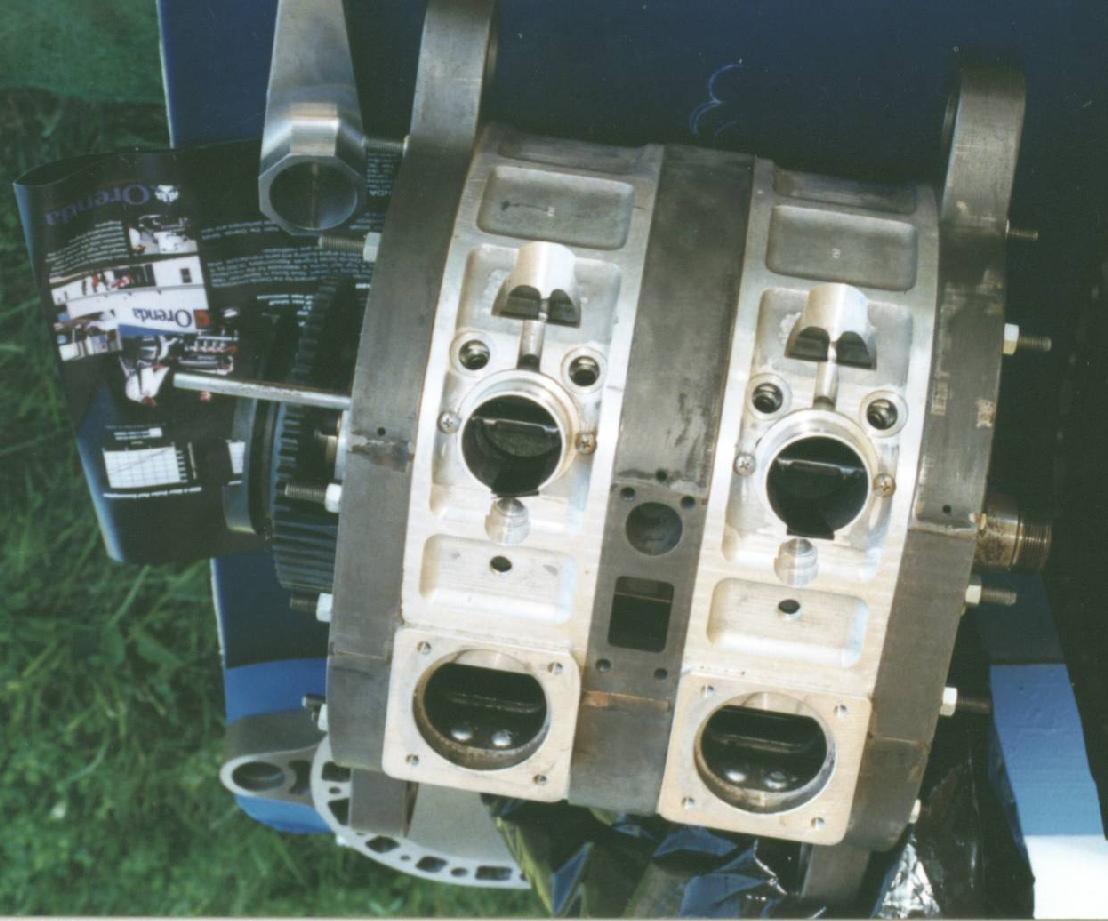
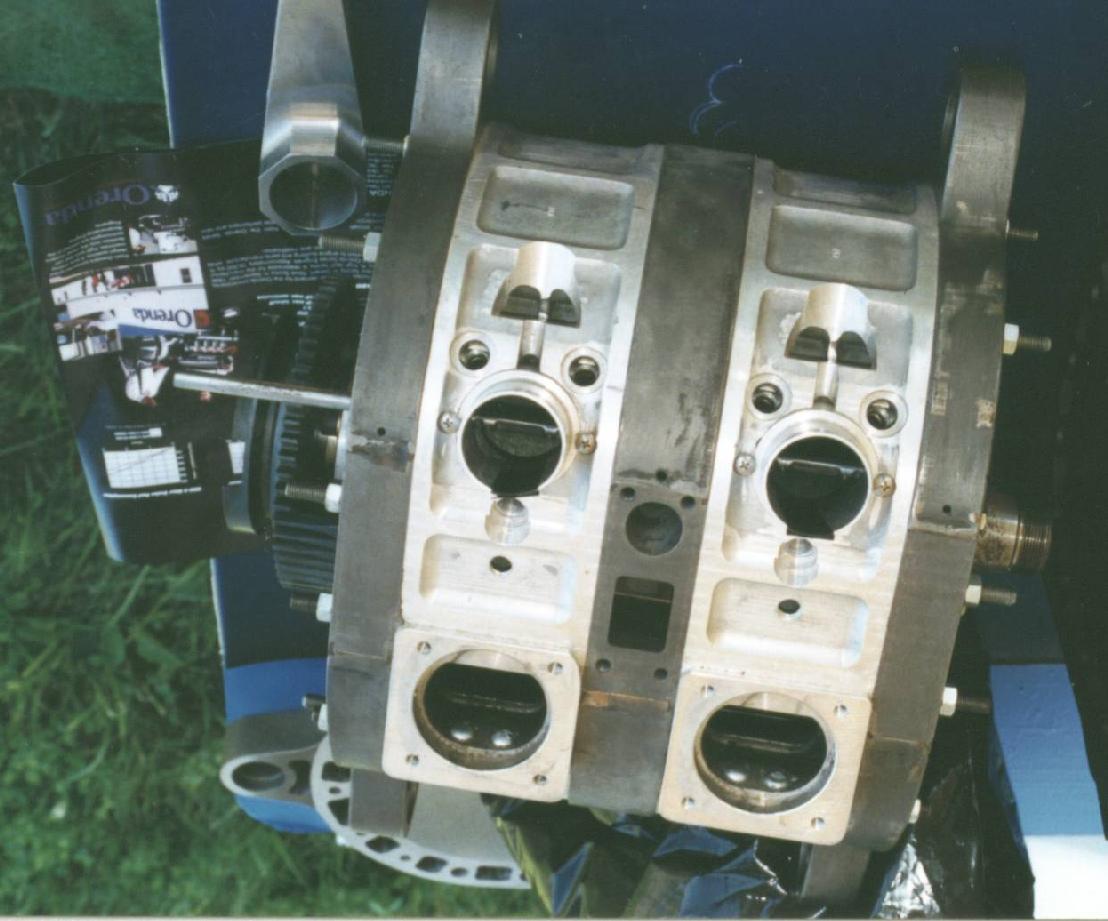
This is the picture I have been trying to find for six months now. Thanks:)
You commented a few months back that having injectors mounted on the rotor
housing where the oil metering hole is does not work. Perhaps they would if
they sprayed before or just after the port closed.
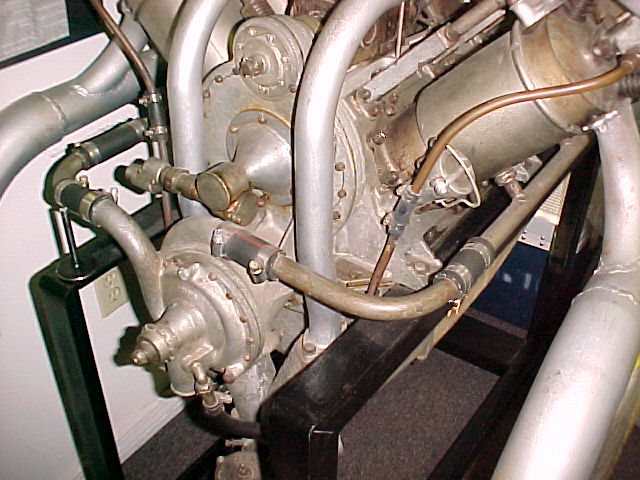
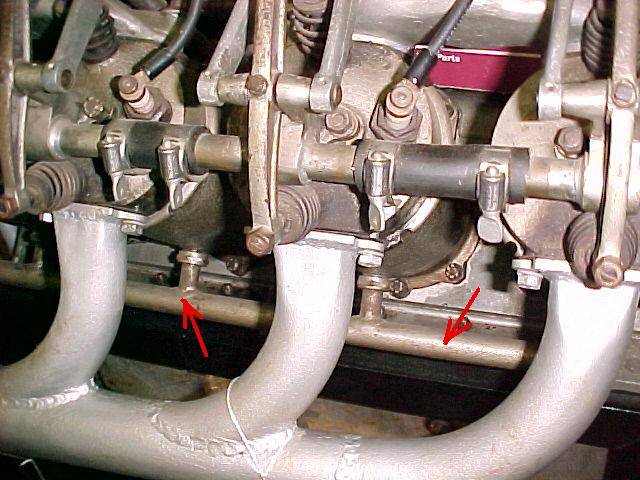
Everett's' housing looks like Swiss cheese BTW. What are we looking at here?
Four injectors per rotor housing and another hole below the P-port to boot.
My guess is this single hole is for shooting compressed air into. Sort of
what Renesis does now but only more elegantly. The one below that is to
circulate warm water naturally.
I am guessing this was a R&D engine in which he could try different
locations for the injectors.
Doug Fir
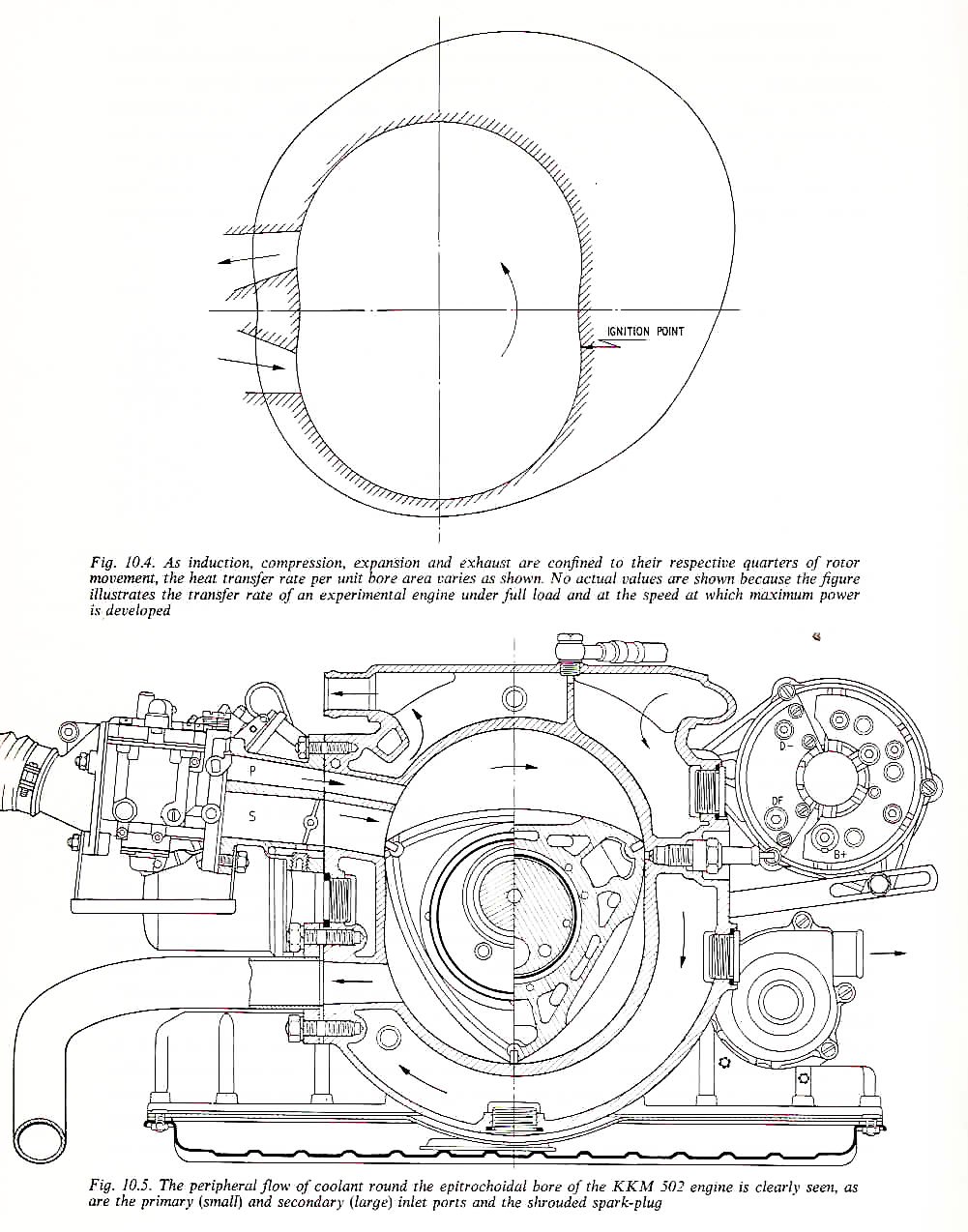
Funny you should bring that up. I had a long talk with Everett on this subject
before he died of course. No I am not a Medium :) Everett and I both
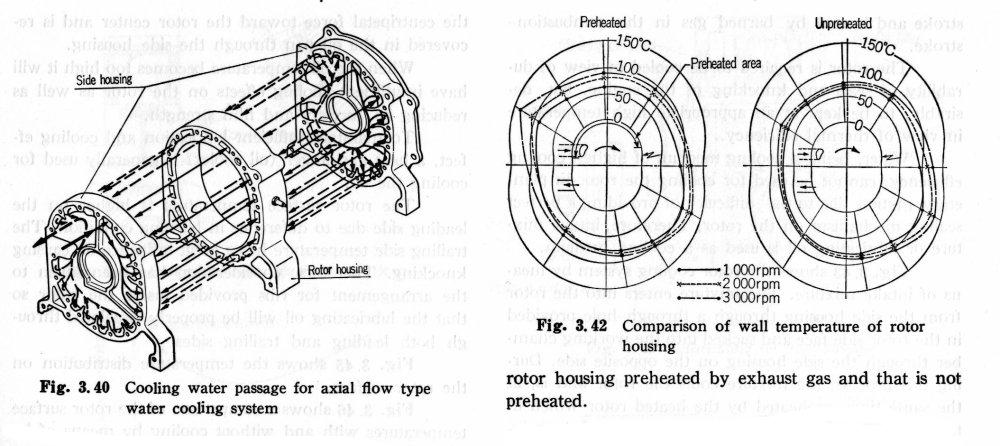
agree that a series cooling system is not the best for liquid cooled
aircraft engines that spend most of the time at high power.
This is why one always has more trouble with the rear rotor.
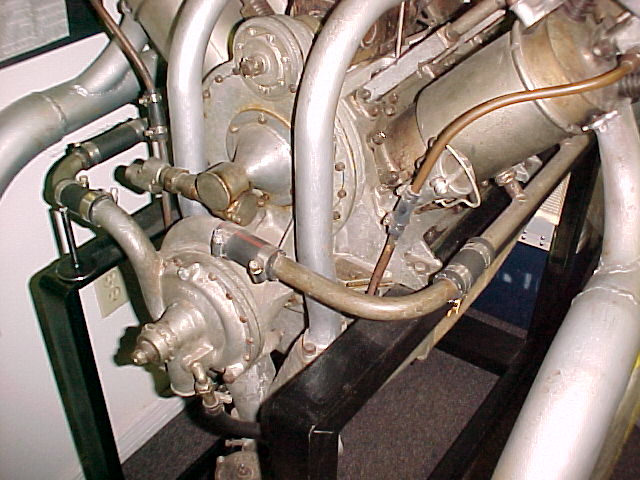
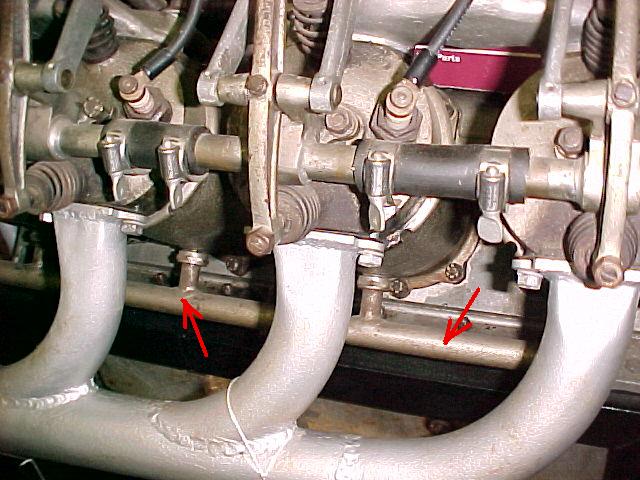
This was well known as far back as the OX5. This hole in the center housing
is therefore a cooling inlet or outlet hole. I think the serial cooling idea
was Max Benteles idea and he sold it to the rotary community way back in the
60s' NSU however did not buy it but Curtis Wright and Mazda did. Needless to
say I would do a parallel cooling system if I were starting over.
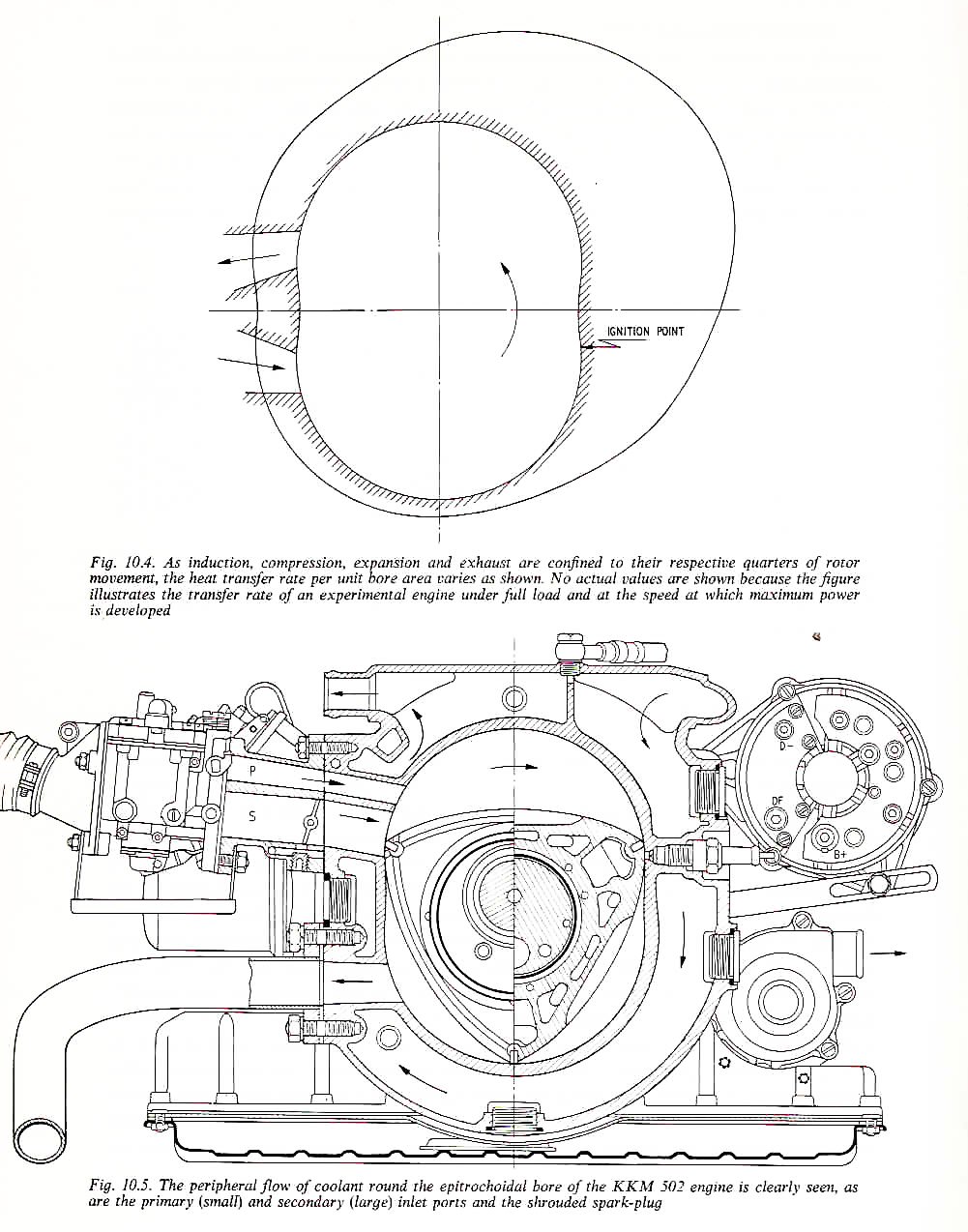
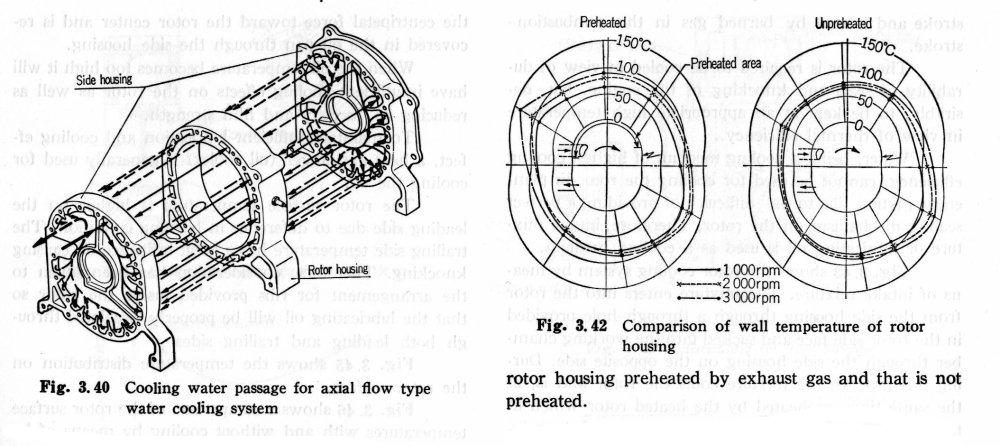
One mistake NSU made was feeding the cool water into the hot side
of the engine first. Not a good idea for thermal gradient reasons and
not the most efficient way from a heat transfer point of view.
You want to feed the water in from the cool side first.
BTW the OX5 did it right. Also down draft cooling is the right
way to do an air cooled aircraft engine for the same reasons.
For the new guys get my book "How to Cool Your Wankel" from Aircraft
Spruce. Blatant plug :)
--
Paul Lamar ...No rotor no motor.
The Rotary Engine NewsLetter. Powered by Linux.
ACRE NL web site.
http://www.rotaryeng.net
Copyright 1998-2006 All world wide rights reserved.