Paul,
I have run this by Tracy and I wandered what you thought of this. This
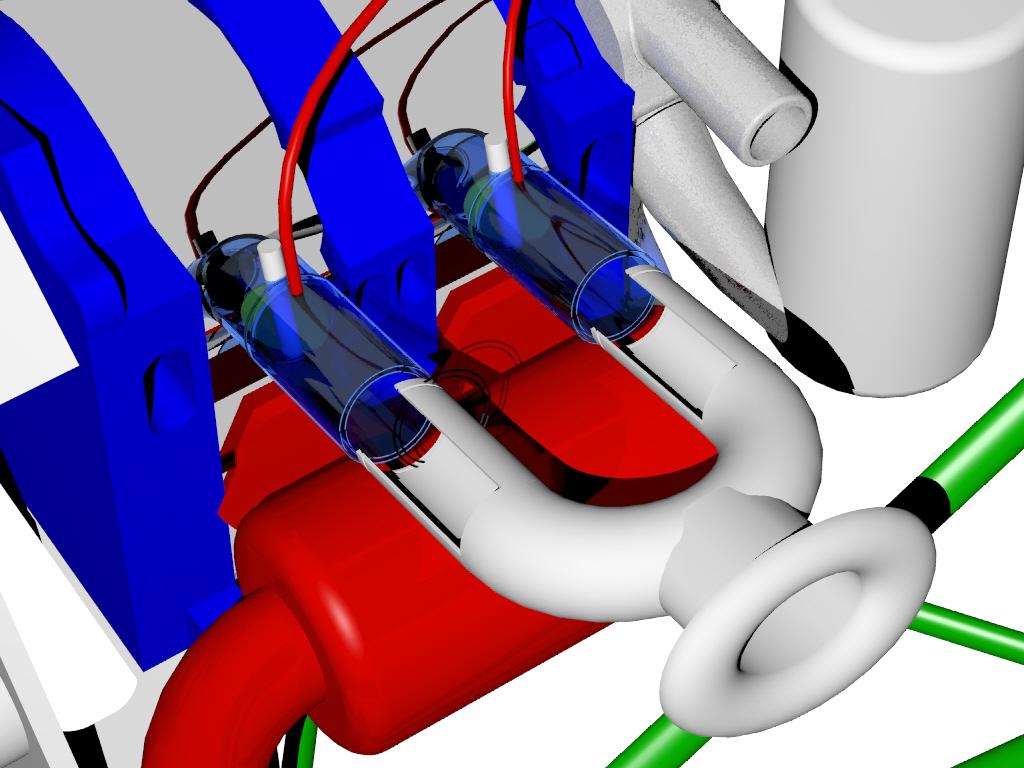
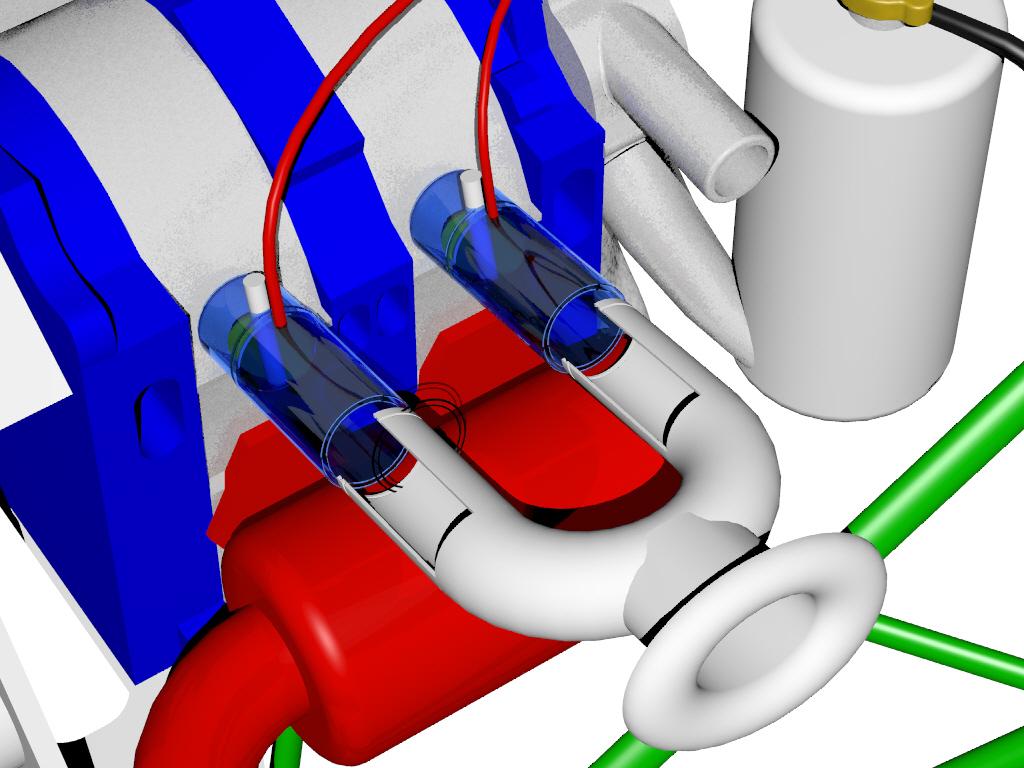
is a 4 port 13b in a Cozy III. I was intending to take the intake duct
to a NACA scoop on the lower left cowling ram air style. The controller
is a RWS EC2. The actual ducting will be rigid fiberglass with inline
filter. I am looking for 160 to 180 HP. Good idea? Bad Idea? Start over
with a dynamic chamber and long runners?
I would greatly appreciate your comments.
Steve Denny
Windsor, Colorado
BTW Sorry, apparently I can only send one pic at a time so here come
2 e-mails
------------------------------------------------------
That is the way to do it if you don't have graphic scaling programs.
Anything over about two meg is too big to send.
Any Y in the pipes causes a discontinuity. In effect what you wind
up with is several short pipes resonating in series. This, in
theory, narrows
the torque peak but moves it way up in the RPM band. Perhaps higher
than 11,000 RPM. That of course does nothing for you. This is an over
simplification of course so unless you dyno this engine no telling what
is going to happen.
I WILL say you will not get as much HP at 7500 RPM or 6500 RPM as
you would get if you had just four long pipes of the right length, a plenum
and this throttle body.
You want the torque peaks in the 5500 to 6500 range. That yields the
best cruise BSFC and the best power in the 6500 to 7500 RPM range for aircraft
use. You get that with the pipe lengths in the 25 to 28 inch long range. These
numbers are also somewhat dependent on the inside diameter of the pipes. A
smaller dia. pipe moves the torque peak down. Larger pipe dia. moves it up.
Matt put it very succinctly awhile back but I lost the message.
Do you remember that Matt? Can you upload it again?
BTW NACA ducts are not recommended by NACA engineers for carb air.
You need a true ram air scoop.
Paul Lamar ...No rotor no motor.
Paul,
Rereading what I said before, I can see that it actually needs a little
massaging - I didn't use language that adequately identifies the
situation for intake vs. that for exhaust. I am busy finishing some
things at work, but at some point I might tweak it a bit more.
Since you asked.. I quote (myself):
"To add... I think the organ pipe tuning effects are most apparent in
the section of pipe extending from the intake port to the first main
discontinuity in the runner. Any significant change in runner cross
section or shape causes what is essentially an impedance mismatch, which
causes a reflection. That reflection causes a momentary pulse of
pressure to travel back down the runner towards the port. If the timing
of that reflection coincides with the timing of the port drawing air in
for the next rotor face, the net volumetric efficiency is increased
(maybe significantly)..
Organ pipe effects in sections of the runner further from the intake
port (after the first discontinuity) are much attenuated because that
first discontinuity absorbs much of the energy of port intake event.
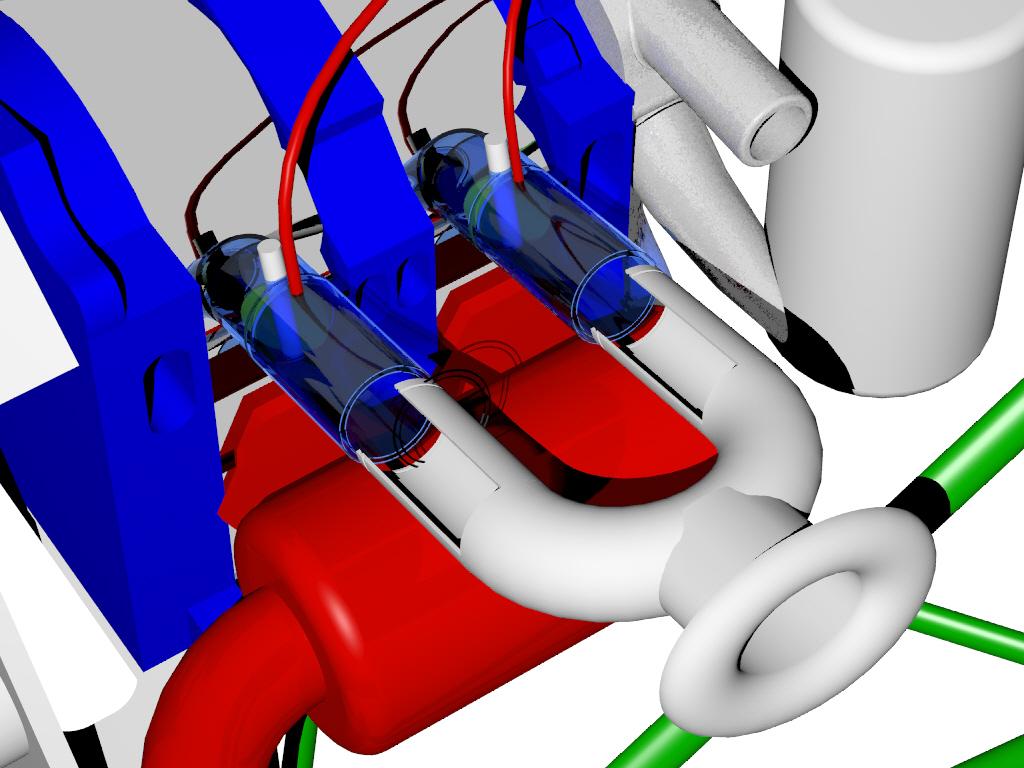
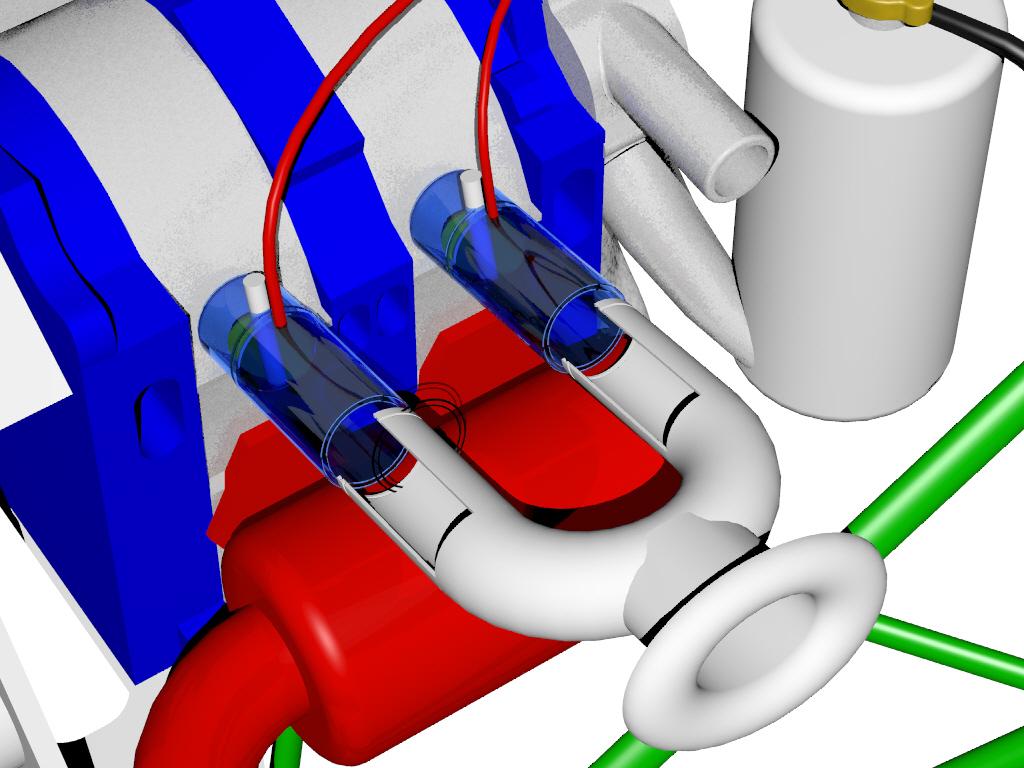
The design pictured above has very short runners from the port to the
first discontinuity - where the runner meets the foam plenum.
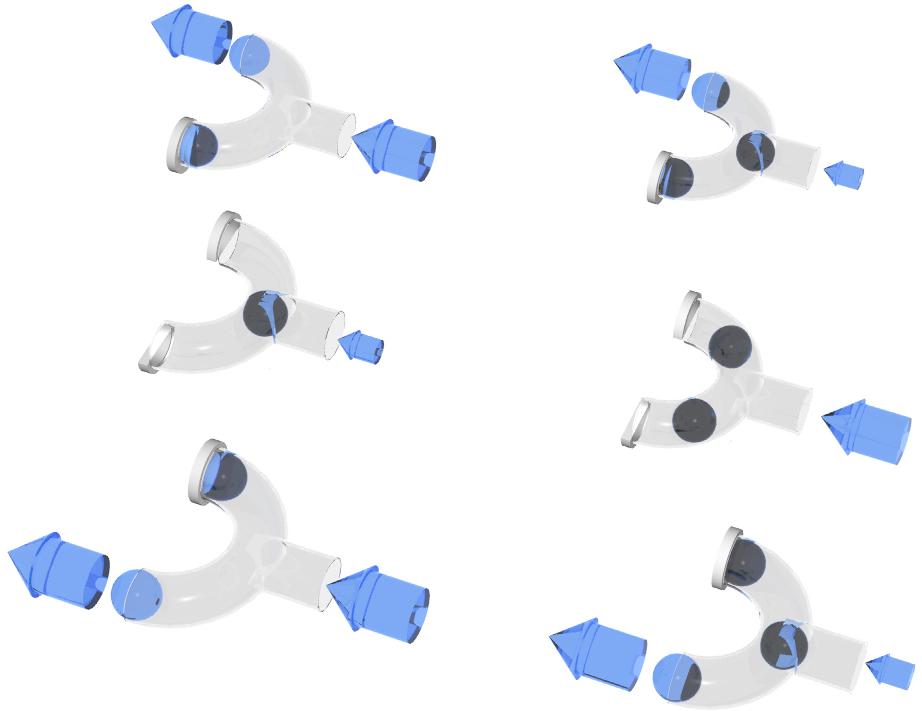
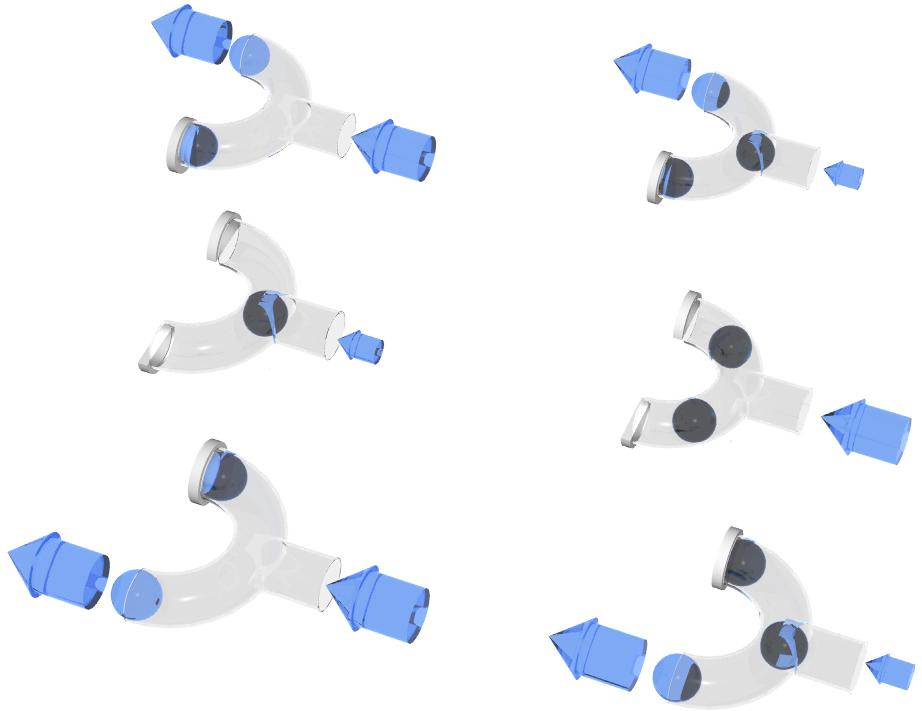
What is the relative timing between intake events on the two rotors?
Could an extremely short set of runners be fabricated between the front
and rear rotors that would cause beneficial interaction between the two
sets of runners?"
Regards,
Matt-
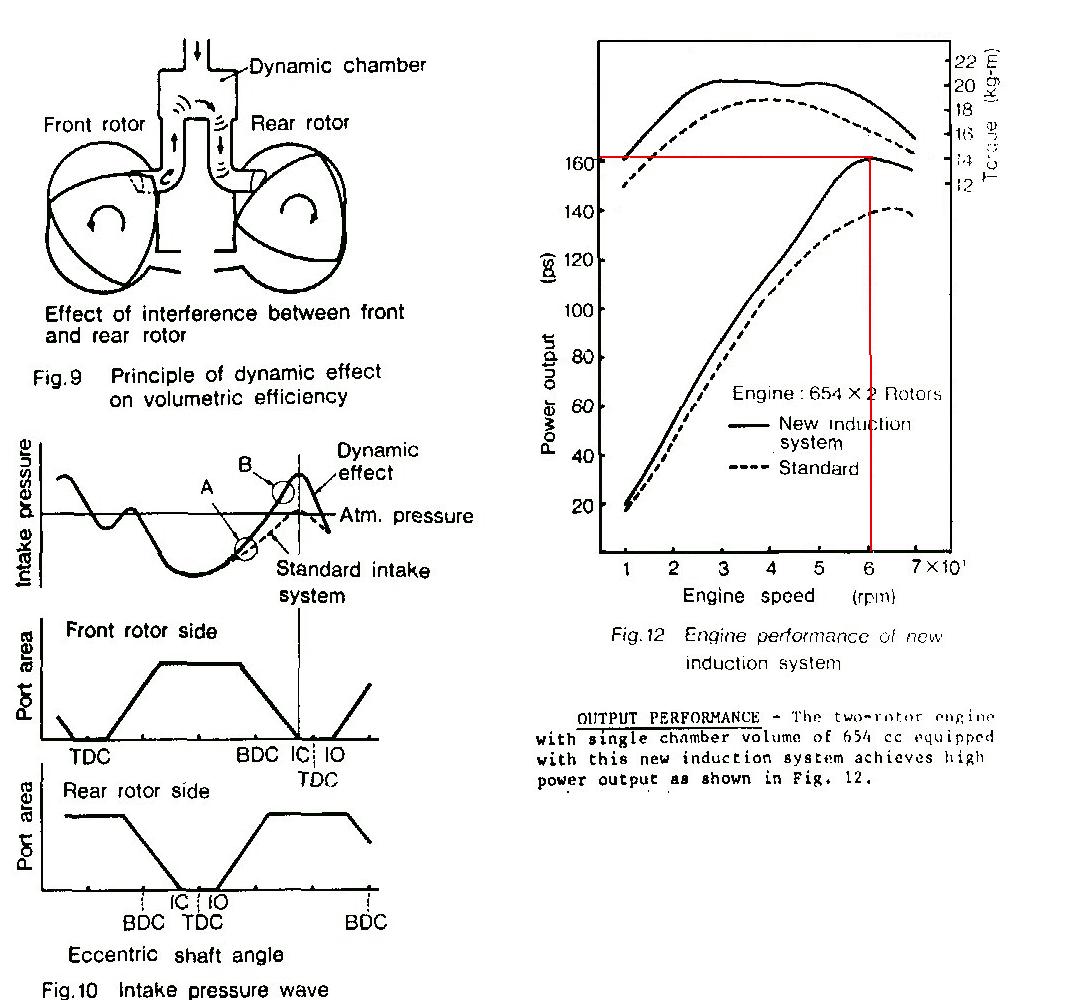
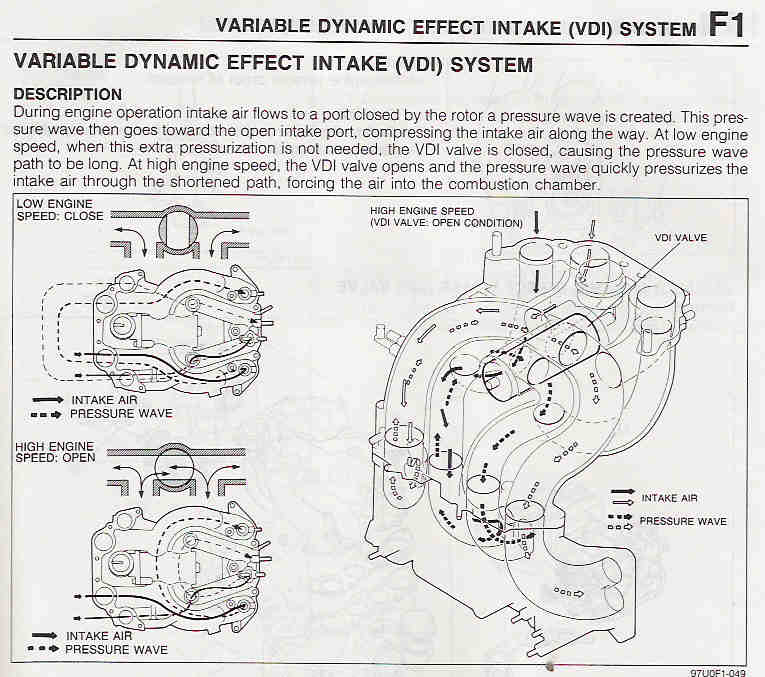
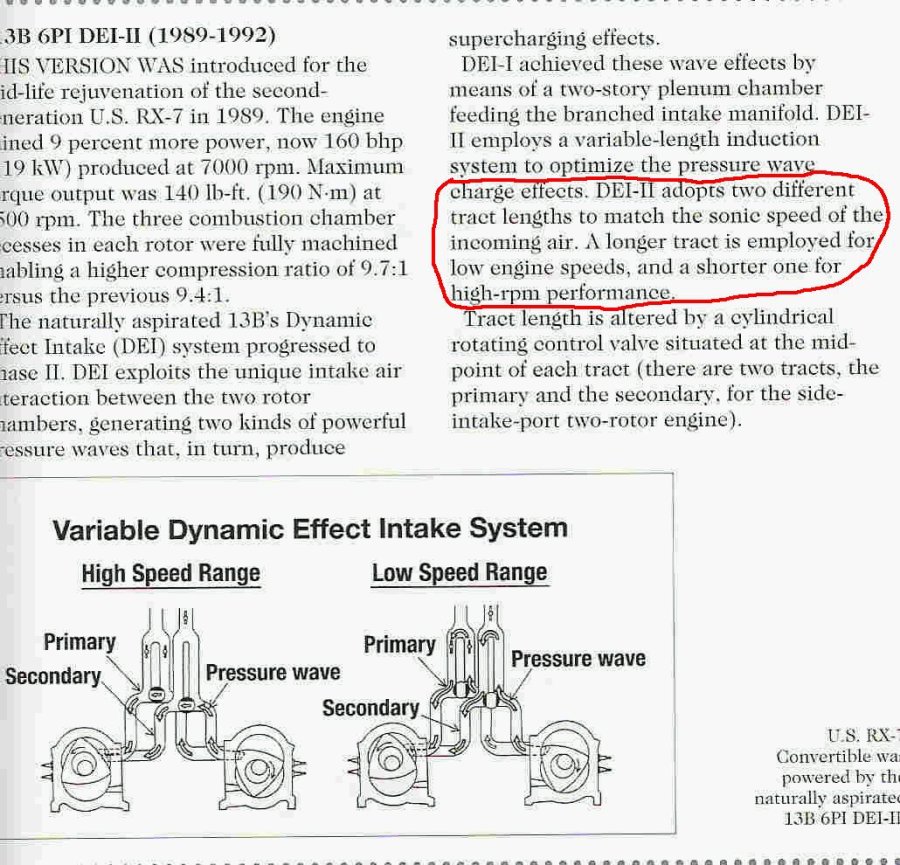
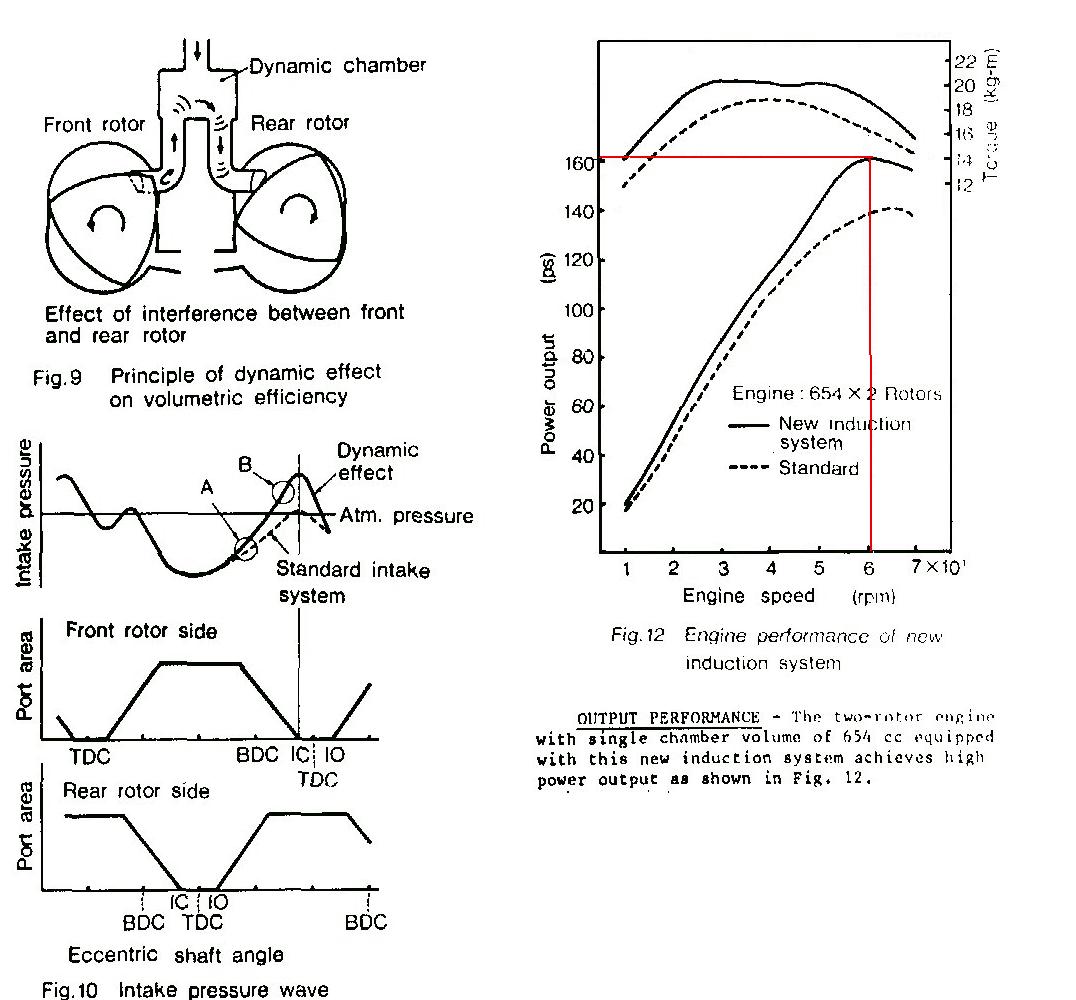
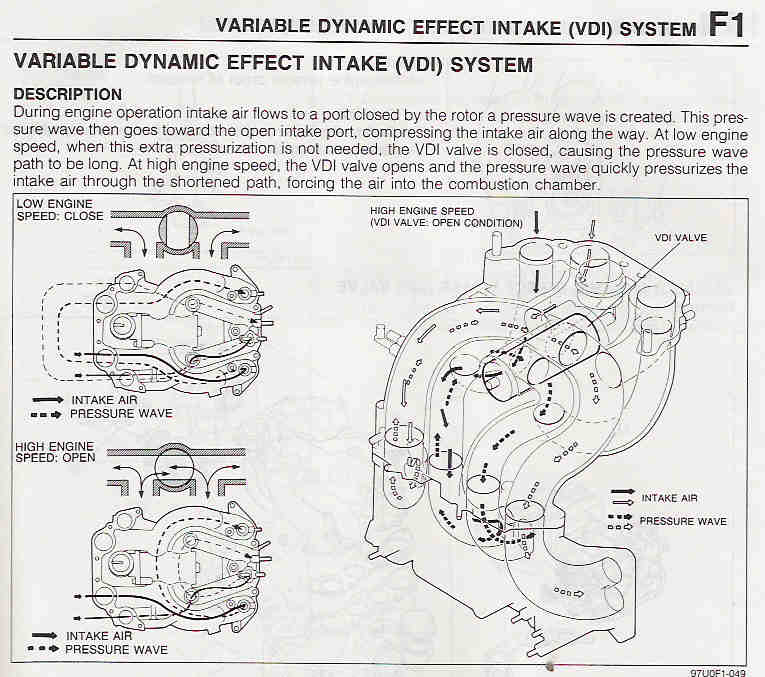
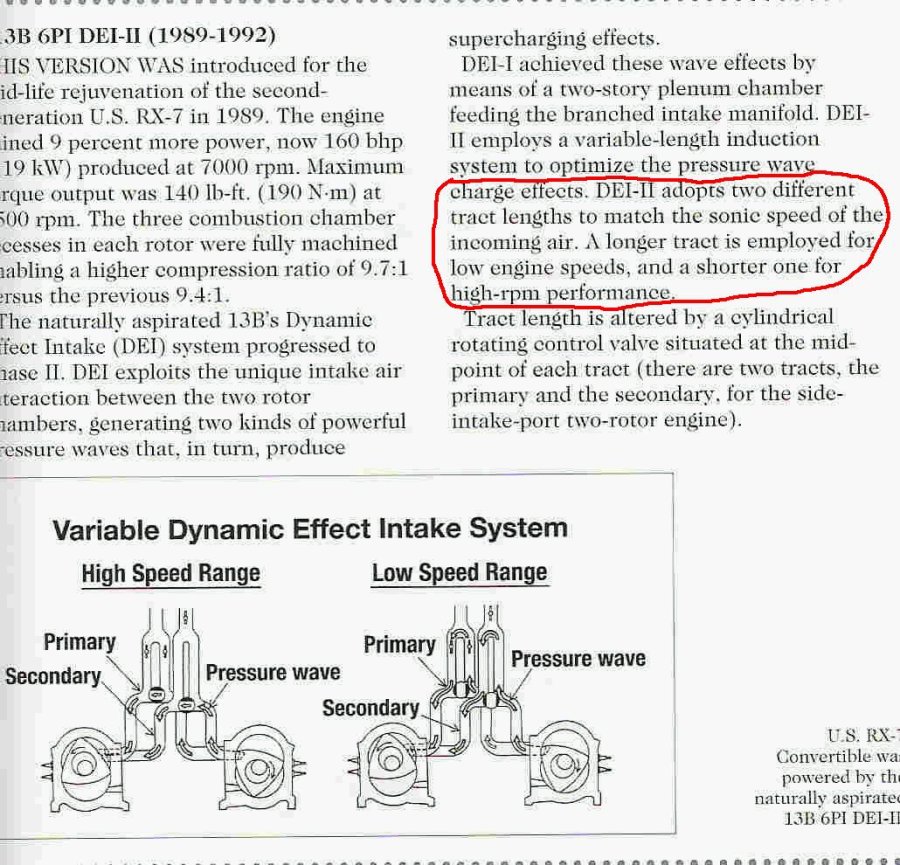
The timing is 180 out of phase and that has been exploited by Mazda. They call
it the dynamic chamber effect. So far they initially used it to enhance the torque
in the 3000 RPM range as can be seen by these jpgs.
Yes it could also be used at higher RPM with shorter runners in theory. The RX8
intake manifold is a multiple of these ideas.
--
Paul Lamar ...No rotor no motor.
The Rotary Engine NewsLetter. Powered by Linux.
ACRE NL web site.
http://www.rotaryeng.net
Copyright 1998-2006 All world wide rights reserved.