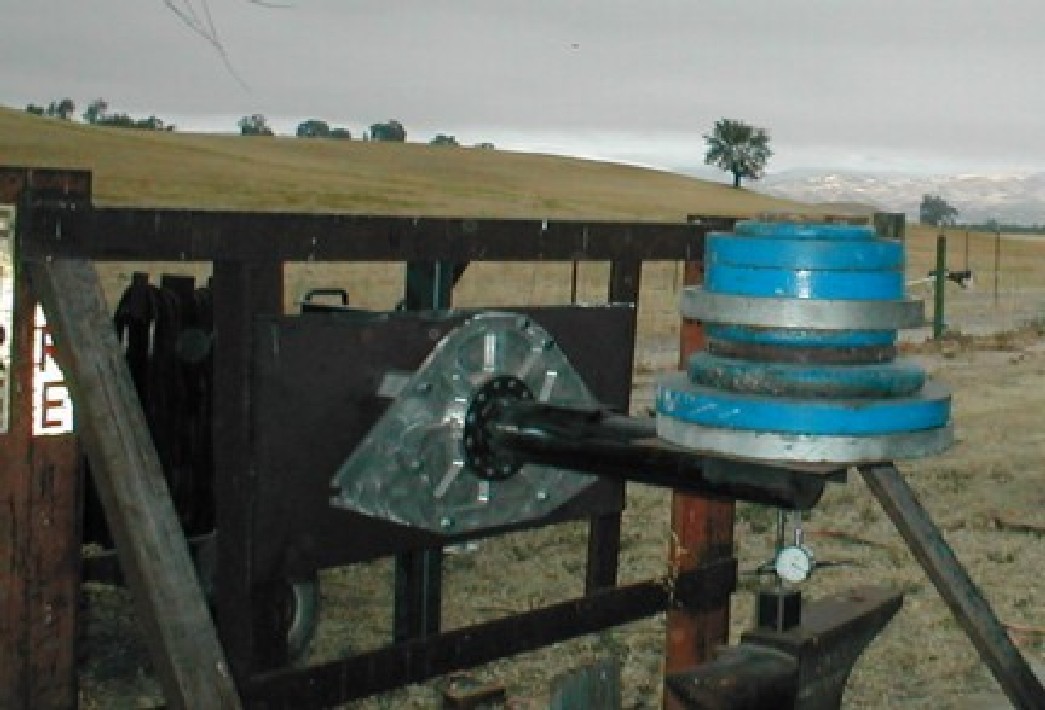
Larry Childs has agreed to produce a new bell housing at reasonable
cost in his NC machine shop if there is a demand. It can be retro fitted
to most
existing aircraft for a more professional look. It is based on Al
Gietzen's
brilliant idea of mounting the starter using the Mazda stock bolt
positions
on the cool side of the engine. Last jpg.
Weight will be low as Larry can take weight out in the final
NC machining step. Jarrett Johnson did the Solid Works design.
This greatly simplified the bell housing design and lowered the cost.
We have been trying to get this done for the last 8 years or so.
Finally looks like it is going to happen. If you order a new gear box
from Tracy ask about deleting the adapter plate, spacers and long 10 mm
bolts. Use this bell housing instead. I am sure Larry would be
glad to wholesale them to Tracy if Tracy wanted them.
Larry needs to know how many would be interested. If you want one
please let us know.
If Tracy trusts it enough to source it, I'll buy it from Tracy when I
pick up the PSRU. Tracy is a practical [electronic] engineer.
Larry Childs needs to talk to Tracy and get him to package it with the
PSRU - that would go a long way towards getting everyone to accept his
bellhousing without the typical wait-n-see approach.
Just my opinion. (And my suggestion.)
--
Vince Orton
Good luck :)
Paul Lamar
I think Vince's opinion (and suggestion) is right on the money. It appears
to me Tracy has made this part of his redrive beefy to handle expected
loads
with a good margin of safety. His adaptor plate mounts with (6) bolts to
the engine whereas I can only see (4) bolt holes in Larry's bell housing
drawings. If Tracy were to give his blessing to the design, I would
definetely prefer it to the plate. I also like the idea of
inspection/cooling holes as long as the structure is not weakened.. Just
my
$.02.
Alex Rose
Angle iron is beefy too but I would not use it in an aircraft.
No there are six bolts in the new design. You are missing the fact
that the starter bolts go all the way through to the end housing.
That was the Al Gietzen contribution. Actually seven bolts for 3rd gen,
Cosmo, 20B and RX8 end housings. Good design is more than just beefy.
Good design is high strenght to weight ratio. Tracy design is not
what I would call a high strength to weight ratio design. It looks
like and is a crude home made device. Most real mechanical engineers
would agree with me I think. Actually any sand cast bell housing near the
same
weight is going to be stronger as the load paths are shorter. High pressure
die cast bell housings are twice as deep and weigh the same. I would love
to make them high pressure die cast but I don't think you want to pay
for the $100,000 and up tooling.
Good luck :)
--
Paul Lamar ...No rotor no motor.
I haven't previously commented on this because it is not productive to do so
on hypothetical products based on conjecture.
As far as including the bell housing with the RD-1 series of drives, I
would have no objection to doing that as long as it was actually available
and met the structural and accuracy requirements. It should also not require
any redesign of other parts of the drive. I am everything from CEO to
Janitor here and I do have a life : )
As to the conjecture that my "crude home made device" has low strength to
weight ratio, I would say "show me the numbers". By that I mean the
finished weight of the bell housing and an FEA on the stresses and their
distribution. As I recall, the last cast bell housing attempt weighed
almost exactly twice as much as the plate and spacer approach. This one
looks better (on paper) but it does remove the option of mounting the
starter at 6:00 which most flying rotary aircraft currently use. The plate
design allows either location.
Tracy Crook
Real World Solutions Inc.
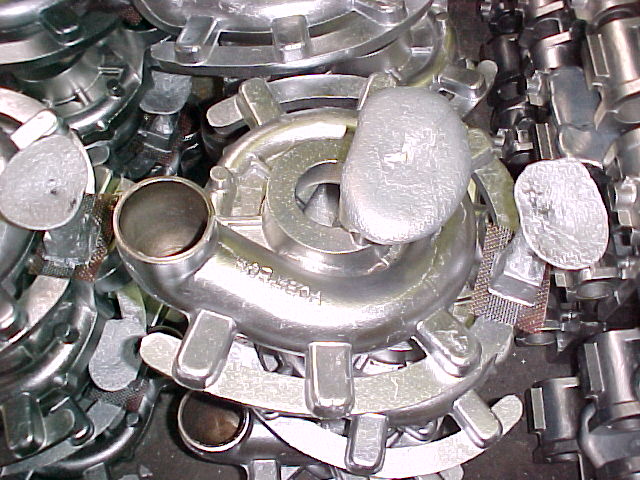
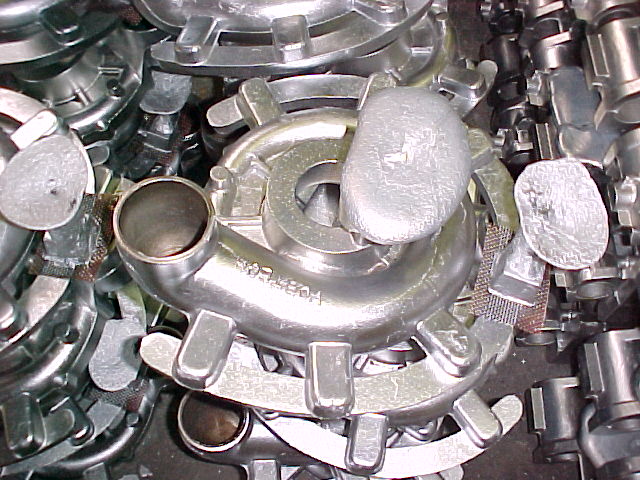
It weighed too much for three reasons. The pattern was made by hand and it
is near impossible to make a large pattern with .1875" consistent wall thickness
by hand even if you are a HIGHLY skilled pattern maker. I know I have made some
intake manifold patterns. An accurate pattern made on a NC mill profoundly
changes all that.
The second factor is what can the foundry do in terms of minimum wall
thickness? American International in San Fernando California has no
problem with that as I have seen hundreds of parts in their foundry.
The third factor was the incorporation of motor mounts in the bell housing.
That idea has fallen into dis favor as the preferred method of engine mounting
is the Schertz beam.
The projected weight of this bell housing, as cast, is one pound lighter
than your set up despite a conservative wall thickness of .2 inches.
That is before NC machining where more weight can be removed.
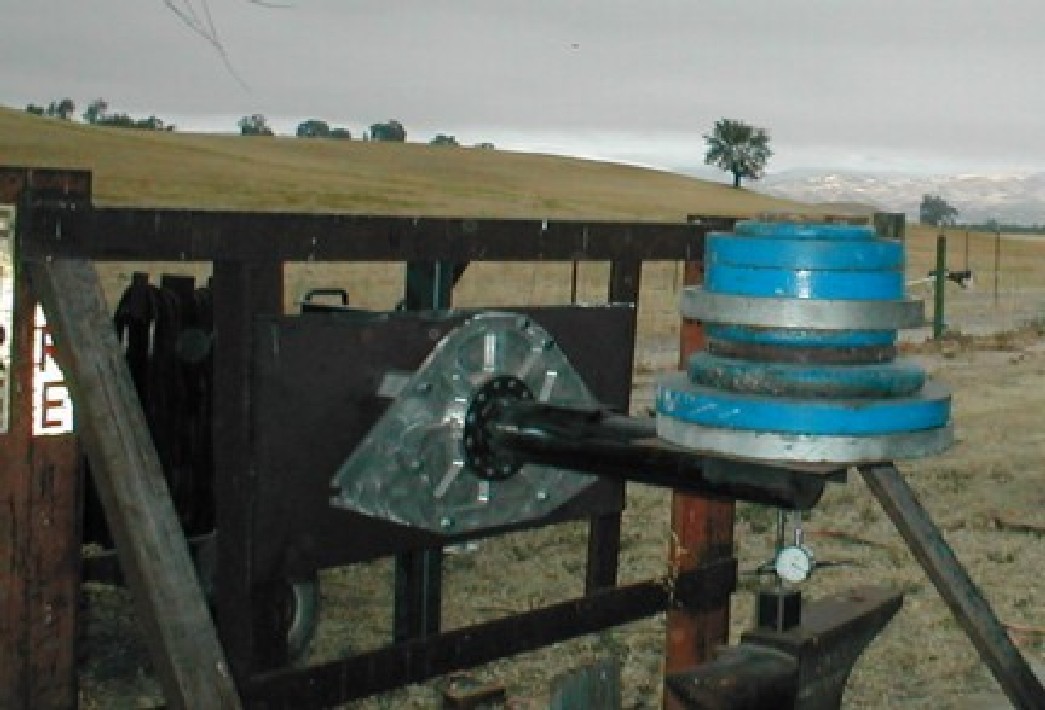
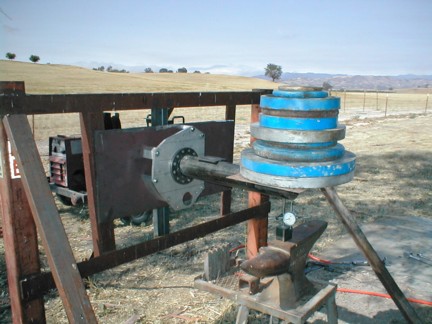
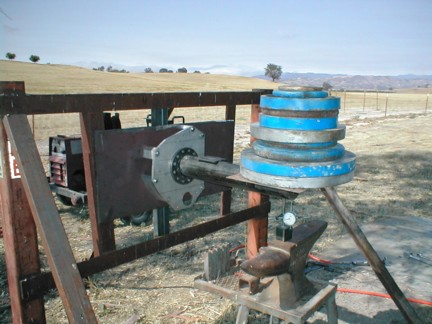
As far as the load is concerned we have already done some static testing thanks
to Jerry Hey. We will do the same kind of static testing on the new bell housing
as well as an FEA.
Not many new designs are mounting the starter at 6 O'clock as it
precludes using one large rad under the engine which simplifies the
cooling plumbing and the ducting. Mounting the starter at six O-clock allows a
simplification of the bell housing and a reduction in its weight and cost.
Paul Lamar ...No rotor no motor.
The Rotary Engine NewsLetter. Powered by Linux.
ACRE NL web site.
http://www.rotaryeng.net
Copyright 1998-2006 All world wide rights reserved.