-Yes, you can publish, sorry I should have said so earlier....
The color won't go to all blue, as the program keeps the colors in for
visual aid, and the scale on the right will change to show the lower
stress.
This has also been done with marginal strength material (poor casting)
heat
treated to only T3, so this really represents worst case. The highest
stress
in the entire model is in the part I used to simulate the gear box. I
used
a
5 inch OD tube with 3 inch ID as a rough guess as being stiffer than the
gearbox and propshaft. I am going to rerun the test with the inner diam
down
at 2" before I do any more modifications. I will also re run the test at
full
material strength. It will take most of today to complete, as each run
takes
about 3 hours.
Larry
Here the initial FET's are folks.
Paul Lamar
Paul & Larry,
Excellent results, just a couple of suggestions if I may, as I've been
through the process. When heat treating the T6061 (or similar) keep the
hardening process down to a T5 as a T6 might cause distortion of such a
thin
casting.
Just remember the thinner the casting the more the Al has to be heated to
make it run distances. The more Al is heated the more likely it is to
produce Hydrogen bubbles throughout the casting i.e. porosity!
This can be overcome with pre-heated steel moulds ( expensive) Or silicone
in injection casting ( expensive). Porosity can be a strength killer!
As Butch suggested to me, the strength of Al goes from the ultimate
strength
of Mill produced sheet, because of it's density it is the strongest e.g.
Tracy's face plate. Second is injection casting because of density and
thirdly is sand casting because of density - all other things being equal.
Because of this, I feel that some external ribbing, especially each side
of
the mounting points to the engine ( as in the Mazda BH) wouldn't go
astray.
These need not be deep ribs but should go all the way to the PSRU mount
ring.
All mounting surface areas should be raised to accommodate finish
machining - inside and outside.
Basically I like what you have done, especially with the stiffening ribs
to
the face. The shape is not dissimilar to my own design, but like you said
Paul - mine is a bit heavy at about 17 lbs ( unmachined). It did however
have provision for 3 starter positions and engine mounts.
Perhaps we ( Butch and I) were trying for too much in one package. Do you
have a photo Paul, that you could show the discussion group. It may give
some idea of what your trying to improve upon.
Luck you have Larry on Board - machining is so expensive.
George ( down under)
Our foundry is up on all that George. They do some fantastic things
with thin walls. I agree now... you got to keep it simple.
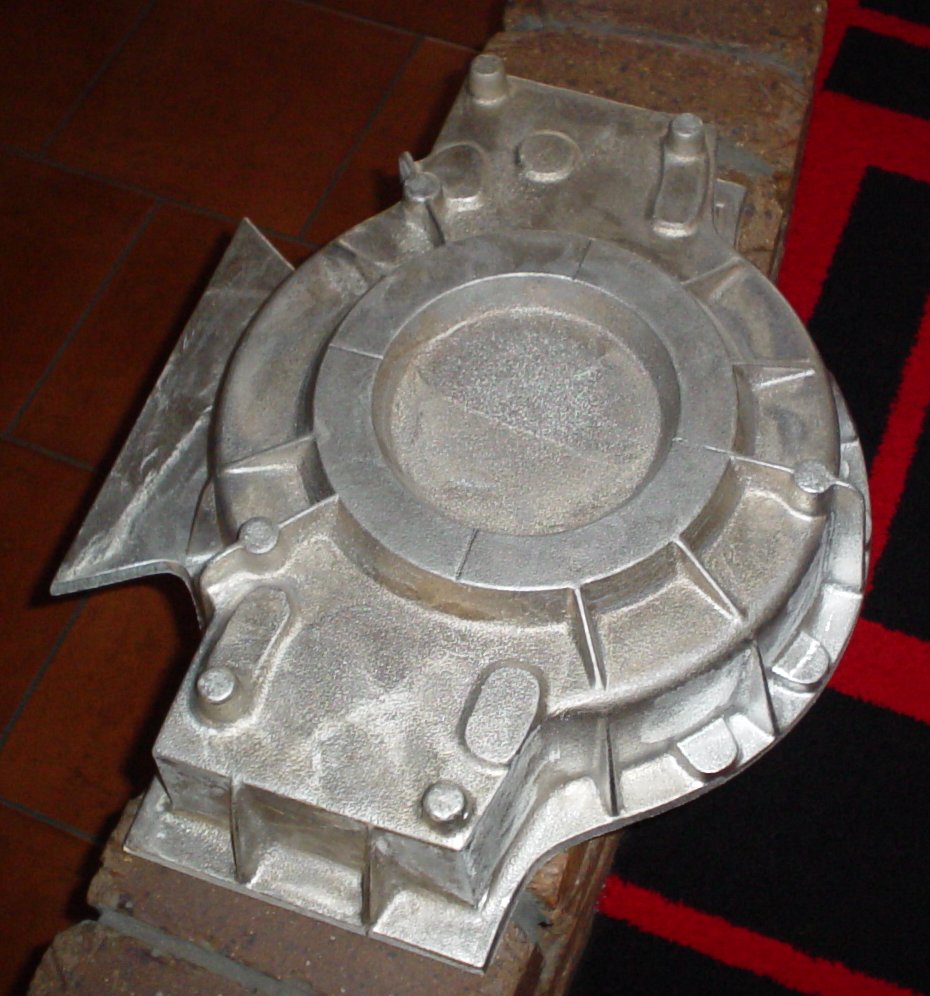
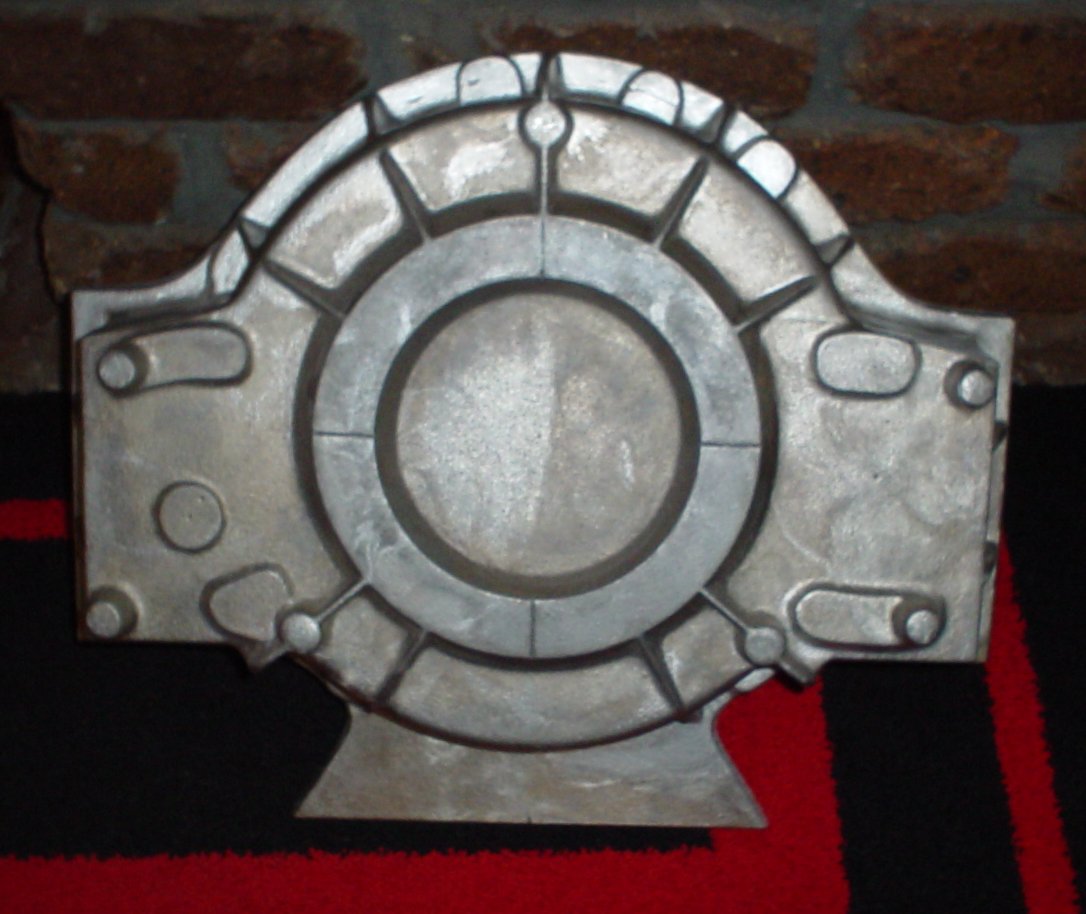
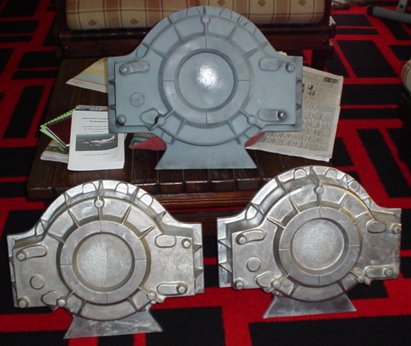
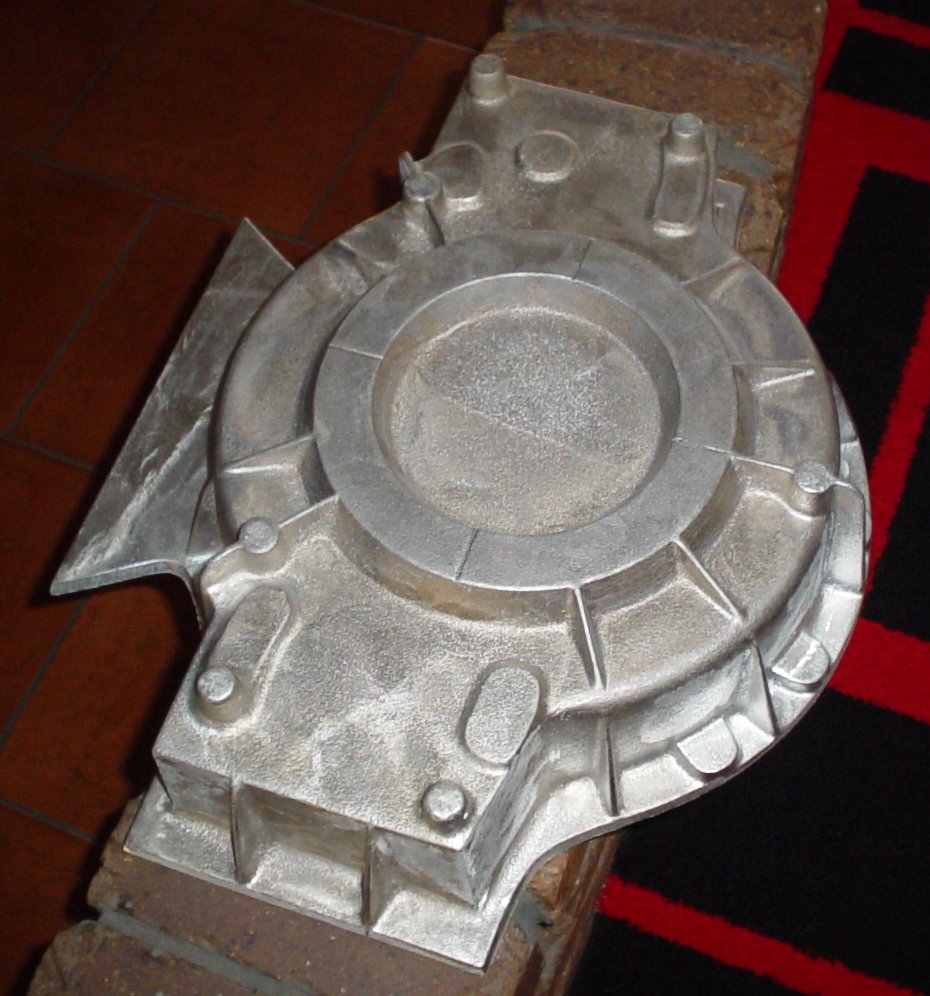
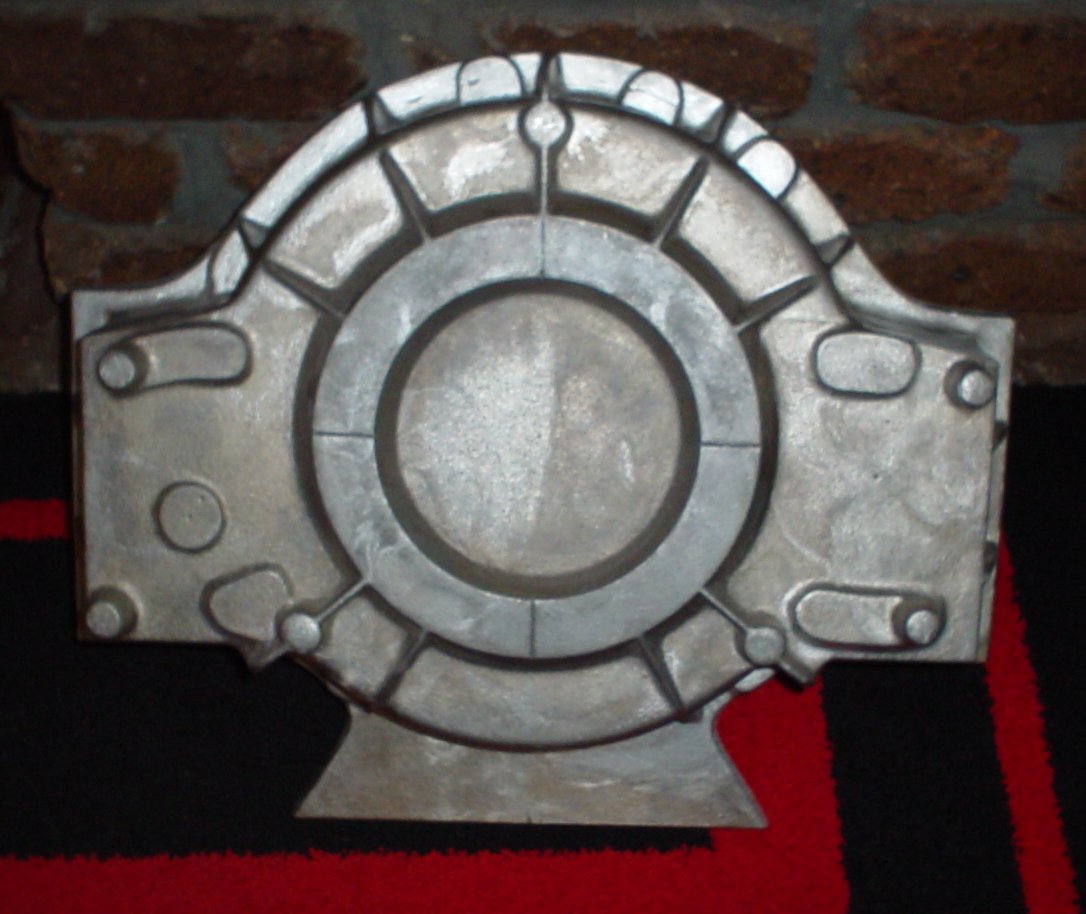
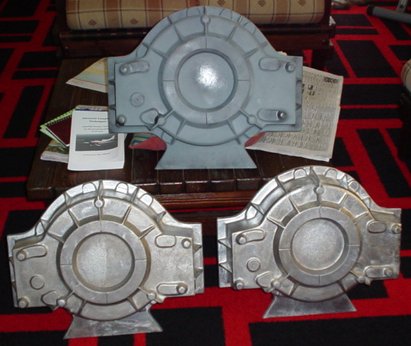
Here are some pictures of George's bell housing.
Paul Lamar ...No rotor no motor.
Paul,
That was the first one, the second one is a lot nicer looking.
George ( down under)
These are dated 2006.
Paul Lamar ...No rotor no motor.
The Rotary Engine NewsLetter. Powered by Linux.
ACRE NL web site.
http://www.rotaryeng.net
Copyright 1998-2006 All world wide rights reserved.