Oh; yeah. I also tried VGs about 2 1/2 ft in front of the exit
fairing --
no noticeable effect. I had previously tried smaller VGs on top of the
exit
fairing for no joy.
Al
Hey Al,
I think there's likely separation as illustrated in the first picture.
I think Paul is right about the wedge diffuser, but I don't think you
have
to move the cooler to the cowl. Maybe have a look at the 2nd pic...
What do you think?
Matt-
You need to read my book Ernest.
You can get it from Aircraft Spruce
http://www.rotaryeng.net/how-to-cool12.html
http://www.aircraftspruce.com/catalog/bvpages/coolYourWankel.php
--
Paul Lamar ...No rotor no motor.
Here is a better way of dealing with the boundary layer Al.
This is from Hoerner Fluid Dynamic Drag.
--
Paul Lamar ...No rotor no motor.
Al,
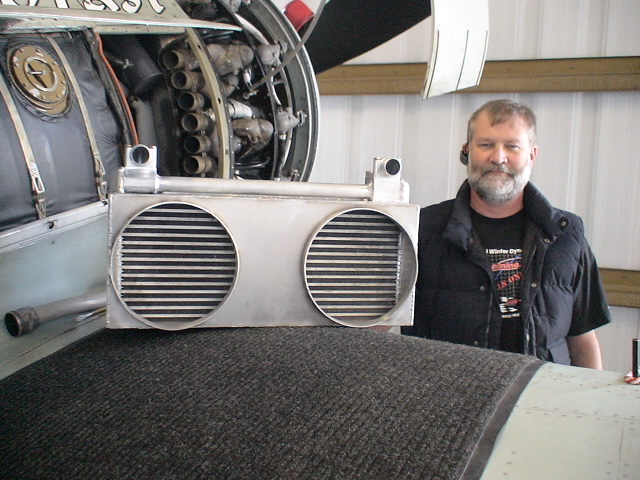
I vote for any form of scoop (ala P-51) that is moved far enough off the
surface to get out of the boundary layer. Ingesting boundary layer air is
never efficient regardless of how cosmetic it is. As an alternative, you
oversize the heck out of the cooler and get away with passing less air over
it. That is the direction we took on the Yak, and now the oil temp runs on
the thermostat setting with the cooler doors closed. We did this for speed,
as reducing the air through the cooler reduces drag. Cooler is home made
unit custom fit to replace 2 10" diameter x 10" long tube type coolers. The
tube coolers were never efficient regardless of how much air we flowed
through them.
Larry
The Rotary Engine NewsLetter. Powered by Linux.
ACRE NL web site.
http://www.rotaryeng.net
Copyright 1998-2006 All world wide rights reserved.