George,
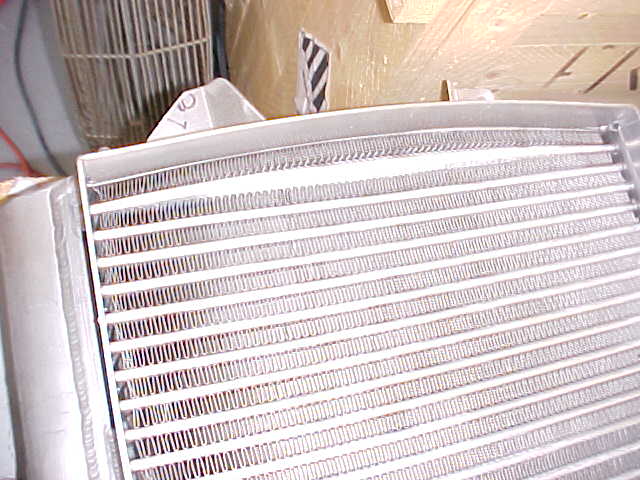
The plate and fin cooler are very efficient due to the air and liquid are
kept out of laminar flow by the design of the small fins. I believe most of
these are dip brazed, but I could be wrong. The weld up just fine, just
takes a lot of current, as you are welding on one heck of a big heat sink.
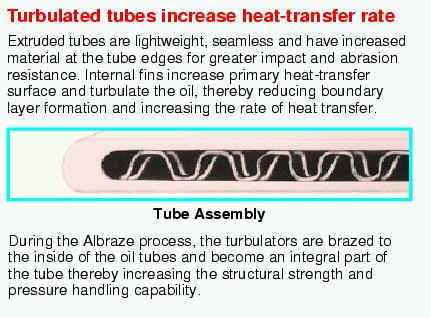
Some of the modern tube coolers also have turbulence generators in the tube
to keep the oil from becoming laminar, and they are efficient. I have just
found the plate and fin units better and the size availability is better for
custom work. My favorite is Bell Intercoolers. Their web site has core
inventory lists on it. If the cooler is being used on the pressure side,
make sure you get one rated for at least 250 psi. this will usually be an
extruded tube and fin type. It looks nearly the same as the plate and fin,
but the liquid side is made of flat tubes with the fins on the inside.
The brazed plate and fin style should only be used on dry sump systems where
it is mounted between the scavage pump and the tank.
Bell can also build on your tanks and mounts if you send them a drawing.
Larry
Joel,
We run the cooler on the scavage side, so the pressure is very low. We
have
run 100 psi on the cooler with air on diesels and this one was leak
checked
at 105 PSI.
They rate them at 300 psi, I just haven't had the guts to take one there.
One of the suppliers I use now also has liquid to air cores, just didn't
have the monster size I needed for the P&W R2000.
Larry
Larry,
Are the liquid to air cores the same? as I like the simplicity of the
construction. I guess they have a plate each side of the liquid are i.e
concertinered ( folded) aluminum with surface plate each side. Then
concertinered aluminum to allow air to pass through.
Marvelous idea IM(NT)HO.
How are they assembled i.e brazed or other method?
Does it carry the heat away better than tube types?
Are they lighter?
Who is the manufacturer?
Do they supply direct?
Are they cheaper?
George (down under)
Goggle plate and fin heat exchangers.
--
Paul Lamar ...No rotor no motor.
George,
The plate and fin cooler are very efficient due to the air and liquid are
kept out of laminar flow by the design of the small fins. I believe most of
these are dip brazed, but I could be wrong. The weld up just fine, just
takes a lot of current, as you are welding on one heck of a big heat sink.
Some of the modern tube coolers also have turbulence generators in the tube
to keep the oil from becoming laminar, and they are efficient. I have just
found the plate and fin units better and the size availability is better for
custom work. My favorite is Bell Intercoolers. Their web site has core
inventory lists on it. If the cooler is being used on the pressure side,
make sure you get one rated for at least 250 psi. this will usually be an
extruded tube and fin type. It looks nearly the same as the plate and fin,
but the liquid side is made of flat tubes with the fins on the inside.
The brazed plate and fin style should only be used on dry sump systems where
it is mounted between the scavage pump and the tank.
Bell can also build on your tanks and mounts if you send them a drawing.
Larry
Modine built the stock 2nd gen oil coolers for Mazda. They seem to
work extremely well for their size.
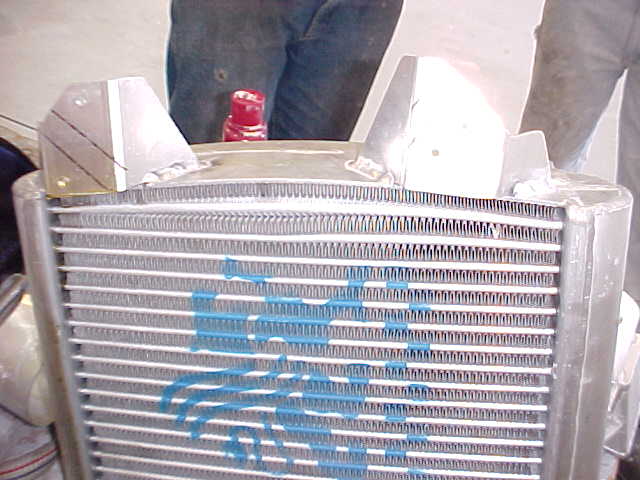
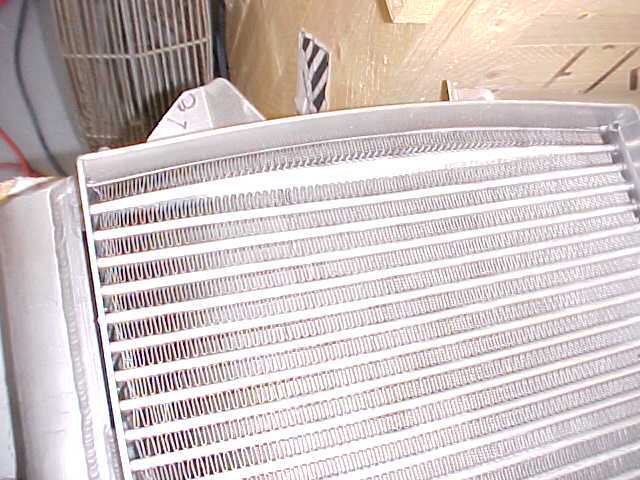
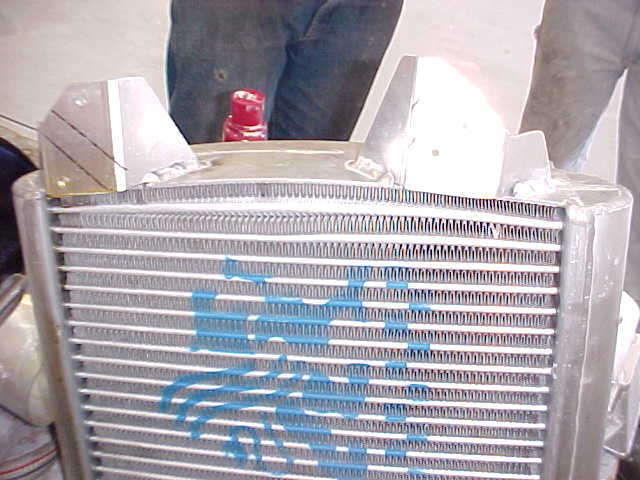
Griffin is building the extruded flat tube oil coolers with interior
walls. I think that is the one Al Gietzen is using. Mistral too.
Here is Griffin's first attempt with out the interior walls
in the tubes.
Paul Lamar
The Rotary Engine NewsLetter. Powered by Linux.
ACRE NL web site.
http://www.rotaryeng.net
Copyright 1998-2006 All world wide rights reserved.