Paul,
I know you posted the numbers for the P-ported engine but I didn't need
the
info then, but I do now - so could you give me the hp and carby inlet size
( one or two) of that dyno tested 13B.
Would be much appreciated.
George ( down under)
What are you going to do with this stuff George?
Paul Lamar ...No rotor no motor.
Paul,
I have been through a complete exercise calculating the inlet sizes and
housing port sizes comparing areas with known end housing 'street port' HP
with carbies, comparing these areas to the P-port areas and HP outcomes.
I've established that a good 13B 'street port' will deliver 164KW 264 HP as
8,500 ( Known dyno results), my calculations about 116 hp at 7,500. This
isn't enough for my needs, however the exercise was an interesting one.
So as I'm intending to use a Carby for my single demonstrator, I 've
calculated that I will need a 1.8" Dia ID minimum for 125HP ( my local Mazda
Specialist) who tried to sell me on the street port, also suggested the
anticipated increase in velocity for a smaller port isn't available in the
rotary, to the degree it is in the cylinder engines - interesting. Therefore
any restriction would result in reduced HP. I have SS tube available with an
ID of 47.6mm (1.874").
So as a guide I would like to know your outcomes with the P-ported 13B to
compare my finding, with real world outcomes. Now finding a carby big enough
might be a problem, how did they do it at the Dyno, did they use 2 or 4; a
duel throat ? and what were the throat sizes?
I know your using a 2" OD, but figure that's an aluminum tube and is
probably close to 1.8" ID - correct?
George (down under)
Perhaps a bridge port but not a street port. There are a lot of liar rotary
engine tuners out there :)
Small dia. runners work great at low RPM. That is why Mazda used six of them on the
RX8 engine. Low RPM torque is a real problem for a 2.6 L RX8 rotary engine competing
with DOHC four valve 3.5 L engines in the automotive world.
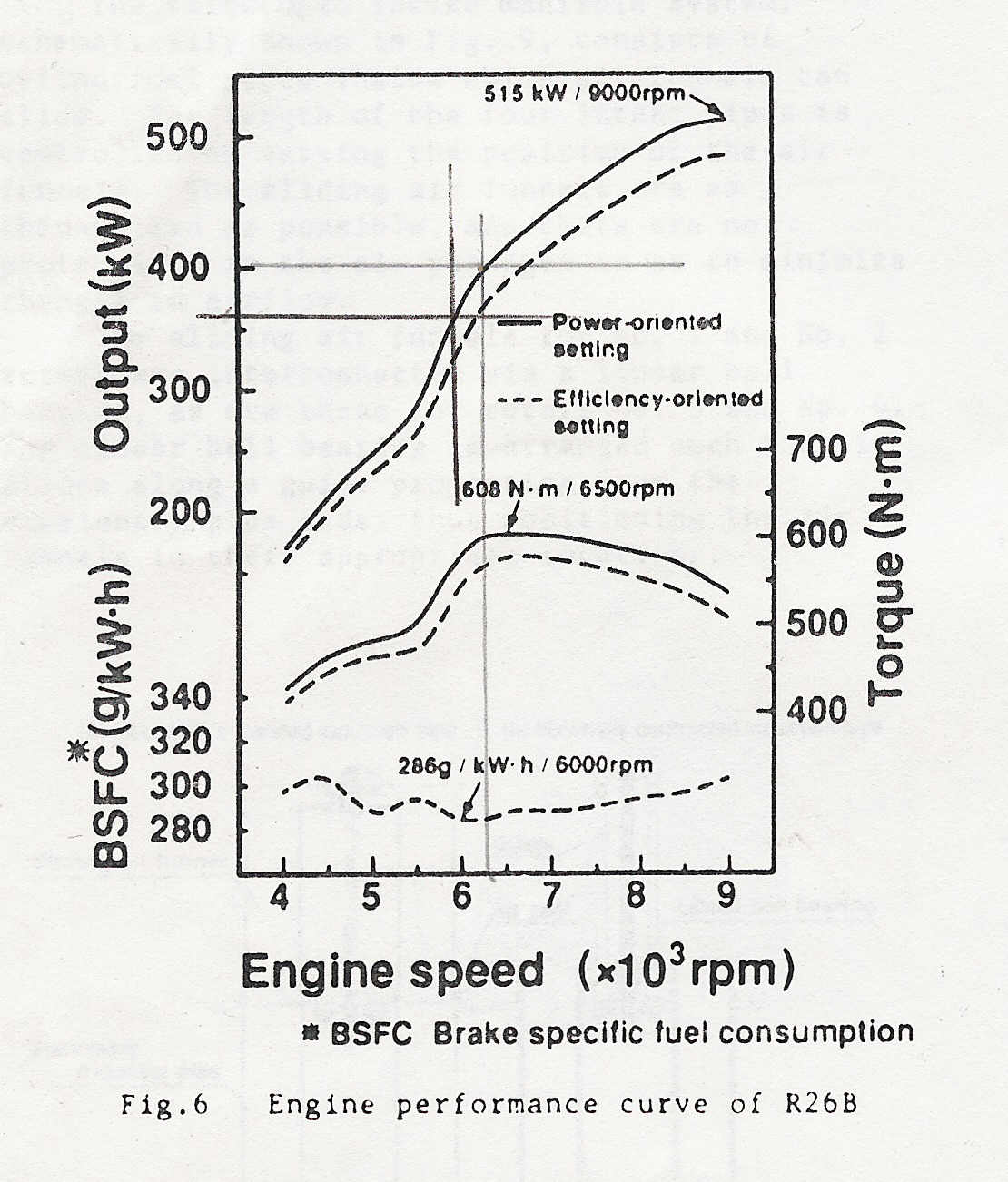
For an aircraft engine with a 2.85:1 PSRU the Lemans torque curve data
is exactly what we needed. A 2 inch OD tube is about the largest P-port that
will fit and still give the apex seal support that it needs. A 100 mm wide
rotor housing 16B would be another matter.
6000 RPM is ideal cruise RPM as the rotor bearing loads
are a minimum. A torque peak at 6000 RPM is ideal for lowest BSFC.
(Lowest fuel burned per HP generated). Sure you don't need 240 HP
at sea level but you need all the power you can get at 12,000 feet.
True you can always slow the airplane to 140 MPH minimum drag speed
to get max MPG but why bother with a rotary. If you are going to putz
around at 140 MPH you might as well drive. Now down under matters are different.
Four lane 85-90 MPH highways are few and far between. It takes all day to
drive from Brisbane to Sydney. Flying at 140 MPH makes more sense.
Paul Lamar ...No rotor no motor.
The Rotary Engine NewsLetter. Powered by Linux.
ACRE NL web site.
http://www.rotaryeng.net
Copyright 1998-2006 All world wide rights reserved.