michael silvius
Michael,
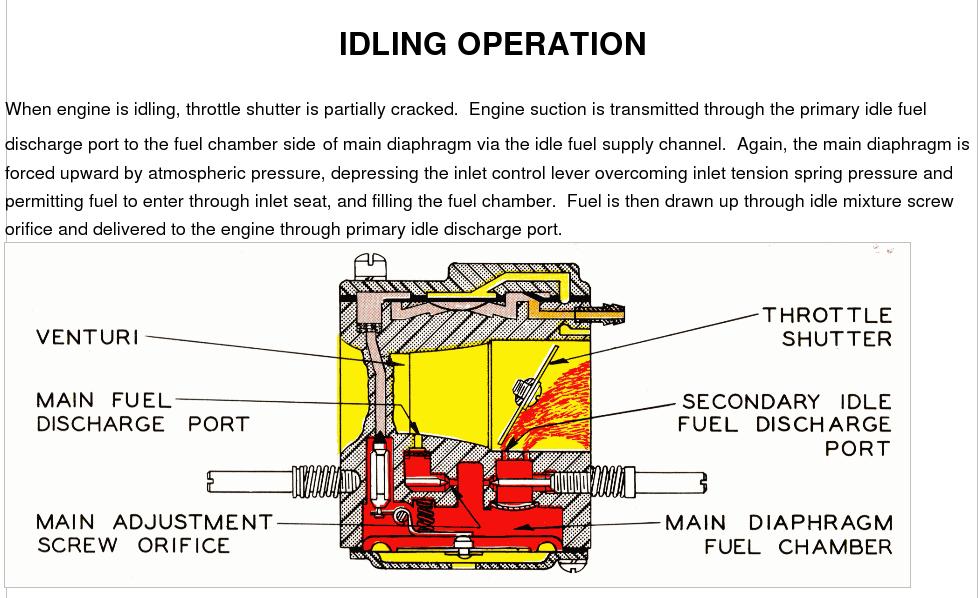
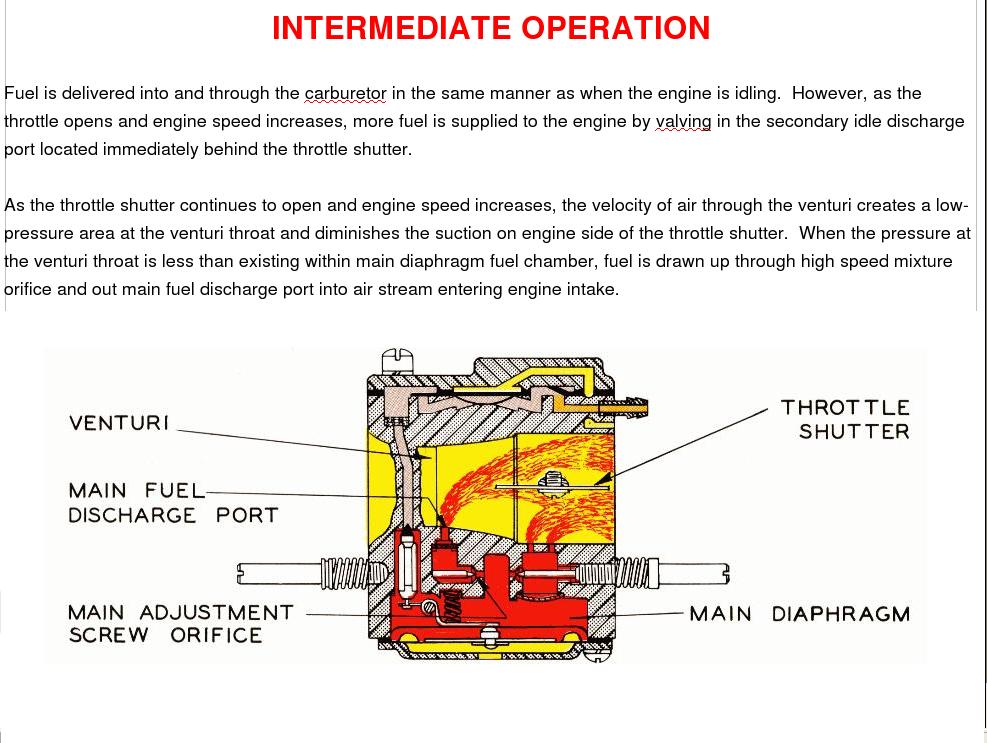
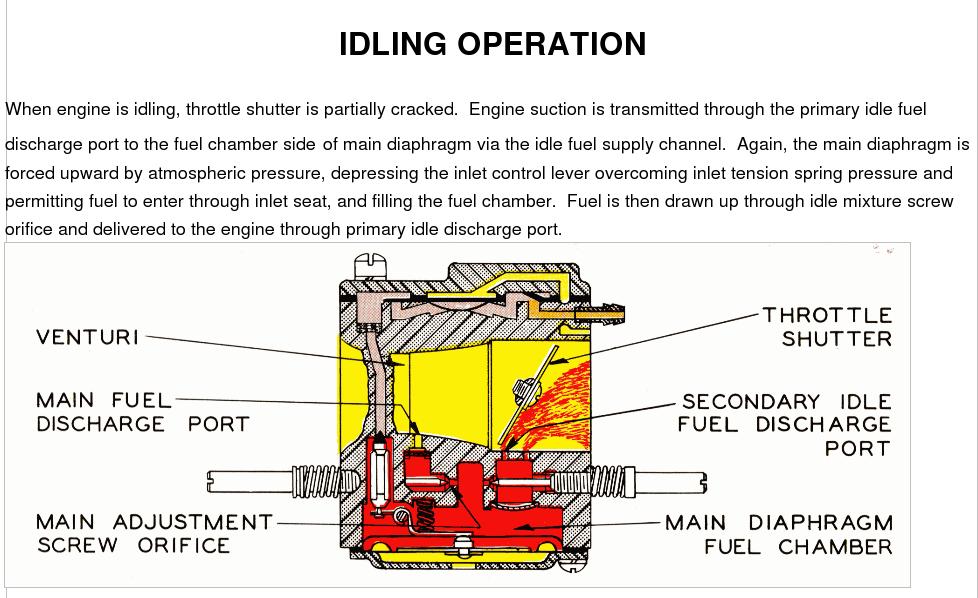
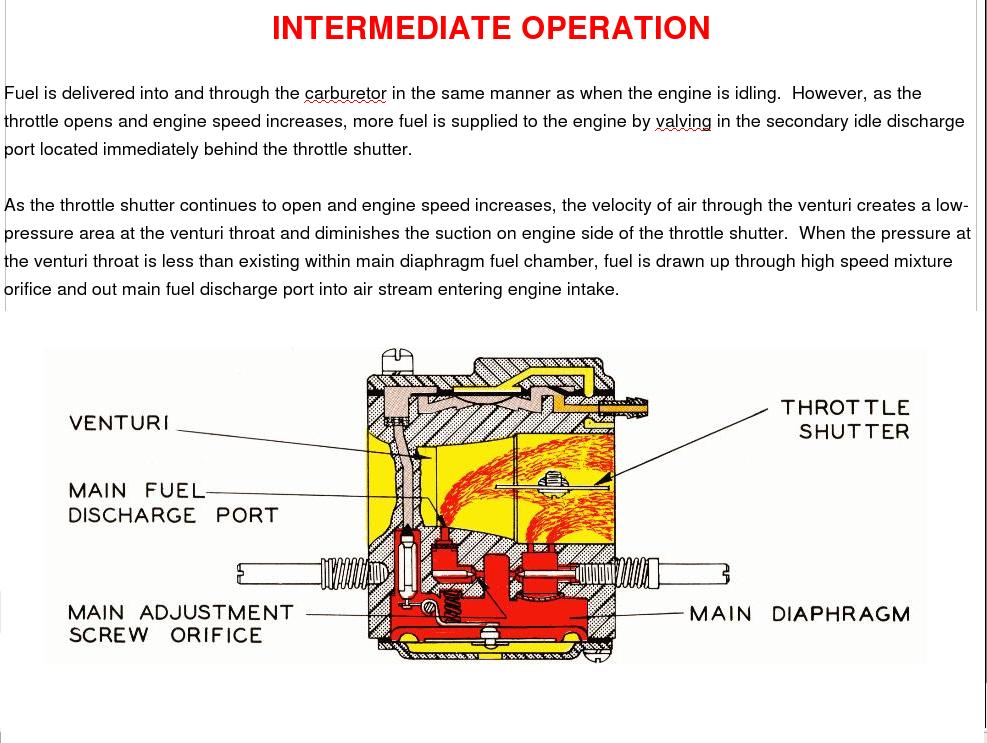
The whole idea of the diaphragm carb is that it will work in most
positions.
One thing to concern ourselves with, these carbs tend to be somewhat
crude
on mixture control. The latest ones probably work better. I haven't
used one
in about 15 years!
Bill Jepson
Bill,
I agree that these can be difficult to get to work correctly. It is almost
mandatory to set one up on a wet flow bench to dial the mixture in close
before running it on an engine under load to prevent killing the engine from
a lean condition. The correct mixture at full load at 7000 rpm may be lean
at lower rpm's under load. The rotary also puts it's own unique intake pulse
problem into the equation making carbs more difficult to tune correctly. I
have made many carbs work on rotaries, but it takes a lot of work to get it
right on a pp engine.
Larry
Well guys we are driven by cost here. And this looks like the cheapest
way to go. These carbs have worked and I don't want to pioneer anything
to keep the R&D cost down. Dyno time is REAL expensive.
The goal is to be able to change the mixture with a leaning control and have it
stay stable at a fixed load and RPM. This should be a lot easier than
a car engine where the load and RPM are changing all the time.
I am willing to build one and put it on the RX8 P-port engine
I am building and try it out on Mazdatrix dyno. One thing I noticed when we
had Mark's P-port slide throttle engine on the dyno with a wide band mixture
monitor the silly thing would run on anything from 10:1 to 20:1 using a Weber carb
and EFI. We had a mixture cloud outside the runners and Weber so we know air was flowing
both in and out of the intake tubes.
Marks EFI p-port slide throttle engine built by Mazdatrix is now running smoothly on
prop load with what ever mixture table Tracy put in Marks computer. As of last Saturday
we did nothing to the table.
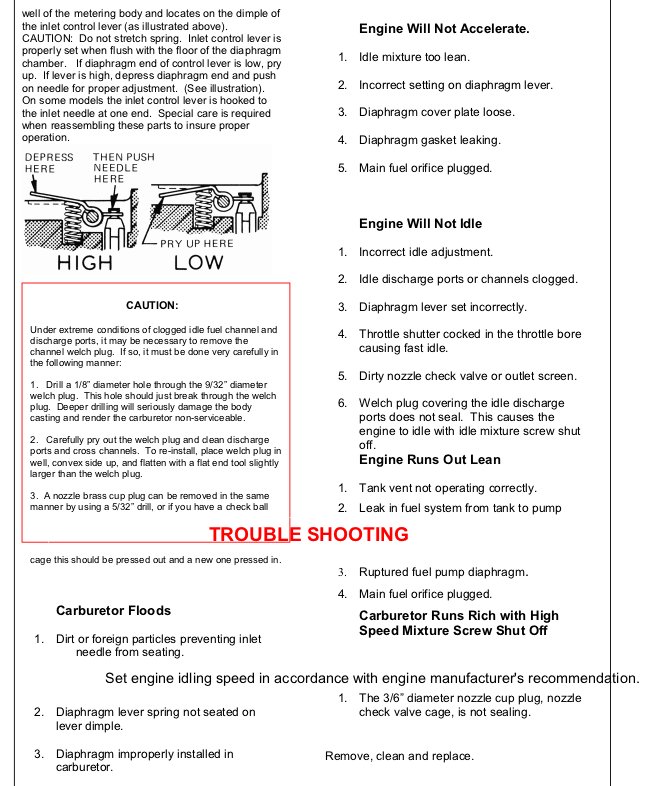
I am planning on making the needle seat (26) adjustable up and down
and the spring (21) seat adjustable up and down. We can change the spring rate too.
I could make the lever pivot (22) move as well with an eccentric.
The needle valve (25) will also be in there.
The reference hole (19) for the atmospheric air pressure on the bottom of
the diaphragm can be real tiny .016 or smaller to damp movement of the diaphragm.
Do you guys have any suggestions for making anything else adjustable
on the test prototype? I am working on the 3D as we speak.
--
Paul Lamar ...No rotor no motor.
The Rotary Engine NewsLetter. Powered by Linux.
ACRE NL web site.
http://www.rotaryeng.net
Copyright 1998-2006 All world wide rights reserved.