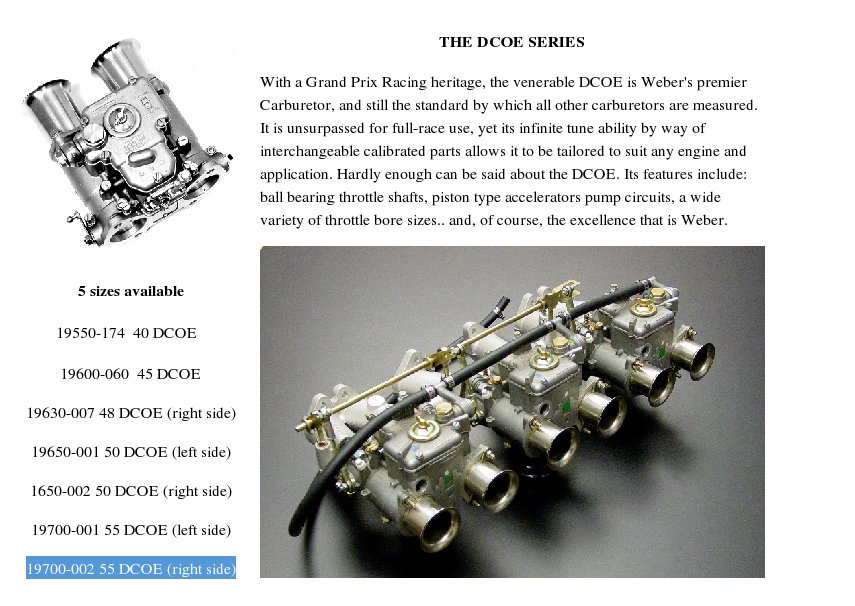
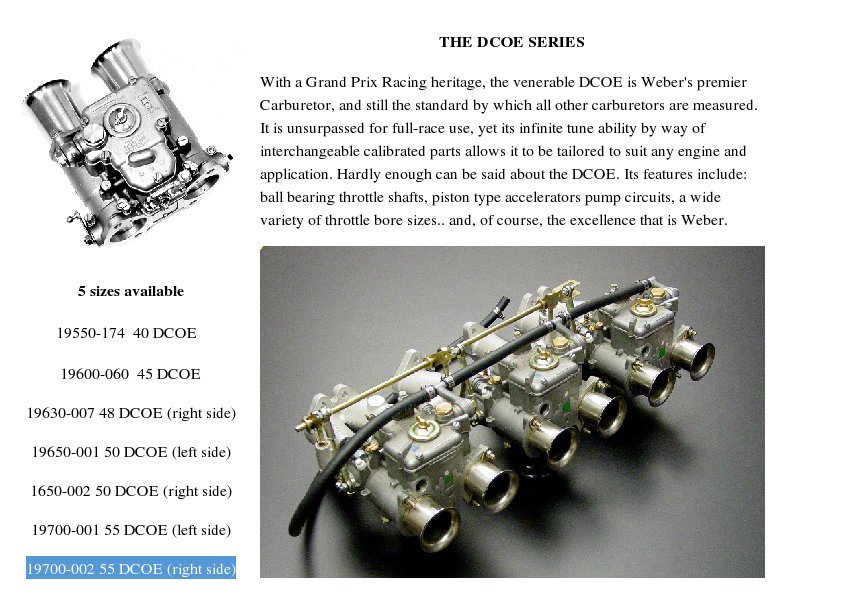
I have recently looked into using a Weber 55 DCOE side draft carb.
Pretty cheap at about $560. I was surprised. Not easy to lean the
mixture as it is a
very complicated carb. It will work but the idle will be pretty poor
as it must be mounted on the beginning of the p-port intake runners.
The throat spacing is too close to mount it near the P-port rotor housings.
Besides that it would be subjected to the full heat of the exhaust
manifold. Power will
be somewhat down compared to a slide throttle due to the aerodynamic
drag of the butterflies and throttle shafts. I don't know how much.
If you take out
the throttle shaft and butterflies and use a slide throttle you will
lose a lot of functionality like the accelerator pump for one example.
It should work fine unmodified at low altitudes and with a modest HP penalty.
Ken Welter has been flying a Weber for a few years on his Coot. I think he
is tricking the float chamber by using dynamic air pressure to
lower the fuel level.
I am not sure. I don't fully understand what he is doing. Perhaps that is
possible with a needle valve.
Paul Lamar ...No rotor no motor.
If you look at that photo just above the left velocity stack is a
hole that is a float bowl vent, I have a controllable air ram pointed
at the velocity stacks that will increase the pressure on the Venturi
so it will draw less fuel. The rams are about an inch away from the
velocity stacks. You can also use an air bleed system that pulls on
the float bowl vent and it will also lean it out which is what they do on
snowmobiles.
Also the Weber carb is very sensitive compared most carbs and when the
air is thin it draws less fuel so it compensates to some degree but
needs some additional manual leaning.
Ken
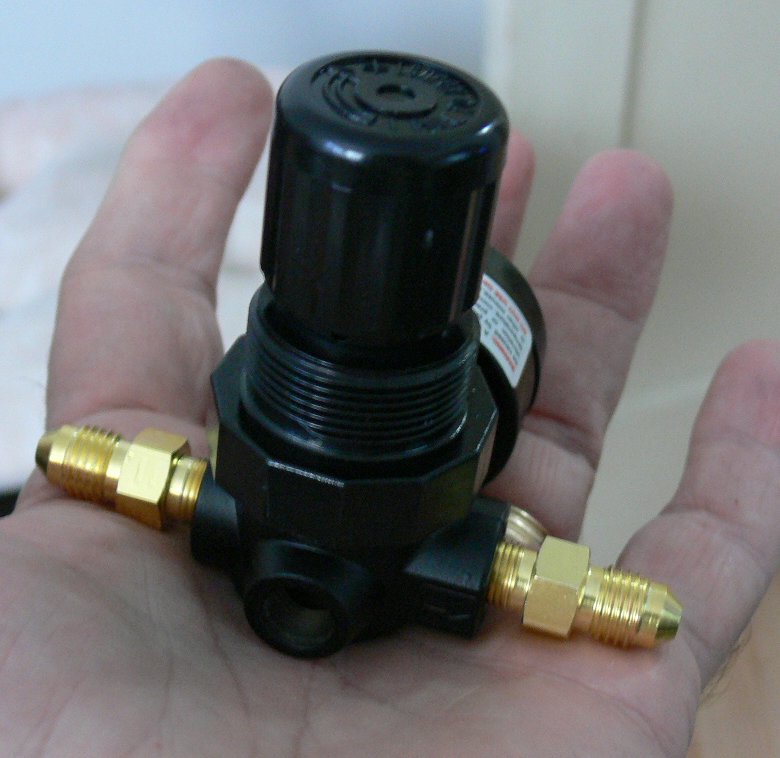
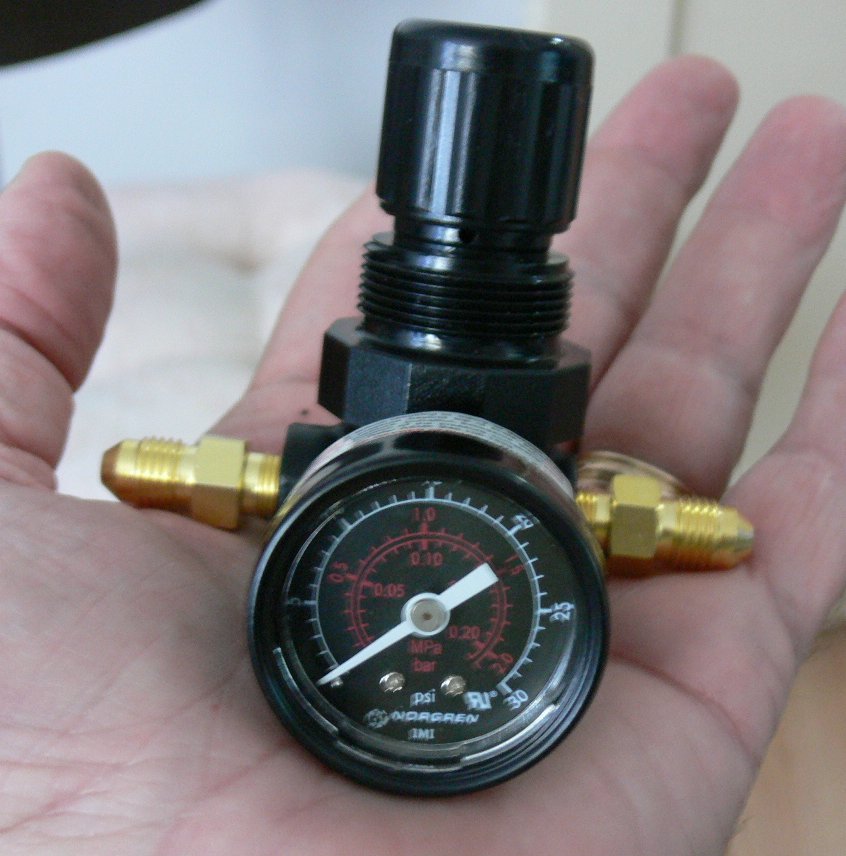
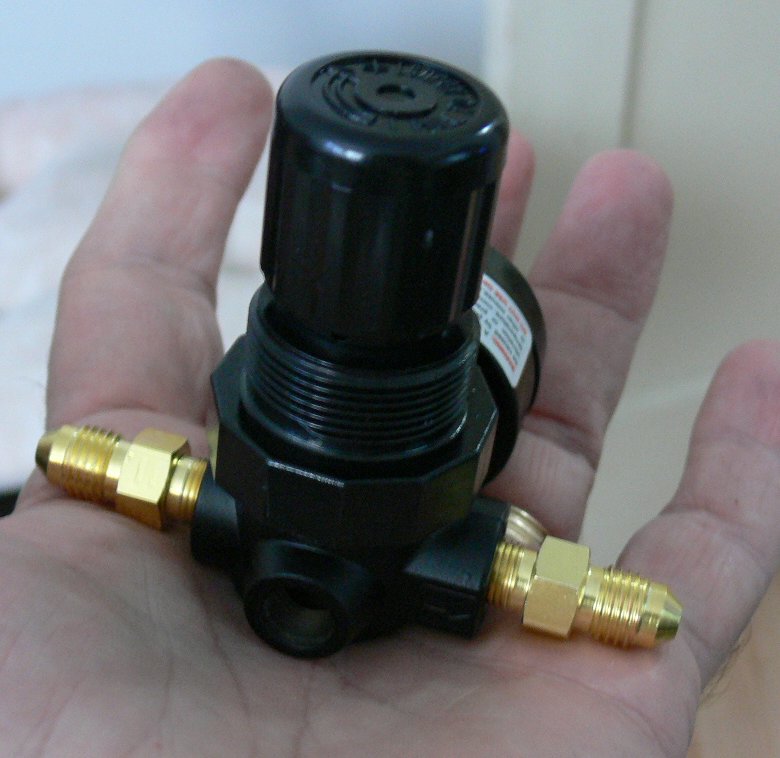
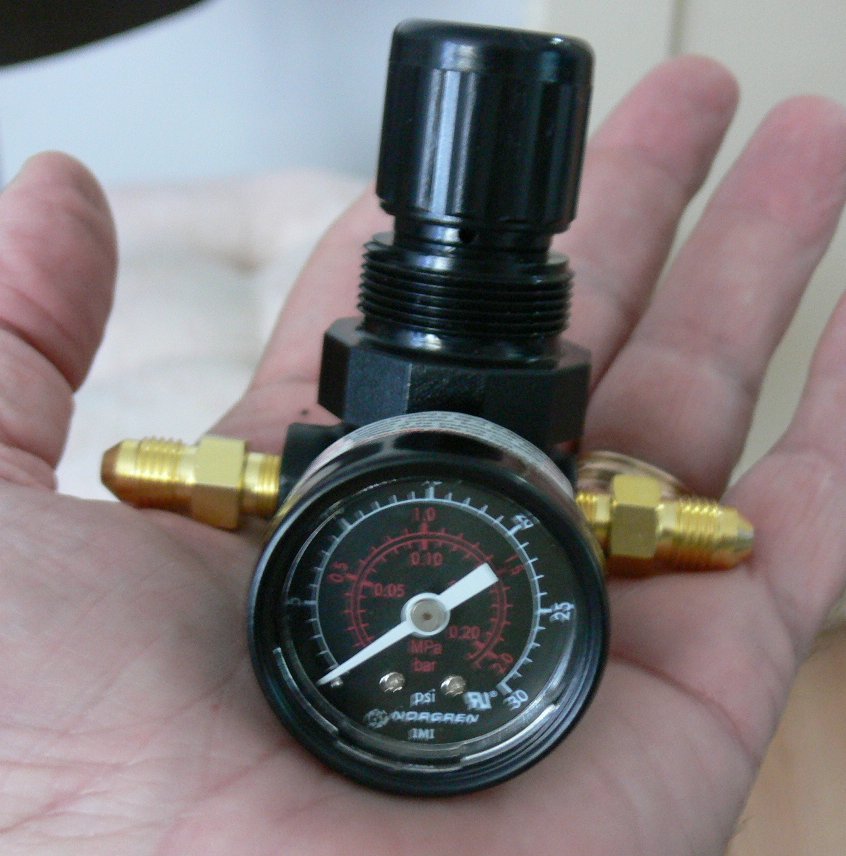
To further expand on what Ken is using one could use a low air pressure
regulator mounted on the instrument panel fed by ram air pressure from the
pitot tube system. The carb could be mounted on the top of the engine.
The idle would be a bit crappy but it should run fine above 3500 engine RPM
(1230 prop RPM with a 2.85:1 gear box.). This is a very workable, low technical
risk, moderate cost system. No modifications to the Weber.
AT sea level the absolute pressure on the float bowl is 15 psi roughly.
Dynamic pressure is .36 psi at 150 MPH at sea level. This should depress the float level
by about 3% max. I am not sure what that would translate into mixture change.
At 200 MPH at sea level in theory you could depress the float level
6% max which should be a significant change in mixture. At altitude the affect
may be stronger as Ken points out.
--
Paul Lamar ...No rotor no motor.
The Rotary Engine NewsLetter. Powered by Linux.
ACRE NL web site.
http://www.rotaryeng.net
Copyright 1998-2006 All world wide rights reserved.