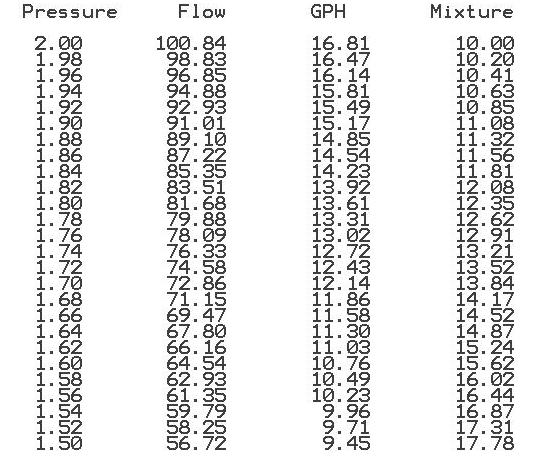
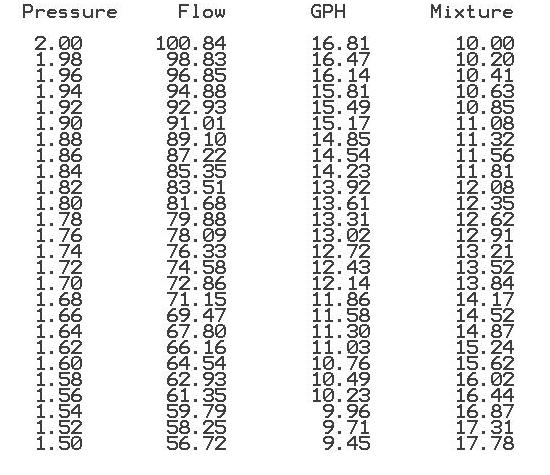
While designing this carb I needed to know what to expect
in terms of fuel flow and mixture as I changed the pressure
inside the fuel chamber. This is the pressure difference across
one main jet. Some is due to lower than atmospheric pressure in the venturi
and some is due to the higher than atmospheric pressure in front of the diaphragm.
It is the difference between these two that flows the fuel.
I was amazed that such low pressure difference
of .5 psi can change the flow so drastically.
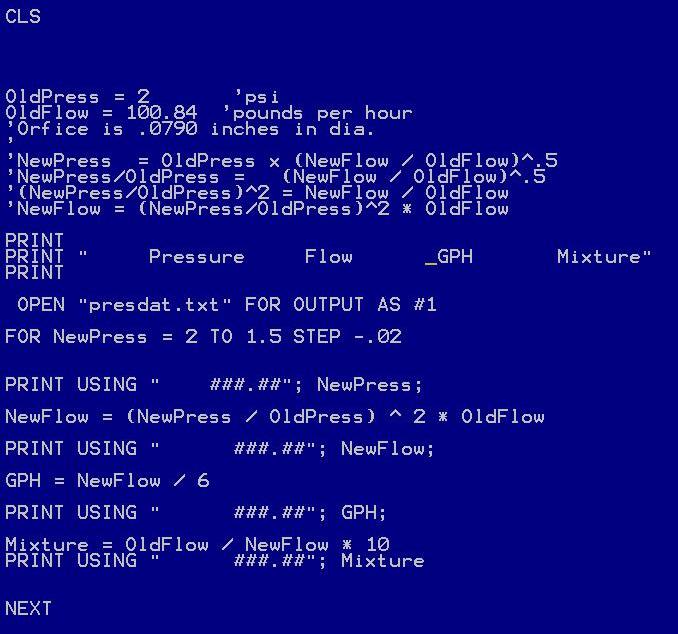
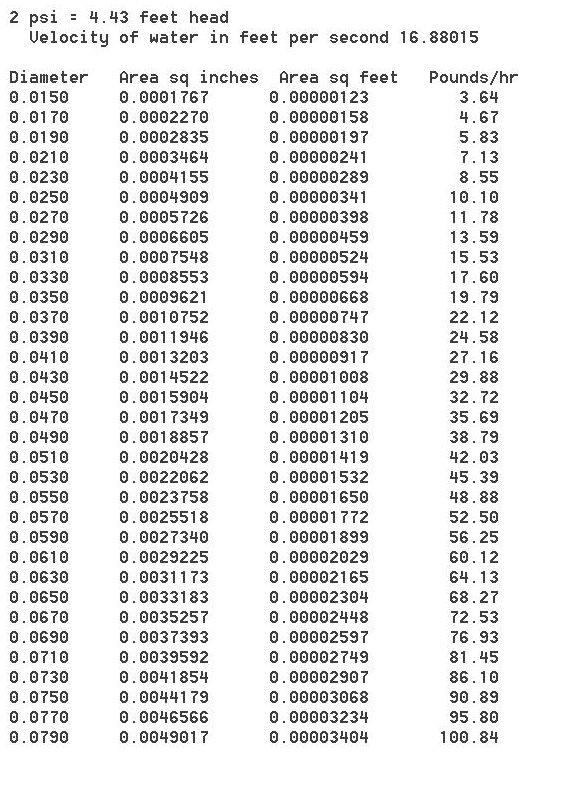
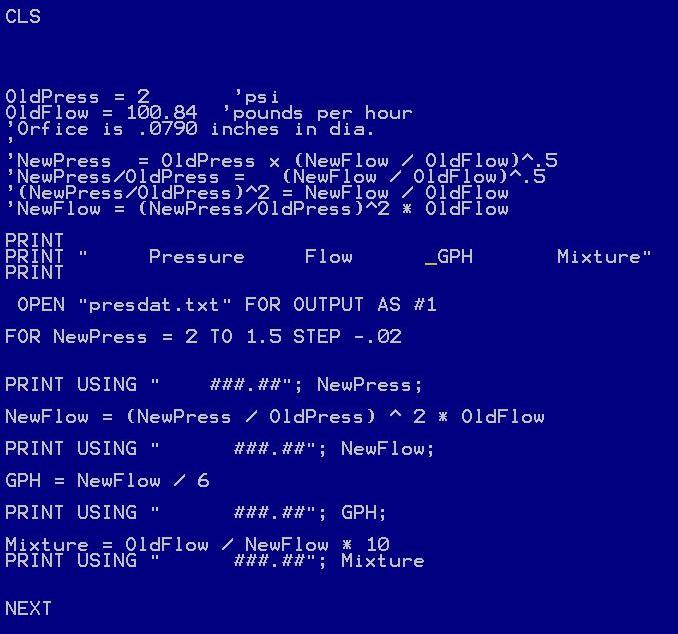
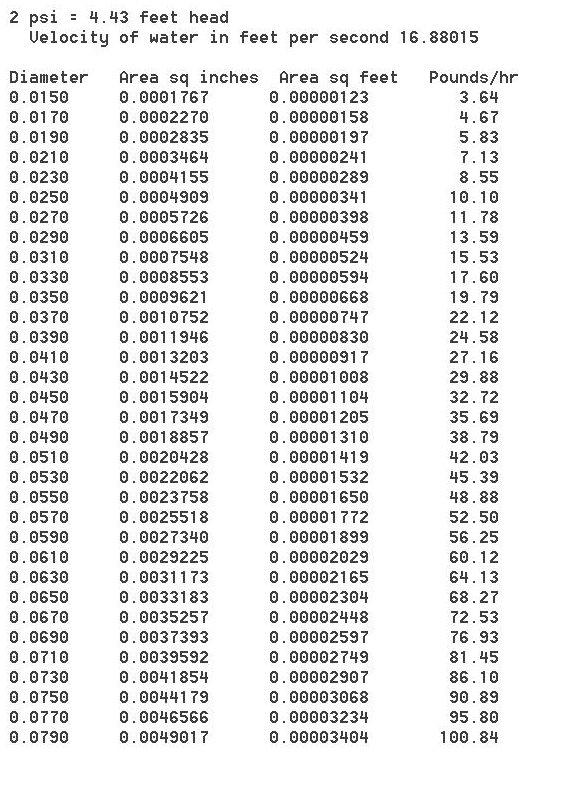
This is based on a formula that Kinsler had in their
catalog and a chart of water flow for different
size main jets. The jet size chosen here for starting
purposes is .079 inches in diameter. The rotary will run
up to a mixture ratio of 17:1.
New flow = old flow times the square root of new pressure divided by old pressure.
Here is the data, the program and the flow charts it was based on.
Check my math.
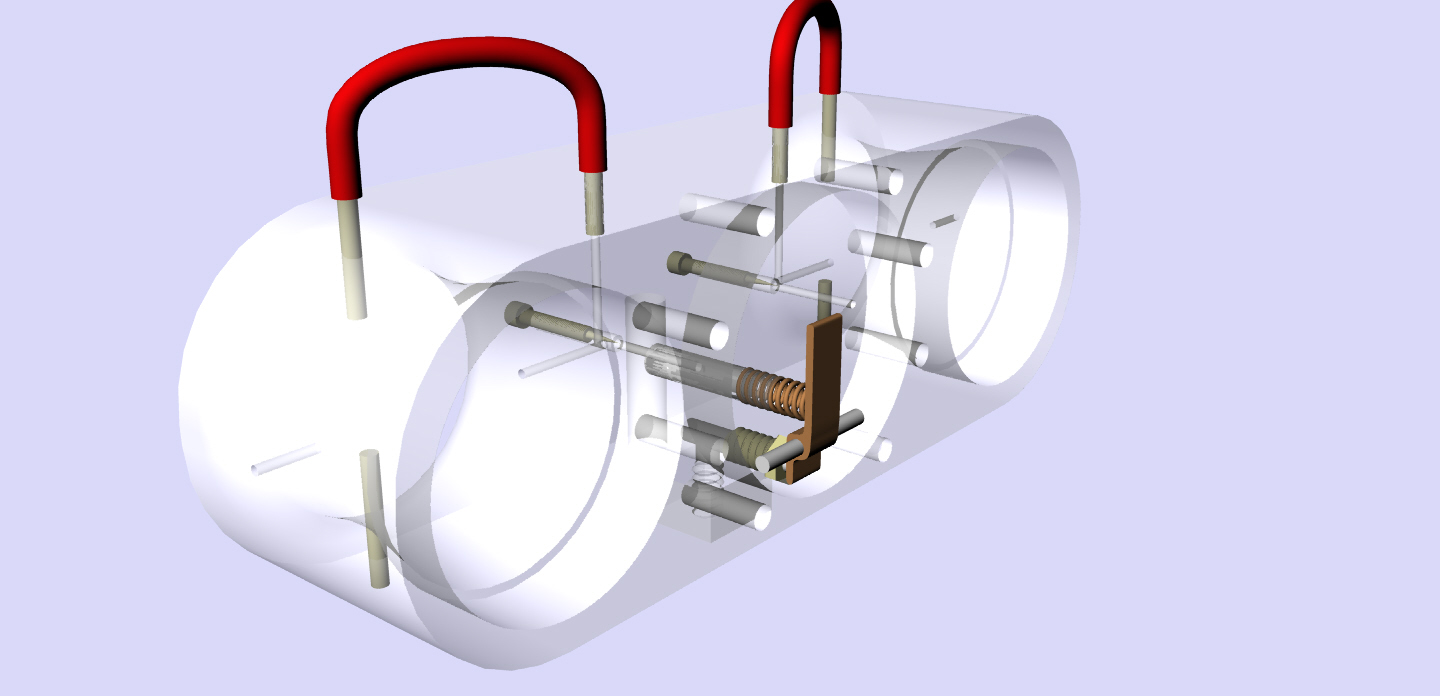
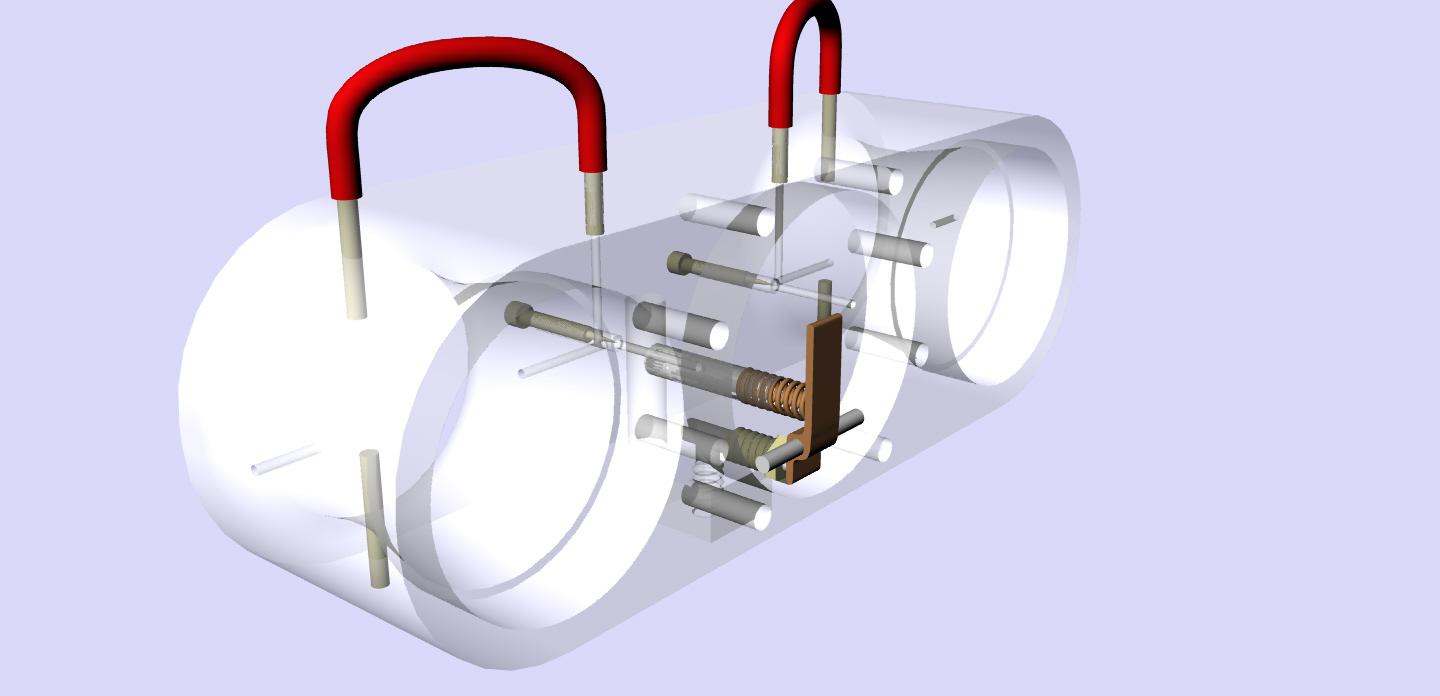
All of this is ground adjustable in my design including the main jet area
for each rotor.
The spring force on the diaphragm will initially cause the pressure
in the fuel chamber to be in the range of 2 psi. The fuel pump pressure
will be higher than that of course or you would not be able to fill
the carb with fuel. As the spring force is reduced by a manually controlled
cam the pressure in the fuel chamber will lower leaning the mixture. This
is very similar to the way Dial A Jet works.
This should be a relatively low cost, very effective
and very reliable carburetor with so few parts of any kind.
Paul Lamar ...No rotor no motor.
The Rotary Engine NewsLetter. Powered by Linux.
ACRE NL web site.
http://www.rotaryeng.net
Copyright 1998-2006 All world wide rights reserved.