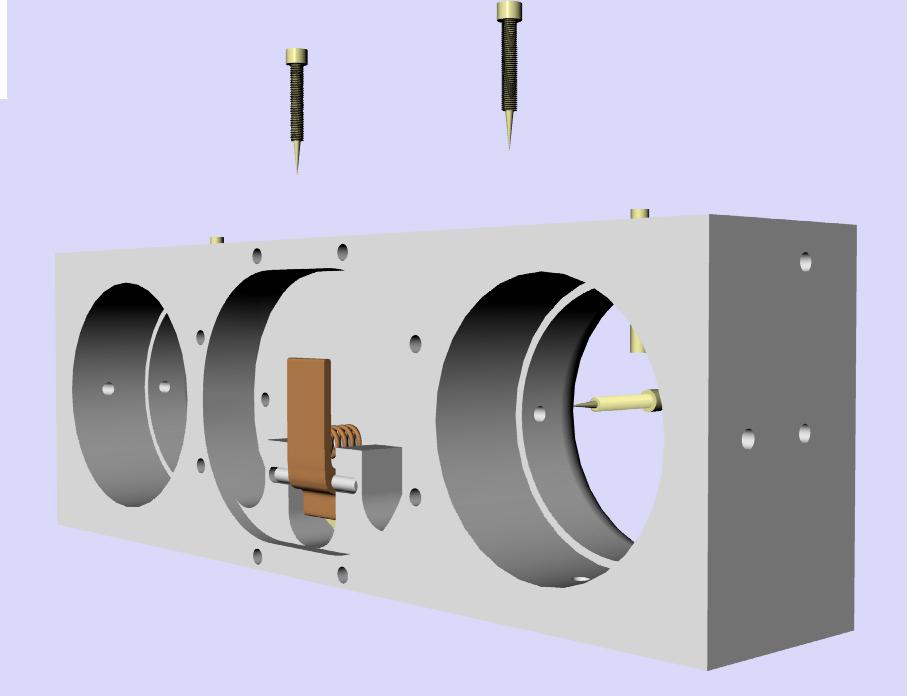
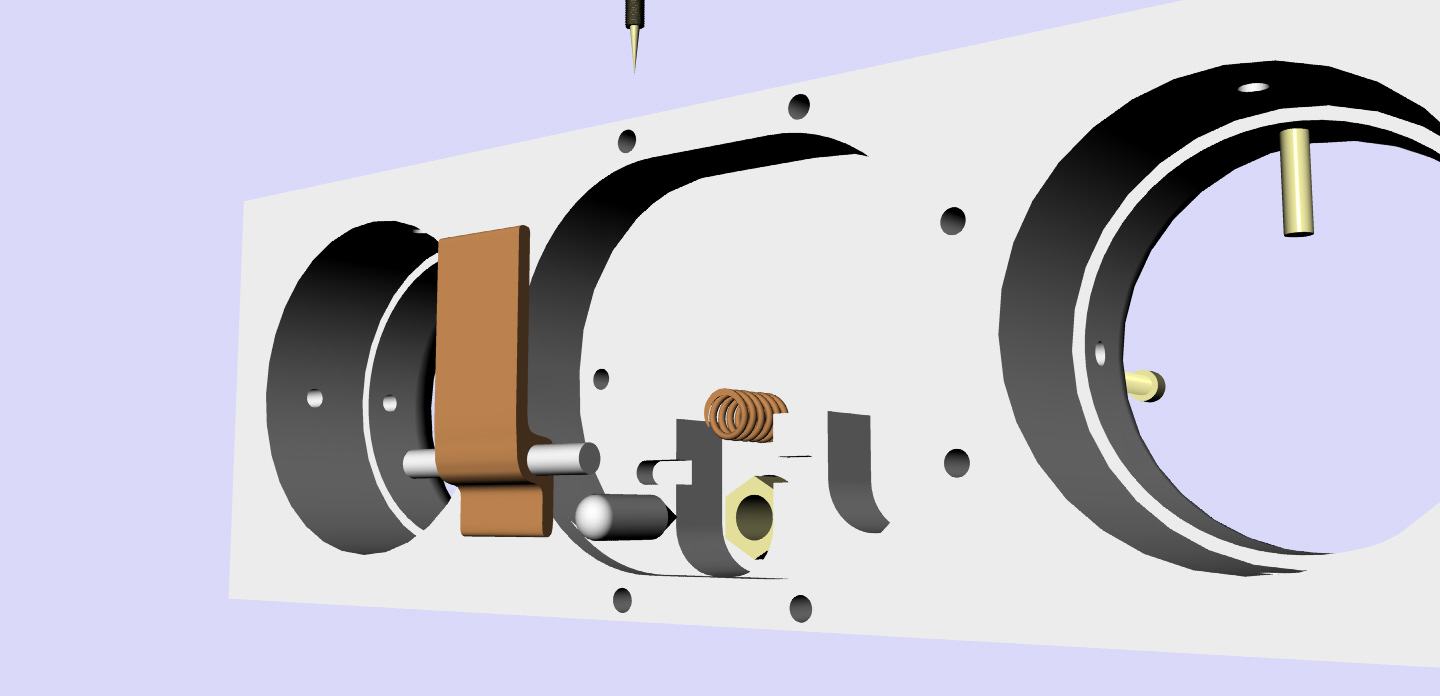
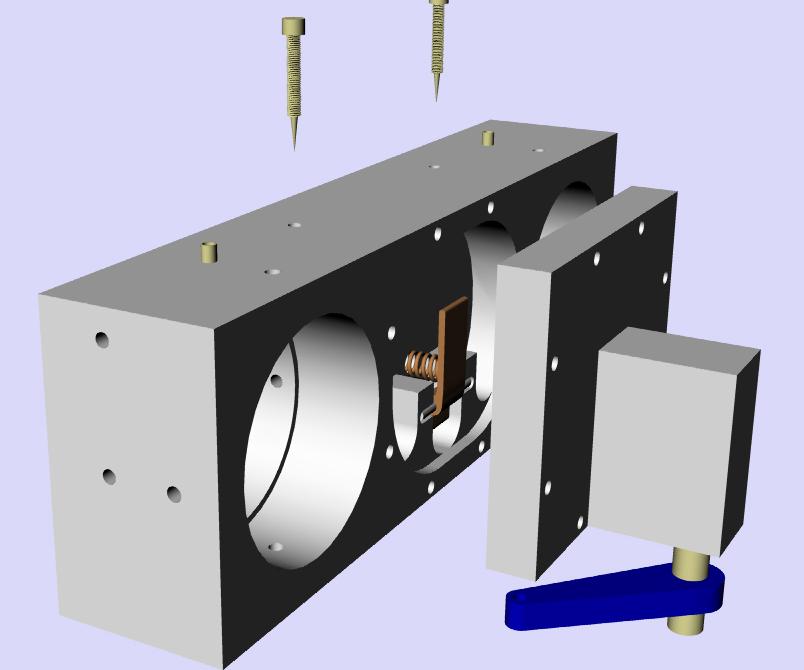
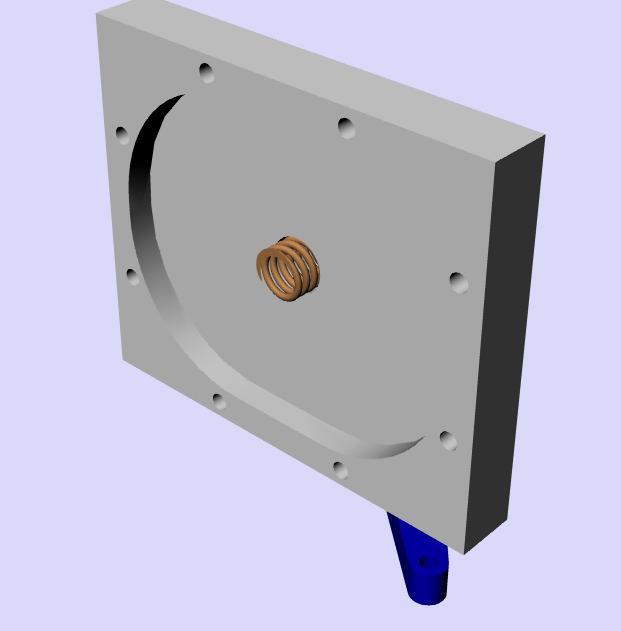
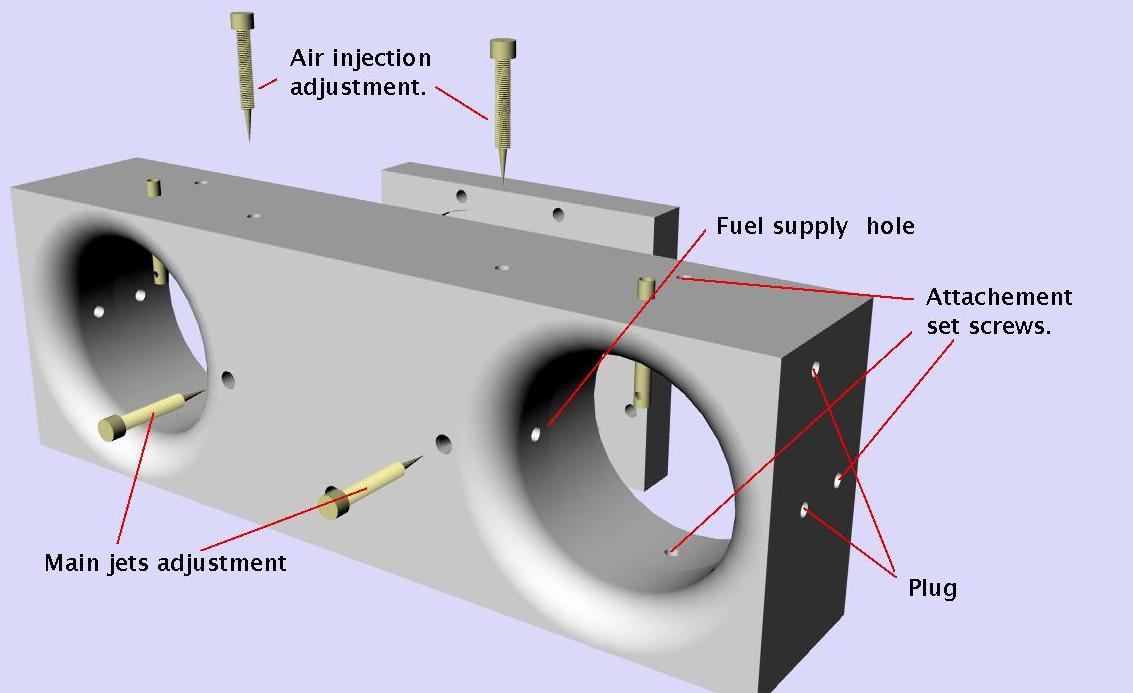
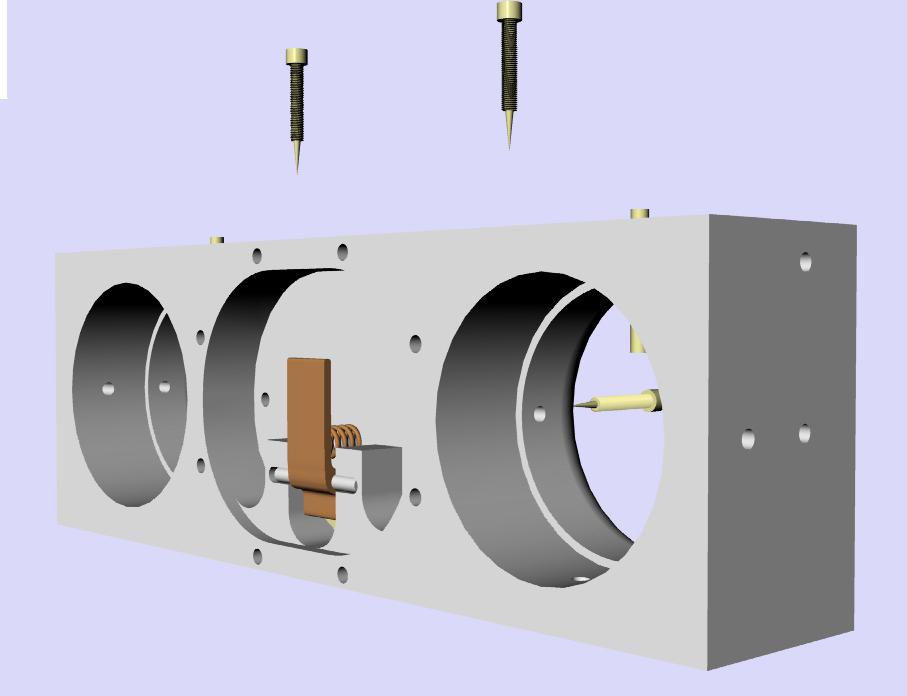
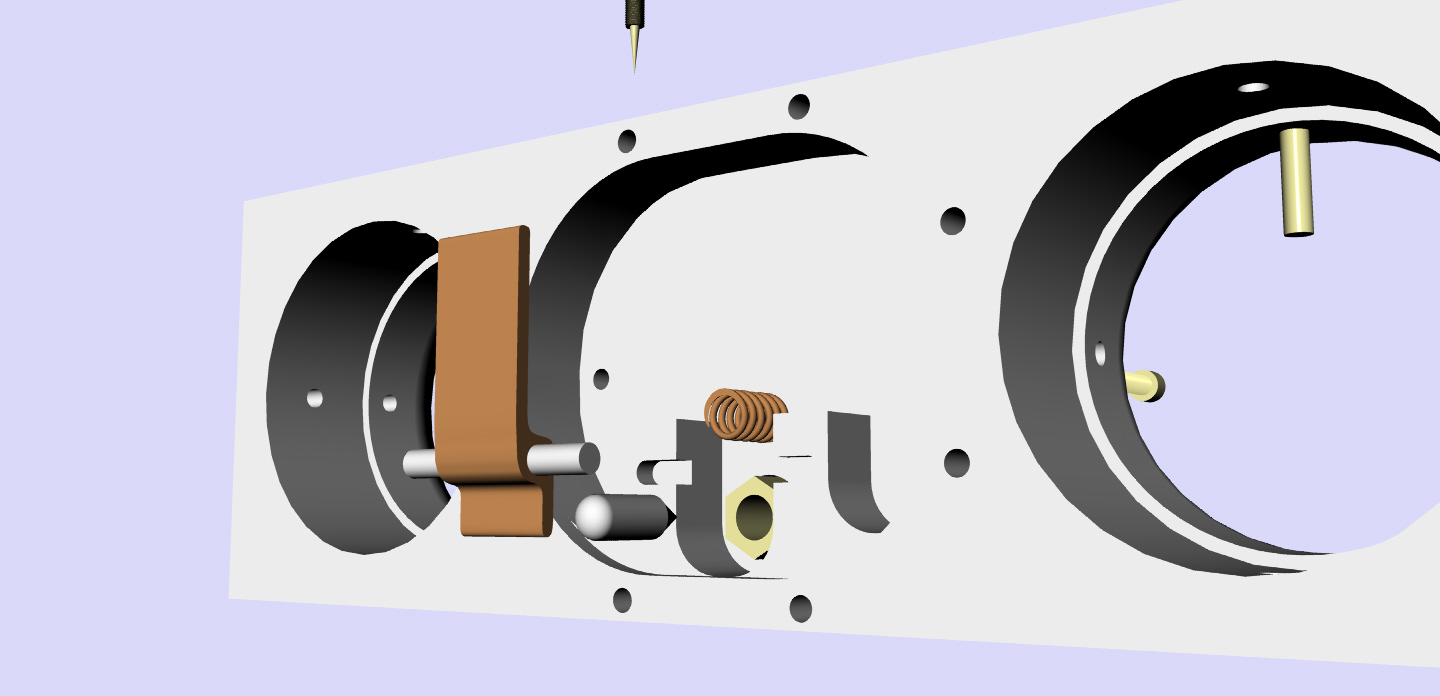
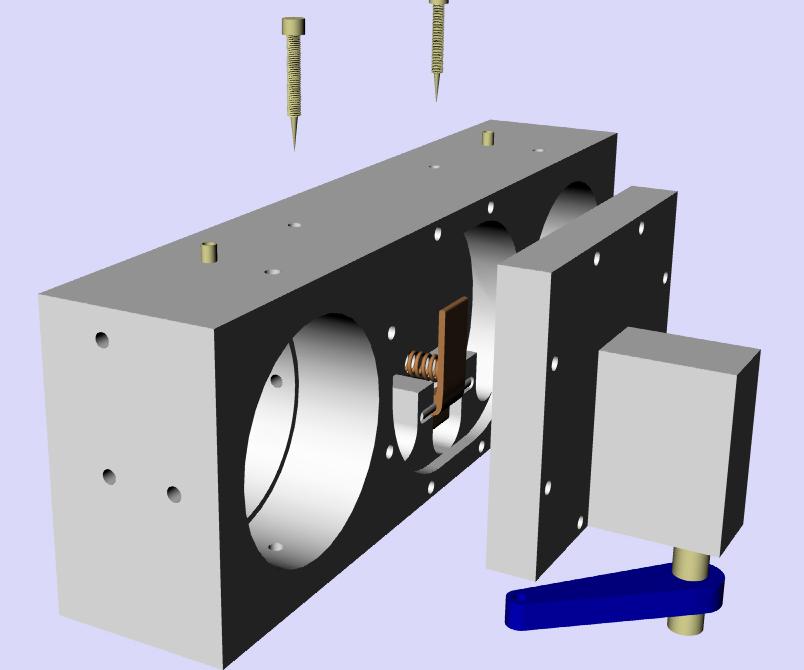
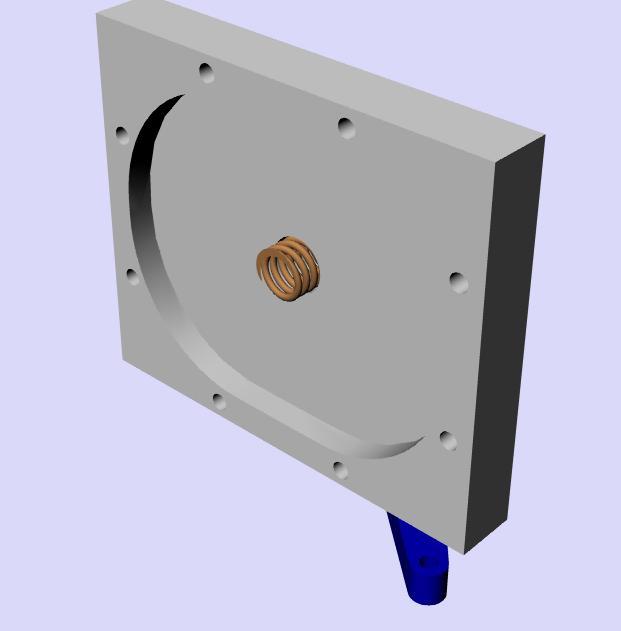
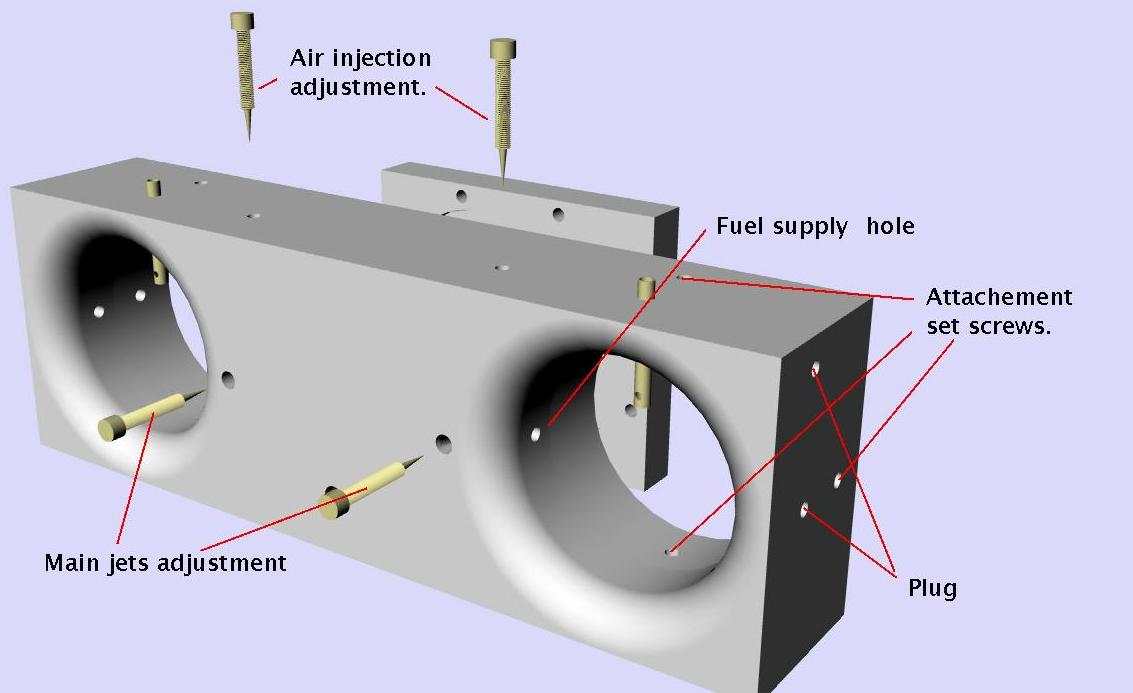
There is a diaphragm instead of a float bowl. In front of the diaphragm
is a chamber that holds fuel at different pressures. At low RPM small throttle
openings the pressure in this chamber is slightly above 15 psi absolute or near
sea level pressure. Inside the throat of the carb is sea level pressure.
This pressure finds it way into the fuel chamber through the main jets.
It is easier to talk about absolute pressure when discussing this kind of carb.
Zero pressure is a perfect vacuum. 15 psi or about 30 inches of Hg is sea level
absolute pressure on a standard day (temperature and humidity).
On the other side of the slide throttle the engine is pumping a vacuum
which can be as little as 4 or 3 psi absolute. In order for a carb to work well
the fuel should be delivered directly proportional to the absolute pressure
on the engine side of the slide throttle more or less. In an EFI system
such as Tracy Crook builds there is a pressure sensor that measures this absolute
pressure and sends the info to a computer. The computer than pulses an
electronic injector with just the right pulse width to inject the required
fuel. Very simple in principle and far more accurate than a venturi.
This is why EFI systems are universally used on passenger cars.
If the mixture is held to close tolerances the emissions can also
be closely controlled. In an aircraft engine the carb is good
enough and much easier to service and understand. The pilot leans
the mixture manually during cruise which can be 90% or more of
the flight time.
Historically carbs have used a venturi do this all in one device.
It started out as a super simple solution.
It both senses the amount of air going into the intake runner and supplies
the fuel. Unfortunately it supples too little fuel at low air flow
and too much fuel at high airflow. It supplies a fuel amount that is
proportional to the SQUARE of the airflow due to the laws of physics and
Bernoulli's equation. Not good. Consequently all sorts of tricks
called circuits are needed in the typical carb to circumvent this problem.
There are idle circuits, mid range circuits, economizer circuits and power
circuits just to name a few. All these devices are required to get around the
limitations of the venturi. Venturi also reduce the air flow going into the
engine consequently reducing the power. I have done away with the venturi
allowing more air to enter the runners much like a fuel injection system.
What I have done is tap the intake manifold pressure and applied it
to the back side of the same diaphragm in contact with the fuel. Normally
this would suck fuel in through the float needle valve (for lack of a better term)
until the diaphragm bottomed out on the back side of the chamber or
the needle was closed by the needle lever.
I have placed a spring with an adjustable seat behind the diaphragm to counteract this
force. The area of the diaphragm is 4.8 square inches. At zero psi
on the back of the diaphragm and 15 psi on the front side of the diaphragm
the force would be 4.8 square inches x 15 psi or 72 pounds. What I need then
is a spring that can supply 72 pounds of force. This cancels the perfect vacuum force
on the diaphragm. As the throttle is opened the manifold absolute pressure
increases allowing the spring to apply more pressure to the fuel
on the other side of the diaphragm forcing more fuel through the main
jets into the intake runners. The pressure in the fuel chamber is
then the pressure due to the spring plus sea level pressure.
At full throttle the pressure in the intake manifold will be about 15 psi
absolute and the pressure in the fuel chamber will be 32 psi absolute or 15 psi above
sea sea level pressure. This helps atomize the fuel as it is now squirting
through a small passage (the main jets) and aerated by injected air from a dynamic
pressure tap in the intake runner. At full throttle the air
velocity in the intake runner is about 200 FPS or about 150 MPH.
Dynamic pressure at that speed is about 52 pounds per square
foot or about .36 psi over and above the sea level pressure in
the intake runner.
Of course I need a 15 psi or more high pressure
fuel pump to make this work. Fuel pumps are specified in relative pressure.
Above sea level pressure so a 15 psi fuel pump is really 32 psi absolute.
The adjustable spring seat is changed in position to change the force
on the diaphragm spring to lean the mixture.
All this depends on MY CALCULATIONS BEING CORRECT.
--
Paul Lamar ...No rotor no motor.
The Rotary Engine NewsLetter. Powered by Linux.
ACRE NL web site.
http://www.rotaryeng.net
Copyright 1998-2006 All world wide rights reserved.