have proven to be inadequate for low speed control. Particular in cross
wind take offs and landings. I don't think it is all that practical
--
Paul Lamar ...No rotor no motor.
Paul,
All I can say is try it with a large, probably 1/4 scale, model first. I
didn't think of it before, but you might be able to get adequate low speed
control with the canard because it would be so close to the rotor. You
could use a mixer in the control to get roll and pitch which would become
translation and rotation around the z axis when in hover. A forward
vertical surface would allow sideways translation and provide some crash
protection in the event of a horizontal forced landing.
Steve Brazil
Yes that might work but the R&D might be considerable. I am inclined
to stick with stuff that is proven to work. A man needs to know his
limitation's :) I don't have a blimp hangar available for tethered testing.
I am not planning on building one. It is just a design exercise for me.
I might be able to afford a coaxial helicopter if I had help building
it and I could copy something that works. Hiller built a small single
place coaxial years ago.
Paul Lamar ...No rotor no motor.
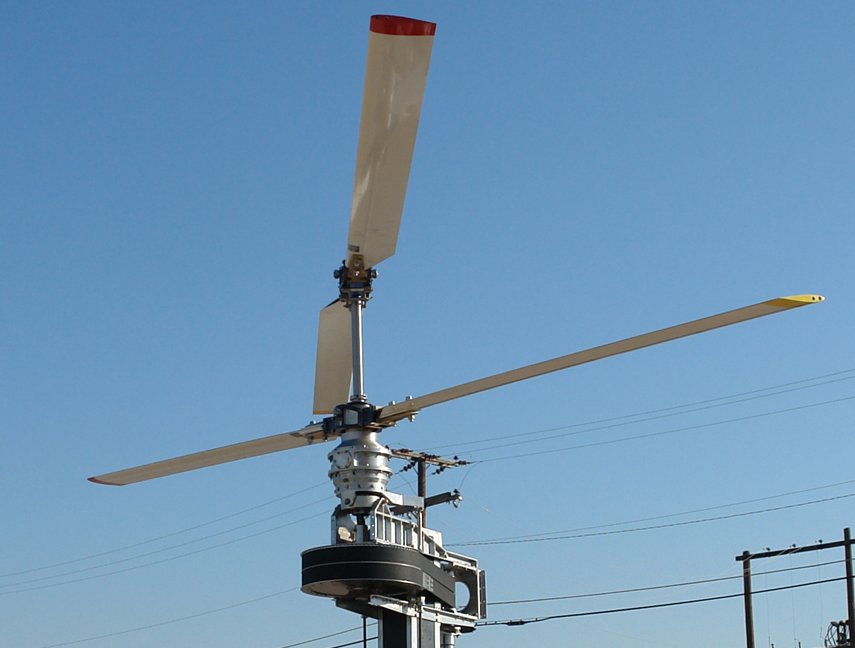
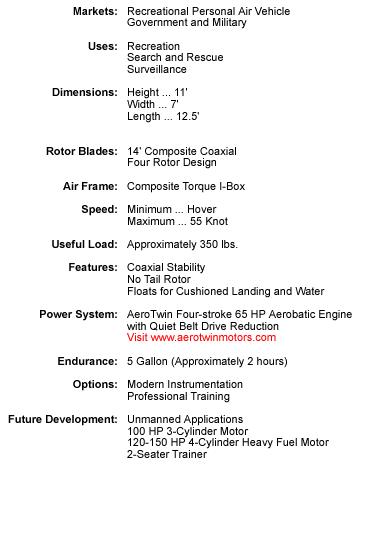
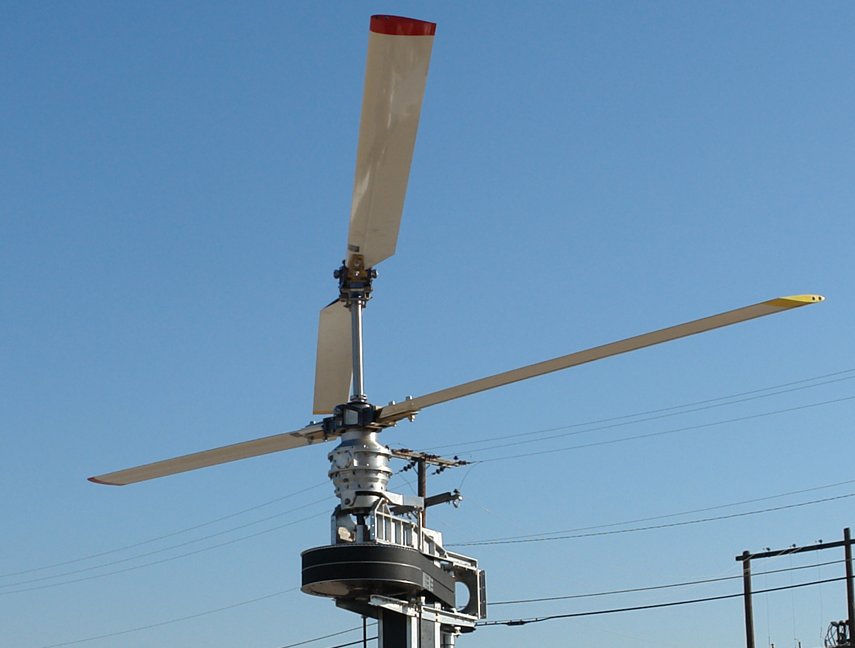
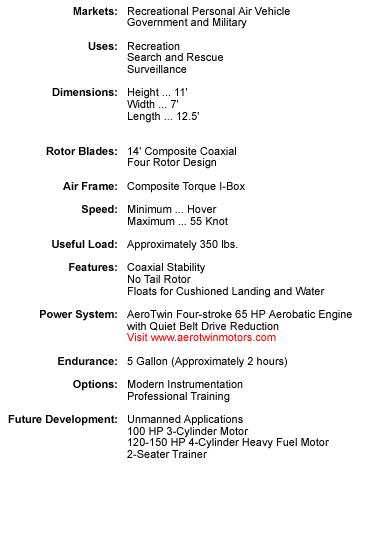
Here is a small coaxial rotor that has been under development for the last
few years, in Henderson Nevada.
The Airscooter. It looks like they sold a flying RC scale model at one
time but now just sell parts?
http://www.airscooter.com
For low speed lateral control in hover mode landing of the coaxial canard,
maybe just a few properly placed compressed air jets? Kind of like the
little thrusters on the lunar module.
Perry
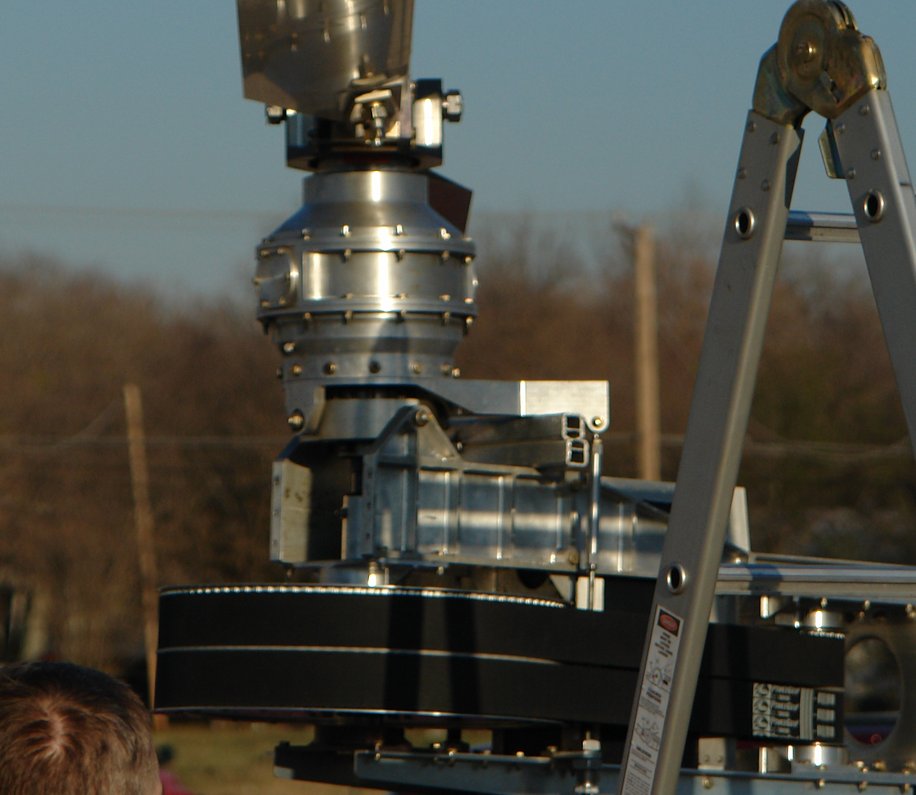
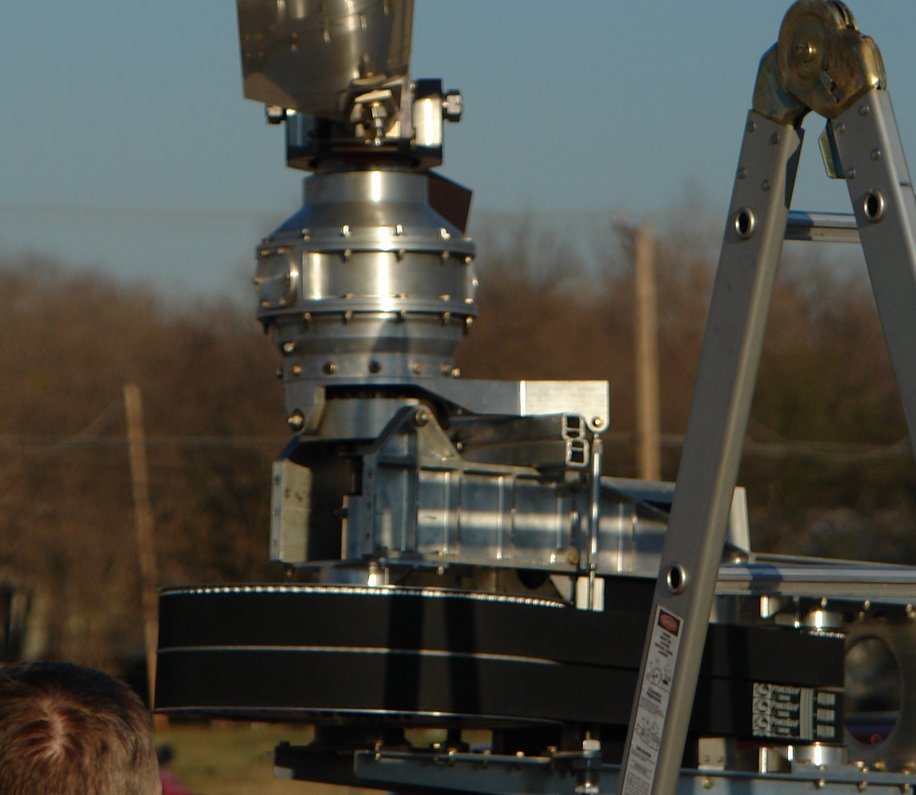
The Airscooter people have mounted the gear box on a gimbal.
The thrust vector then moves around relative to the CG. There is a U joint
inside the gimbal feeding the power into the gear box. Very clever.
Super simple. Analogous to a hang glider. Only two control rods are
needed. There is no blade pitch adjustment. Climbing and
descending are handled by throttle opening changes. This could work
for our purposes.
The two blades are rigid and pivoted on the top of
the mast to handle leading and lagging blade differential lift or flapping.
Same as most two blade helicopters and the Robinson. This looks build able and
relatively cheap.
In forward flight you could change the thrust vector for some very
interesting maneuvers. You might not need an elevator or rudder :)
If someone builds this STOL canard it could be a stunning break through
in aviation:)
The rotor blades would have be wider and look more like the V22 blades
as the trade off of vertical lift verses tip speed in horizontal flight
is the main problem.
Paul Lamar ...No rotor no motor.
I think the blades will still need to be conventional variable pitch for the VTOL
canard to handle the speed range. I started with 12 foot blade, double the
normal prop size, and cut RPM in half to 1200. Constant speed at 1200 RPM,
pitch set for maximum static thrust for takeoff then gradually increased as
you level off and increase horizontal speed.
The airscooter stays in helicopter mode and has a top speed of 50 knots.
Perry