PLEASE somebody look at these equations
and tell me where I am going wrong. There must be a mistake in here
somewhere.
*********************************************************************
CLS
Weight = 1900 'pounds
statthrust = 2000 'pounds
distance = 0 'feet
FlatPlate = 4 'square feet
PropEff = .8
HP = 300 '1 HP = 550 pound foot per second
FPS = .001
distance = .001
PRINT "Time Drag HP NetThrust G's FPS MPH Feet"
PRINT
FOR time = .1 TO 4.6 STEP .1
PRINT USING "###.#"; time;
Drag = FlatPlate * MPH ^ 2 * .0026
PRINT USING "#######.##"; Drag;
HP = HP * (1 - .000003 * distance) 'adjust HP for altitude.
PRINT USING " #####"; HP;
Thrust = (HP * 550 * PropEff) / FPS
IF Thrust > 2000 THEN Thrust = 2000 'lower limit for thrust
NetThrust = Thrust - Drag
PRINT USING "#########"; NetThrust;
Gs = NetThrust / Weight
PRINT USING " ##.##"; Gs;
velincFPS = Gs * 32 * .1
VEL = VEL + velincFPS
PRINT USING "#########"; VEL;
MPH = 60 / 88 * VEL
PRINT USING "######"; MPH;
distance = (VEL * time) + distance
PRINT USING "########"; distance
NEXT
You can only climb straight up for a few seconds so you better
start pitching over right away or its going to hang on the
prop. This program assumes you are going to pitch over right
away. If you don't the velocity will drop to near zero and the
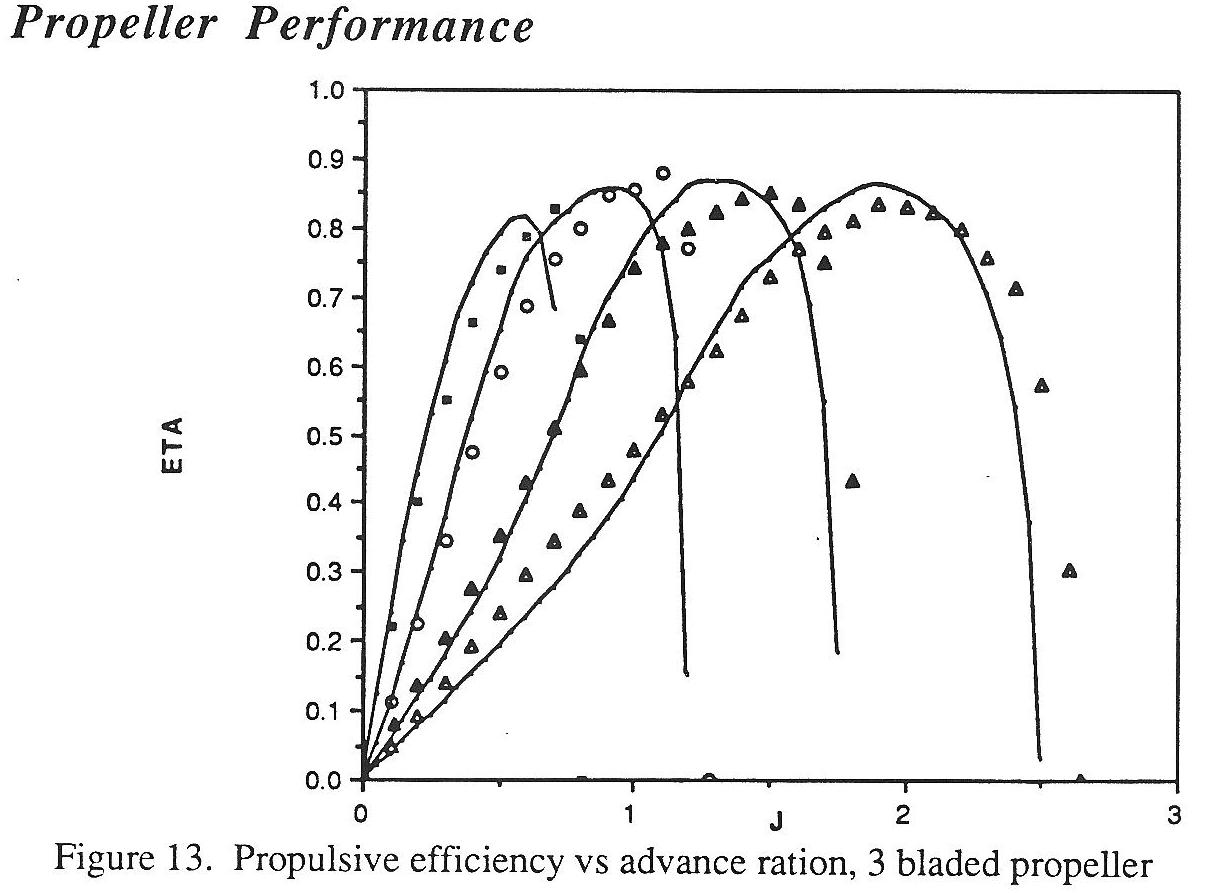
the airplane will stop climbing vertically. It also assumes the prop
pitch is adjusted for maximum thrust at all times.
Top speed will be limited by the rotor tips going supersonic.
Paul Lamar ...No rotor no motor.
The Rotary Engine NewsLetter. Powered by Linux.
ACRE NL web site.
http://www.rotaryeng.net
Copyright 1998-2006 All world wide rights reserved.