Rotary Engine wrote:
The RX8 drive shaft is perfect for our needs.
Designed to run up to 9000 RPM and sized exactly
right for the rotary torque. Since the engine is
in the extreme rear of the VTOL canard air craft for weight
and balance reasons and the gear box is in front for prop
shaft reasons we need a drive shaft to bring the power forward.
What is the length?
I can put it in the model.
Perry
Don't know but we may have to put in three sections of it.
Right now it is two piece.
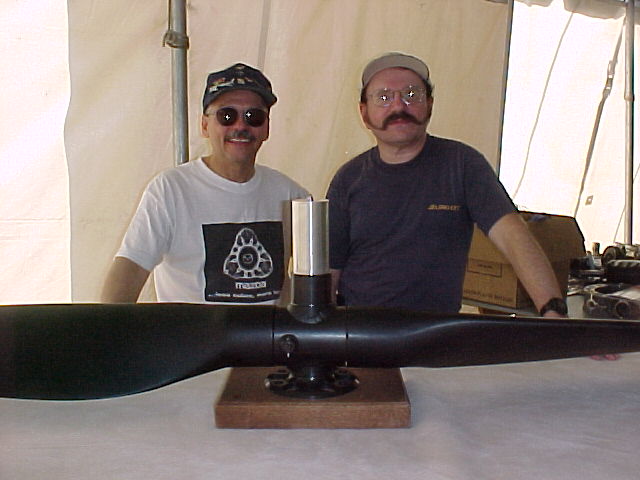
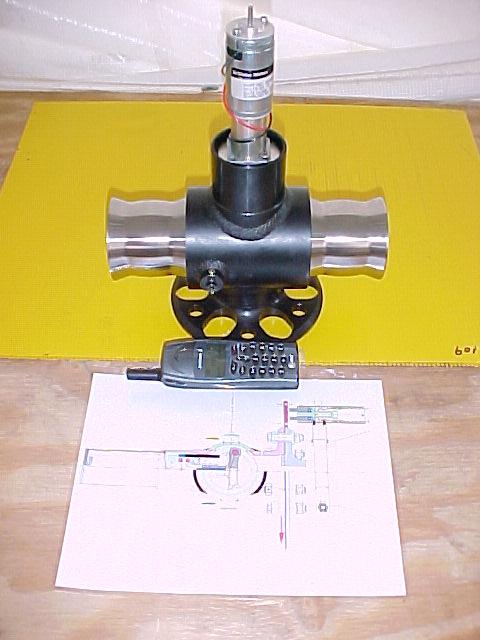
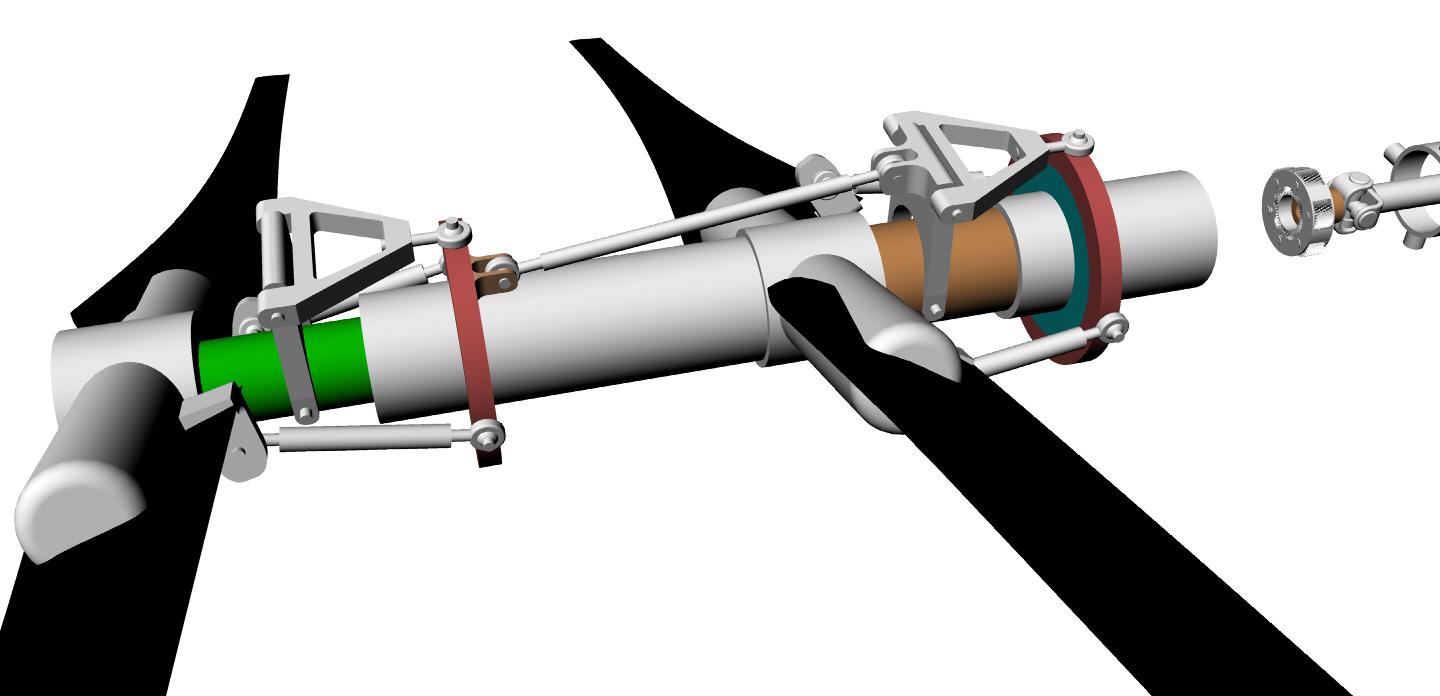
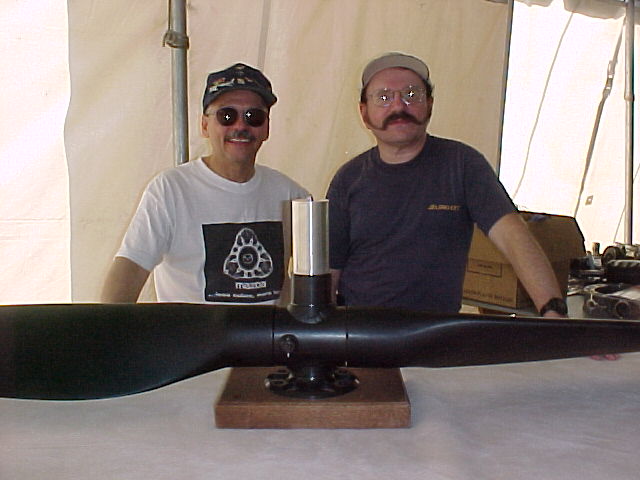
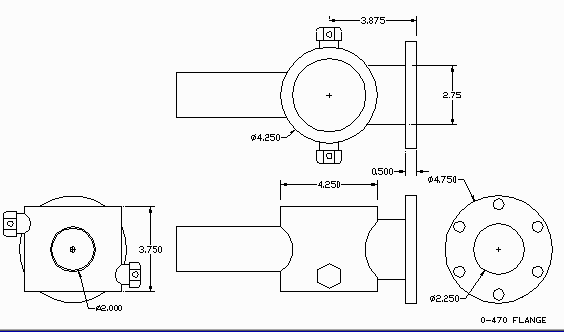
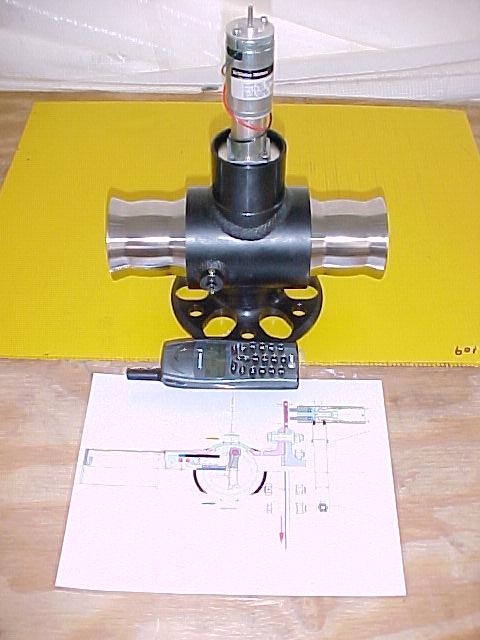
What do you think of this composite rotor hub? Glass maybe carbon
fiber. I am also thinking of using composite drive shafts.
--
Paul Lamar ...No rotor no motor.
Paul,
That rotor hub may be good for a start. I think you're going to need at
least 45 degrees of feathering angle available so you've got to figure out
how you're going to get the bearings in there. I would make the head with
some coning angle and provide for a teetering hinge. It should also have
generous rubber snubbers to deal with mast bumping which you may encounter
when nosing it over or in a sudden yaw or pitch change. I think if you try
to have the rotor head fixed like a constant speed propeller, you could get
some pretty serious vibration in high AOA flight.
My friend, Murray, told me you had a hangar at SZP and I looked you up when
I was there today for Open House. Unfortunately, you weren't there. I
would like to pick you brain. I have another acquaintance who has extensive
experience building PSRU's and he's scared to death of rotarys. He tells me
that he once observed a dynamometer shaft break when testing a 300 hp 13B
and that same unit would handle a 1000 hp V8. The way I see it, the power
density, especially with aluminum housings is too good to ignore. I would
like to see one in pieces so I can decide how it will work vertically--I
need to know more about oil scavenging and how it drains through the case as
well as how the coolant flows and whether or not it will have steam pockets
or if the outlet will have to be moved.
Steve Brazil
Sorry I missed you. You need to let me know your coming
so I can be out there to meet you.
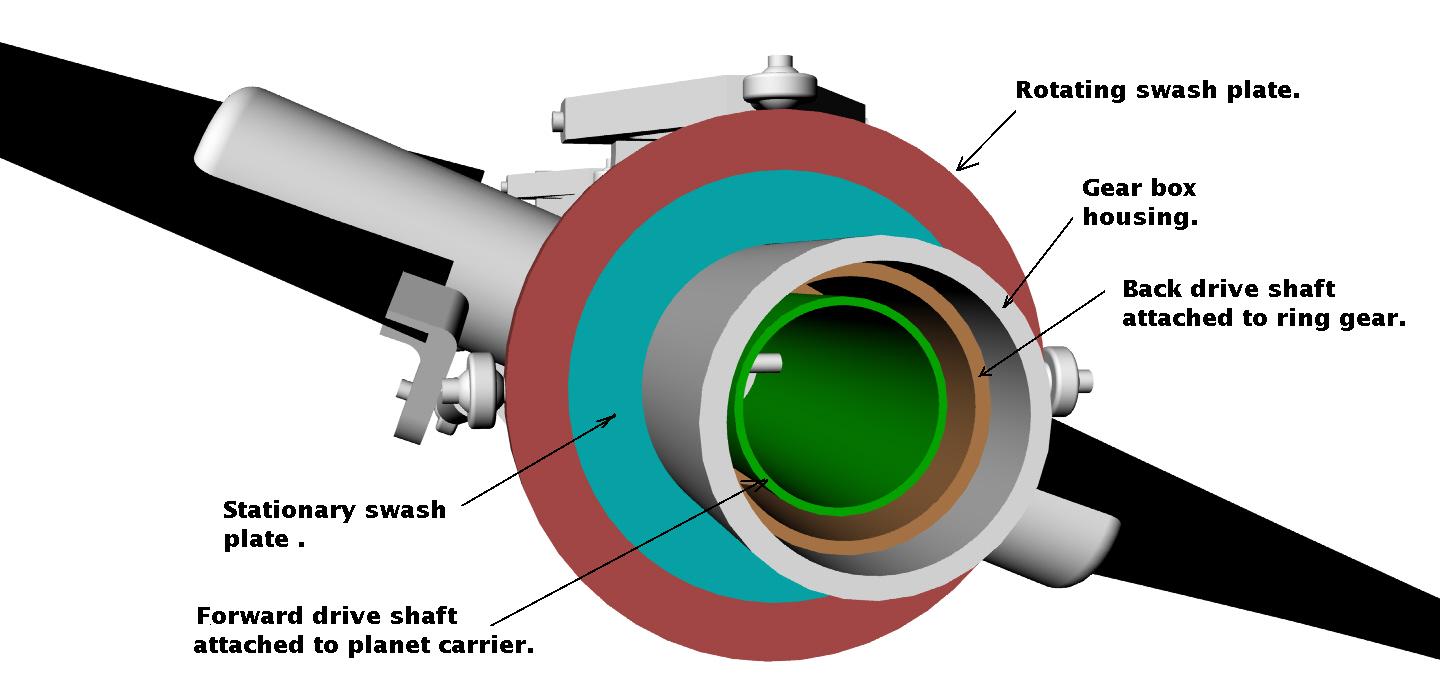
I have decided on a semi rigid hub system so mast bumping will not
be a problem. We will spend such a short period of time in vertical mode
anyway.
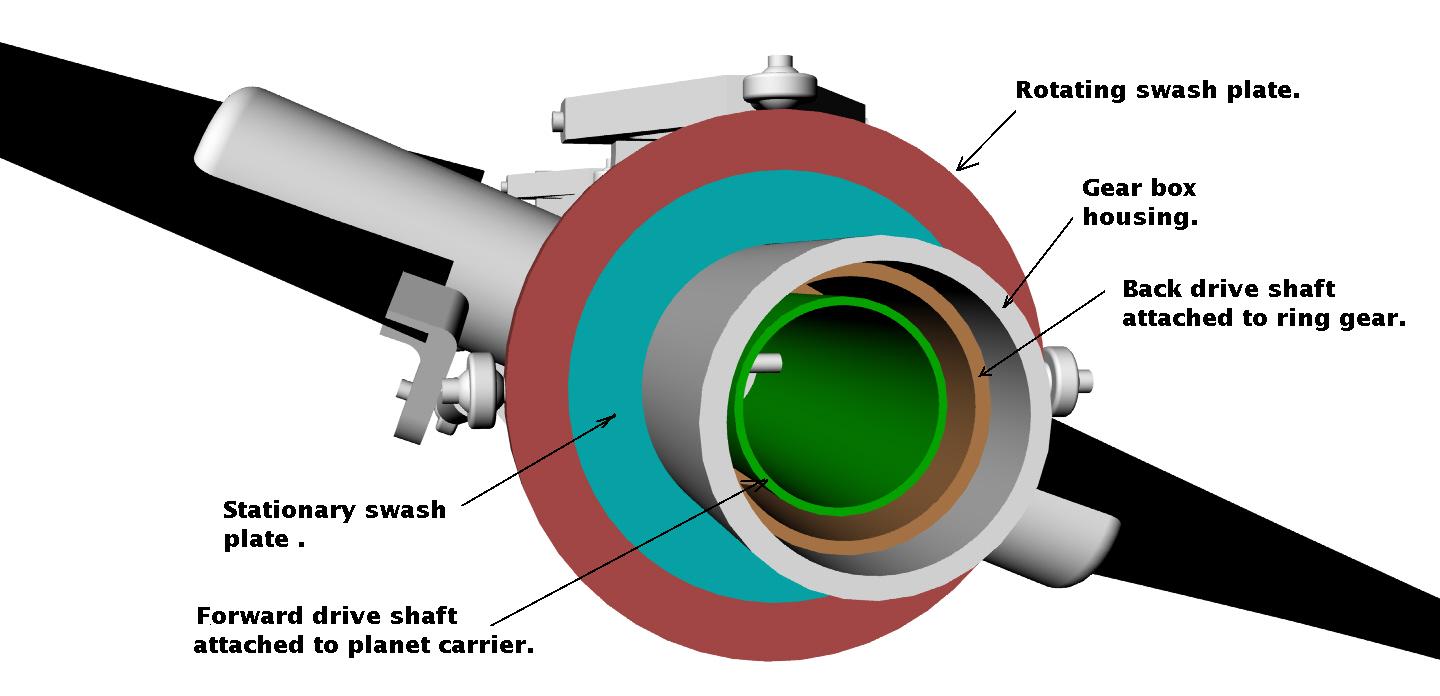
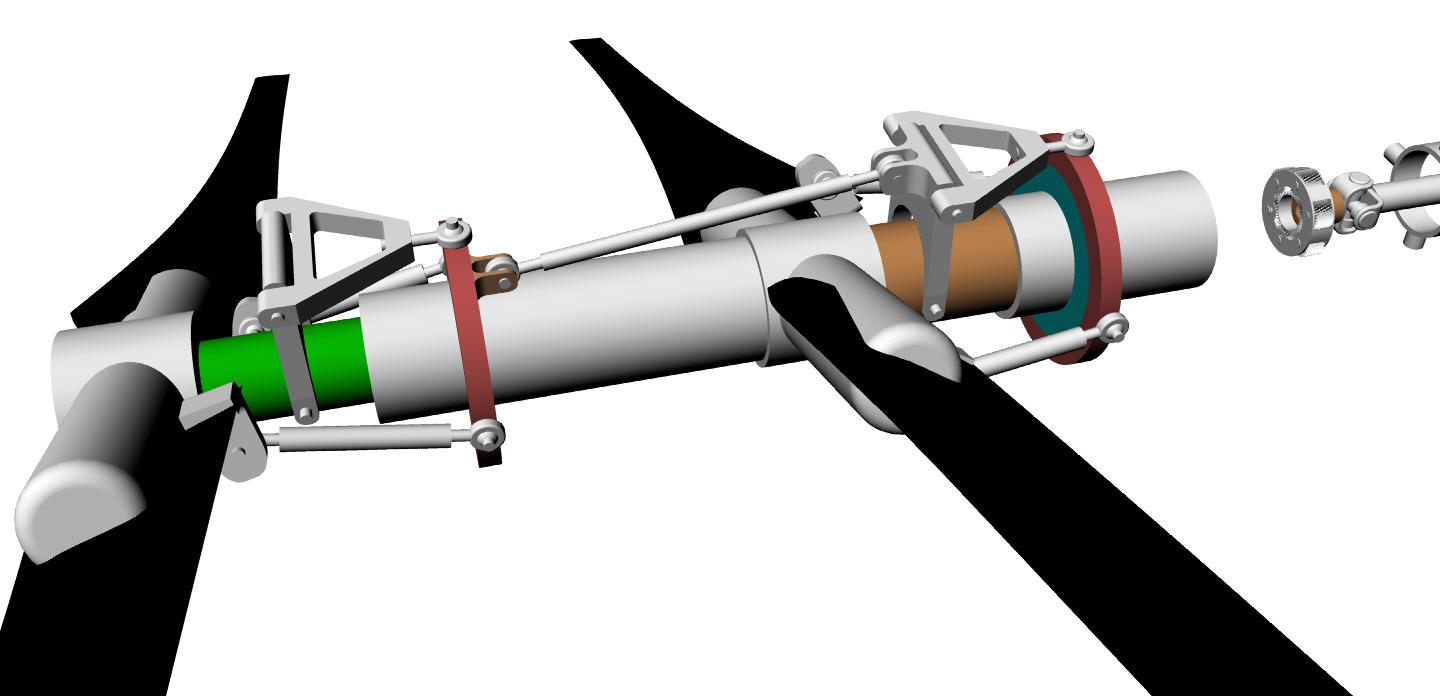
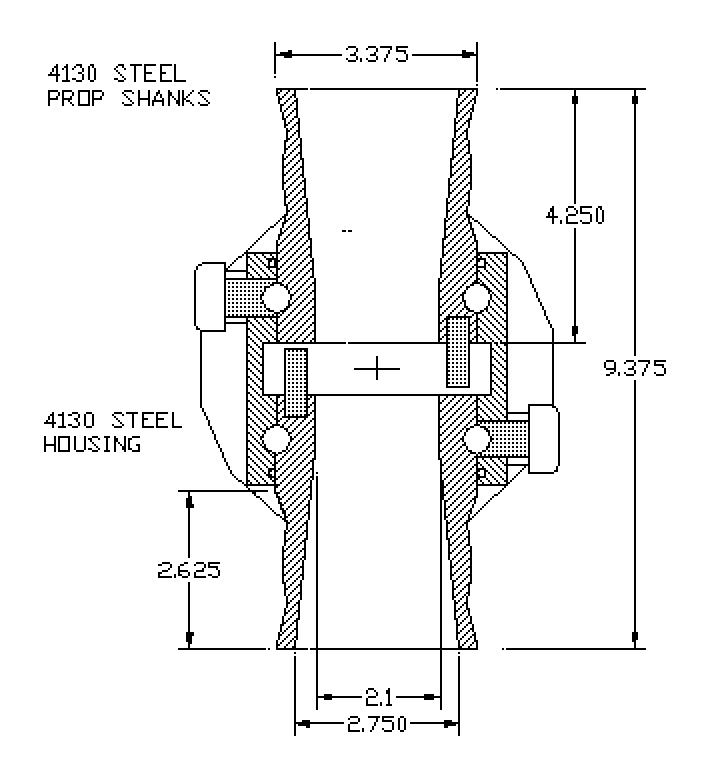
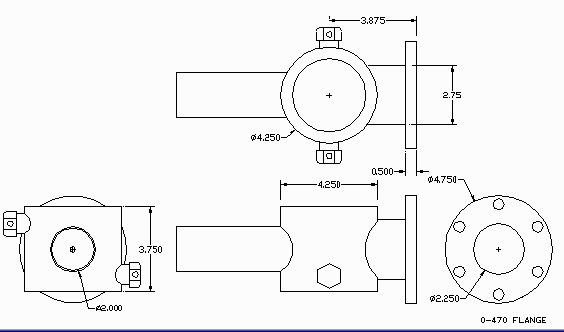
Yes I can accommodate a 45 degree pitch change. I will use something like
this pitch change mechanism. Simple and mechanical so parts can
be inspected and redesigned if necessary. Still evolving.
No new tech here.
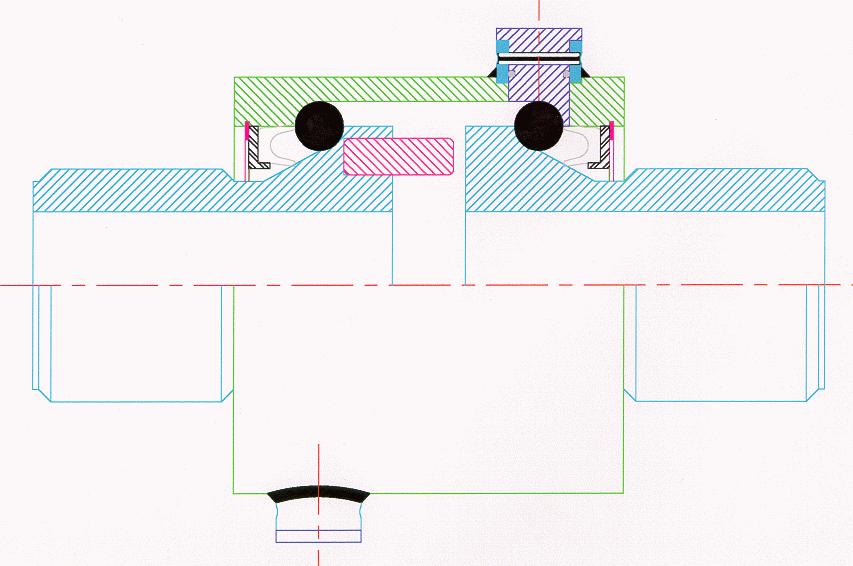
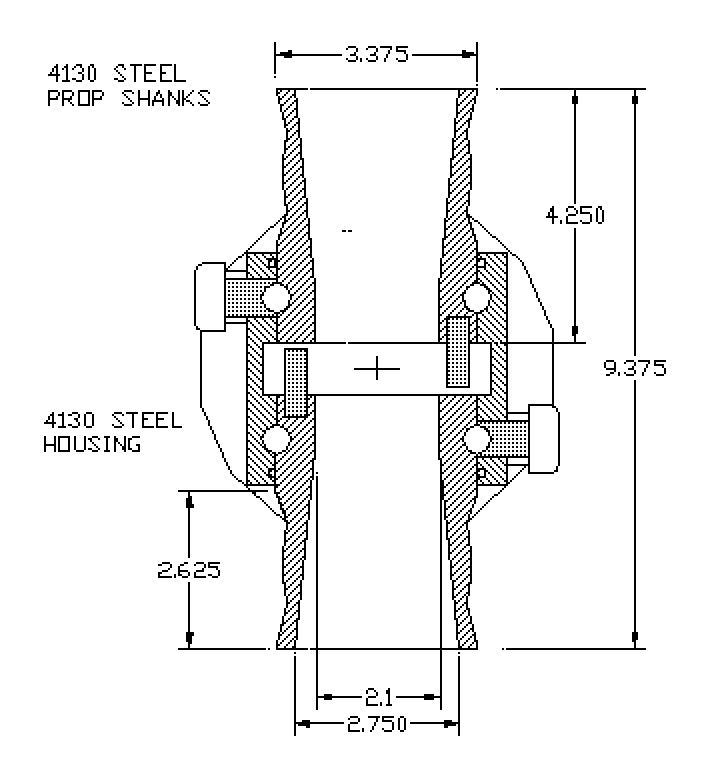
I am thinking of Torlon balls instead of steel to save weight.
Torlon Balls are used in racing sail boat blocks. Torlon Balls
can run in aluminum races. Weight is going to be critical on the
gear box, hub and rotors due to CG problems. Carbon fiber wherever
possible.
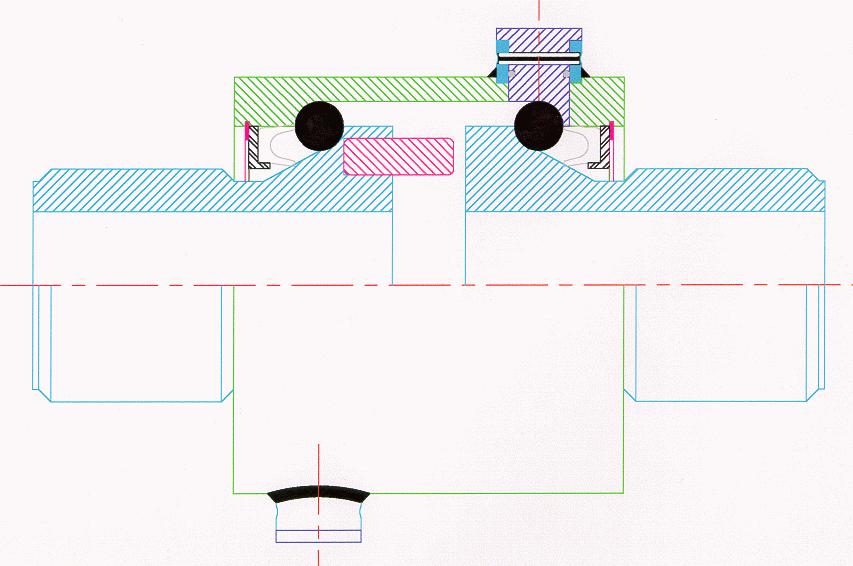
We will use a trick for feeding the balls into the one piece
bearings we developed years ago for the LAEV prop design.
Here are some drawings of that.
I think the broken dyno shaft was an example of what happens when
you hit the torsional resonant frequency of a shaft. The rotary fires
twice per rev while a V8 fires four times per rev. The torque pulses
on a rotary are more benign than a four cylinder piston engine but
not as benign as a V8.
Oil drain back pictures will have to wait for another message as they are
too much for this one. Needless to say we will need a dry sump system as
all the oil will wind up in the front cover otherwise might not
be all that bad if the oil pick up tube position is changed.
Easier to do if you are running it vertical all the time.
Paul Lamar ...No rotor no motor.
The Rotary Engine NewsLetter. Powered by Linux.
ACRE NL web site.
http://www.rotaryeng.net
Copyright 1998-2006 All world wide rights reserved.