Well Sir, I finally got a few seconds to do these FEA's on your hub.
I installed some 'ball bearings' of sorts and then a shaft/stub
where the
blades would sit. I loaded this stub two ways. The first was radially
out from the center w/ a 16,000 lb load. And then on a flat face which
was 24" from center I put 325 lb's force perp to the plane of rotation.
I put symmetrical loads on either end of the hub and then used Larry's
6061-T6 Alum material properties to test it.. 32seconds later it
gave me these
I think that the area where it neck's down is really the only area
which might need a little more material.. the rest looks like it could
fly. If it was made from Alum.. that is..
Larry also gave me some material data on composites so I did these
w/ Eglass. Now the data did not provide a yield number for the material
so it doesn't show whether it's exceeded it , but hopefully these
will be
useful to you as well..
Anyway if you want me to do any more just fire away.. it takes
longer to copy and
paste the screen shots than it does to do the FEA part of the job..
Jarrett
Thanks Jarrett. You do great work.
Looks like it is over designed just about everywhere except the necked
down area. Time to save some weight :) I'll go with the e-glass results.
--
Paul Lamar ...No rotor no motor.
I think the yield strength for e-glass structures is rarely a concern -
it's so flexible that by the time you reach yield, the structure has
flexed so much that other things start going wrong. Certainly e-glass
can be used in a particular structure where the yield strength matters,
but it may be more relevant to design for stiffness..
Regards,
Matt-
I would agree in most cases. Helicopter rotor heads are unique situations
where some flexibility is required to deal with the gyroscopic forces.
You have this big gyro up there and every time you try to pitch
or yaw huge bending forces are introduced into the shaft. Also as the
blade moves forward on one side the lift is greatly increased while
the blade moving aft the lift is greatly decreased. This too causes
bending moments on the blade. Mitigating all this is the centripetal
forces on the blade due to their own weight which in effect tends
to keep them flat while still supporting the weight of the craft.
Without this effect they are no where near strong enough to support
the weight of the helicopter.
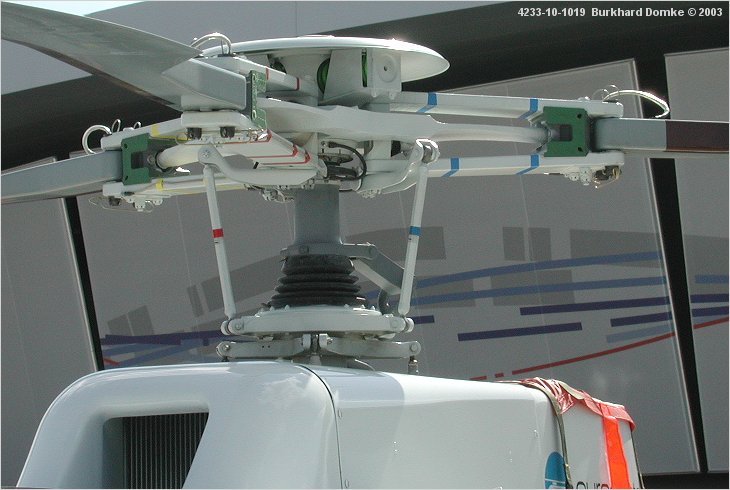
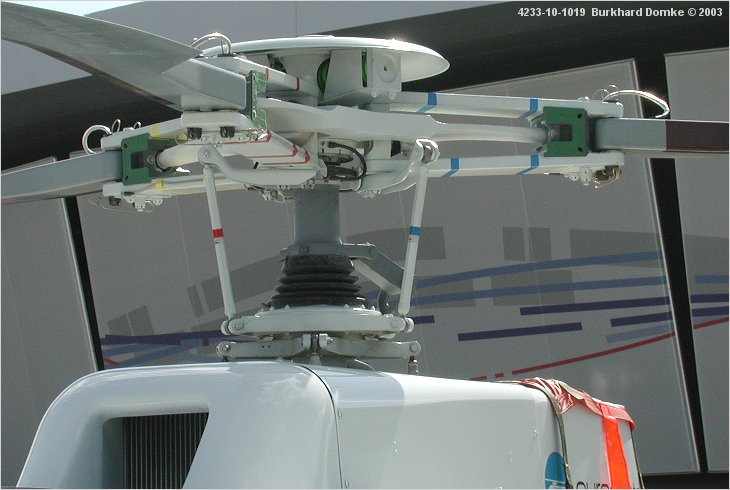
Consequently most helicopters have what amounts to a U-joint between
the blade and the shaft. This minimizes the bending loads on the shaft.
The new thing is a semi rigid rotor head made from glass composite
that provides the flexibility required while simplifying the rotor head.
Glass fiber does not fatigue.
http://www.b-domke.de/AviationImages/Rotorhead.html
Paul Lamar ...No rotor no motor.
The Rotary Engine NewsLetter. Powered by Linux.
ACRE NL web site.
http://www.rotaryeng.net
Copyright 1998-2006 All world wide rights reserved.