Paul
I am at the stage of trying to build a mount for a 20b to an
Australian
Lightwing Speed 4000 fuselage.
Firewall mount dims are 715mm horizontal, 505mm vertical. Engine
thrust
line needs to be at least 160mm below the top firewall mounts for
cowl
clearance at top of engine, and prop flange using RWS RD1-C re-drive
needs to be 1100mm in front of firewall.
Any help for the mount dimensions and general mount design would be
greatly appreciated
Regards
**Andrew Martin**
Geraldton. Western Australia.
------------------------------------------------------------------------
I need to know the positions of the hard points on the firewall.
Are you in touch with the other aircraft rotor heads in Perth?
--
Paul Lamar ...No rotor no motor.
Andrew,
Are you talking about putting a 20B in this?
http://www.lightwing.com.au/speed.html
Cute airplane, but stick to the 13B for this aircraft.
If you want a side by side airplane to stuff a 20B in, check out a
Glasair
II RG. It would carry it well if you used the aluminum end and
intermediate
housings. It should be faster than the Glasair III and fly better.
Steve Brazil
Steve,
Too late, the 20b is in me shed ready to go, the fuse is built with
wings nearly done, CG calcs suggested needing extra weight on the nose
for 4 POB, I just figured it might as well be going round, don't have to
use the extra horses if they ain't needed. If the actual W&B is out when
I get around to that part of construction then I suppose I'll just have
to build another plane to use this engine :)
I looked at all the fast glass types but they all seem to need a runway
to land on, something that is not always available at my preferred
destinations, my idea of a landing area is anywhere without rocks and
big flora and fauna. Lots of HP lets you get out too.
Andrew
I agree with Steve.
It is not too late Andrew. The price of 20B's has gone way up recently.
It will go higher as time goes on as Mazda is no longer selling 20 B
parts at reasonable cost. A 20B FW installation is 100 pounds heavier
than
an O-360 installation. Roughly 925 KG or more for the 20B. The gross
weight
will go up more because of the required ballasting in the tail. The
stall
speed will go up making it harder to land in short fields. The take off
speed will be higher so it will use more runway. The landing gear will
be more fragile as it will be subjected to higher loads due to the
higher
speeds required, longer time going fast on the ground and the increase
in gross weight. Your fuel burn will be higher so the range will be
less.
Span 28 feet. Wing area 135 square feet. Wing loading 20 pounds per
square
foot. A good bush plane is a Cessna 180 with a 37 foot span
If you keep the same gross weight you will take 60 Kg out of the payload
and still cut the range.
I suggest you keep the 20B and buy a 13B for the airplane. If you p-port
the 13B you will get almost as much power. About 240 HP at 7500 RPM. Get
a 2.85 to one gear box and a longer prop (about 1.828 meters). Lengthen
the
landing gear for the longer prop and strengthen it a bit.
I'll do a 20B motor mount design but I don't recommend using the 20B in
this
airplane.
--
Paul Lamar ...No rotor no motor.
Paul
Yours and Steve's recommendations are noted. The 20b is first going onto
a mock firewall/ test stand that I have built with the idea of
assembling then weighing everything before committing it to the plane. I
was aiming to keep FW fwd weight below 200kg which the designer assured
me the plane will take. I'm assuming that most 13b installations are
160kg FW fwd as per Tracey's book figures. I know a 20b is more engine
than I need but I figured that if I could carry it I'd get at least
200hp NA no matter how I done the intake & exhaust. Figured a well tuned
Renesis could go in later once I got a bit of experience. If the 20b
does end up too heavy it will never see this plane but used in a future
project or sold.
I'm not too keen on P porting my first engine but I would consider it
later on. I have a 2.85 re-drive so it will be used on whichever engine
ends up in the plane.
BTW maybe you could update your weight comparison chart on your web site
to reflect the 20b being 100 pounds heavier than the 0-360.
Andrew Martin
Wow! 200 KG or 440 pounds for the engine!
That is a bunch. I am impressed.
OK but it is not not going to make a good bush plane and the HP
of the 3 rotor will be limited by the prop diameter. I have done
some flying in the outback and you need a real slow stall speed
so you can survive the crash at least and hope they find you soon :)
Energy in a crash is m x V squared.
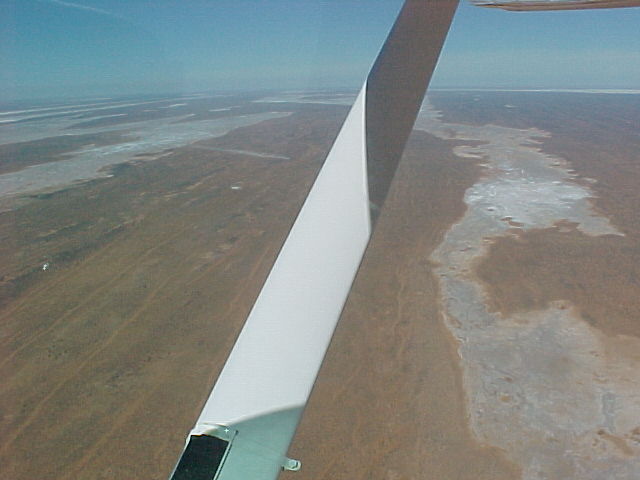
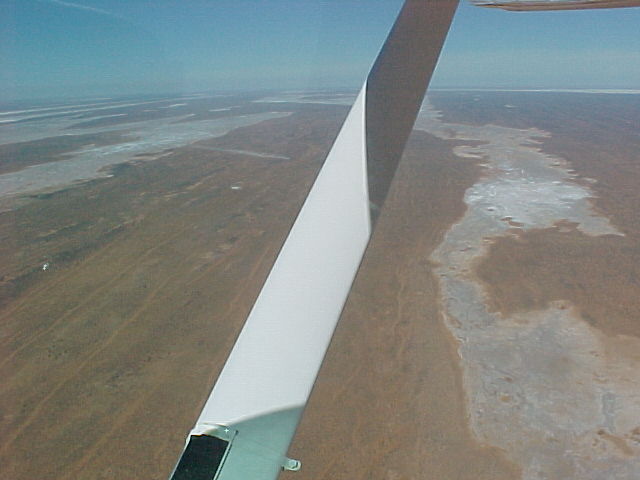
Here are some aerial shots of the outback for those in the rest of the
world that have never been there.
Paul Lamar ...No rotor no motor.
The Rotary Engine NewsLetter. Powered by Linux.
ACRE NL web site.
http://www.rotaryeng.net
Copyright 1998-2006 All world wide rights reserved.