> >> Steve, What do you think of this idea.
> >>
> >> Since we will not be flying forward in helicopter mode for
long
> or at
> >> high speed
> >> the leading and lagging hinges can be done away with. Same
goes
> for the
> >> flapping
> >> hinges. I think we can use GRP for the hub. Same as several
> European>> helicopters
> >> use. GRP has high tensile strength and a low modulus of
elasticity> >> allowing it to
> >> flex without failing. Same as the Long EZ main landing gear. The
> >> innovative feature
> >> of having a one piece carbon fiber blade with internal outer
> bearing race
> >> and pitch
> >> change arm is also a major weight and cost saving feature.
The
> bearing>> balls are
> >> Torlon which are widely used in off shore sail boat racing.
> These are
> >> subject
> >> to the worst possible environmental conditions and survive. The
> >> connection
> >> between blade and hub is achieved by the bearing balls and
they
> are fed
> >> into the races by one access hole on each side. We have used this
> >> feature in the past of an aircraft propeller and it works well.
> >> --
> >> Paul Lamar ...No rotor no motor.
> >
> >
> > Go one step further and use a standard prop internal pitch change
> > mechanism.
> > Milo
> >
> > Care to make a 3D dwg for me? I can't see how it would work
with
> counter> rotating
> > rotors?
> >
> > Paul Lamar
>
> Forgot about that! Milo
>
> That is why I went with the tried and true helicopter pitch change.
>
> --
> Paul Lamar ...No rotor no motor.
>
>
>
> I think it would start shaking pretty good as soon as you
started
> gettingsome translational lift. Did you look at that website I
sent?> http://www.rotor-international.net/
>
> It uses co-axial two-blade rotors and they appear to be
underslung
> withshort beams that twist for feathering, flex for coning and
may
> be servo-tab
> controlled. Look at how far apart the rotors are. I think if
you
> want the
> flexure to to accomplish lead and lag, the flexible portion
should be
> outside the feathering bearings. The stiffer the system is, the
> more moment
> applied to the hub and the more vibration.
>
> I think on the model you've shown, with one bearing race, when a
> moment is
> applied to the assembly the loads on the bearings could get
pretty
> high. A
> second bearing race inboard would help, especially if it were an
> angularcontact type that could take high thrust loads and it was
> located far enough
> inboard to resist to the applied moment. I'm not sure about
those
> Torlonbearings being strong enough, but with two races, they
might
> be and you
> would avoid the shear load that would occur with your model and
> the loads
> would be all compressive. The slight elasticity of the Torlon
may
> helpdistribute the load which would be a good thing as well.
>
> Steve
>
> I don't think so. We don't do much translational lift. It is an
> arcing takeoff with
> considerable vertical velocity for only a second or two.
>
> I looked at that web site but I saw no details of the hubs. If
> you see something
> there in detail please do a screen capture and email that.
>
> All constant speed props are built with only one bearing. The
> negative bending
> moment on the blade hinge due to centripetal force acting on the
> blade CG counteracts
> the positive bending moment due to thrust. Therefore it only
needs
> one bearing.
>
> If the constant cord blade weighs 20 pounds
> and it moves up one foot at it's CG radius position that is a
> negative bending moment
> of 100,000 foot pounds. The centripetal force on the 20 pound
> blade is 100,000 pounds.
> Weight/32.2 x FPS^2. The positive bending moment due to thrust
on
> the blade is only
> 6.5 ft x 300 pounds (each of four blades will need to generate
300
> pounds to lift the
> 1200 pound craft.) or about 2000 foot pounds.
>
> Obviously the rotor blade CG is not going to move up one foot.
The
> upwardsdeflection of the blade at its CG position will only be
> about .2 feet or 2.4 inches
> balancing the thrust moment. That puts a negligible bending load
> on the bearing compared
> to the centripetal load. All props and rotors work this way. If
> not rotors and blades
> would break off at the hub because they do not have the bending
> strength on their own
> to support the weight of the helicopter.
>
> The bearing consists of 22 half inch dia. balls. In effect they
> act like 22 1/2 inch
> dia. bolts in single shear. The centripetal load is 100,000
pounds
> so each half inch
> bolt only needs to accept 4,500 pounds of shear roughly. A 1/2
> inch bolt has an area
> of about .2 square inches. So the shear stress on the bolt will
be
> 22,500 psi
> roughly. A piece of cake for a steel ball but maybe marginal for
a
> Torlonball. Consequently I will try to get the carbon fiber
blade
> weight well below
> 20 pounds each.
>
> As you can see the centripetal force is orders of magnitude
higher
> than the
> bending loads on the blade hub. It is all about numbers.
>
> Paul Lamar ...No rotor no motor.
I don't think I can add too much to the discussion as heli
dynamic's are
something I've never studied to extensively [primarily because I
never come across any books on it] but I do think there will be
times when there is signifigant translational lift. I'm thinking of
landing more than take-off. When the pilot pulls up and starts to
drop forward speed and translate into vertical flight. This isn't
a problem on your average aerobatic a/c however, so maybe
it won't be such an issue as long as there isn't abrupt control
movements exceeding some G number?
Not entirely sure..
Jarrett
A lot of prop helio hubs have lead lag dampers so they could be added.
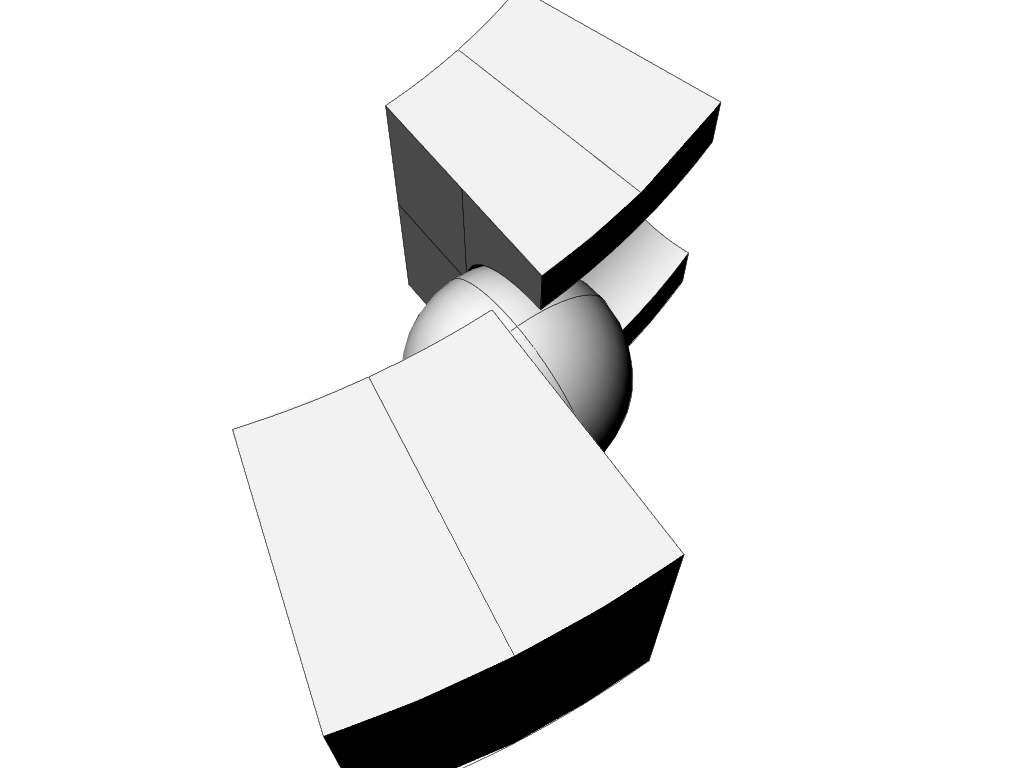
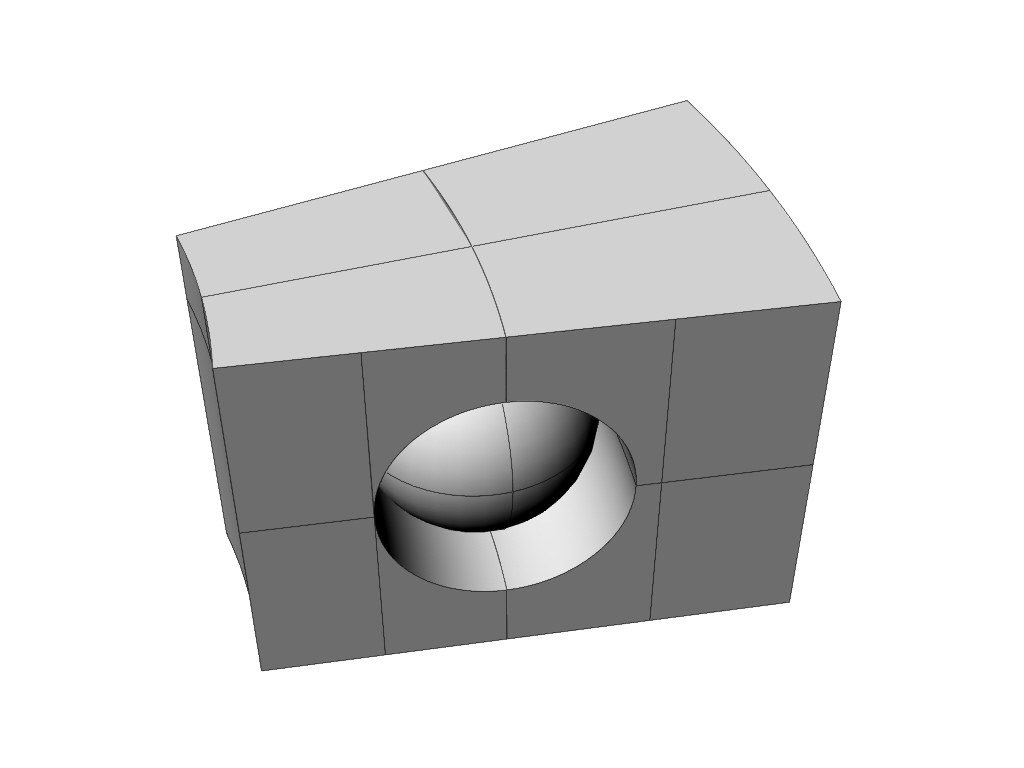
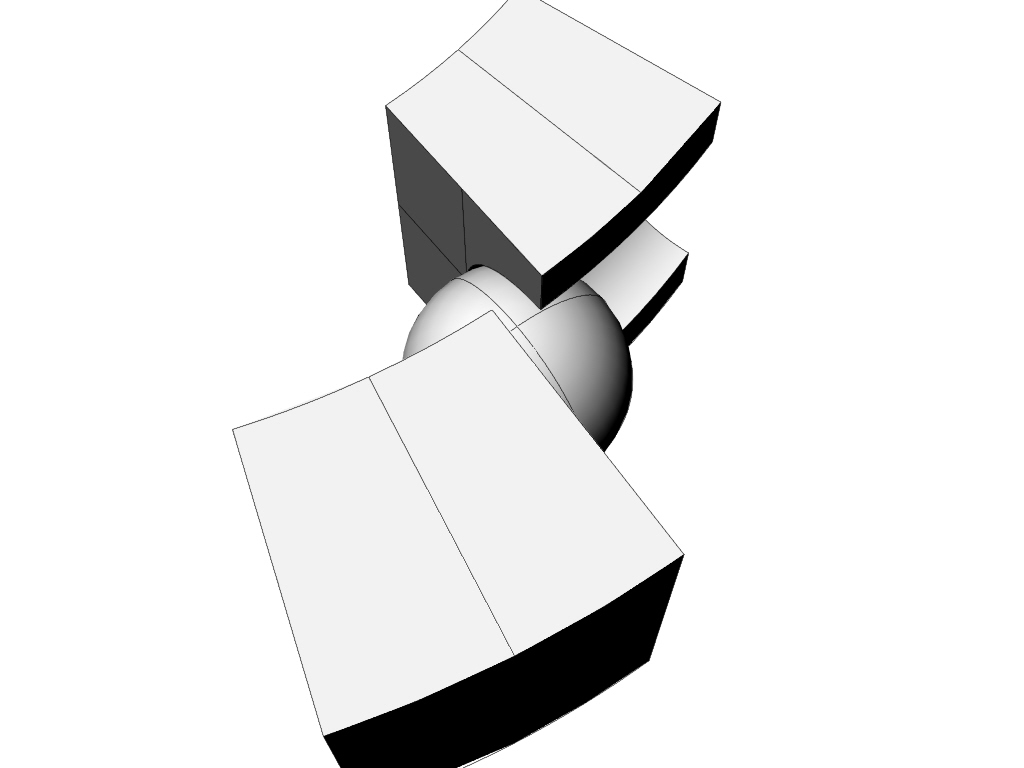
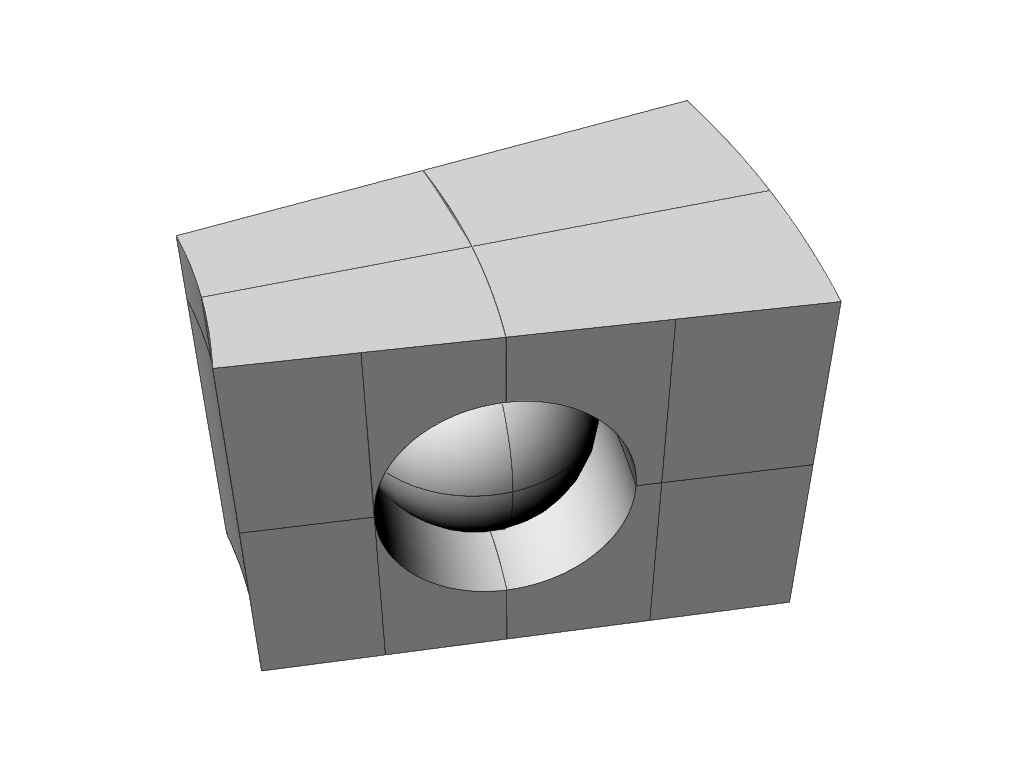
Perhaps. I can send a dwg and you could do an FEA. I am curios
about the
bending deflection of the FRP and the loads on the bearing balls.
I changed the design and did away with the inner bearing.
What would help is a simple FEA of one 1/2 inch ball and sections
of the races.
I'll do a 3D of just that.
Paul Lamar ...No rotor no motor.
Send away.. I'll throw it in and see what it shows..
Jarrett
Put in 10,000 pounds of shear and see what happens. High strength steel.
and then aluminum to simulate the Torlon.
Unless of course you can put in the Torlon properties directly.
Just think what would happen if we showed up at Reno with a delta tilt rotor
and said: "We want to race." Their response would be price less :)
--
Paul Lamar ...No rotor no motor.
The Rotary Engine NewsLetter. Powered by Linux.
ACRE NL web site.
http://www.rotaryeng.net
Copyright 1998-2006 All world wide rights reserved.