Eric,
Is that fuel burn ratio's 13.1:1 to 13.4:1 at WOT?
George (down under)
George,
13-1 at WOT is pretty close number. We will have more dyno, test
stand, and
in flight data in the coming months.
Eric Barger
I know this is probably picking nits, but I'd like everyone to think
about mixture (fuel-air) in terms %power (or best-power) instead of
throttle position (re "WOT" in this message). Throttle position -
especially on the rotary which runs well over a wide range of mixture
settings, is only a portion of the description or power output.
WOT should be thought of as "best volumetric efficiency" not "best
power" - though best power generally happens at WOT.
So, it sounds like Eric is saying that he sees his engines making best
power at mixtures around 13:1.
Side question Eric: Does your engine test setup allow easy inflight
setting/adjustment/control of the fuel-air mixture? As has been
discussed here in the past, this is critical for optimizing engine
performance (efficiency) lacking some kind of really smart FADEC system.
Regards,
Matt-
Matt,
I agree, I asked the question as I thought best power for the rotary was
12.65:1.
I intend running a carb with a wide band O2 sensor and a digital display
monitor/readout.
No good having a leaning knob, unless you can see what the fuel air ratio
is - my opinion only FWIW.
George (down under)
Matt,
Good input as it relates to VE and WOT. We tune our ECU using VE
correction
with a desired lambda as a base map. Our ECU has an external Barometric
sensor allowing for altitude comp without having to do any in flight
adjustments. One note about A/F mixture in a charged cooled rotary engine
the incoming A/F is cooling the rotor so you use this to provide cooling
as
well as desired and or optimum power. This is one variable we have that is
not in the Mazda rotary due to the oil cooling.
Eric Barger
Eric,
The charged cooled rotors may be a variable and I see it may be an advantage
in cooling - however I can't see any advantage in heated fuel for best VE.
In fact I would suspect VE to be down due to this design configuration.
What can you tell us about the pros and cons of charge cooling the rotor
specifically.
George (down under)
George, (down under)
There are surely tradeoffs in charge cooling, the advantages are no oil
cooling hardware, the VE goes up as load is applied due to the additional
Air fuel ratio passing thru the engine. The Charge cooled track and or
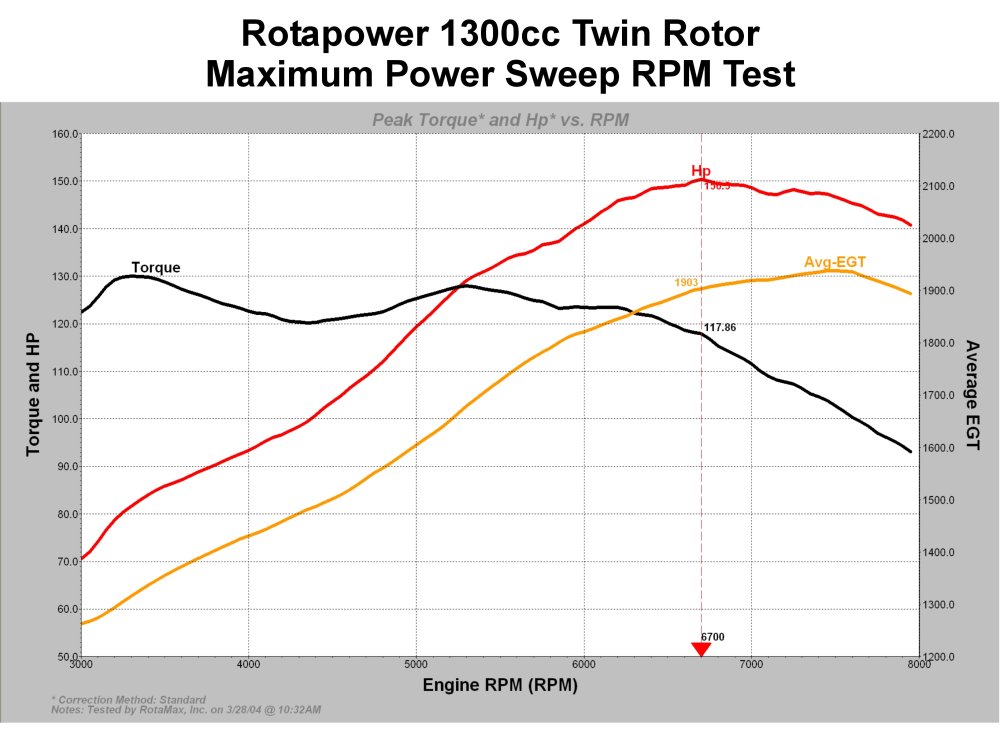
intake length increases the torque and flattens the torque in this engine is
flat from 3000-8000RPM. The path naturally atomizes fuel due to the passing
thru the rotor. Some of the above benefits are opinions and speculation due
to the inherent differences in our engine compared to the Mazda and the fact
that these above stated characteristics show a major difference in
performance characteristics out of a very similar sized engine 650cc/rotor.
I hope this provides you some answers.
Note: The engine loves cool air, full load, and alcohol as stated above the
VE gets better as you introduce anything that cools the rotor and or the
intake charge.
Eric Barger
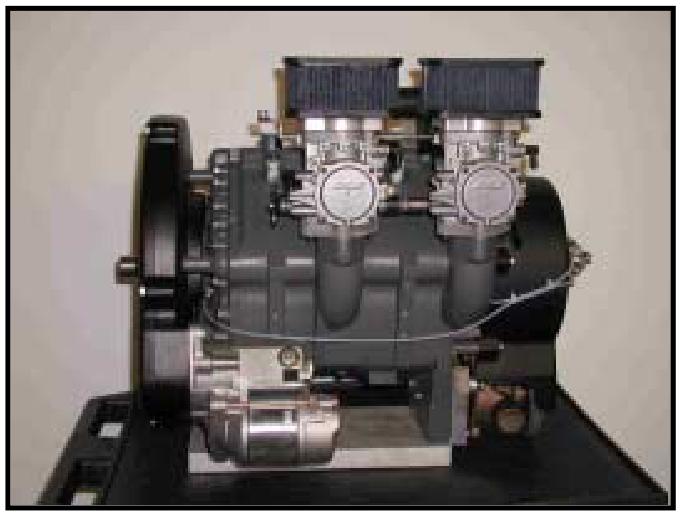
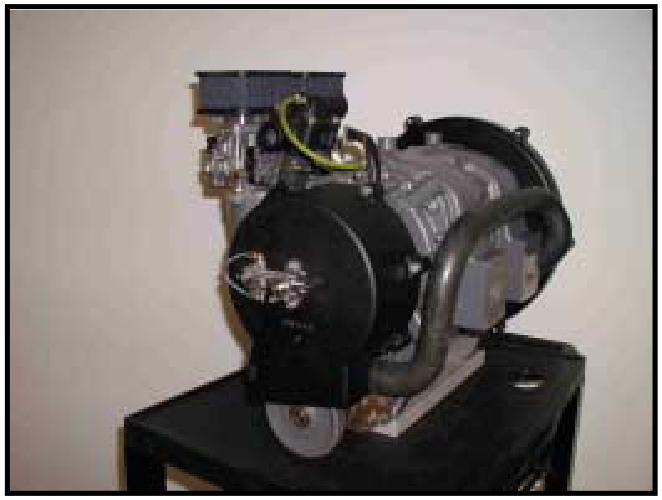
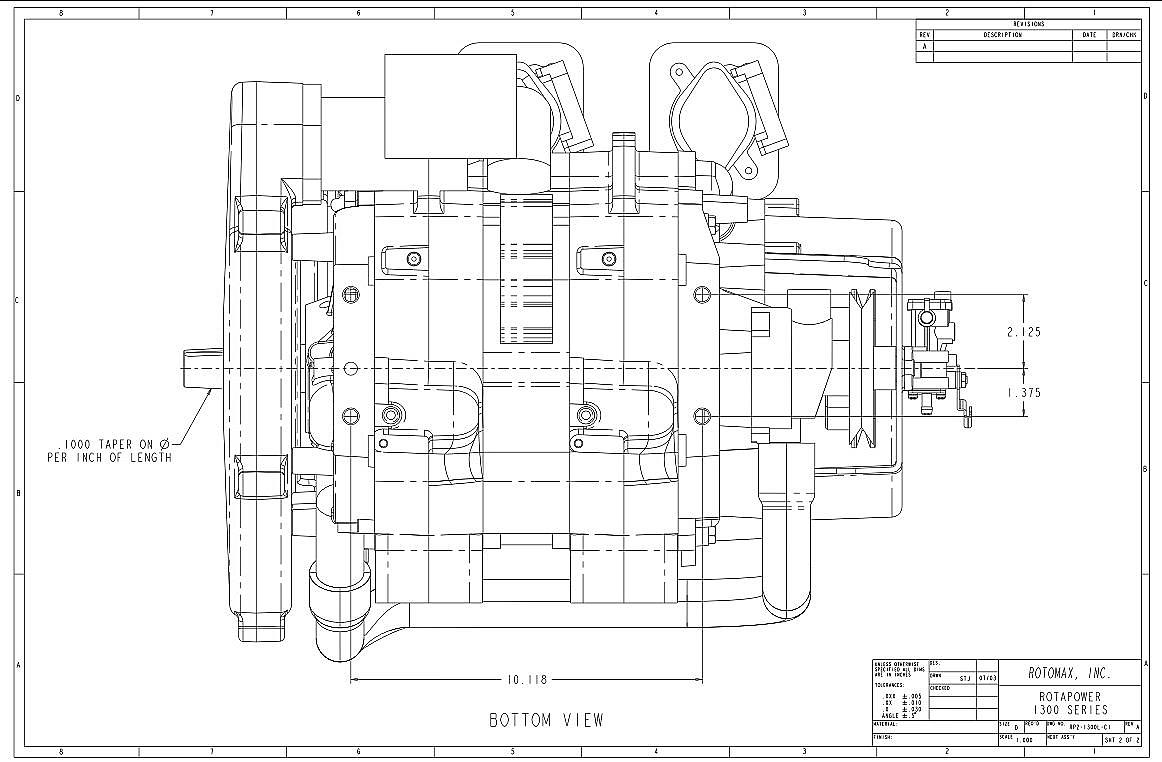
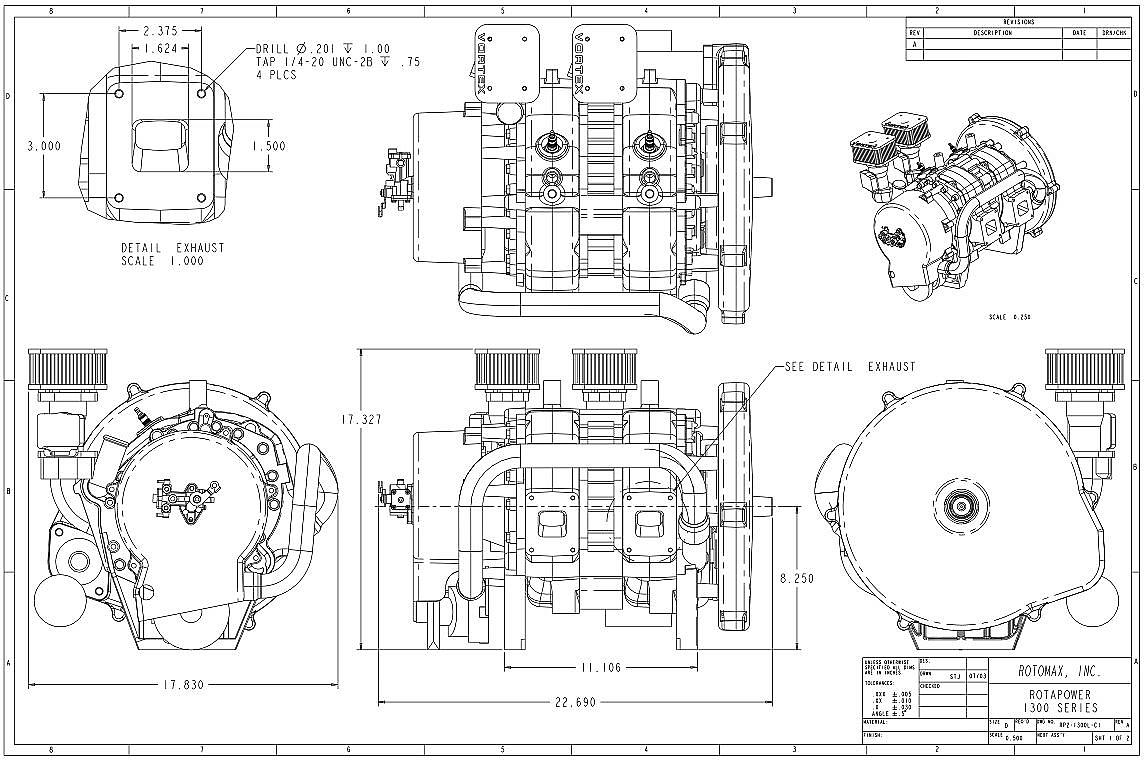
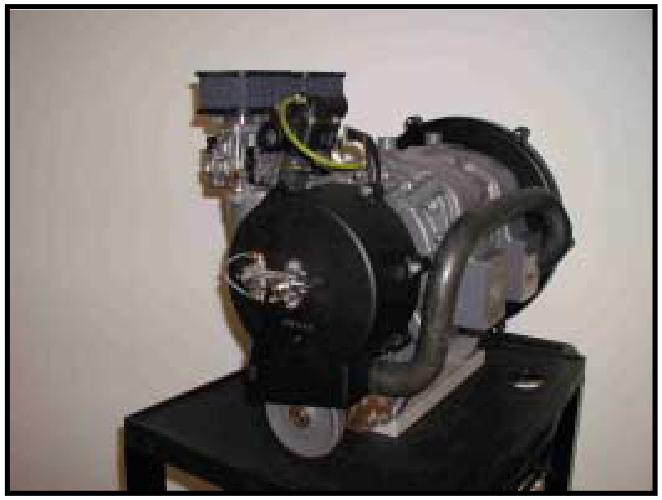
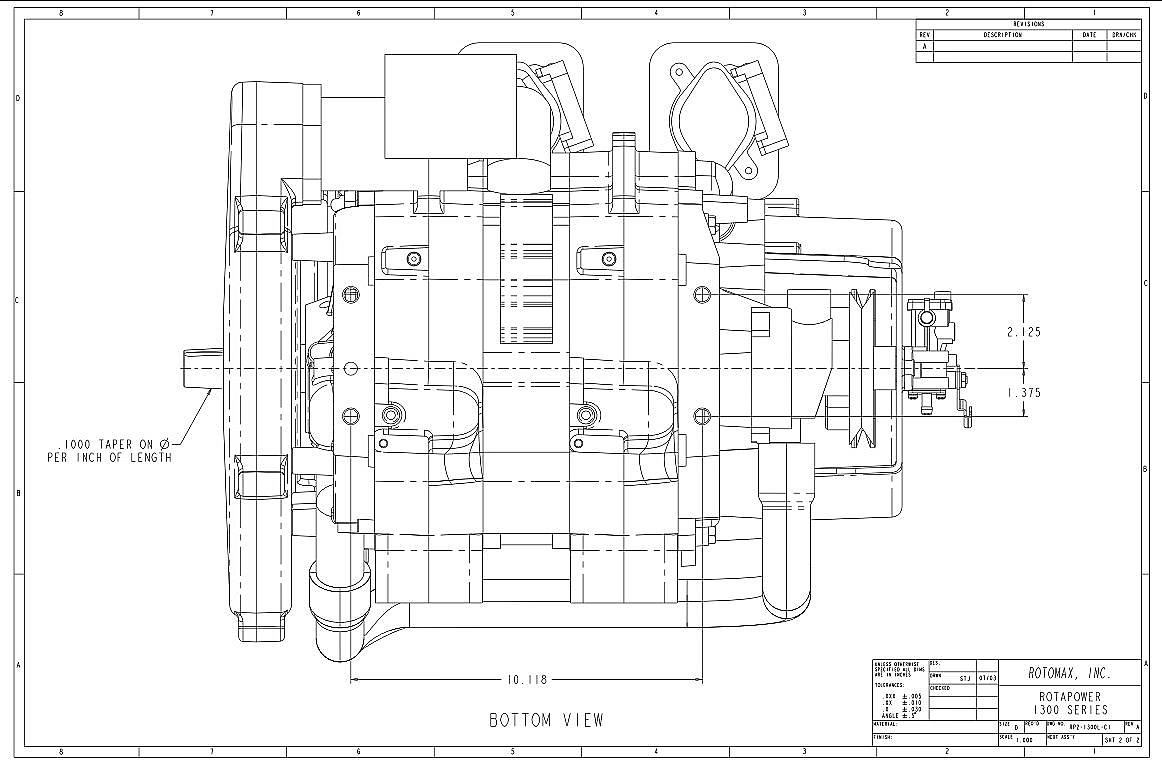
Here is some early stuff I have on the engine.
--
Paul Lamar ...No rotor no motor.
BTW from the looks of the EGT curve there is a lot of unburned fuel in the
exhaust. I would pump more hi pressure air into the exhaust and build a turbo compound
configuration to get the best out of this engine.
Also Eric look into making the e-shaft out of hydro formed thick wall 4340 tubing.
It will save you a lot of machining cost.
--
Paul Lamar ...No rotor no motor.
The Rotary Engine NewsLetter. Powered by Linux.
ACRE NL web site.
http://www.rotaryeng.net
Copyright 1998-2006 All world wide rights reserved.