John and his partner have been working on this for a long time.
Something like
20 years. Just recently did they get it flying. The first thing that
happened was they lost an apex seal. Probably due to detonation.
They over hauled the engine and then the turbo let go. Nothing new here
as that is probably about the 8th 2nd gen turbo to let go. The turbo
caught fire when it failed. Fortunately not a lot of damage and John
was able
to glide to a safe landing back at Camarillo. The turbo is being
modified
to Dave Leonards spec. Hopefully we will get a report after his 5000
to 6000
mile trip.
I was unaware they were flying. The last time I saw the airplane was
about five or six years
ago. If I had known about it I could have warned them about the
detonation
and the 2nd gen turbo. You MUST monitor the intake charge air
temperature and keep
it below 140 F or you WILL get detonation sooner rather than later.
We have known about and discussed the 2nd gen turbo problems for at
least two years
and maybe three.
The PSRU is a home made belt unit built according to Blanton's
plans. The ratio
is 2:1 so they need a lot of boost to get the HP. They had the large
pulley custom
made by a broach shop in LA.
They are running 50 inches Hg MAP for take off and 45 inches of
HG MAP for climb
out. Max rpm for climb out is 4500. Static engine RPM is 5100 RPM.
The turbo is working hard. Cruise is 4000 RPM with 42 inches of Hg.
TAS is 160 MPH. Fuel burn on take off and climb out is about 7.5 gallons
an hour extrapolated from the last short trip when the turbo failed
so they are not making very much power despite the high manifold
pressure. The manifold itself is stock without the mass air flow
sensor. Just the stock TB. You can get away with that if you use a belt
drive as the engine sits lower. They are using Tracy's EFI unit instead
of the stock computer.
During prior cruise flights they were burning 4.6 to 5.0 gallons and
hour.
More about the cooling system shortly.
Did I get all this right John?
Paul Lamar ...No rotor no motor.
Courageous, but it seems that people insist on working too hard on
things that they don't need to and skip taking care of some important
stuff. Buy the PSRU. Build (or buy) a P-Port.
_Everyone's_ time is
worth something.
I think all new installs need to run on a test stand at high power
settings - takeoff power - for at least 50 hours . If not a test stand,
on the chained down airplane with fan cooling. People make too many
rosey assumptions about how much better things will go once there's
slipstream cooling air through the system. I'd make exceptions to this
if an install is a
_direct_ copy of another which already works
reliably. In that case, only spend 25 hours on the stand. There are no
direct copies!! Hah. :) Lots of useful stuff will be learned in the
process of making it run well on the ground. It's a tough pill to
swallow because lots of builders really want to be fliers instead.
I don't think they're undergeared so much as overpropped. It's not all
that unusual for a LongEz to cruise with the prop at 3000RPM. They
aren't supposed to have props with diameter greater than 62" (though
some aircraft do), so I think 3000RPM is no big deal, and that would
allow a 6000RPM engine speed. They need less pitch, less diameter,
and/or a better prop airfoil. Do these guys have any other EZ
experience? Oh wait, are they running an IVO or Warp drive - I think I
can see it in one of the pics. How fast are they allowed to turn? And
at what RPM does that blade get really inefficient?
Matt-
I think you are being a bit hard on them Matt. A lot of these decisions
were made over ten years ago. Probably before one could buy a PSRU off the
shelf. These guys are true rotary engine pioneers along with Yvon Cournoyer
and Ken Welter with a similar belt drive PSRU's. We have come a long way since
1997. Turbo chargers have advantages at high altitude (12K to 14K) cruise.
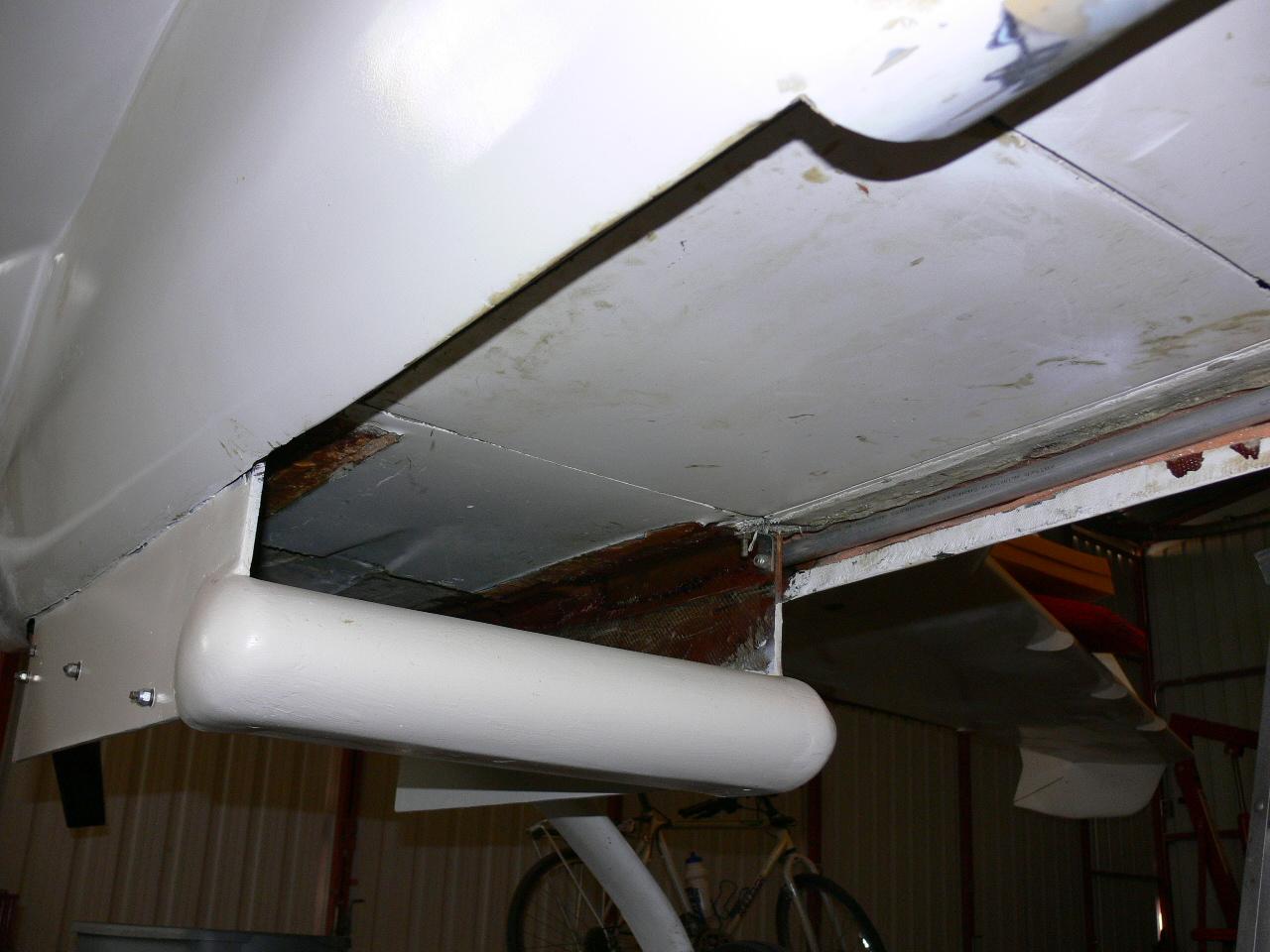
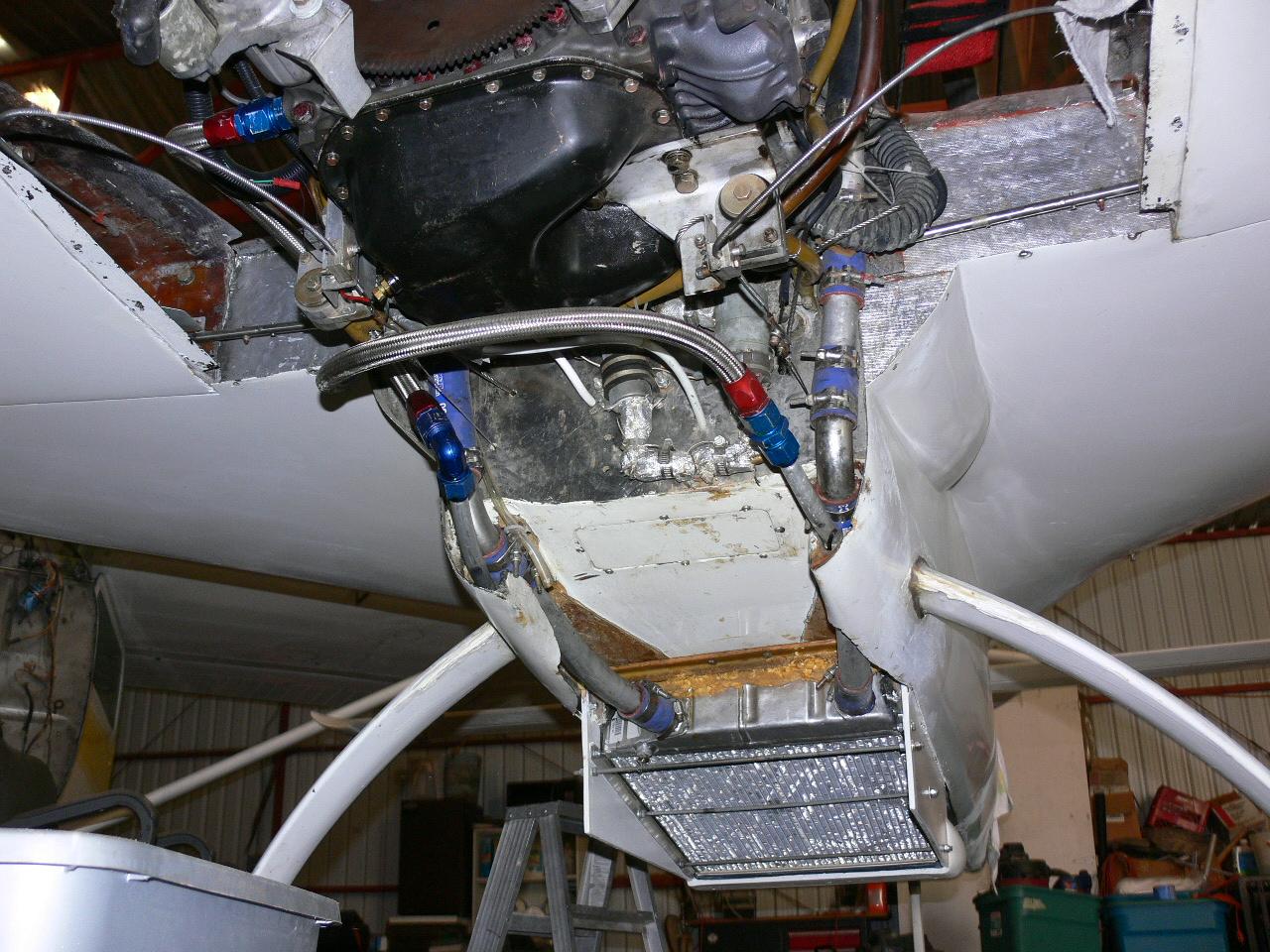
Here is the cooling stuff. The original configuration was a real thick
(5 or 6 inches) custom rad core in the nose. I did not think it would work when
I first saw it and of course it did not work. They adopted the super simple, super
quick under the fuse mounted heat exchanger with Kays & London wedge
shaped diffuser. Works like a charm. Super slick cowl. So far water temp
is 205 F take off and 185 F cruise.
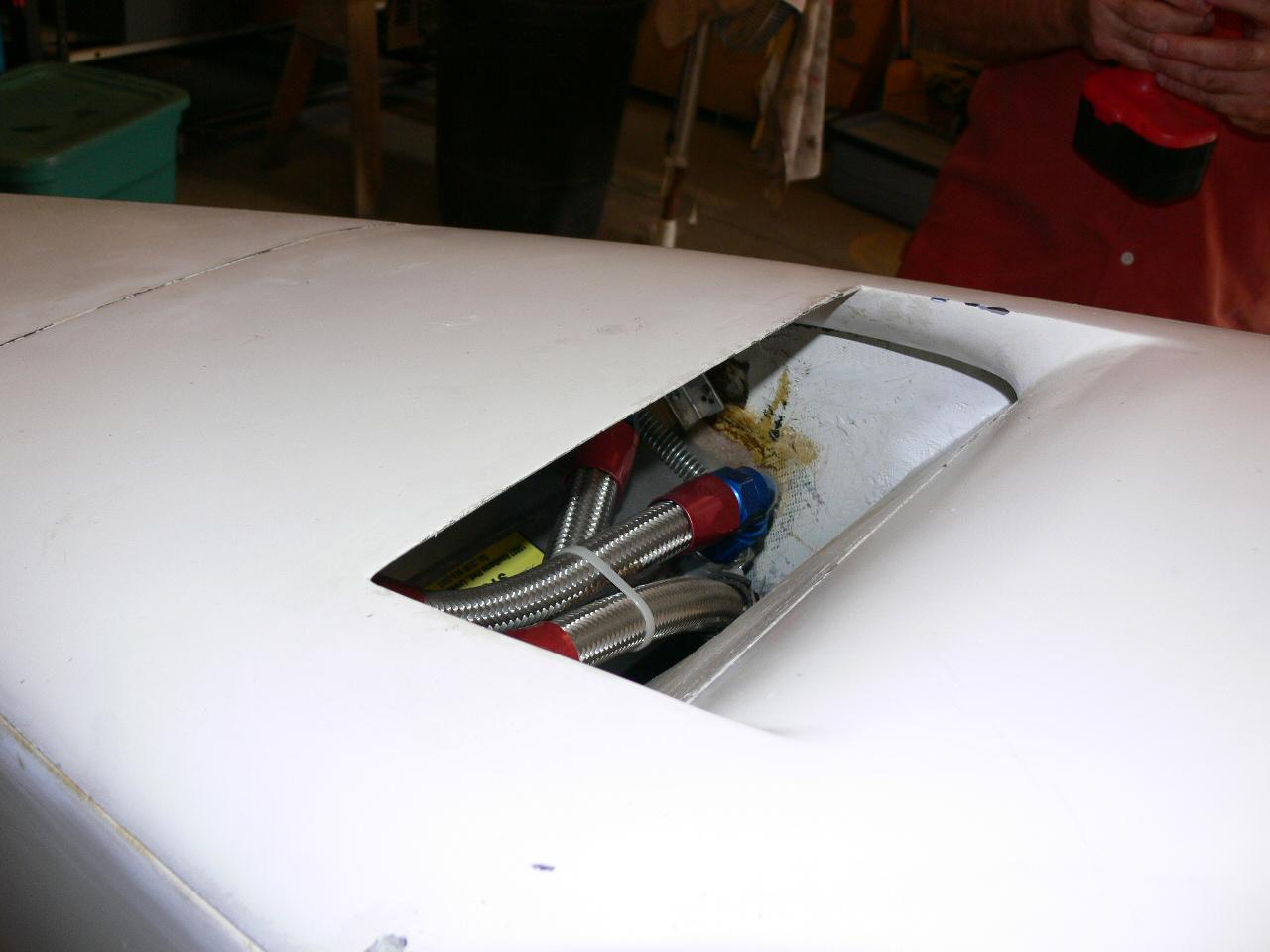
Oil cooling in the nose is two Earl's supply oil coolers back to back in the
cross counter flow configuration. In other words the back cooler gets the
hot oil first. Oil temp is 205 F on take off and climb out and 192 F
in cruise.
--
Paul Lamar ...No rotor no motor.
The Rotary Engine NewsLetter. Powered by Linux.
ACRE NL web site.
http://www.rotaryeng.net
Copyright 1998-2007 All world wide rights reserved.