Driving with the charge cooled rotor in the DKW motor bike:
· Sometimes (depending on ambient conditions) the engine
overheats at full throttle. After 10?15 minutes the power decreases and
the engine stops. After cooling down for some minutes it starts and runs
as if there was nothing before.
· Cruising with 80% of max power is possible for hours and
days. Nevertheless the rollerbearings and the rotor reaches temperatures
up to 250 °C (480 °F I think). A wonder that it lasts, but it does.
· With lots of temperature measurements we found by our
surprise, that at cruising with only 40% of max power the rotor and
bearings still have very high temperatures. I assume that at part
throttle with below athmospheric pressures there is a backflow of
exhaust gas into the internal parts of the rotor. So at this conditions
there is more an internal heating than cooling.
· Driving with alternating loads and speeds like on europaen
roads (not Highway) or in racing is no problem at all.
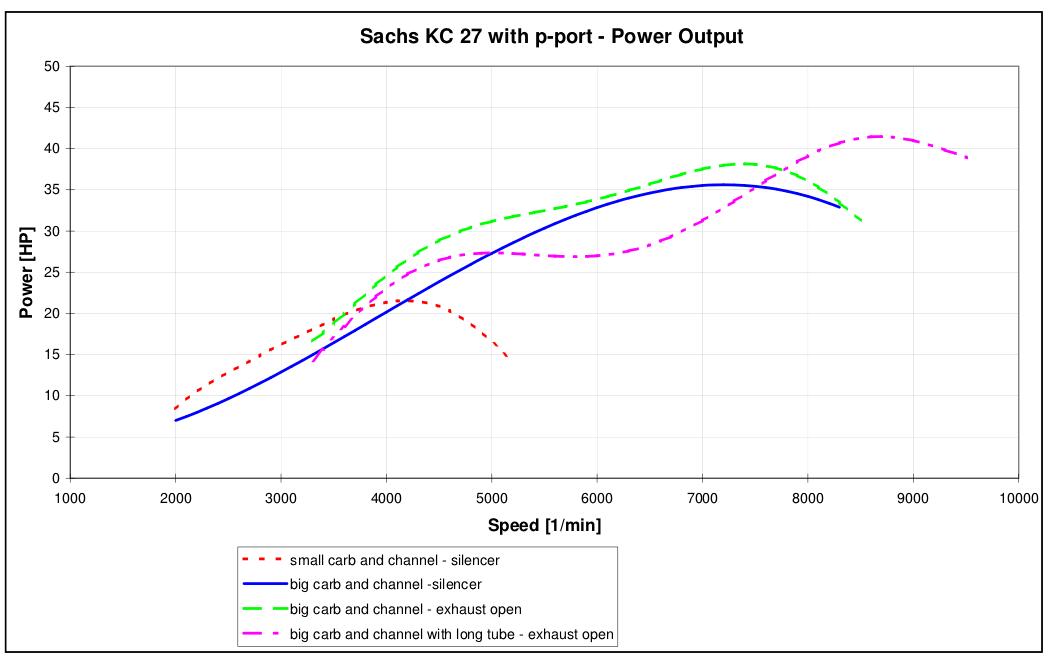
With that knowledge we ventured to drive with p-port only ? no rotor
cooling at all. With no surprise the power increased. 42 Hp (from 294
cc - 18 cu in) is quite a good result, but more remarable is how it
reacts on tuning. Changing from a low speed ?steam engine character? to
a high revver is possible with the same basis engine just by varying
external parts like exhaust, carbs and so on (see diagram enclosed). Up
to now I did more than 2500 mls on the road with it and the engine was
in our classic race bike for a test run, too. There is no guarantee and
we will see what happens.
Whatever, without that complicated oil seals at the rotor, without oil
sump, oil pump and oil cooler it is such a simple and light engine with
ultralow friction. It is much fun to work and play with.
Reiner and the motorcycle guys from Germany
OK all you one rotor fans here it is.
It is the same displacement as a Mazda one rotor but it is
a lot lighter. If I can hold it for even a short time it is
well under 100 pounds.
Right now the power is limited but I suspect with the addition of
a p-port it could be as much as 100 HP.
--
Paul Lamar ...No rotor no motor.
Paul,
Isn't the Rotamax charge cooled for the rotors? If you p port it, you loose
the charge cooling on the inside of the rotor. I expect it will need some
type of forced induction to increase power.
Larry
One would think so but apparently it still works. Here is a picture of
the AIRXO go cart
engine with both p-port and charge cool port. This engine has been
pumped up to 100
HP with a Rotrex super charger for a paraglider power plant. This must be
a worlds record power to weight ratio for an intermittent internal
combustion
engine.
What I think happens is you get some additional rotor cooling from the
charge entering
the p-port.
Perhaps what is also happening is silicon nitride ceramic roller rotor
bearings and
silicon nitride ceramic apex seals are being used so it is less
important to cool
the rotors. Ceramic roller bearings are less affected by high heat than
steel
bearings. Same goes for apex seals. Some of the reasons for oil cooling
the rotors
in the Mazda is to cool the rotor bearings and help cool the apex seals.
Most of
the apex seal cooling is now done by the injected apex seal oil in the
Mazda engine.
With less rotor cooling there is less waste cooling heat.
Paul Lamar ...No rotor no motor.
----------------------------------------------------------------------
Driving with the charge cooled rotor in the DKW motor bike:
· Sometimes (depending on ambient conditions) the engine
overheats at full throttle. After 10?15 minutes the power decreases and
the engine stops. After cooling down for some minutes it starts and runs
as if there was nothing before.
· Cruising with 80% of max power is possible for hours and
days. Nevertheless the roller bearings and the rotor reaches temperatures
up to 250 °C (480 °F I think). A wonder that it lasts, but it does.
· With lots of temperature measurements we found by our
surprise, that at cruising with only 40% of max power the rotor and
bearings still have very high temperatures. I assume that at part
throttle with below athmospheric pressures there is a backflow of
exhaust gas into the internal parts of the rotor. So at this conditions
there is more an internal heating than cooling.
· Driving with alternating loads and speeds like on europaen
roads (not Highway) or in racing is no problem at all.
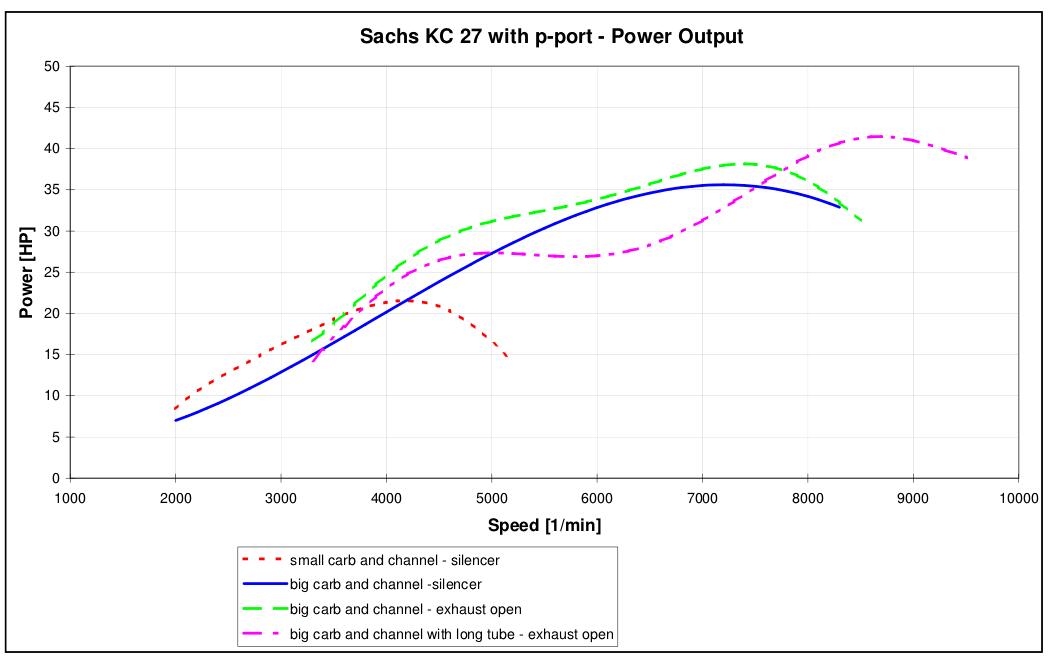
With that knowledge we ventured to drive with p-port only ? no rotor
cooling at all. With no surprise the power increased. 42 Hp (from 294
cc - 18 cu in) is quite a good result, but more remarable is how it
reacts on tuning. Changing from a low speed ?steam engine character? to
a high revver is possible with the same basis engine just by varying
external parts like exhaust, carbs and so on (see diagram enclosed). Up
to now I did more than 2500 miles on the road with it and the engine was
in our classic race bike for a test run, too. There is no guarantee and
we will see what happens.
Whatever, without that complicated oil seals at the rotor, without oil
sump, oil pump and oil cooler it is such a simpler and lighter engine with
ultra low friction. It is much fun to work and play with.
Reiner and the motorcycle guys from Germany
The Rotary Engine NewsLetter. Powered by Linux.
ACRE NL web site.
http://www.rotaryeng.net
Copyright 1998-2007 All world wide rights reserved.