Paul
John Dinkel has the best answer and he deserves the prize.
It is difficult to explain the smoke and mirror characteristics of the
Wankel engine.
But here goes
We are trying to understand the Wankel engine motion from obvious
perception.
Almost everybody believes that the earth rotates on its axis almost 365.25
times every year..
The earth in fact only rotates almost 364.25 times every year.
The act of orbiting around the sun gives us the additional day.
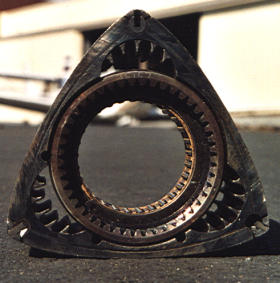
In the Wankel engine the rotor internal gear is forced to engage two thirds
of its gear teeth with the stationary gear as the rotor center is carried
the full revolution by the e-shaft lobe.
Relative to the e-shaft lobe the rotor rotates two thirds backwards as it is
carried forward by the full e-shaft revolution.
One minus two thirds creates a one third advance that comes not from the
phasing gears but from the completed orbit.
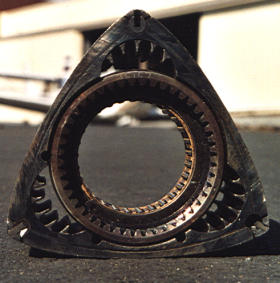
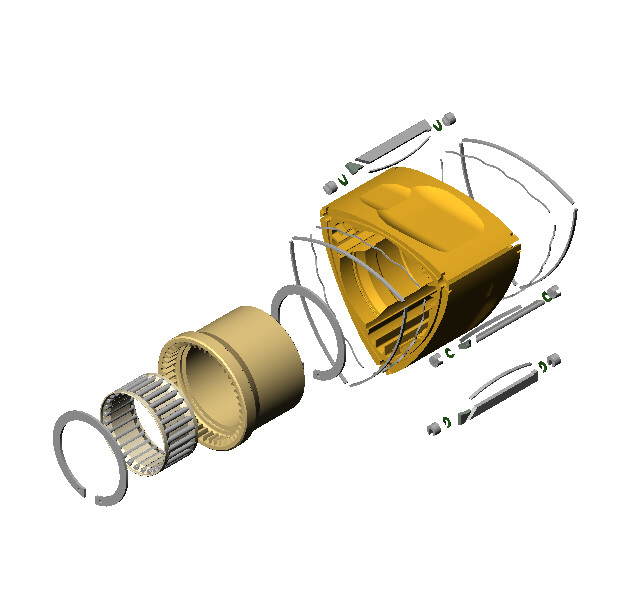
I have a concern about manufacturers (who have not taken the time to
understand the lack of friction in ball and roller bearings when they are
used in the conventional form) using them in the Wankel engine.
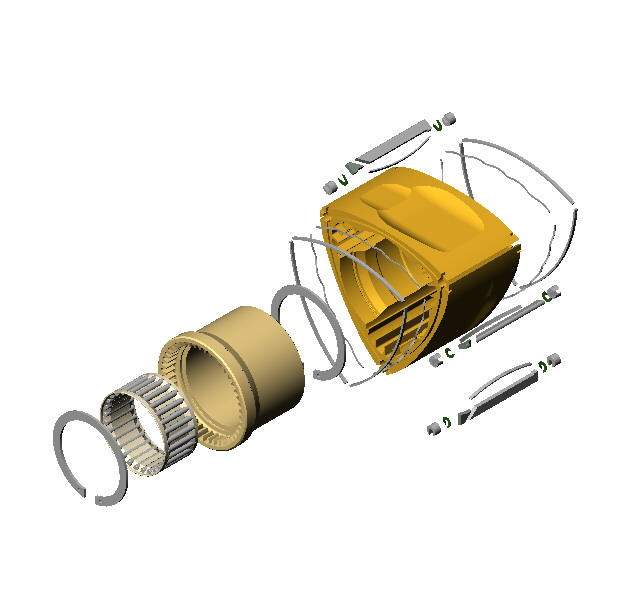
The bearing has to be specifically designed so the rotor can turn two thirds
backwards as the e-shaft turns a full revolution forwards. The measurement
of the inside of the outside race of the bearing must be divided by six to
give the exact ball or roller size. The inside race is two thirds. and
deviation from this will cause friction and heat and premature failure.
Thanks for all the interesting information.
Kenneth McKenzie
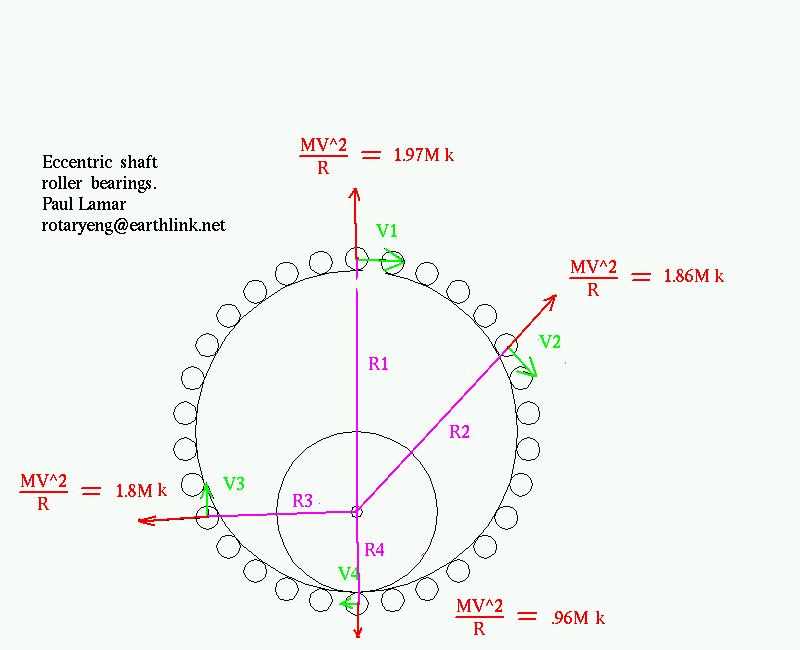
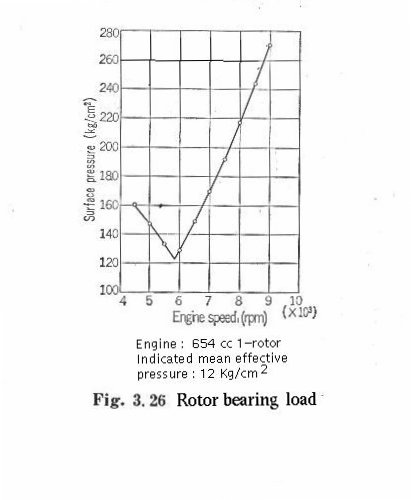
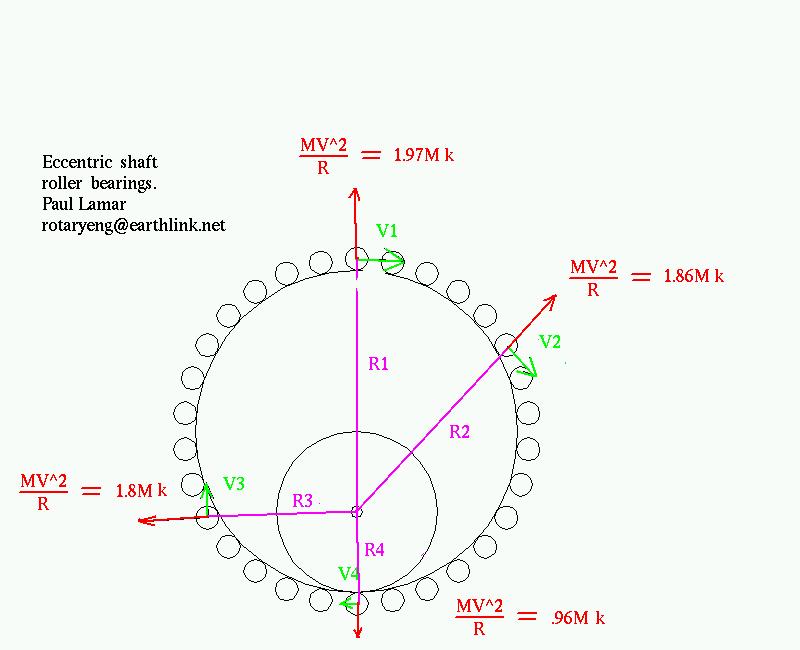
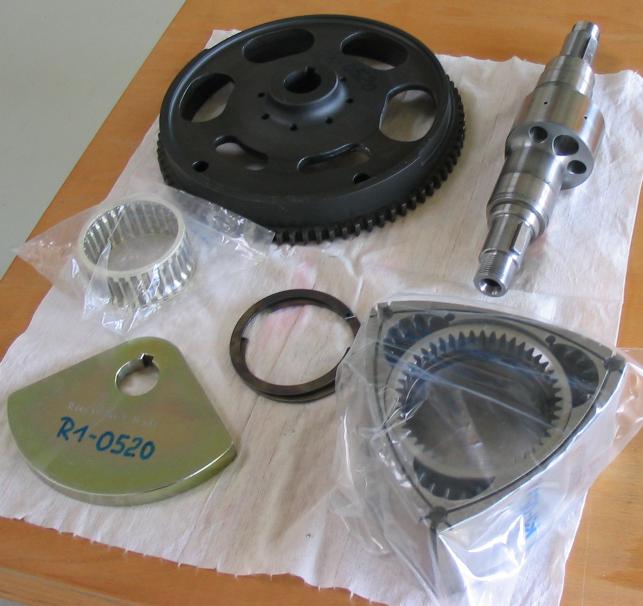
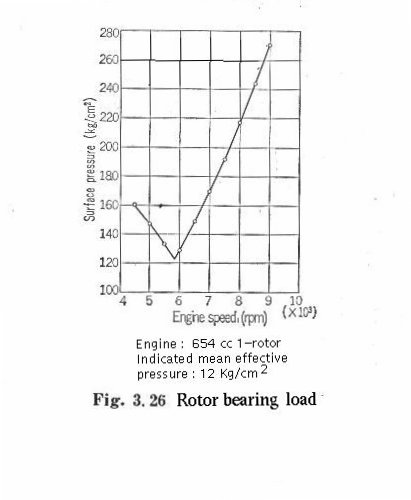
The big problem with the rotor roller bearings are the varying inertia
forces on the rollers tend to cause them to skid. A similar thing happens
in ball bearings on simple rotating shafts at extremely high RPM's due to much
simpler centrifugal forces. That is one reason lower density silicon carbide
balls are used in extremely high RPM applications. IMHO silicon carbide rollers
should also be used in rotor bearings.
BTW Come on guys we need more serious votes. Who wrote the best
description of how the Wankel works and what is its true displacement
relative to piston engines?
If you want to see all the entries over again let me know.
We will put the winning entries on the web site with credit to the winners.
We need a section on the web site explaining what its true displacement really
is. New explanations will not be accepted for the competition at this point.
Sorry Kenneth. You are too late.
We have some serious votes already but they won't be published until we get more.
--
Paul Lamar ...No rotor no motor.
The Rotary Engine NewsLetter. Powered by Linux.
ACRE NL web site.
http://www.rotaryeng.net
Copyright 1998-2007 All world wide rights reserved.