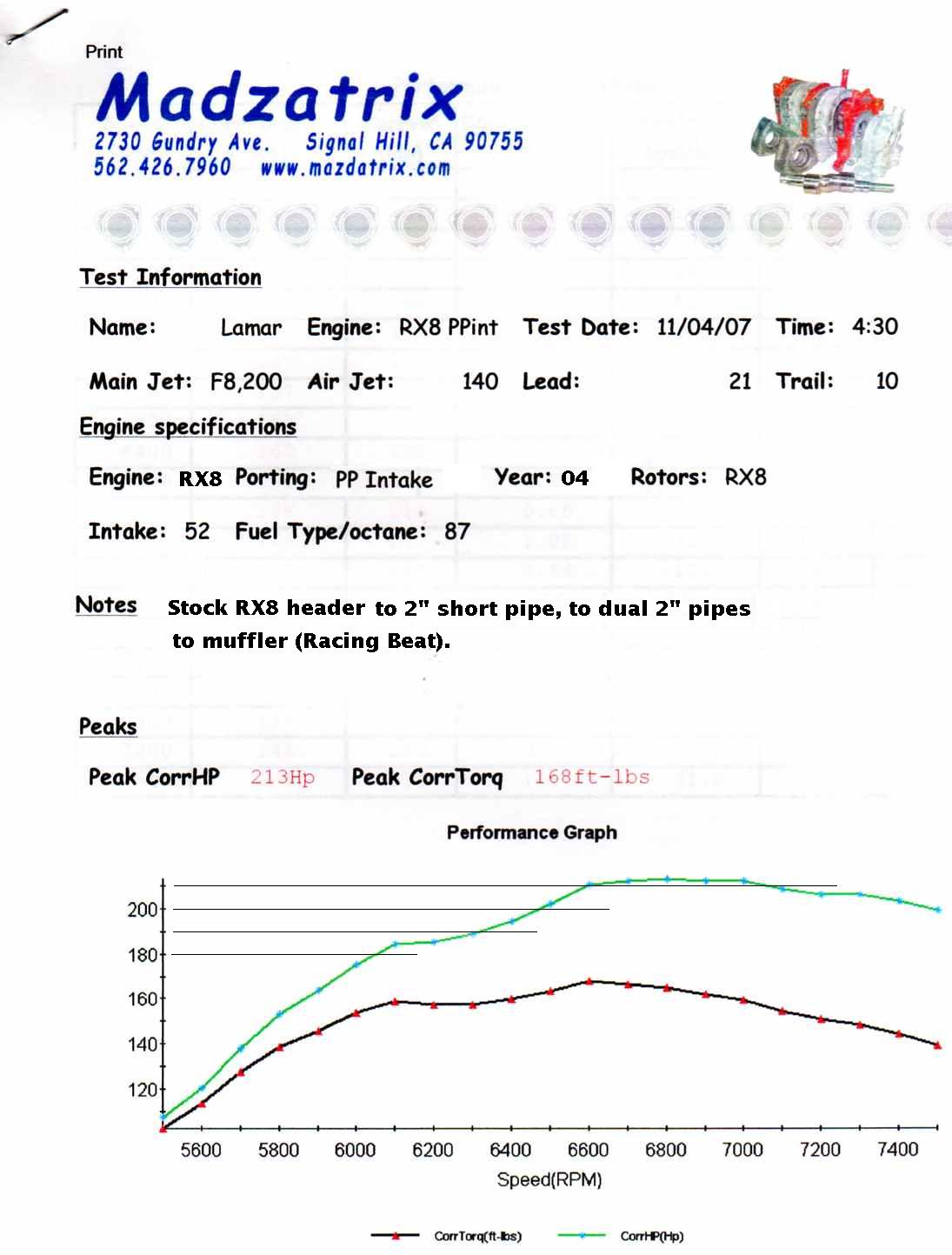
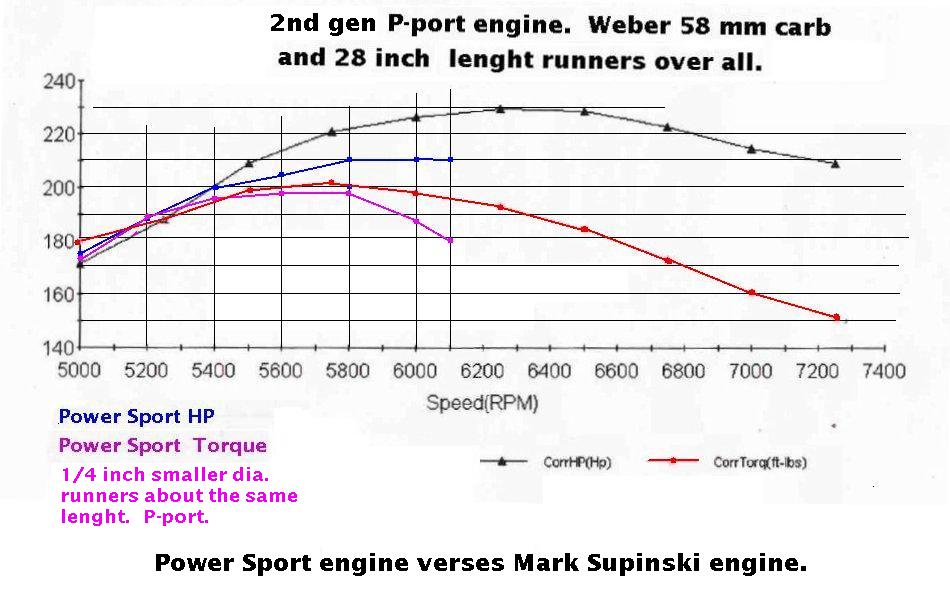
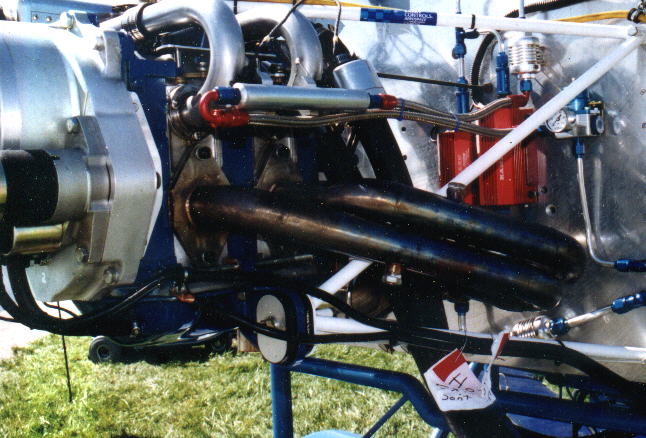
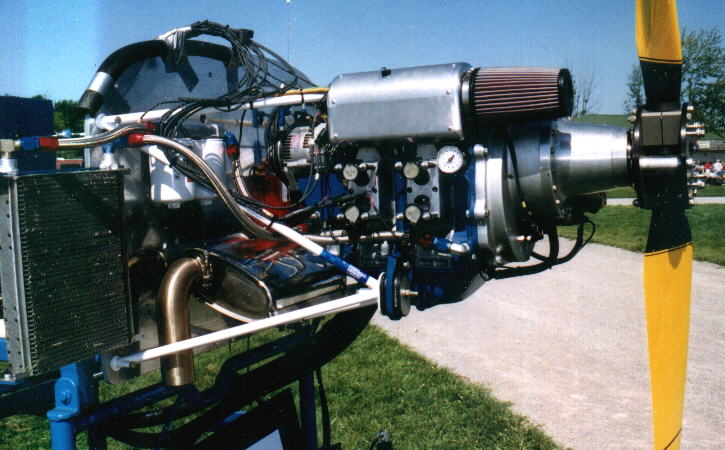
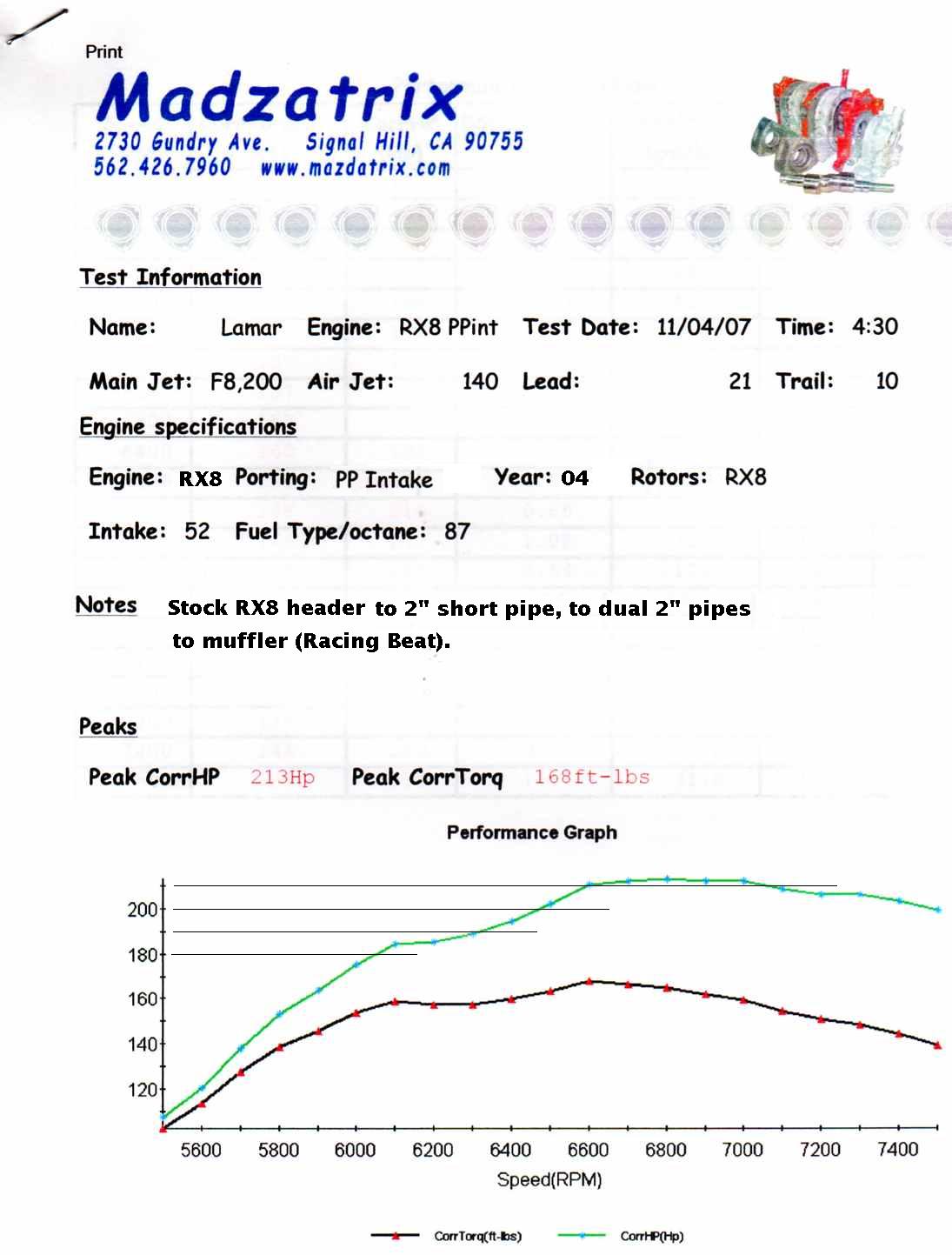
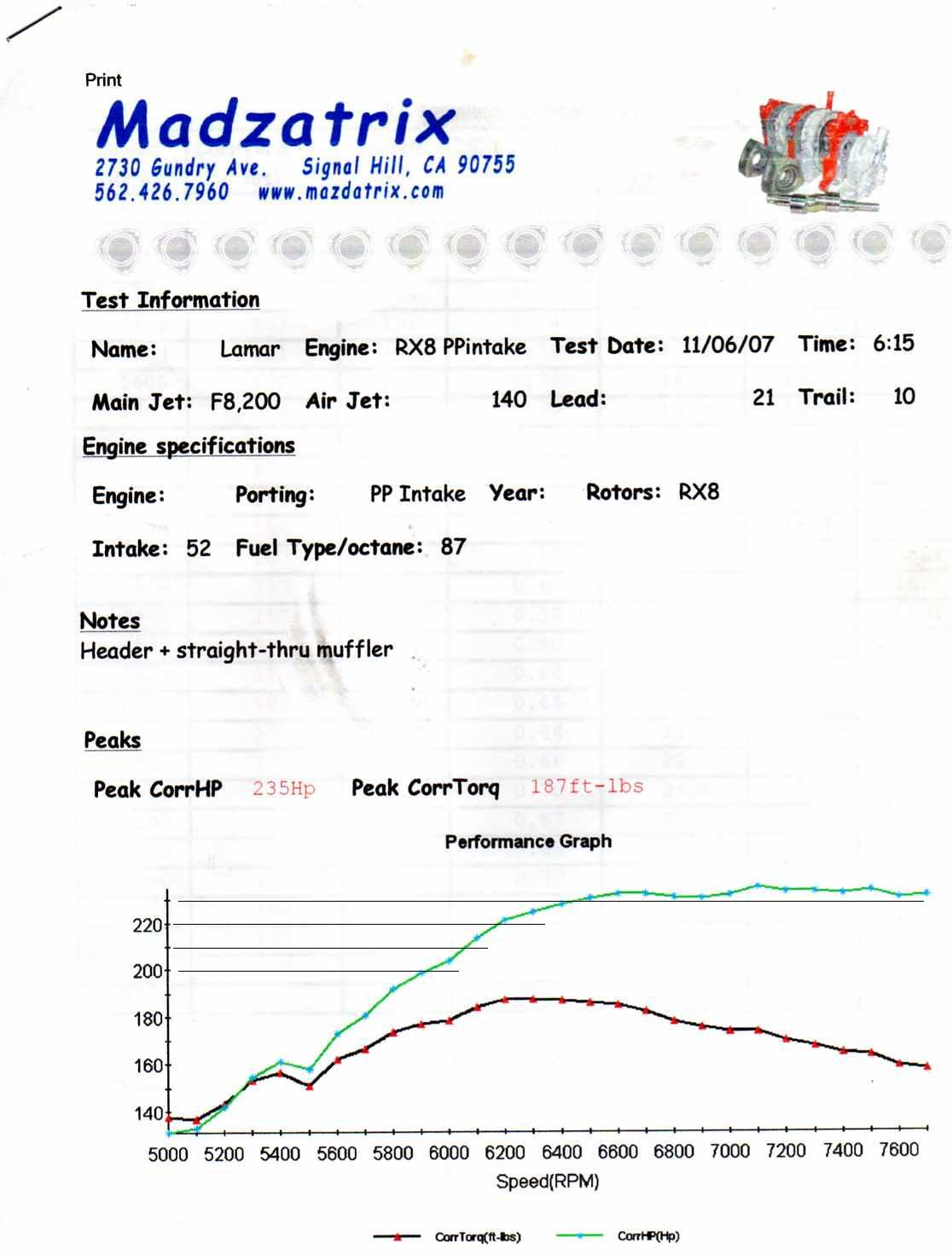
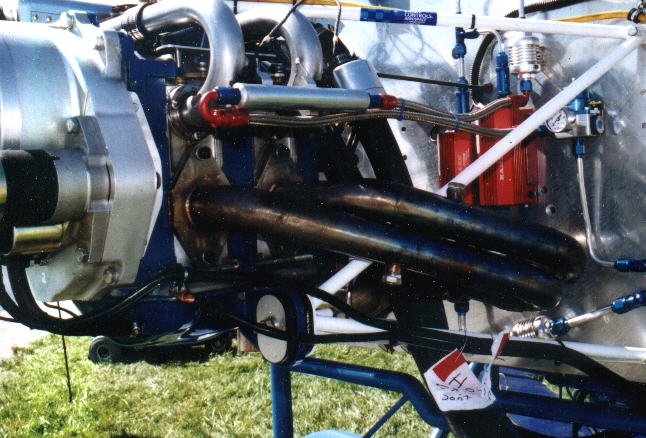
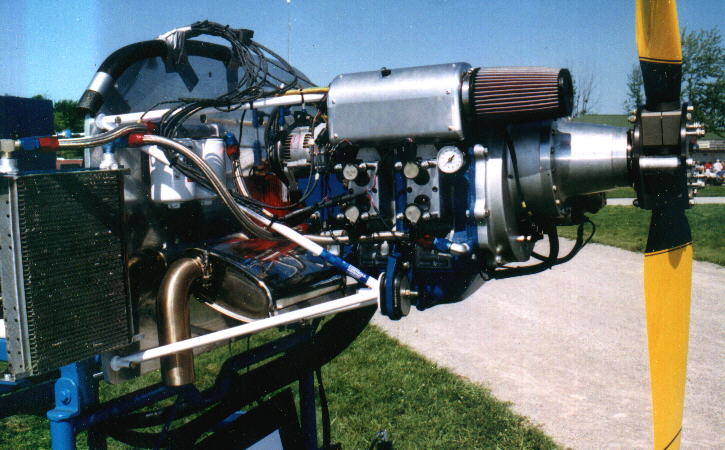
We now have Mazdatrix dyno runs on the 2 inch steel tube welded RX8
p-port
engine.
Far more torque and HP than the RX8 high power engine in the
6000 to 7500 RPM range. This is the range we use with the 2.85:1 PSRU.
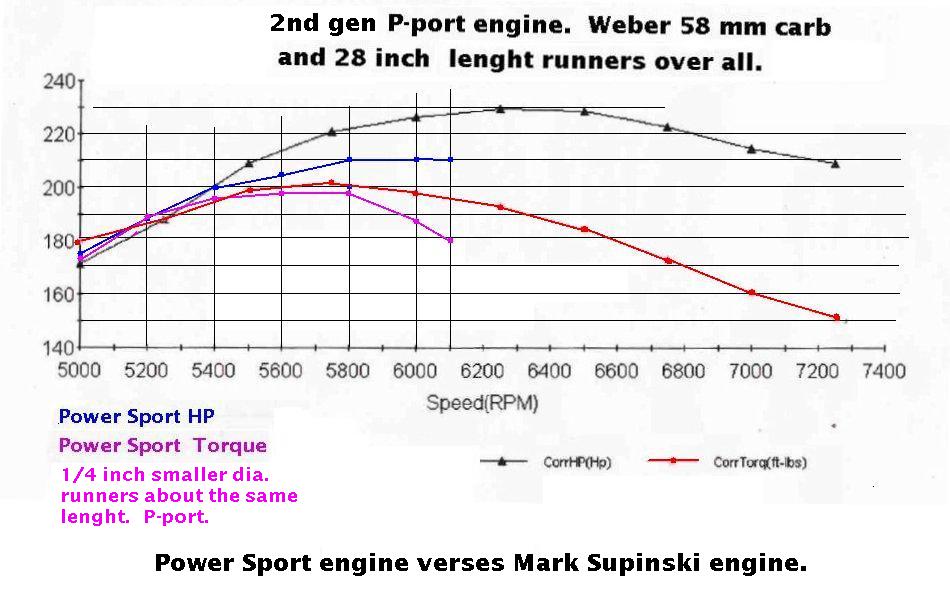
This had a 52 mm Weber carb which unfortunately is smaller
than the 58 mm Weber carb we used on the 2nd gen p-port engine
dyno runs. The 52 mm carb is showing signs of being too small.
The 2nd gen P-port engine is now running in Mark Suspinski
Mustang II. Hopefully that will fly soon.
Dave Lemon commented that the engine had extraordinary stand off
fuel/air mist
above the carb with the stock RX8 exhaust manifold. This is to be
expected
as organ tuned p-ports don't like exhaust back pressure. We use ram
air plenum's
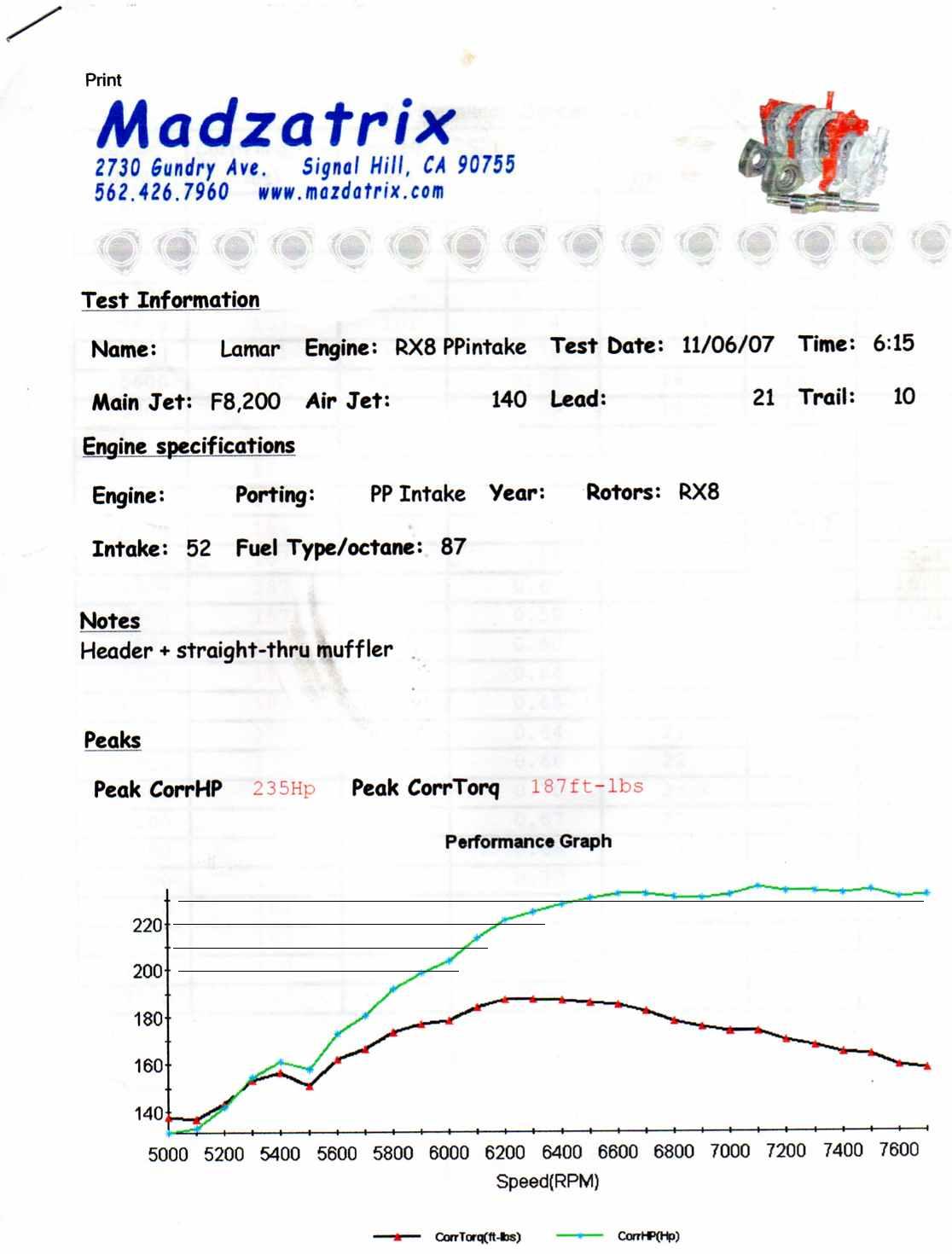
so this is not a problem for us. A supercharger exhaust manifold and
straight through
muffler reduced the stand off and increased the power. Dyno run B.
More pictures on Monday and perhaps a video of the engine running on
the dyno.
--
Paul Lamar ...No rotor no motor.
-----------------------------------------------------------------
Paul,
Thanks for filling in at Copperstate- you did an excellent job.
Do you happen to have dyno numbers for the sideport RX8 6-port? The
_OEM Renesis "claimed" _output appears to be quite close to your dyno
measurements. I wonder how much hp/torque the p\port mod adds, though
its likely too early to compare the two setups without the optimum carb
setup. Do you feel the "upgrade" was worth the cost and effort given
the added stress to apex seals and possibly increased wear from running
at a higher rpm range.
Im interested, as I now have a 4-port Renesis; and this seems a
reasonable way to improve performance in the future, if needed. Did
anyone happen to comment on differences regarding noise levels with the
p\port intake?
Mike Parker
-----------------------------------------------------------
Thanks Mike.
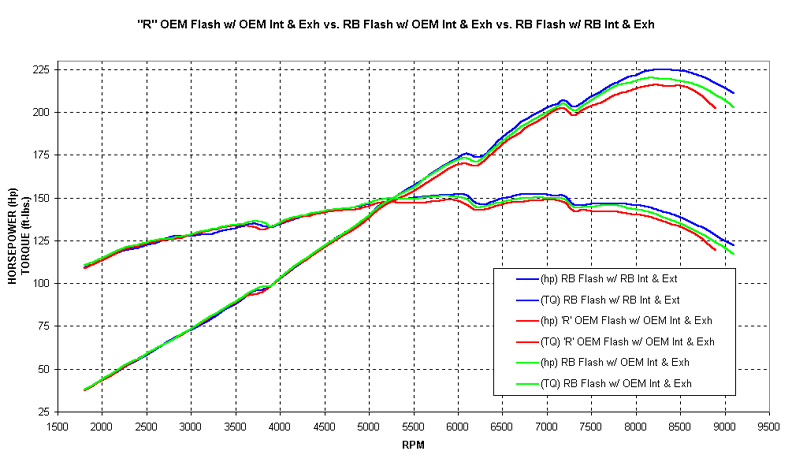
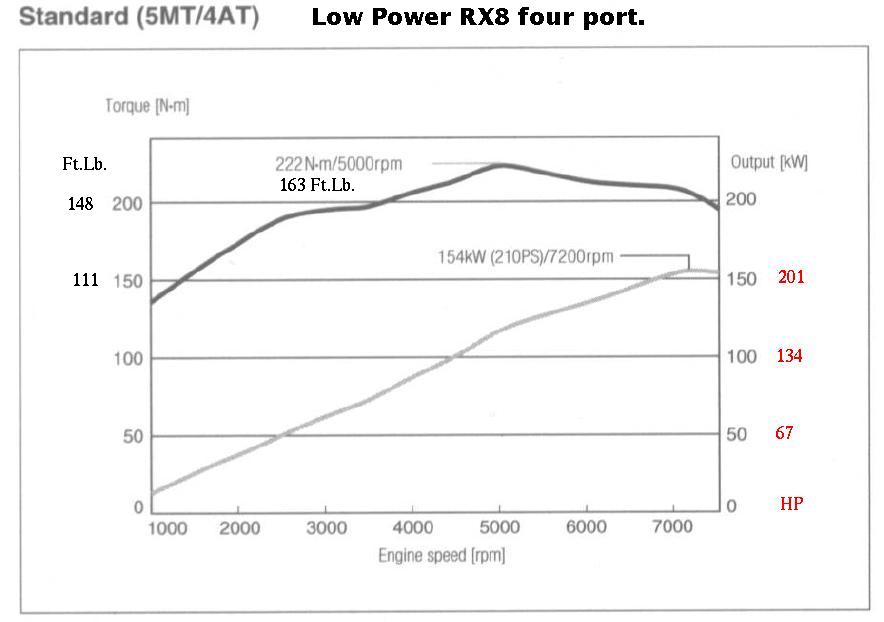
Jim Medere, of Racing Beat fame, ran some dyno numbers on the high power RX8 engine.
Not as much HP as Mazda claimed. Here are the curves.
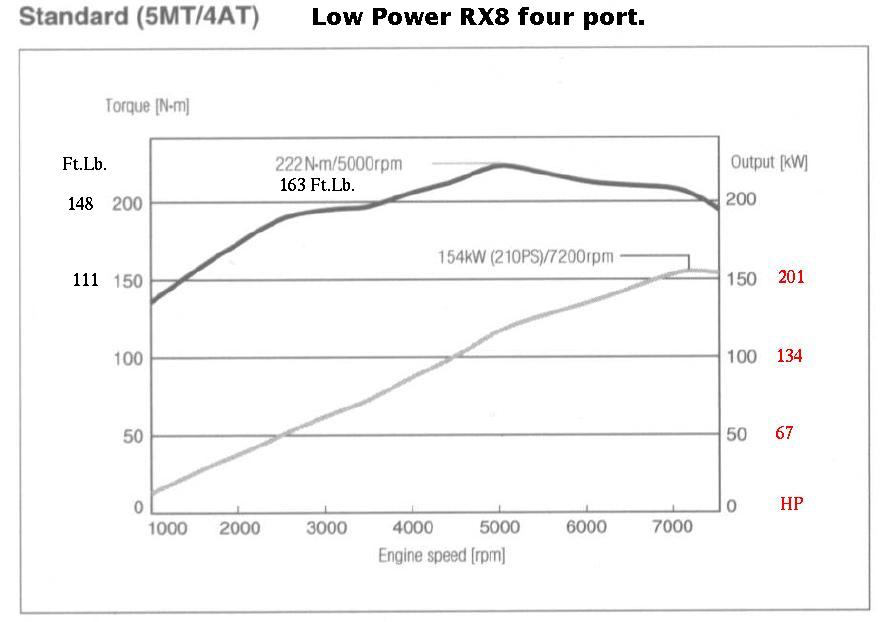
Also here are the Mazda claims on the four port RX8 version.
A p-port on the four port RX8 engine version would be a very good idea.
The p-port configuration will always give you more torque in the
RPM range we are interested in. Namely 5000 RPM on up. That translates
to more power. The reason is; intake manifolds are aerodynamic devices.
Forcing the air to turn corners results in aerodynamic drag. That in turn
results in a reduction in the amount of air entering the engine. Less air,
less fuel, less power.
The p-port rotary engine is unique in the world of piston ported engines
(mostly two cycle engines) as the air never needs to change direction.
Consequently the p-ported Wankel engine is unprecedented in terms of
volumetric efficiency.
Note; the Power Sport engine is EFI. This engine powered a four place
Velocity airplane from Dayton Ohio to Oshkosh Wisconsin at an average
speed of 205 MPH for 500 miles. Fuel burn was 12 gallons an hour or
17 MPG. This race was sanctioned by the EAA so the results are a matter
of public record.
The added stress on the apex seals is minimal as the identical 2nd and 3rd gen
apex seals have no trouble with the peripheral exhaust port. I don't know where
this harder-on-the-apex-seal myth comes from :) The exhaust p-port is far harder on the
apex seals as they have to deal with the 1800 F exhaust gas temperatures.
BTW this p-port intake RX8 engine has about the same overlap numbers as the
3rd gen engine but still has the advantage of recycling all unburnt fuel.
Paul Lamar ...No rotor no motor.
The Rotary Engine NewsLetter. Powered by Linux.
ACRE NL web site.
http://www.rotaryeng.net
Copyright 1998-2007 All world wide rights reserved.