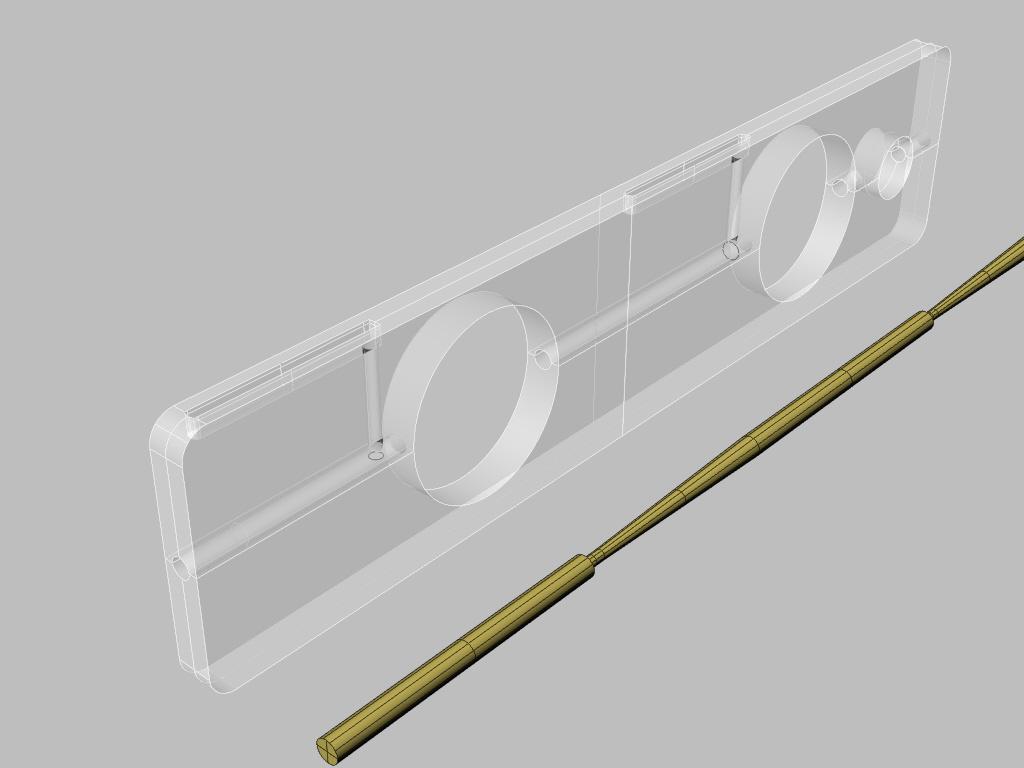
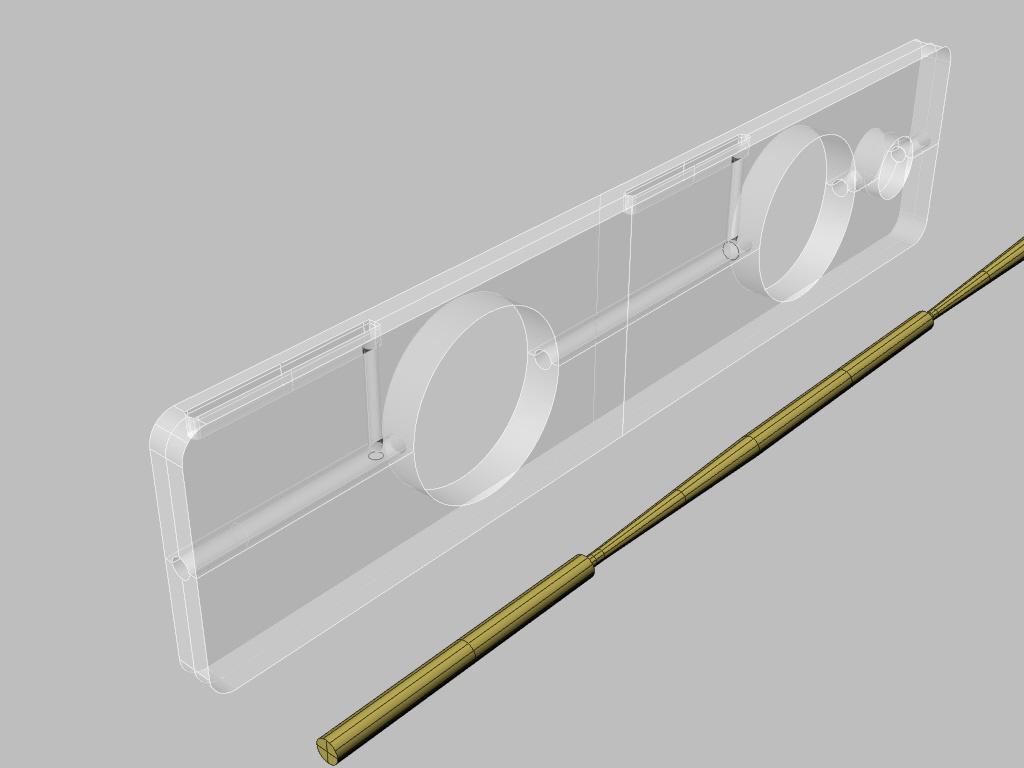
I don't know why I did not think of this a couple of years ago.
I just was not thinking fixed needle movable fuel jet.
This is by a factor of ten simpler and easier to build than anything I
have come up with
so far. It uses a low pressure pump and a low pressure pressure
regulator.
Your done!!!! Assuming you have a slide throttle. Adjust the regulator to
lean.
Turn the pump on after the engine is turning over to start.
To prime turn the pump on for a second or two and then off.
Paul Lamar ...No rotor no motor.
Paul,
This seems to be a fixed needle, (with integral needle and jet) x 2.
Wouldn't the fuel therefore need to be fed to the other, thicker end of
the
needle.The biggest draw-back of a fixed needle is getting the fuel to the
jet, as the jet would be in most cases moving with the slide.
You have designed around this problem but I do see a couple of things to
consider, like the thickness of the needle- rod , but that is just a
relative thing ( i.e. fuel flow to air flow). I would personally go for
the
flat ground needle to maintain more width thickness of the needle,
therefore
keeping the needle diameter down to the smallest size.
One of the claimed draw-backs of the round ground needle is that it tends
to
rub against the jet wall in one area and causes uneven wear of the jet,
that
leads to an uneven flow distribution. However where it's one piece like
this, there isn't that sort of problem.
I may be wrong but I thought that round ground needles needed the
increased
signal of a venturi to better draw the fuel. That's why I like the flat
ground needle as it creates it's own low pressure area behind the needle,
which draws the fuel up through the jet. Then again you mentioned the low
pressure pump and Regulator to initiate and maintain correct fuel flow. I
will use the same system but just enough pressure to get the fuel to
within
striking distance, to respond to the low pressure area created by the flat
ground needle.
If I am seen to be pushing the flat ground needle, it's just because I
would
like both yourself and Doug to fully understand the benefits, before you
eliminated it as a contended for a design.
One other thing to consider is fuel cut-off, but I suppose you will just
cut-off the fuel pump?
George (down under)
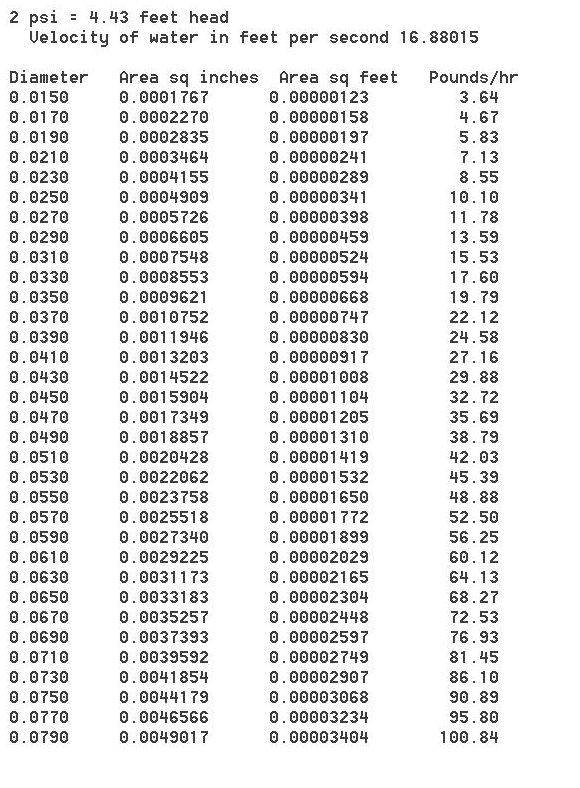
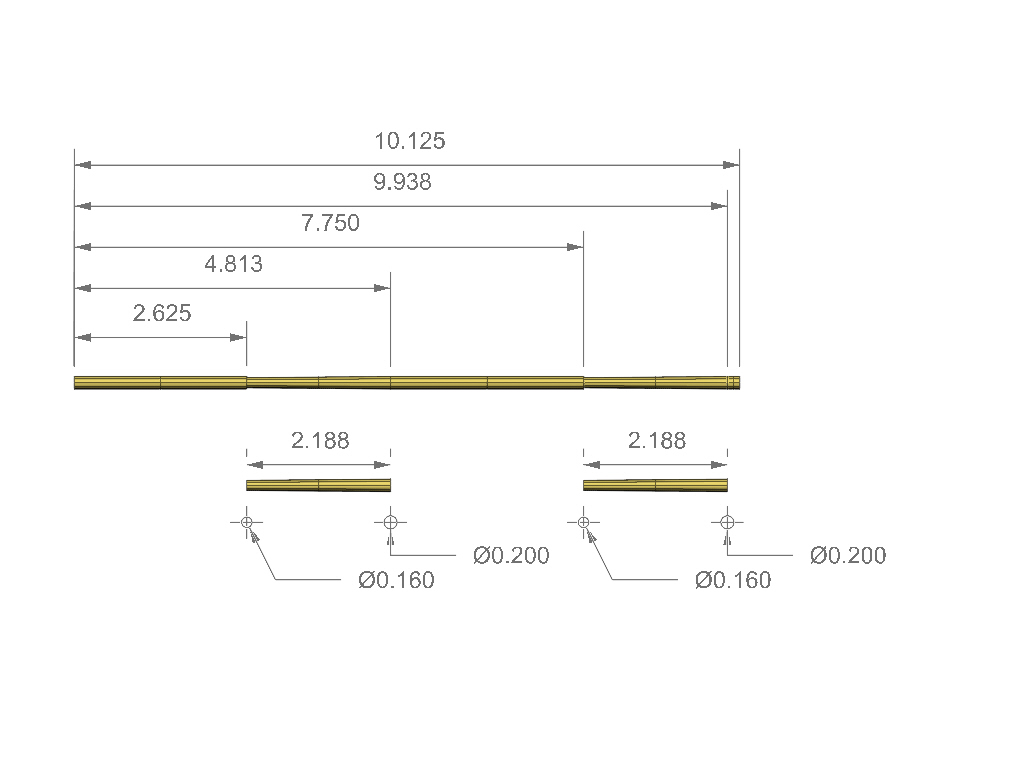
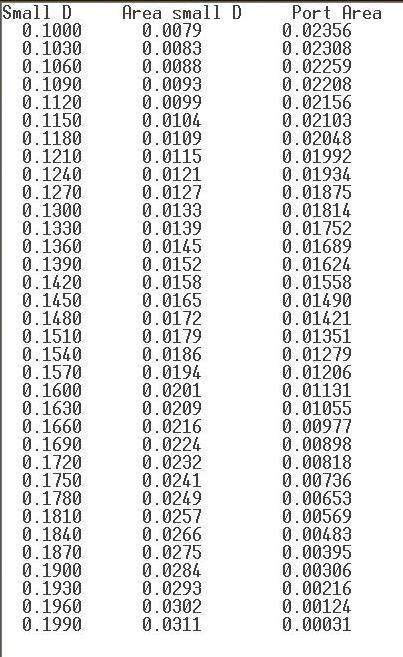
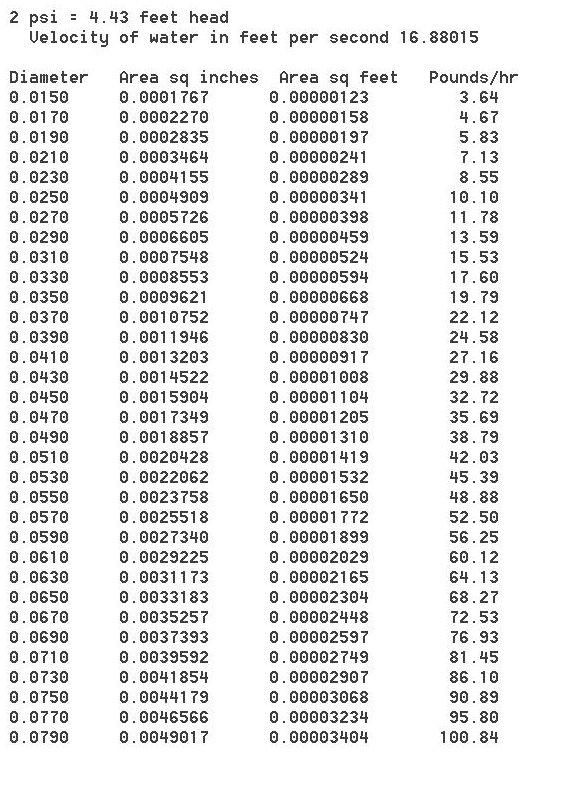
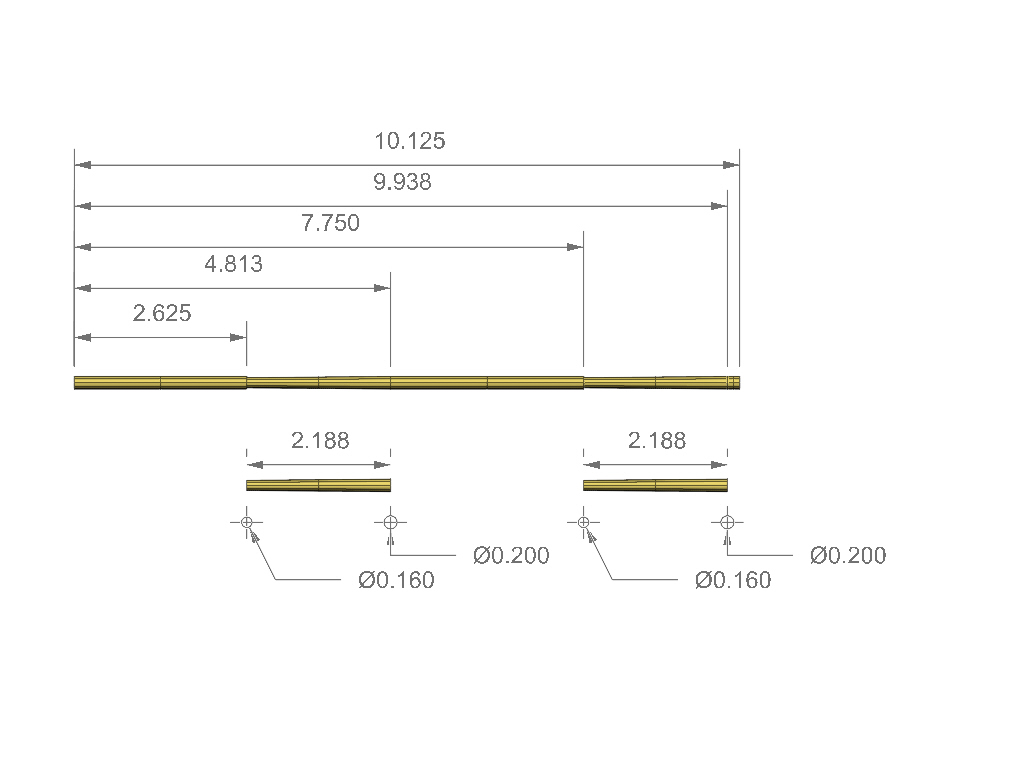
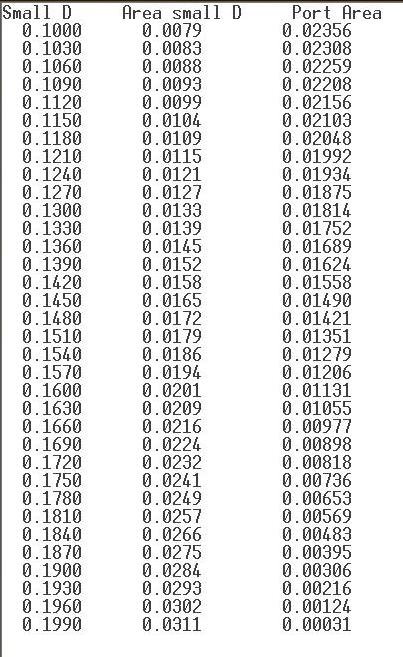
Here is the needle design and a chart showing fuel jet port area as a
function
of the smaller diameter of the needle. The OD of the needle is .2 inches.
Looks like the small diameter should be about .16" for a fuel flow
of 22 gallons an hour high power at 2 psi fuel pressure.
This is going to be one super cheap FI system using only off the shelf low
pressure fuel pumps and an adjustable low pressure regulator.
Dave, hang on to my RX8 p-port engine. I am making one of these and we
will be trying it again on the dyno soon. Stand off mist should
not be a problem as the fuel is injected down near the engine
16 inches away from the runner bell mouths and about 3 inches
in from the p-port itself. In other words inside the sealed slide
throttle.
--
Paul Lamar ...No rotor no motor.
Paul,
If your referring to the graph in the previous e-mail ( 2 psi) and your
estimating approx ( I use my own figures) 10.5 gph x 6 lbs per gallon = 63
lb/hr ( per rotor) would indicate .063 "( dia). In my flat needle .0625" (
1/16") is half of my ground needle of 1/8 "( .125").
Most of the needles I've seen are no more than 1/8" before taper and I have
copied that. Being one piece your needle my be thicker. In this application,
I would reconsider the hollow needle with the small holes at the back like
the Ellison. The low pressure are behind the needle is the same principle as
in the flat needle.
George (down under)
Opss you are right! I need more like 100 pounds per hour or 16.7 gallons an hour
per rotor. Looks like the small diameter will be .1 inch or less. I was mistakenly
reading the chart as gallons per hour. Of course I can always jack up the pressure
a bit to squirt more fuel with small diameter of .1 inch.
There is no reason a .2 inch needle instead of .125 inch diameter cannot be used.
What counts is the opening AREA of the jet. The small diameter is what counts.
I need the larger diameter for structural reasons as the needles are connected
end to end.
I am figuring full rich 12.5:1 WOT.
Paul Lamar ...No rotor no motor.
The Rotary Engine NewsLetter. Powered by Linux.
ACRE NL web site.
http://www.rotaryeng.net
Copyright 1998-2007 All world wide rights reserved.