>>> I don't know why I did not think of this a couple of years ago.
>>> I just was not thinking fixed needle movable fuel jet.
>>> This is by a factor of ten simpler and easier to build than
anything I
>>> have come up with
>>> so far. It uses a low pressure pump and a low pressure pressure
>>> regulator.
>>> Your done!!!! Assuming you have a slide throttle. Adjust the
regulator
>>> to
>>> lean.
>>> Turn the pump on after the engine is turning over to start.
>>> To prime turn the pump on for a second or two and then off.
>>>
>>> Paul Lamar ...No rotor no motor.
>>
>> Paul,
>> This seems to be a fixed needle, (with integral needle and jet) x 2.
>>
>> Wouldn't the fuel therefore need to be fed to the other, thicker
end of
>> the
>> needle.The biggest draw-back of a fixed needle is getting the
fuel to the
>> jet, as the jet would be in most cases moving with the slide.
>>
>> You have designed around this problem but I do see a couple of
things to
>> consider, like the thickness of the needle- rod , but that is just a
>> relative thing ( i.e. fuel flow to air flow). I would personally
go for
>> the
>> flat ground needle to maintain more width thickness of the needle,
>> therefore
>> keeping the needle diameter down to the smallest size.
>>
>> One of the claimed draw-backs of the round ground needle is that
it tends
>> to
>> rub against the jet wall in one area and causes uneven wear of
the jet,
>> that
>> leads to an uneven flow distribution. However where it's one
piece like
>> this, there isn't that sort of problem.
>>
>> I may be wrong but I thought that round ground needles needed the
>> increased
>> signal of a venturi to better draw the fuel. That's why I like
the flat
>> ground needle as it creates it's own low pressure area behind
the needle,
>> which draws the fuel up through the jet. Then again you
mentioned the low
>> pressure pump and Regulator to initiate and maintain correct
fuel flow. I
>> will use the same system but just enough pressure to get the fuel to
>> within
>> striking distance, to respond to the low pressure area created
by the
>> flat
>> ground needle.
>>
>> If I am seen to be pushing the flat ground needle, it's just
because I
>> would
>> like both yourself and Doug to fully understand the benefits,
before you
>> eliminated it as a contended for a design.
>>
>> One other thing to consider is fuel cut-off, but I suppose you
will just
>> cut-off the fuel pump?
>>
>> George (down under)
>>
>>
>> Here is the needle design and a chart showing fuel jet port area
as a
>> function
>> of the smaller diameter of the needle. The OD of the needle is
.2 inches.
>>
>> Looks like the small diameter should be about .16" for a fuel flow
>> of 22 gallons an hour high power at 2 psi fuel pressure.
>>
>> This is going to be one super cheap FI system using only off the
shelf
>> low
>> pressure fuel pumps and an adjustable low pressure regulator.
>>
>> Dave, hang on to my RX8 p-port engine. I am making one of these
and we
>> will be trying it again on the dyno soon. Stand off mist should
>> not be a problem as the fuel is injected down near the engine
>> 16 inches away from the runner bell mouths and about 3 inches
>> in from the p-port itself. In other words inside the sealed slide
>> throttle.
>> --
>> Paul Lamar ...No rotor no motor.
>
> Paul,
> Most adjustable low pressure fuel regulators go to 6 psi, so if your
> set-up
> shows your running too lean you can adjust your regulator. I see the
> regulator as the course adjustment and would suggest a fine
adjustment of
> the needle, simply by having a thread and nut to adjust the
needle up and
> down (back and forth).
>
> Of course most needles aren't just one linear line form fully open to
> fully
> closed, they are stepped and change from idle to cruise to wot.
Exactly
> where and by how much is a matter for experimentation. This is
where an O2
> sensor comes in handy, as it will identify where the needle is
too thick
> or
> too thin.
> George ( down under)
>
> That is a REAL good idea George. Really easy to implement on this
design
> as the needle sticks out the front end of the slide. Thanks for
thinking
> of
> that. It could be motorized even with a big gear and a small
pinion turned
> by a DC motor.
>
> I don't think you need the stepped needle because in an aircraft
engine
> you adjust the leaning at steady RPM cruise. You take off at WOT.
It is
> not
> like a car or a motor cycle where the RPM and load vary over a
wide range.
> All you need is to keep the engine running and the rotary will
run from
> about
> 10:1 to 18:1 mixture.
>
> --
> Paul Lamar ...No rotor no motor.
Paul,
You may well be right about the needle taper, I hope you are, it
would sure
make things easier.
On the threaded adjustment of the needle, this could be manually
done, as it
is currently done - from the cockpit / turn knob, for rich and lean,
with
the cable going from cockpit ( knob) to the needle/jet threaded rod.
This is how I plan my rich/ lean adjustment also.
The next thing I would reconsider is moving away from the electric
pump and
going back to the manual pump you designed a little while back OR
have both
for redundancy. Certainly use the electric pump for testing.
The carb discussion has been very stimulating, I wish Doug had
tossed in his
2 cents worth. It's always interesting to see others opinions and if
I have
contributed in any way - it's my pleaser to do so. Acceptance of an idea
reinforces that I am heading in the right direction also.
George (down under)
I kind of like the idea of an engine driven primary pump. I haven't
been keeping up with the details of this injection/carb system (I
apologize), but an engine driven pump might make flow regulation
easier. As the engine slows down the pump can supply lower
pressure/volume. Then you just need to regulate fuel flow based on
manifold pressure (or mass flow).
Use the electric pump to prime and as a backup.
Regards,
Matt-
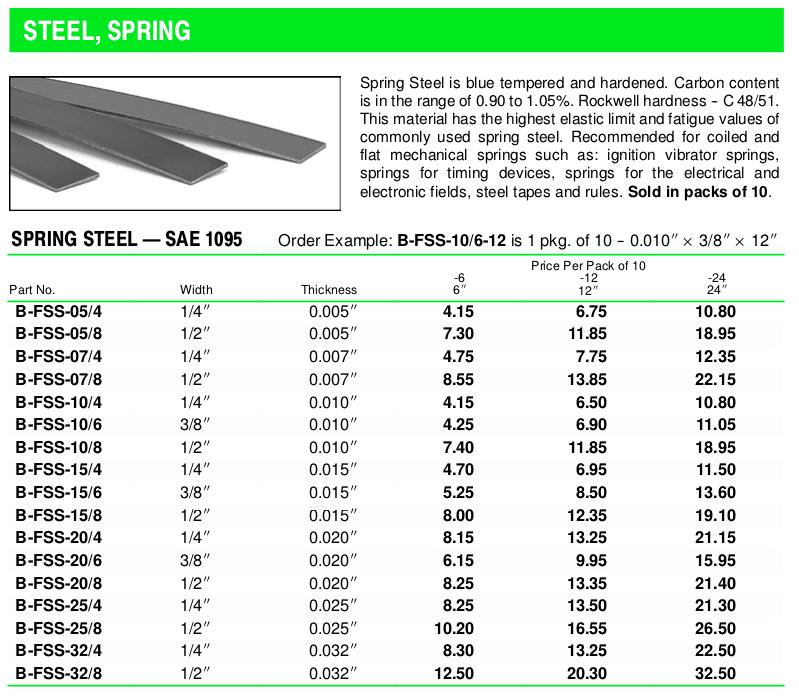
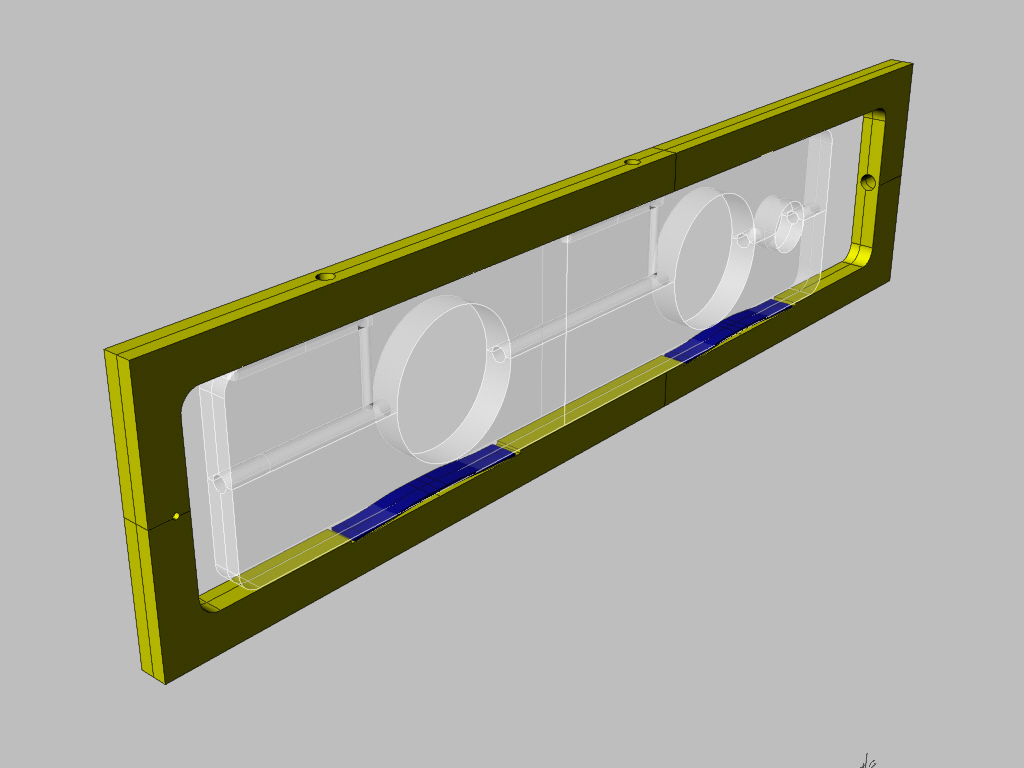
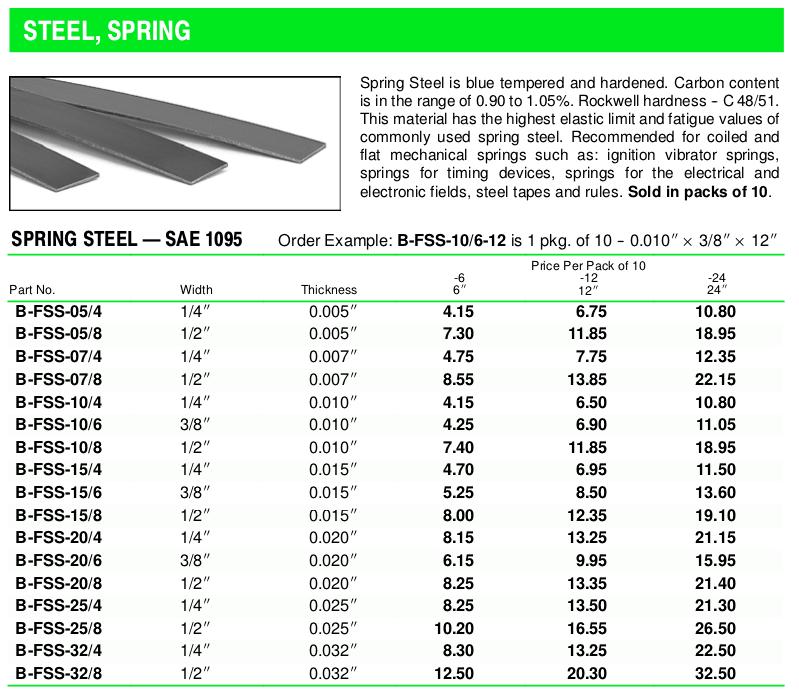
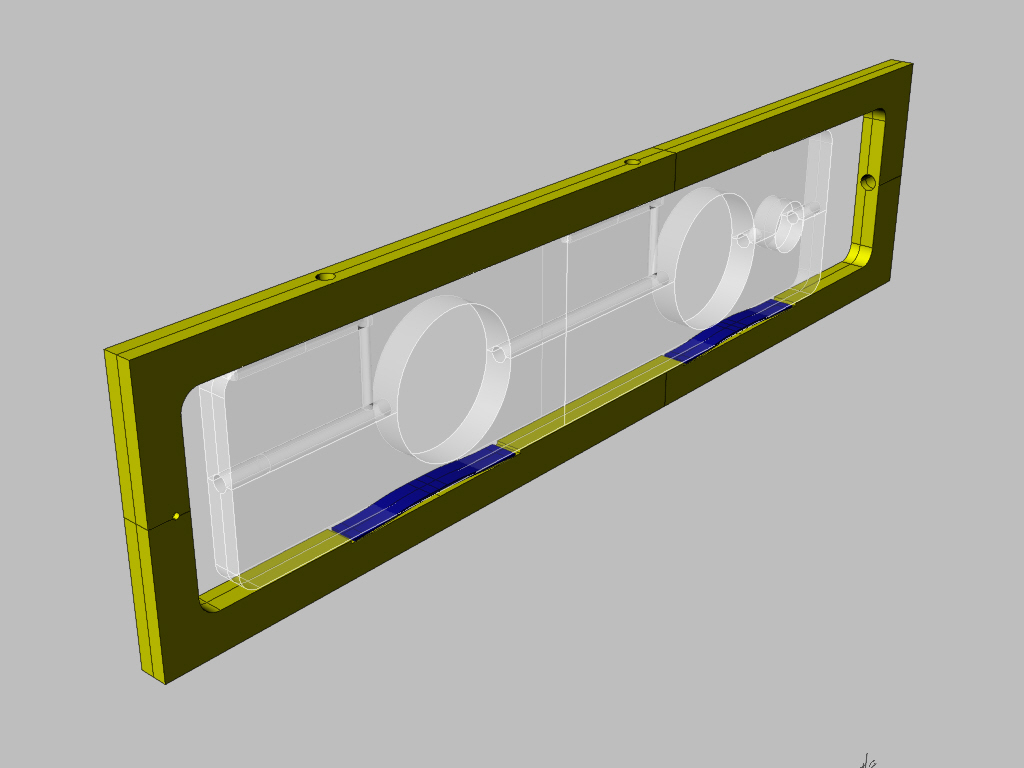
I needed some flat springs to push up on the bottom of the slide to
seal the fuel ports coming down from the top.
I found this amazing company on the net called Small Parts Inc.
http://www.smallparts.com/ Their pdf catalog is 500 pages.
Looks like they have everything.
They had exactly what I was looking for in the way of flat springs.
It is going to be a bit tricky as the needle will have to be a bit
loose where it attaches to the left end of the spacer. This is needed
to allow the needle to move up and down slightly along with the slide.
I will just drill a small hole laterally in the .2 inch diameter needle
and pin it to the .375 thick spacer with and oversize pilot hole.
The covers will hold the pin in place.
Paul Lamar ...No rotor no motor.
The Rotary Engine NewsLetter. Powered by Linux.
ACRE NL web site.
http://www.rotaryeng.net
Copyright 1998-2007 All world wide rights reserved.