> I don't know why I did not think of this a couple of years ago.
> I just was not thinking fixed needle movable fuel jet.
> This is by a factor of ten simpler and easier to build than
anything I
> have come up with
> so far. It uses a low pressure pump and a low pressure pressure
regulator.
> Your done!!!! Assuming you have a slide throttle. Adjust the
regulator to
> lean.
> Turn the pump on after the engine is turning over to start.
> To prime turn the pump on for a second or two and then off.
>
> Paul Lamar ...No rotor no motor.
I am having some aluminum material blanks cut today.
If anybody is interested in a low cost kit of slide
throttle parts let me.
The big 2 inch holes will be cut in the 2 1/8th thick cover plates.
The .375 thick spacer will be machined out with notches for the springs.
These are the hard parts. You drill the small holes.
Paul Lamar
I bought enough cut 6061 T6 material for ten Posa type carbs. In
it's current 3 pcs
state it it is sawed to the outside dimension only plus or minus
1/32th. If anybody
wants one of the material kits send me $40 cash. One each front and
back .125 thick
plates and one .375 inch thick spacer.
I also got a quote for ten pcs 6061 T6 material included,
spacer only from:
Integrated Ideas & Technologies, Inc.
3896 N. Schreiber Way, Coeur d'Alene, ID 83815
208-665-2166 or fax 208-665-5906
For just the spacer alone milled to final size inside and out for
$38 each.
Less the material I got a quote for water jet cutting the inside
and out side. 10 pcs for $22 each. You still need a mill to smooth
the cuts. Cheaper to just machine it to start with.
This is a cheap way to go as a dual 58 or 51 mm Weber cost well over
a $1000
and you can't easily lean it. Two 50 mm Mikunis or Keihins or
Ellisons will
set you back REAL BIG bucks. Well over $2000.
I plan on making several different tapered needles so I can change them
on the dyno. A higher angle taper on the high end to richen the mixture
works on the Posa.
BTW Doug, you can't do that with a .25 inch long needle :)
Paul Lamar ...No rotor no motor.
The Rotary Engine NewsLetter. Powered by Linux.
ACRE NL web site.
http://www.rotaryeng.net
Copyright 1998-2007 All world wide rights reserved.
Posa Carb Notes:
General:
The POSA carb is an ancient device. One was recently found in an
excavation near Stonehenge. It is a simple fuel/air metering unit
consisting of an orfice/needle combination for fuel regulation and a
slide (which carries the needle) for air metering. In it's most
common form there is no float bowl, fuel is simply supplied directly
to the orifice.
I was amazed at the amount of bad press surrounding the "POSA". This
led to serious consideration of replacing it before the engine had
even been run. I decided to try it anyway but had low expectations
of success. I was so skeptical in fact I remember being shocked by
how well the engine started and ran the first time I tried it. With
this early success I decided to press on with the Revflow carb and
intake system unchanged.
Without a float bowl, the POSA is sensitive to fuel pressure
variations. It was designed to be used in gravity flow systems.
Gravity flow systems depend on head pressure to flow fuel. Head is
the distance between the level of fuel in the tank and the
carburettor fuel fitting. The larger this distance the greater the
pressure (and consequently flow) to the carb. High wing aircraft
with wing mounted fuel tanks are especially well suited to this
system with heads in the 2 - 3 foot range. Low wing aircraft present
more of a challenge to gravity flow fuel systems simply because we
typically have less head available.
In the KR series of aircraft head can be very small at low fuel
levels and high climb angles. This can be ameloriated somewhat by
using large diameter fuel tube (3/8"), keeping runs short and
straight as possible and avoiding the use of restrictive filters and
shut off valves.
Revmaster recommends adjusting the needle of the RevFlow carb to
produce a full power full rich mixture EGT reading at least 100 deg
F below peak EGT. You should be able to lean to peak and then reduce
EGT back to this 100 deg below using the mixture control. This is
all the adjustment available on this carb other than the idle speed
stop.
Rex Taylor produced a video some years ago which should give you an
idea of how to proceed adjusting a Posa type carb. When you are
adjusting yours do the final adjustments with the induction system
and all filters in place however, not as shown in the video with
just the carb.
Watch EGT closely as throttle is advanced slowly. The EGT should
rise continously as throttle is increased. If not you are possibly
too lean. Adjust the needle out by a turn and try again. If after
adjusting out 2 turns the problem remains or worsens try using the
mixture control to lean at full power. If the mixture control can be
used at full power to increase EGT more than 200 degrees F the
needle should be turned in (leaned) or replaced with a leaner profile.
Be careful not to adjust the needle out so far that the adjusting
screw is in danger of working its way out completely. Count the
number of turns from installation to fully seated and try not to
turn the needle out more than 3/4.
Do not tighten the needle valve adjusting screw too much when
seating the needle (to count # of turns out). The needle could stick
in the full lean position. You should be able to pull the needle out
against the spring with your thumb and forefinger when correctly
installed.
On one occasion after a number of high power tests the throttle was
found to be binding on advance. No external impedements could be
found and the binding was no longer noted after the engine had
cooled. It is possible the slide is expanding at high carb
temperatures causing binding.
Upon inspection a significant amount of scoring was observed on the
back face of the slide and the corresponding face of the carb body.
This was evident in smaller amounts when the carb was cleaned and
reassembled last winter. The scoring on the slide and carb body were
both polished out using 400 grit wet paper and then lapped together
using valve grinding compound. The slide actuating spring was
removed and straightened slightly to improve its geometry. The slide
now operates smoothly. This will be monitored closely.
An aluminum cover over the gascolator helps reduce the likelyhood of
vapour lock (recommended by Revmaster) and for the Cadillac solution
a 1" blast tube (from the back of the engine baffle) can be added
easily for almost no weight.
The needles themselves can be ground somewhat to fine tune
performance. The amount of adjustment available is limited. If a
great deal of adjustment is needed perhaps there are other problems,
which should be addressed first. Changes to the needle profile
should be carefully considered and accurately made. My experience
with modified needles has been very poor. (although I am hoping a
new needle modified by Revmaster may be more positive).
Needle tip thickness, overall needle length (under the head) and
length of taper determine needle charateristics. A tip of 0.055" is
considered rich while a 0.065" would be a lean needle.
Keep records of engine performance including RPM, OAT/Altimeter
setting (or P ALT) fuel level EGT, CHT, Oil temp and pressure, fuel
and oil consumption.
Etremes of temperature are likely to affect the needle valve setting
to some extent. Use the adjustment worksheet to adjust the needle
valve regularly and keep the record for monitoring.
The carb adjustment seems very sensitive to changes in the intake
system. Adding a filter has a large effect on the top end performance.
Sep 9 - 10, 2000:
While adjusting The Gadget's carb per the Rex Taylor video it was
not possible to get the mixture rich enough at full power. The
lowest Full power - full rich EGT readings I could obtain were about
100deg F under peak. This could only be accomplished with the needle
adjusted to it's furthest out (rich) position.
I adjusted the mixture cable to increase mixture control throw and
began to analyze the fuel system.
I began to suspect it may be necessary to modify the carb body to
accept a larger fuel inlet fitting. The 1/4" flared fitting supplied
on the Rev-Flow unit has a flow diameter of approx 5/32" and
requires a reducer be used between a standard gascolator and the
carb. This means you are likely to use a 1/4" hose here as I did. At
low head pressures (common in low wing aircraft like the KR) fuel
flow could be borderline. Symptoms of this would include difficulty
adjusting carb at high power settings and an increase in RPM while
in tight turns. Increasing to a 3/8" hose between the gascolator and
carb not only increases fuel flow but it will reduce the possibility
of vapour lock.
Fuel flow tests conducted on C-GGFW show a marked increase when the
1/4" hose and fittings are replaced with 3/8". Canadian inspectors
strongly encourage the use of 3/8" tube (min) throught the fuel
system (at least up to the gascolator). GFW was constructed with
3/8" tube to the gascolator but 1/4" hose from there to the carb.
Worst case fuel flow (near empty tank & 15 degree nose up) was 12
GPH. This seems reasonable to supply the needs of my Revmaster 2100
but I was having difficulty getting the mixture rich enough at full
throttle settings. Replacing the 1/4" hose and fittings from
gascolator to carb with 3/8" produces an increase of 9GPH in fuel
flow to 21GPH! This is well in excess of the most stringent FAR
requirements of 15GPH for a 75HP engine.
Sep 17 2000:
I also relieved the inside of the 1/4' 90 deg flare fitting
necessary to connect to the carb without interferance from the
bottom of the cowl. After this worst case fuel flow went up to 13
GPH. Tests with a regular 1/4" flared tube bent on a standard tube
bender give 15 GPH but the radius is too large for good clearance on
the cowl bottom.
Once the cowl and air filter was installed the mixture seemed to
become very rich requiring re-adjustment of the needle. This was
expected but the effect of the air filter on mixture was larger than
anticipated. Compare static RPM between the two filtered air sources
and unfiltered for indications the cowl filter may be too
restrictive. I am hoping the two filtered air sources may be better
matched than 1 filtered and 1 unfiltered resulting in a smaller
mixture change when selecting alternate air. This may mean more
consistent engine performance between the two air sources.
Sep 18 2000:
Still unable to achieve good high end performance with the
intermediate needle. As power is advanced EGT rises to a maximum of
1200 at approx 80% throttle. Further throttle advance causes engine
to begin stumbling (popping). It seemed the mixture might be too
lean at this setting however the engine smooths out when the mixture
is pulled back and EGT continues to rise to a maximum of about 1350.
Turning in the needle seems to delay the onset of the problem somewhat.
Sept 20 - 25, 2000:
A fitting was fabricated allowing the use of 3/8" hose to the
RevFlow carb body. Unfortunately this did not appear to have a
significant effect on the full power mixture however. I will keep
the larger hose and fitting since it is less likely to become vapour
locked or obstructed by debris. Worst case fuel flow to the carb is
now over 20 GPH.
The fuel tank vent position is important since if it is in an area
of disturbed air flow the tank may flow fine in a static test but
poorly under power. GFW's vent was in the stock position about 1"
above the forward deck line and with the cowl off (or at a high
climb angle)may have been in a disturbed air flow. In order to
eliminate this item from consideration an extention was fabricated
placing the vent 4 inches above the deck line. Yes, it looks like
hell but we're going to do this thing by the book, one step at a
time until I'm happy with the way this motor runs.
A call was made to Revmaster and Joe Horvath was (as usual) willing
to help. After checking the usual items (mixture control position,
fuel flow, gascolator shield) he requested the dimensions from my
needle. Specifically:
Overall length - 2 15/64"
Length of taper - 1 7/8"
Tip thickness- 7/128" (0.055")
After some consideration Joe suggested increasing the length of
taper (not decreasing tip thickness as I would have thought) may
richen the mixture at high power settings and allow the needle to be
adjusted in to about 3 turns.
He quickly ground a new unit and sent it to me.
In the mean time I discovered that while the engine ran somewhat
lean at the top end without the intake assembly and filter, adding
these items seemed to richen the mixture. So much so that the stock
(lean) needle could be installed at about 4 turns out and give
acceptable full power EGT readings. This seems self-evident now
however until I moved the tank vent up out of the disturbed airfolow
behind the engine baffles I was having trouble getting consistent
EGT readings (espesially with the cowl off).
One interesting item to note is that the EGT rises steadily as power
is increased but then seems to settle slightly a few seconds after
the engine reaches full power. It then remains steady until the
mixture is adjusted. Joe Horvath indicated he had not noted this
previously but would watch for it in a future "dyno run". I would
suggest that this phenomenon was related to the gauge/probe in some
way but for the fact that it is not apparant in engine tests without
the intake/filter combination. It is possible this induction system
does not flow well.
Summary:
At 5 hours the engine is running well with the Revflow carb, but
still slightly rich at full power and idle. Further leaning is possible.
Abrupt power changes will cause the engine to stumble as there is no
acceleration pump. Accept this as normal.
Power changes in cruise will have a significant effect on mixture
(EGT). Prepare to re-adjust mixture with power setting changes.
The engine will "load up" with fuel after prolonged periods of
idling. The engine should be "cleared" periodically during descents
to ensure power is readily available. Those of us who trained in
C-150s were likely taught to do this every 500' during descents and
this seems to work quite well with the Revmaster as well.
Ts and Ps
Initial climb
CHT - Max 450 deg F (at base of plug)
EGT - 1200 deg F
Oil Temp - Max 180 deg F
Oil Press - 40 PSI steady
Cruise 2700 RPM
CHT - 400 deg F
EGT - Lean to 1120 deg F
Oil Temp - 175-180 deg F
Oil Press - 38 - 40 PSI steady
-----------------------------------------------------------------------
Ughh.. I don't like the "manual-ness" of the Revflow carb
description.. It sounds as though there is a significant change in the
mixture when throttle open at high RPM vs. low RPM - the EGT changes
noticeably as the engine revs after a change in throttle position. I
suspect that with a fixed pitch prop as the nose is raised (reducing
airspeed), the mixture would get richer because the revs would fall off
while at the same throttle position.
Also, I wonder if the engine would actually quit if the throttle is
moved rapidly. Or does it just stumble and then recover on its own?
Maybe all of this is moot on the Rotary with its apparent ability to run
over a wide range of mixtures. Maybe it won't "load-up" in a descent...
Regards,
Matt-
-----------------------------------------------------------------------
That is strictly a gravity flow system. The height of the tank controls
the fuel pressure the carb is subjected to. In our case we are using
a combination of the Ellison (drilled needle) and the Posa (solid needle).
The Ellison uses a low pressure regulator so the pressure on the needle
is always the same.
The EGT always changes with an increase or decrease in power.
We are taught to set the mixture full rich on landing approach so
the carb will not stumble if rapid power application is required. This
subject came up in the past. As I recall AC carbs don't have accel pumps.
In addition to this I have invented
an optional system that momentarily increases the fuel pressure.
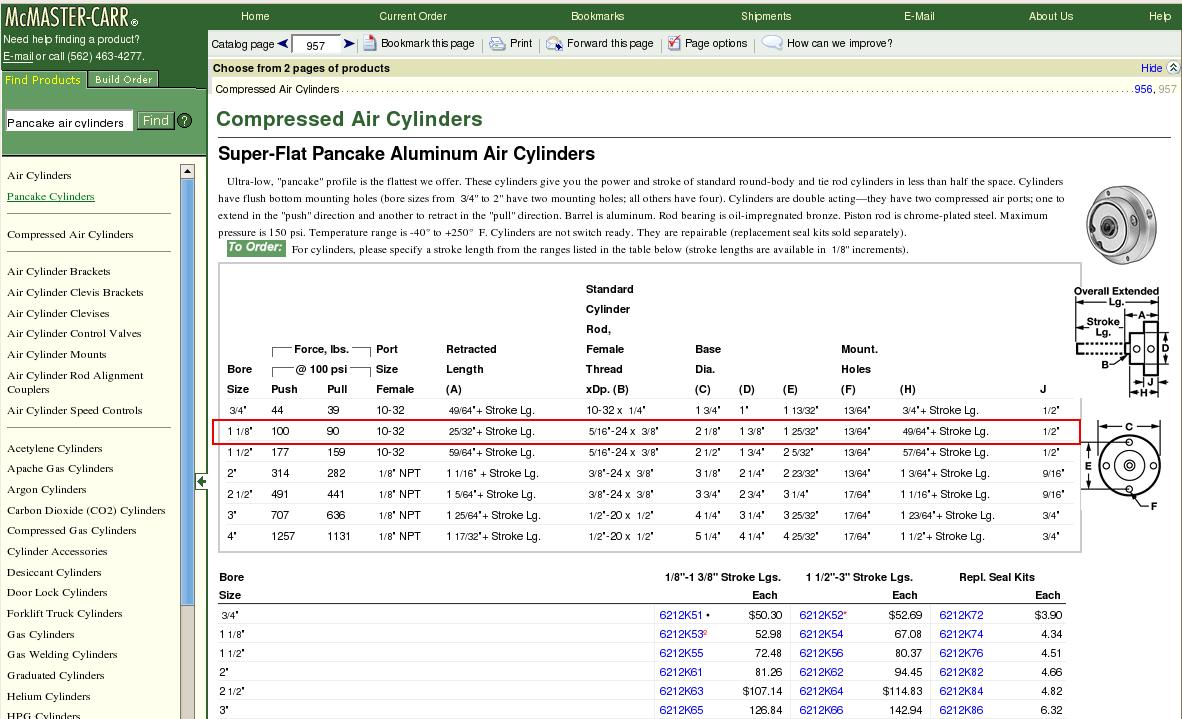
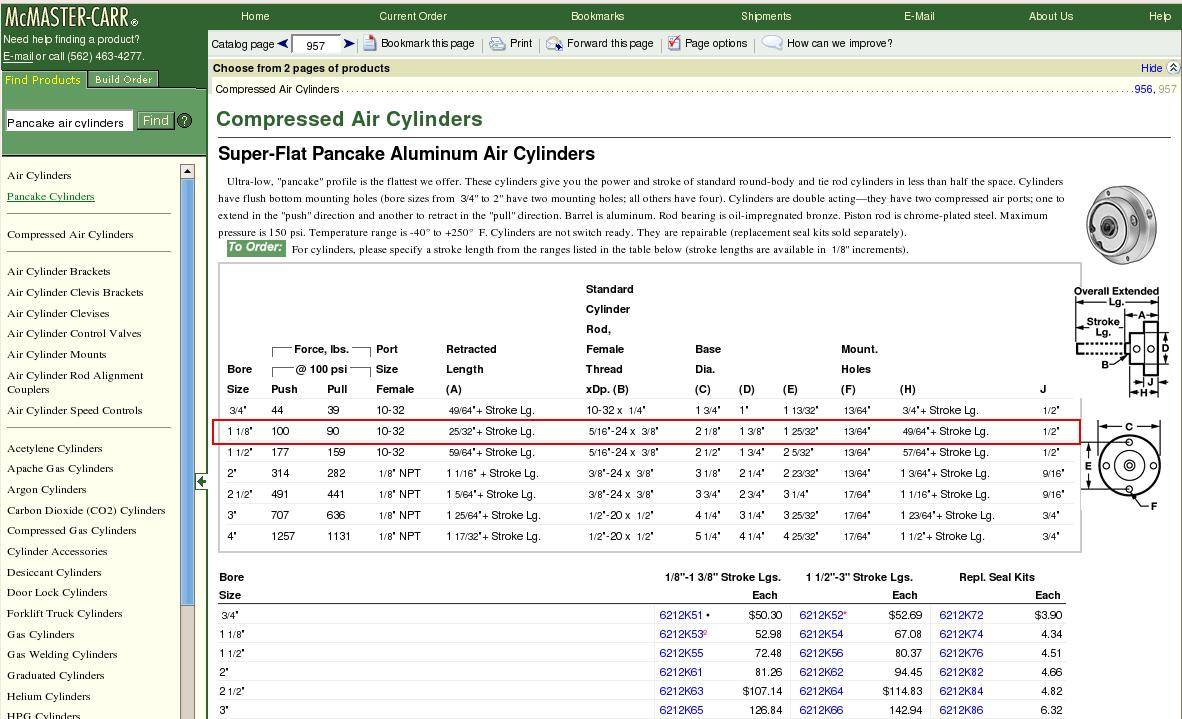
A pancake cylinder pump in the knob of the throttle cable sends a shot
of air to the pressure regulator to momentarily richen the mixture.
Just use the flat of your hand to jam the throttle open.
--
Paul Lamar ...No rotor no motor.
The Rotary Engine NewsLetter. Powered by Linux.
ACRE NL web site.
http://www.rotaryeng.net
Copyright 1998-2007 All world wide rights reserved.