Paul,
Can you send me the last RX8 Dyno test please - in all the excitement, I
seem to have misplaced it.
George (down under)
Here it is plotted with the stock engine HP and torque.
The second one is probably what you would get with fuel injection.
I.E. No venturi to screw up the results.
Paul Lamar ...No rotor no motor.
Paul
Do you think you can do a run up to 8200rpm and see what power is
available? With a shorter manifold it should be about 300Hp unless the side
exhaust ports don't breath as well as the P-Port exhaust.
Doug
The torque is already falling off at 7500 RPM.
We can't shorten the present runners as we would get into the tube bends.
All we have right at the moment is the downdraft Weber.
Maybe when I get the new slide carb working.
I am pleasantly surprised about the side exhaust. It does not seem to
hurt. Of course total exhaust port area is now 17% more than the old
peripheral port exhaust. We are getting more power with the RX8 P-port
than we got with a 2nd gen P-port. Here are charts from both of them.
The RX8 p-port has everything. More power, idles better, lower EGT,
quieter and recycles unburned fuel. What is not to like? :)
Paul Lamar ...No rotor no motor.
Paul,
Perhaps the questions should be what is the HP potential of the P-ported
intake Renesis and what are the remaining challenges? Over the years you
have often promoted the benefits of the one half Lemans engine.
Having said that and done some research on the Lemans engine, I know it was
a highly tuned, blueprinted, custom engine with major upgrades not found in
the mass produced 13B engines of the nineties. Ditto the 13B dual P-ported
NA race engine in the late 80s that got the magic 300hp at 8,000rpm.
We all know that Mazda incorporated a lot of what they learned over the
years of racing into the Renesis engine. Lighter weight rotors, and a
better e-shaft for one. Better water and oil flow as well. Of course it is
not ceramic coated internally with ceramic apex seals so that would account
for some increase in friction vis-a-vis the Lemans engine.
It's amazing to accomplish what you have done so far but it is still early
in the game to declare a complete success. The overlap of the intake and
exhaust port doesn't hurt idle and that is a good indication that exhaust
ports are scavanging well but a good fuel burn is an upcoming challenge. I'm
particularly curious as to the VE compared to dual Port. Logic would dictate
that it is less therefore the engine won't breath as well as a dual p-port.
True the 17% increase in exhaust port area helps overcome to some extent the
fact that the exhaust is restricted by going through several dog leg turns.
I would be very happy to be proved wrong on this speculation.
IMHO, P-porting the exhaust of the Renesis is not only a evolutionary step
backwards it is a bad idea. The internal water cooling channels in the side
housings are totally different then the 13B.
One question. How does the P port Renesis engine behave from idle to 5,000
rpm?
Doug Fir
Don't know yet Doug as the Weber was messing up in that RPM range.
Did you look and listen to the video?:
http://www.rotaryeng.net/intake.html
Video and sound of RX8 P-port engine showing fuel
mist stand off.
Not a problem with fuel injection. It is a phenomena due to
the venturi in a carburetor.
I'll have the Posa/Ellison type dual slide carb/low-pressure-fuel-injection
working soon and we will try that.
I can see why you are interested in 8200 RPM as your gear box is 3:1.
I can change the runner length on the Posa/Ellison type carb so I will make
some
shorter straight runners to try at higher RPMs. The side exhaust ports
might bite us at the higher RPM's.
Fuel burn is strictly leaning it at constant cruise HP. Not possible
with the Weber but built into the Posa/Ellison type with individual fuel
pressure
regulators for each rotor.
Paul Lamar
Paul,
Yes on the video. I wondered if it might have been a phenomena with the port
arrangement.
Thats great news on the proposed test. Thank you. Let me know if you would
like me to have some shorter test runners or anything made up for you. I
have a few weeks before I have to head out to Nepal so it will have to act
quick if you need something.
Yes you are right on my interest. I recently confirmed that the SeaWind 76"
C/S prop is run at 2700 to 2750 on take-off.
I found the appropriate high speed needle bearings for the planetary gears
on the Bell and worked out a compact torsional coupling on the input side
but still am little stuck on the proper prop shaft design. Options are make
a flange and connect direct to the planetary ring in which case I need a
flange on one end and a taper, key nut and prop collar on the other end.
Second option; go with the splined plate I have from Bell now which bolts
to the planetary cluster and accepts a splined shaft with prop plate
attached. The second option also needs a split collar to be attached before
the final bearing. I am leaning towards the second option. That is an
almost 3" diameter shaft or tube to deal with though.
You have mention forged steel before. Does it have to be forged or can the
whole 3 inch diameter shaft and prop flange be turned down from say a 4
inch piece of stock and heat treated later? I understand a forged piece of
metal is stronger as the metal then has grain. Sort of the same principle
as the katana swords my neighbors cherish.
Doug in Japan
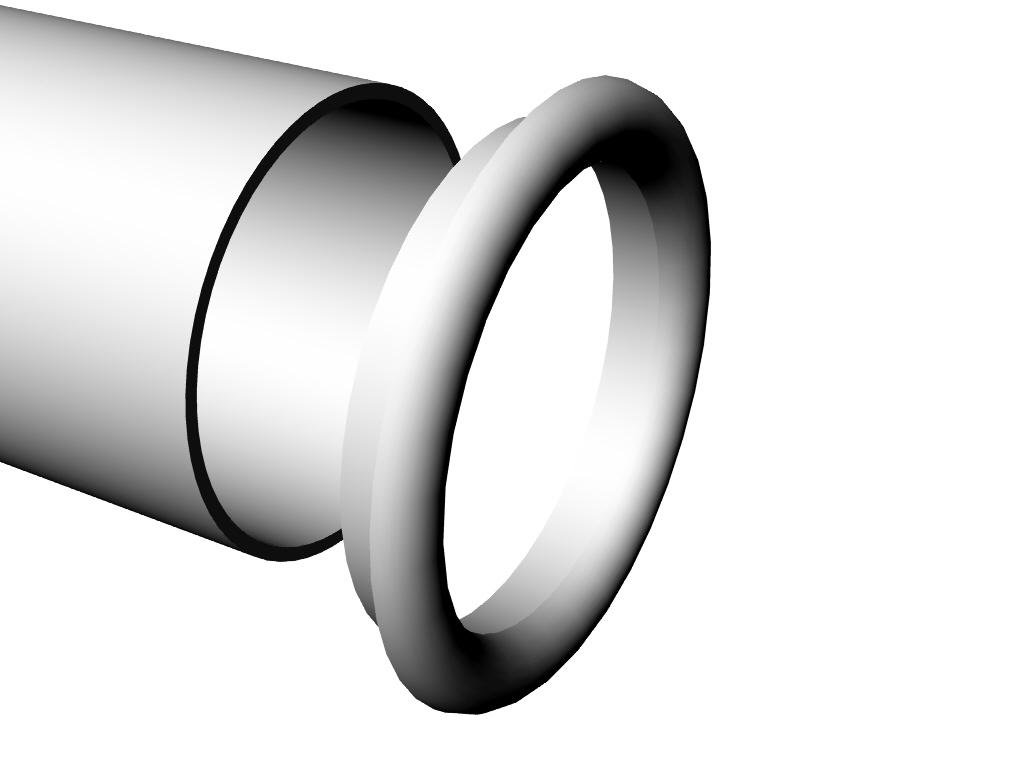
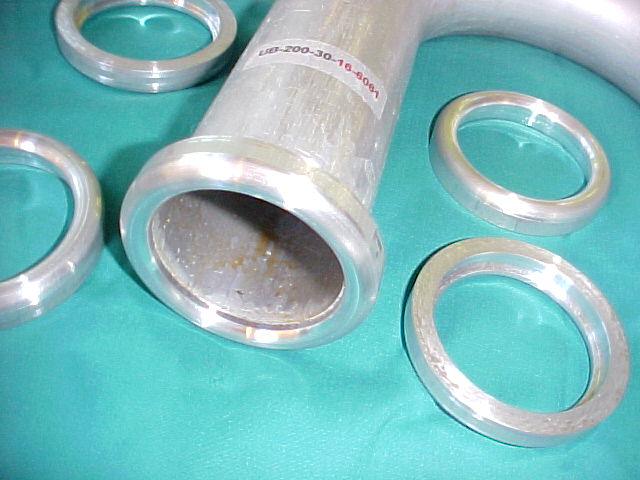
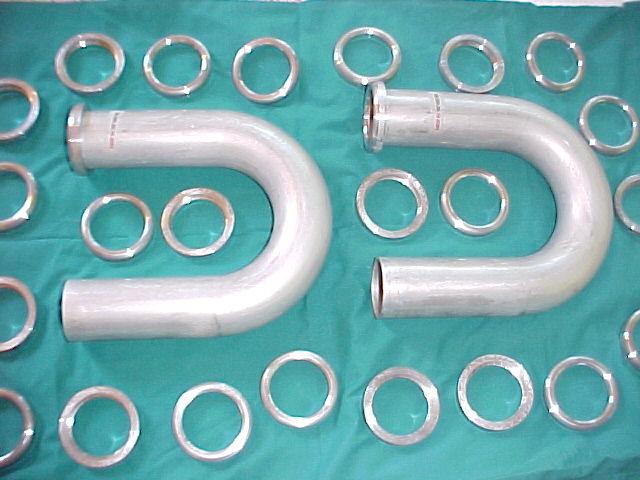
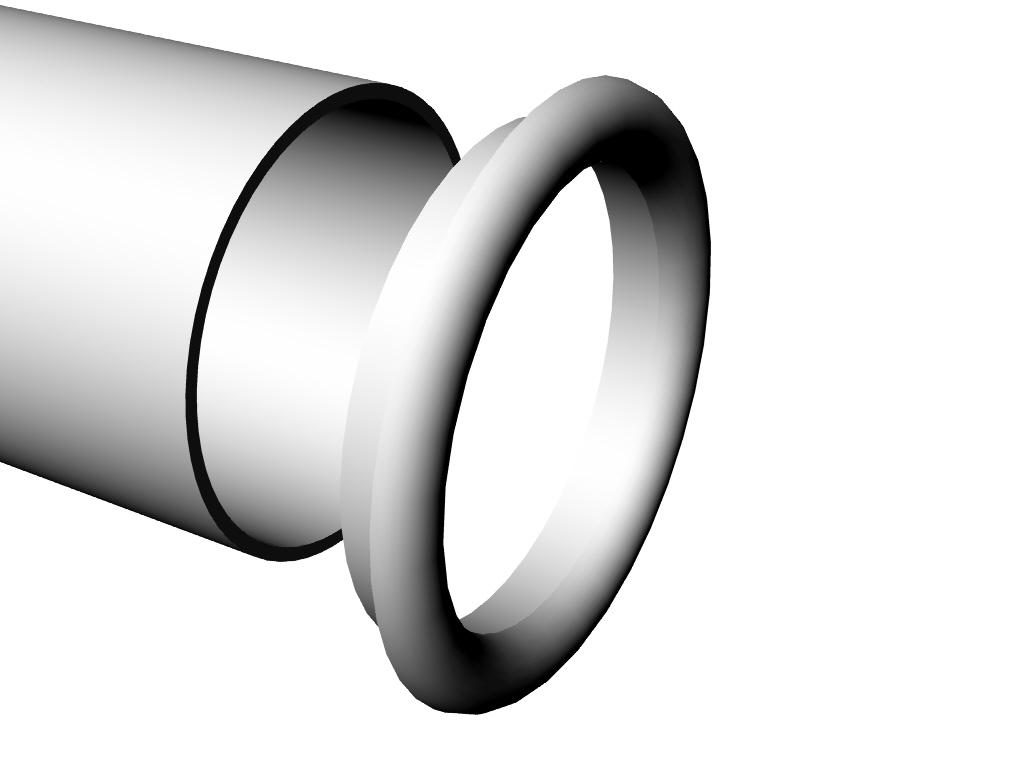
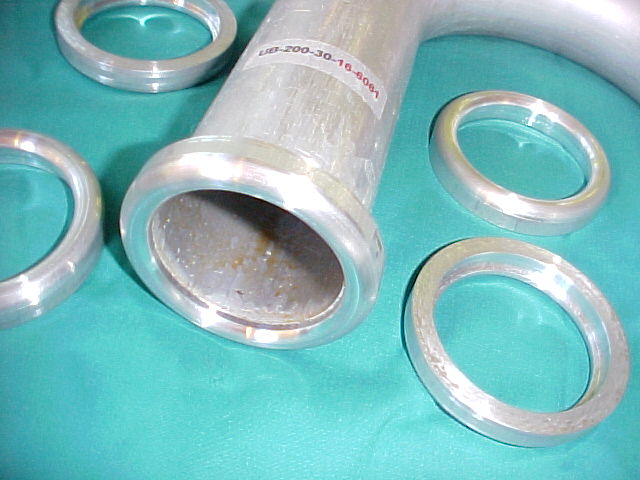
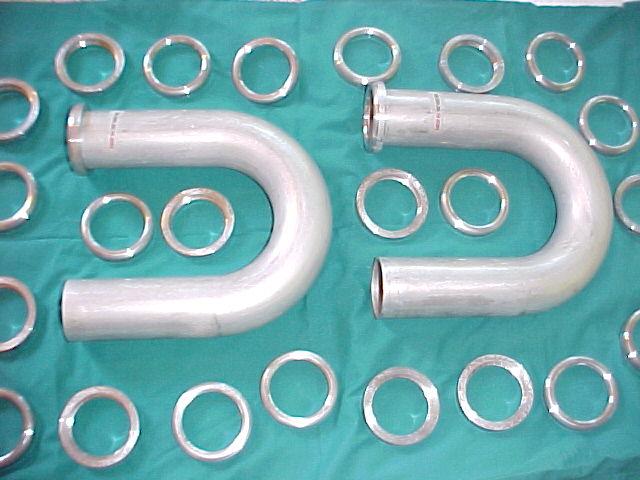
I can handle the short runners. I have a whole pile of 2 inch bell
mouths left.
I don't know how Dave Garber calculated the Bell gear box bearing loads but
don't forget there is at least 600 ft pounds of bending on the
prop shaft due to gyro loads. That takes a bit of bearing
spread. Heat treated billet steel will work fine for
a prop shaft. Only draw back is it will be a bit heavier than forged.
Not the same situation as a crank shaft where forging is near essential.
Paul Lamar ...No rotor no motor.
The Rotary Engine NewsLetter. Powered by Linux.
ACRE NL web site.
http://www.rotaryeng.net
Copyright 1998-2007 All world wide rights reserved.