Hi Paul,
Brian from Tin Man robotics forwarded you email. I am in the physics
and engineering program at Mt.San Antonio College.(Located where the 10,
57 and 60 come together.) We put together collaborative teams of
sophomore engineering students to do small independent projects.
Looking at your project, you need to continually monitor three inputs,
the Crank Angle, Manifold Pressure and the Intake Air Temperature.
Based on these three inputs you want to drive an output (the fuel
injector). I assume that the Manifold Pressure and Air Temperature
sensors are just an analog voltage proportional to the value. I don't
know if the Crank angle is a pulse train or ???? I assume the fuel
injector has a front end module that can be driven with standard logic?
I have a team this winter that might be interested in your project.
They are reasonably capable at computer interfacing, signal conditioning
and programming. They would produce a prototype and code that could be
modified by the user.
The advantages of working with a team of students are:
Cost (labor is free)
Ability to guide the next generation of engineers
Disadvantages:
Typically projects take longer then they would otherwise.
Students are often not available for long term support.
If you are interested, please let me know,
Martin Mason
--------------------------------
Professor of Physics and Engineering
Mt. San Antonio College
1100 N. Grand Ave
Walnut, CA 91789
Hi Martin,
Thanks for responding. This is a paradigm shift in EFI. One computer
per injector instead of one computer per eight injectors. RS232 network
for data exchange with a small PC mounted on the instrument panel. The
goal is vastly simplified control software. This should reduce bugs
and make it easier to maintain and trouble shoot.
What I was planing on doing was run a do nothing
loop in the back ground and use a hardware interrupt instigated by a pulse
from the crank angle senor to initiate routine to do what you suggest.
This will be the same pulse that triggers the ignition.
I am partial to hardware interrupts as I am the designer of this old
attached 1970's SuperKim product :) Max RPM is around 7500 so we
have about 8 ms to complete all tasks before the next trigger pulse arrives.
I suggest two injectors per rotor to obtain a wider dynamic range.
One injector for the lower power range and both for the higher power
range.
I have hired a person locally here in Ventura to help out doing the work.
You are welcome to have your team do the same project. We could compare
approaches as we go along. That would be very interesting to our readers.
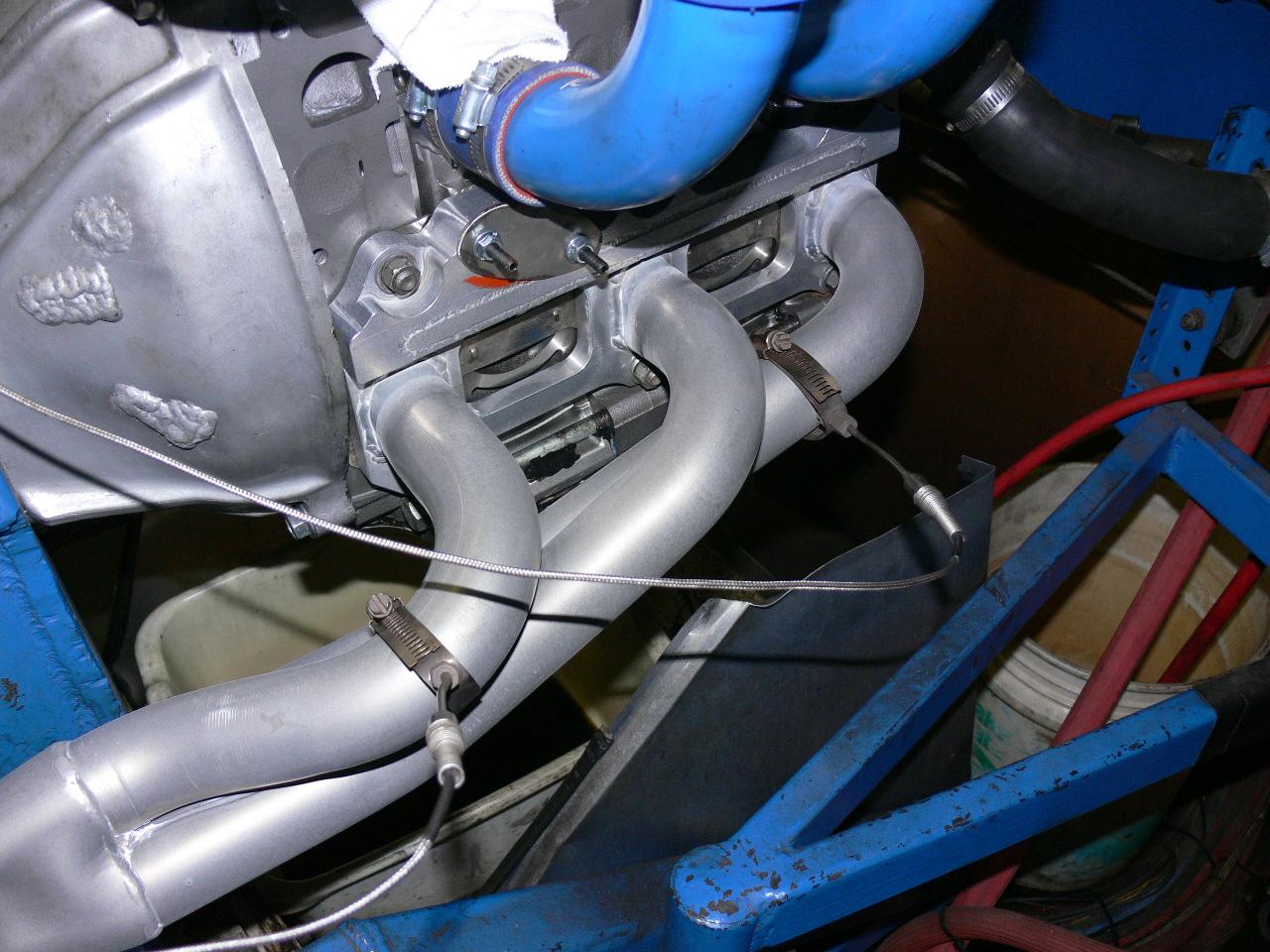
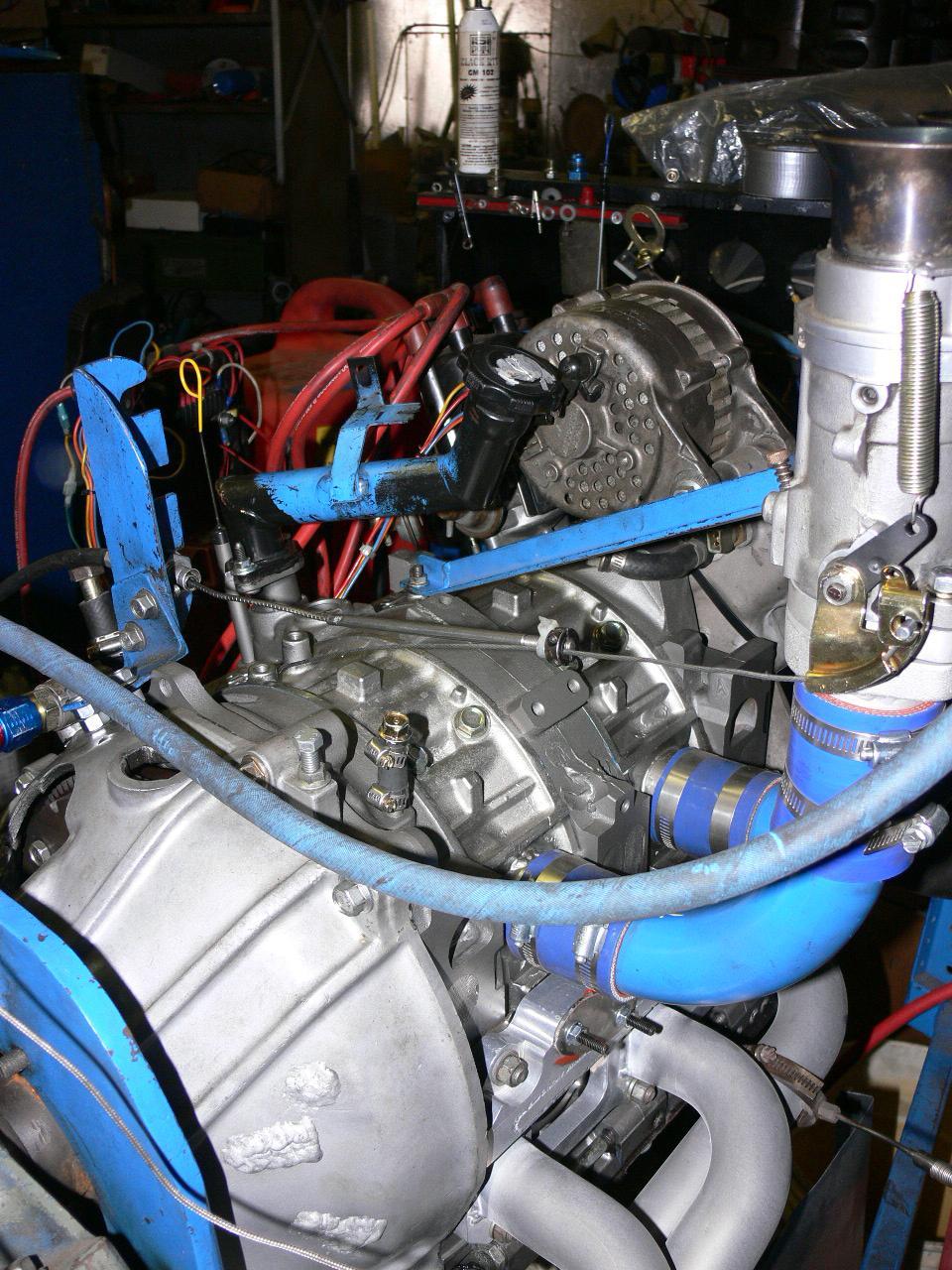
First test engine is a Wankel rotary. A Wankel
single rotor goes through all four cycles in one revolution so it fires
once per rev.. A four cylinder four stroke piston engine fires every other
rev.. Consequently there is a need to know what stroke it is on.
The Wankel is simpler. The trigger wheel on a single rotor engine
output shaft has only one tooth. A two rotor two teeth 180 deg. out
and so on up to a four rotor with four teeth 90 deg. out.
Here is a interesting video of a Mazda based turbo 4 rotar generating 1650 HP.
http://www.youtube.com/watch?v=tpyZuAtH-FQ
There are two main control choices. Manifold Air Pressure (MAP) sensor or
mass air flow sensor. Both output zero to 5 volts more or less so
that is one controlling parameter. Intake air temp is another as you
mentioned. The third is RPM itself as in implementing the hardware
interrupt. I will be glad to supply more information as needed.
I am also glad to see you are interested and it will be an interesting
project. Thanks again.
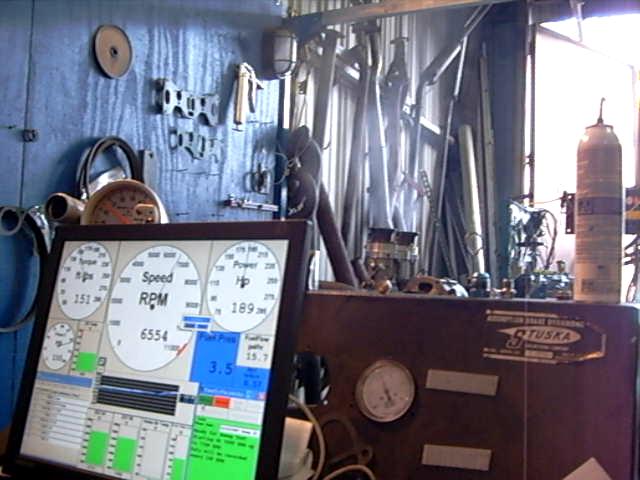
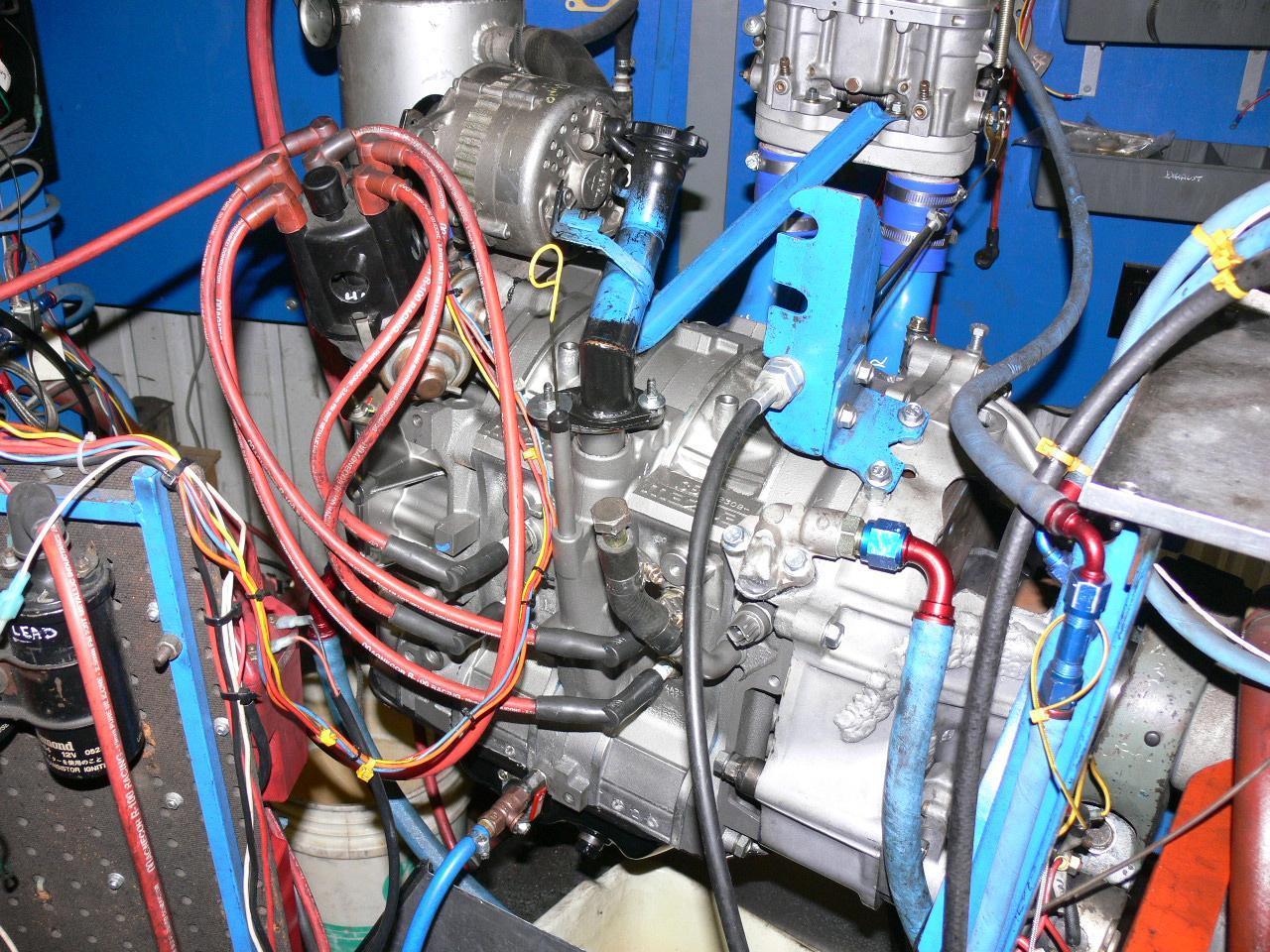
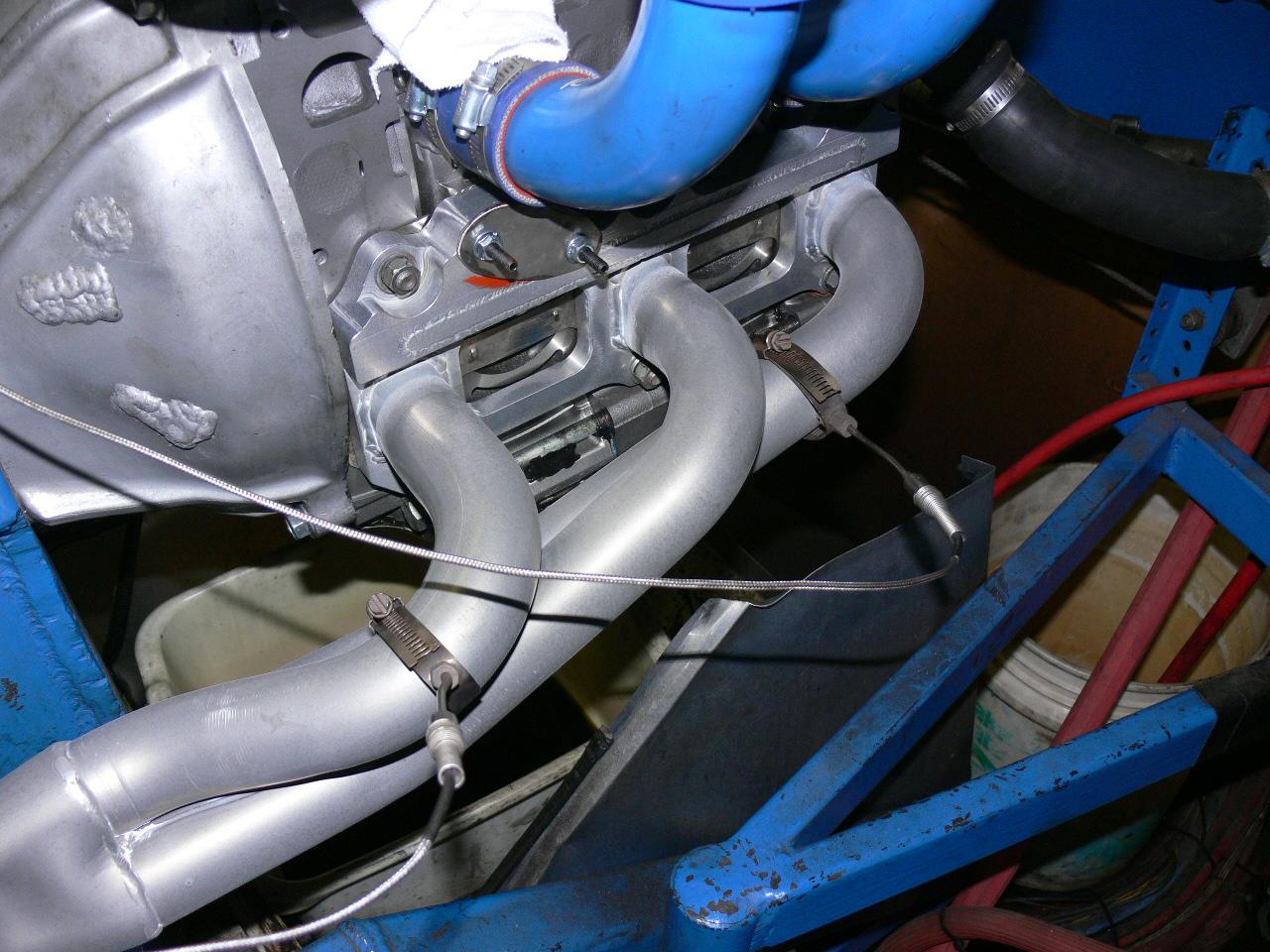
BTW as a reward for your student's efforts we will run two of their system on
a 264 HP Mazda RX8 engine two rotor on the Mazdatrix dyno in Signal Hill which they
and you of course will be welcome to attend. In addtion to these attached
pictures there is a video of this engine running using a Weber carb at:
http://www.rotaryeng.net/intake.html
Paul Lamar ...No rotor no motor.
The Rotary Engine NewsLetter. Powered by Linux.
ACRE NL web site.
http://www.rotaryeng.net
Copyright 1998-2007 All world wide rights reserved.