What sensors are being used; It seems to me that we might be able to
share information and thus reduce the workload for all.
I am looking for recommendations for the following:
1. absolute air pressure or MAP?
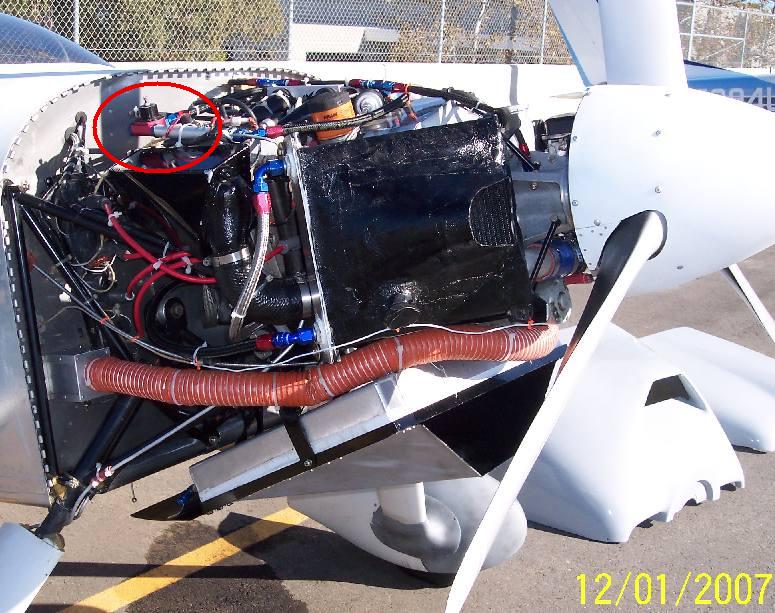
FreeScale MPX4250AP pressure sensor. See picture.
2. fuel pressure: 0-15psi
3. air temperature
Any low cost thermistor as Mazda engines are not equipped
with stand alone intake air temp monitors.
4. specs on the stock Mazda coolant temp sensor, i.e., inputs outputs,
resistance range, etc.
5. EGT - output for units in common use
6. coolant pressure
7. oil temp specs for stock Mazda oil temp
8. oil pressure specs for stock Mazda oil pressure
Thanks for your help.
Doc Custer
Retired Software Engineer and sometime Audiologist
Doc sounds like you are doing an engine monitoring system.
That comes after we get the engine running :) There are plenty of
those already on the market.
All you need for the PicAXE EFI is ignition trigger pulse,
intake manifold pressure and intake air temperature.
Are you building the whole engine monitoring system
in each PicAXE injector controller?
The work load for that is three dozen BASIC instructions.
1.Measure the intake manifold pressure with the A to D.
2.Measure the intake manifold air temperature with the A to D.
3.Use the data to look it up in the 2D mixture table.
4.Adjust the pulse width generator. (Free runs in the background.)
5.Return to back ground loop and wait for next ign. pulse.
That's it!
Paul Lamar ...No rotor no motor.
FUEL PRESSURE
The fuel pressure sensor is to close the loop on the PWM. Why "close the
loop?" Closing the loop means monitoring the fuel pressure and then
adjusting the PWM to keep the fuel pressure where it is supposed to be.
If the fuel pressure changes without a change in the amount called for
by the uC, the closed loop system will automatically compensate by
adjusting the PWM. Closing the loop guarantees the fuel pressure
required will be there without regard to outside disturbances such as a
change in system voltage or change in temperature.
If the alternator fails, the system voltage will change significantly.
What happens when you reduce the voltage to a DC motor? Well, as
everybody knows, it slows down. For the fuel pump, a slower motor means
less fuel pressure. This drop in pressure delivered to the dribble
injector will change the fuel/air mixture. This change will affect the
power output of the engine. I think it is important to keep the engine
running as long as possible, and putting out whatever power the pilot
calls for. Closing the loop will keep a reduction in system voltage from
affecting the fuel pressure, at least as long as there is sufficient
voltage available to run the pump at the required speed.
Changes in temperature will affect the output of the pump. Why? The pump
has coils of wire. Wire changes resistance with temperature. A change in
resistance will cause a change in the current flow with no change in
voltage (PWM). The torque of a DC motor is proportional to the current.
A change in torque means a change in pump output.
There are probably other factors that will affect the output of the pump
with no change in PWM that do not come to mind as I write this.
Closing the loop will guarantee the fuel pressure the uC is calling for
despite these or other outside factors within the limit previously
mentioned.
EGT
I would also like to close the loop using either an O2 sensor or an EGT
for at least two reasons. The loop in this context is the fuel/air
mixture changing the exhaust characteristics. A change in the fuel/air
mixture will, as every pilot knows, will change the EGT or O2 output. By
monitoring the EGT, the uC can provide some significant benefits.
1. Easy Installation: To provide for a learning mode, so the pilot
doesn't have to program the computer in flight, under actual flight
conditions. What would this look like? The pilot would put the uC in a
learning mode. The uC would then automatically build up a table of
values similar to those Paul provided in a previous email while the
pilot flies the airplane without having to split his attention. This
means that the pilot would not have to do a tedious and time consuming
series of flights under differing flight conditions while being
distracted by the need to record the results, either electronically or
by pencil and paper.
The table would take into account enough of the flight conditions so
that even if the EGT or O2 sensor should fail, the engine would operate
satisfactorily in an open loop condition.
I have the data on the O2 sensor, but I would like engineering specs for
the typical EGT should the builder choose to use an EGT rather than an
O2 sensor. Not everyone wants to use mogas.
2. Safety: Closing the loop could also provide early warning if the
engine fuel requirements started departing from the stored values. If
something changes, there is a reason. Sometimes the reason is important.
--
Doc Custer
Retired software engineer and sometime Audiologist
All EFI engines are equipped with fuel pressure regulators.
Nobody uses the fuel pressure to adjust the pulse width.
The pump is over kill and it takes a great loss in voltage
before there is not enough fuel pressure to be regulated
by the fuel pressure regulator. During idle as much as 90%
of the fuel is recirculated back to the fuel tanks by
the fuel pressure regulator.
If you want to monitor the engine use a different processor
than the one controlling the injector. There are at least
a dozen off the shelf engine monitoring systems on the market.
You are trying to make this way more complicated than what
it needs to be. The pilot does not have to program the computer
in flight. He just needs to take notes based on fuel burn and EGT
and adjust the mixture table using the PC when he gets back on the
ground. The rotary will run from about 10:1 to 18:1 At cruise and
at a constant power setting and RPM he uses the leaning pot to
adjust the mixture. Add one or subtract one from the pulse
width.
Looks like we are already experiencing classic feature creep :)
Now I know it is the software guys that are responsible :)
Paul Lamar ...No rotor no motor.
Doc,
Current fuel injection systems use a fuel pressure regulator that has a
connection to the intake manifold. This is used to keep a constant pressure
differential across the injectors. As manifold pressure goes up, fuel
pressure goes up. This method provides a much easier tuning of the injectors
for fuel mixture as their flow is based on pulse width and pressure
differential.
Current Ford injection no longer uses a regulator, but does exactly what you
are doing by PWM controlling the pump to get the pressure differential
called for by the computer, and this eliminated the return line to the tank.
It has proven to be very reliable and the pump only uses the energy
required.
Your on the right track, and could use a single picaxe to run the fuel pump
PWM.
Larry
Larry, What exactly do you have in mind? We discussed a PWM fuel pump in
the past. In theory you don't need electric injectors. All you need
are four jets or orifices. One PicAXE system measures the manifold pressure
or the mass air flow sensor and changes the PWM and pressure of the fuel
pump.
Kind of a radical idea. I am not sure people would go for such a cutting
edge system on an aircraft engine. It would be super cheap as electric
injectors are up to $100 each. Pilots are a conservative lot. With
good reason. Their life is at stake. How many people on here would
like such a system?
What I am proposing is basically a standard EFI system with mechanical
fuel pressure regulator except one computer for each injector. It is
almost exactly what Tracy is doing except his controls four or more
injectors with one computer. Tracy needs a faster more expensive
computer.
It is also standard on the majority of car systems out there.
In fact I think Ford still uses the electric injectors and basically
they have replaced the mechanical fuel pressure regulator with an electronic
one. We could do that with a separate PicAXE. No problem with that
except you now need a fuel pressure sensor.
BTW It is not necessary to control the mechanical fuel pressure regulator
with manifold pressure although it is frequently done. We have run them
both ways and cannot tell the difference. On the other hand it is mandatory
for a turbo engine.
Paul Lamar ...No rotor no motor.
Paul,
I believe Doc is planning on using PWM to control the fuel pressure for the
electronic injection. This is not a bad way to go as it eliminates the
return line from the regulator to the tank.
On needing the pressure differential across the injector, you are correct in
that very little difference is seen on a NA application, but I use the
theory to build all fuel systems to handle boost pressure, as I always end
up going there!
Larry
Why bother? Just another electronic part to fail. Most mechanical regulators
have the provision of compensating for boost. They are extremely simple
devises and are highly reliable as they are used in 50 million cars
world wide. TWM makes a nice one. Dave Leonard is successfully using
one on his turbo. Here is a picture.
I would go for it if people wanted to do away with the electronic
injectors and just use squirting nozzles. In that case it would be
worth the effort.
BTW My guess is less than 3% of the guys building rotaries are going
for turbo's. My estimate is the three guys using stock turbo's have
blown up six turbo's so far between them:) I think Mistral alone has blown three :)
Dave Garber started it way back in 1973 but he never flew for long
periods of time at altitude. MecanAir, later to become Mistral, was first
with the stock 1990 to 1992 turbo I think. At the time I mistakenly thought it
a good idea. It took some serious modifications to the stock turbine to
eventually make it work. At least so far it seems to be working
for Dave Leonard in the more or less flat rated mode. Long term
is still open. The reason for this is the extra 200 degrees F
exhaust temperature of the 2nd gen and 3rd gen peripheral exhaust
port engines. The RX8 engine with its side exhaust and cooler
temperatures might work better in the flat rated turbo mode.
Paul Lamar ...No rotor no motor.
The Rotary Engine NewsLetter. Powered by Linux.
ACRE NL web site.
http://www.rotaryeng.net
Copyright 1998-2007 All world wide rights reserved.