Paul,
Ok, now I get it. I'll get some of each ordered and try
them to see what works best/easiest and then post the results to
the BMA list.The new BMA EFIS uses an instrument module that has two
capacitance channels, so this is not a problem for the late-comers.
Worth posting anyway as there are plenty of us early "Gold Box"
owners still out there.Appreciate your help.
Thanks,
Mark
Lancair ES-20B, 15 hours
Post it here too Mark. Might be of interest to other
people using the same probes. By the way it is real easy
to build your own probes using two one inch wide long
strips of brass separated by nylon nuts and bolts. Takes about an hour
or two. A 555 will handle the electronics.
--
Paul Lamar ...No rotor no motor.
Paul,
I agree.The only hard part is the end fitting, but a
fitting could probably be purchased at Home Depot and modified to
work.Might have a total of $5 in each probe.I ordered the EI probes
when I
ordered the kit and didn't know squat about capacitive fuel probes.I
guess that's part of the "education and recreation" of building your own
airplane.
By the way, it is a real thrill, while also a bit scary
to be flying around above the clouds in an "experimental" airplane that
you put together in your garage and which uses a car engine
along with a whole bunch of do-it-yourself parts. You can't help but
wonder if you did everything correctly as one snafu could easily
ruin your
whole day. With that said, I'm beginning to feel a bit more
comfortable about the whole experience now. But give me a
couple-hundred
hours of trouble-free flying and then ask me how I'm feeling.
Mark
15 hrs (and counting)
My mother told me never to fly anywhere unless I could
see the ground :)
Things happen. Plan on it. I am not supposed to be
saying that on here but never the less always have a plan B.
Judging by what I have seen so far of your excellent
installation I think you have less to worry about than most.
BTW what are you seeing on the "cylinder head" temperature
gages so far? You are our only experimenter on those.
How is the muffler working out?
--
Paul Lamar ...No rotor no motor.
Paul,
Thanks for the vote of confidence.I try to fly high so that I
have more options, just in case.
I haven't looked at the CHT's in a while as you must page
through a number of screens on the EM-2 to get to the EGT/CHT page.Not
much you can do about it anyway.I like to keep the main page up
during the initial climb, but the most important info is on the top and
bottom lines which don't change when paging. The EGT's typically run
around 1600-1650 in cruise. I'll check the CHT's on my next flight and
let you know what they're reading.
The " R.B.Wagner" exhaust tubes seem to be holding up just
fine also. So is my homemade auger muffler, although guys tell me that
they can hear me coming from 5 miles away. I tested a Hush Power II
resonator muffler and it is amazing how much quieter it is over the
auger
muffler. For the first time I could actually hear the prop
above the exhaust. The body of the muffler is only 12", overall
length is 17.5" but a couple of inches can be cut off both ends to
shorten it.
It is compact enough to fit under the cowl. I couldn't bring myself
to hang a muffler under that beautiful airframe. This provides a good
alternative. Dennis H. has one of these on his RV-7A and it
is the quietest airplane on the field. Now that's something you don't
hear often when discussing rotaries.
By the way, a side benefit to the oil/water exchanger is that
the oil keeps the water hot enough so I don't need a thermostat or cowl
flap. Yesterday, I flew and the oat was 44* F.The coolant was up
around 170-175 in climb and settled down to 150-160 in economy
cruise.Oil temps track 10-15* higher.If it gets much colder, things may
change and I may have to add a cowl flap.The 20B burns about 12.3
gph in economy cruise.Not too shabby, especially since I can burn
auto fuel which is more than $1/gallon cheaper.
Mark S. 16 hrs
There is no cheap replacement for thick RB Wagner SS exhaust
pipes :)
You certainly have plenty of cooling capacity in the winter
time :)
12.3 gph is 73.8 pounds per hour so at a well leaned BSFC of
.47 (150 F lean of peak.) that would be about 160 HP. At .5
BSFC it would be about 150 HP. At that HP rate the 3 rotor
TBO should be 5000 hours :)
How fast are you going at 12.3 gph and what is the EGT?
--
Paul Lamar ...No rotor no motor.
Paul,
That was cruising in overdrive.;-) Best I recall, it was about
105-110 kts indicated, 123 kts TAS (142 MPH) and about 17" MAP,
highest EGT was 1600 +/- .I'll verify that again on next flight. I'm
still
working on getting the EM-2 fuel totalizer calibrated. I know I'm
close,
but not quite there yet. Best cruise speed I've seen so far is 173
kts TAS
(200 MPH). This was at 1700 prop rpm, 5200 engine rpm, wot and no wheel
pants.I can't wait to see what it will do with the wheel pants
installed and
higher prop/engine rpm. That M/T c/s prop sure makes things
nice. I usually set the prop to 2250 for takeoff. That gives me almost
7,000 rpm for takeoff. She's usually airborne before I hit the first
turnoff. Once I'm up to about 110 kts I start dialing the prop
speed down to reduce the stress on the engine and psru, and also to
lower the fuel burn. I usually see about 26-27gph ( 160#/.6 BSFC =
265 HP....
160#/.65 BSFC = 246 HP) on the EC-2 during initial climb. It
usually climbs in excess of 1500 fpm at 105-110 kts. Not too bad for a
4-place airplane. I haven't done a full-power climb at Vx yet.
Mark
Thanks for the performance data. I'll have to do some data
reduction. I assume you have the 2.85:1 PSRU since you can reach
7000 RPM
or can you do that with a 2.17:1 PSRU?
My C182 cruises at about 150 MPH on about the same 12 gph fuel burn.
Of course it won't cruise at 200 MPH :)
--
Paul Lamar ...No rotor no motor.
Paul, I flew again today, my first official cross-country in a
rotary-powered airplane.I flew from Lockhart (50R) to Taylor (T74), staying
outside of the ABIA class C airspace.It took an hour from engine start to
"clear of the active" and I burned approx. 11 gallons according to the
capacitive fuel gages (on the ground). I managed to snap a couple of shots
of the EM-2 and EFIS for your viewing pleasure.The TAS readings differ a bit
between the EFIS and the EM-2. The oil & coolant temps to pay attention to
are the ones on the EFIS.The EM-2 oil temp is the temp after the oil/air
cooler, but before the oil/water exchanger.The EM-2 coolant temp is the
return coolant temp, after the radiator (returning to engine).You can see
that the coolant and oil temps (shown on the EFIS) are within about 10* of
each other.
The highest EGT is shown on line two and is rotor #1 (nearest the
flywheel) and is at 1647*.The two bars to the right of the #1 show a
graphical representation of the EGTs (#2 is not working as is evidenced by
a gap between the #1 and $3 bars). I checked the CHT readings and the
highest was also #1 (nearest the flywheel) as I would have expected.It was
reading 195-200*. The fuel readings (lower right of the EFIS) were Left -
33 gallons, Right 29 gallons when in the hangar before the flight.You can
see that the left is reading 25.5, which is pretty close, but the right has
gained 7 gallons and is reading 36.1 gal.Maybe I should apply for a
patent.:-)All kidding aside, I really need to get this corrected. I'll be
trying out your suggestions soon. Mark
17 hrs
Congratulations on the
first cross country.
Is that CHT 200 C or 200 F Mark.
--
Paul Lamar ...No
rotor no motor.
Paul,
That would be 195-200* F.
Mark
Amazing! At that rate we are a hardly using these engines. A piston
engine CHT
runs up to 400 F. I sure hope those thermocouples are working right.
If so
I suspect 400 HP would not be out of line for a p-port 3 rotor
aircraft engine.
Maybe 500 HP with a 3:1 PSRU. At that level we would be pushing
turbine engines
in power to weight ratio with 75% of the fuel burn. I wonder when
this is
going to dawn on a major aircraft company. Just think what Wankels
could do
with a turbo compound.
CHT is the one parameter that measures the capability of the engine
to generate
HP long term. We are just seeing the tip of the iceberg on the
potential
of Wankel aircraft engines.
Paul Lamar ...No rotor no motor.
Paul,
I couldn't agree more. The only problem is it takes fuel to make hp,
and fuel isn't getting any cheaper. That's one of the reasons I decided
not to turbo-charge. So, I'm happy cruising along at 165 kts burning 12
1/2 gallons/hr, as long as I have the reserve for the rare cases where
you really need another 150 hp, like when you're in a hurry to get to
your destination (fuel burn be damned), or your buddy is flying along
side and you both decide to find out whose airplane is the fastest.
One of the things I wonder about though is the hp capabilities of
Tracy's redrive. He says it is good for 250 hp continuous. Has he
tested one to the point of failure? My DAR (a rotorhead) warned me that
there were two things I really needed to watch. One was the gearbox,
and the other was the cooling system. The cooling system is fine, but
there are some unknowns with the gearbox. I know that there are quite a
few of them flying, but mostly they are on 2-rotor engines. I always
check it on my pre-flight for excessive backlash, end-play, and I
rotate the prop to try and feel for chipped or rough gears. So far all
is well. At this year's Rotary Roundup, I discovered some excessive
backlash in Dave Leonard's redrive. Tracy checked it and agreed. I
don't know what he's done about it, if anything.
This brings up one concern I have. I seem to have a resonant vibration
when running at any rpm lower than 1800 (prop). Due to this, I normally
run at 1800 or above, but I would really like to be able to run it at
1700. I have been meaning to talk to Tracy about it. At 1800 and
above is very smooth. Have you heard of anyone else having this problem
with a 3-rotor coupled to the 2.85 box?
Mark
---------------------------------------------------------------
I was thinking of commercial aircraft equipped with turboprop engines.
Excess HP is always a good idea when you are taking off at a high
density airports at max gross weight. More of a concern here in the
REAL west. Not Texas :) High altitude cruise also benefits where
NA HP is down to 80% to 50% anyway due to lower air density. Drag
is also way down so your MPG will get much better as you are going
much faster.
You don't have to use the HP when you don't need it.
Van is always harping on people about adding HP to his designs.
He assumes they are going to install a larger displacement and consequently
heavier aircraft engine. In a rotary that is not necessarily true.
HP can vary over a wide range depending on how it is tuned. A p-port
or turbo can drastically increase the HP with little or no weight
penalty.
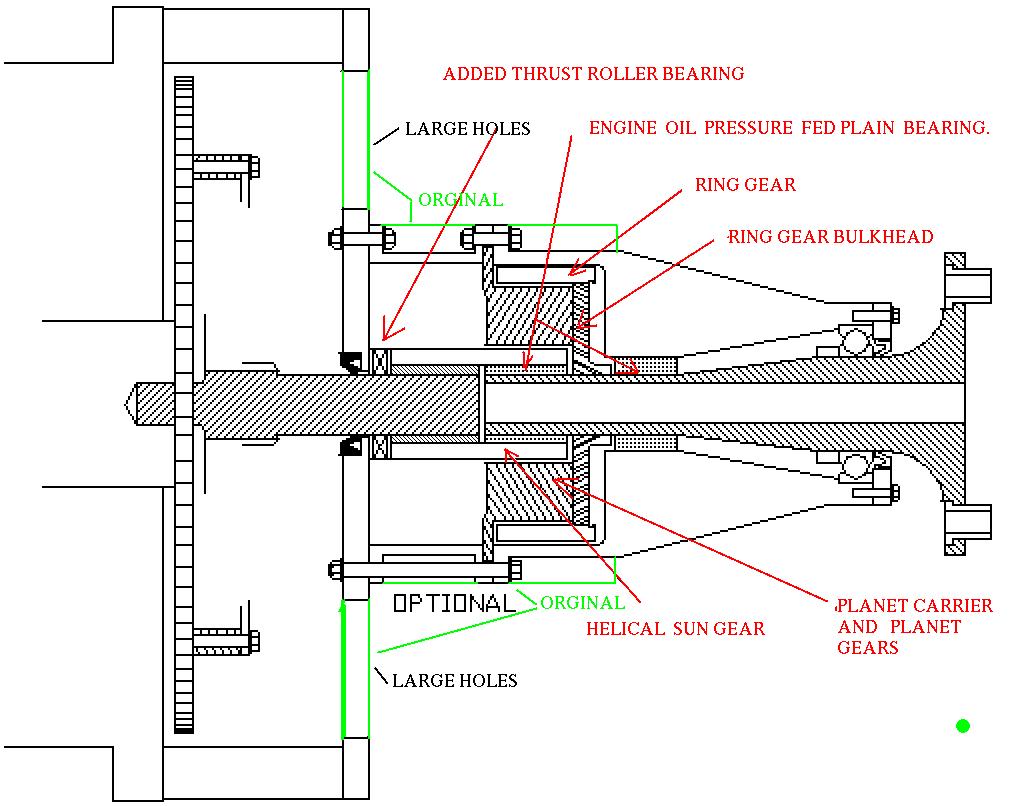
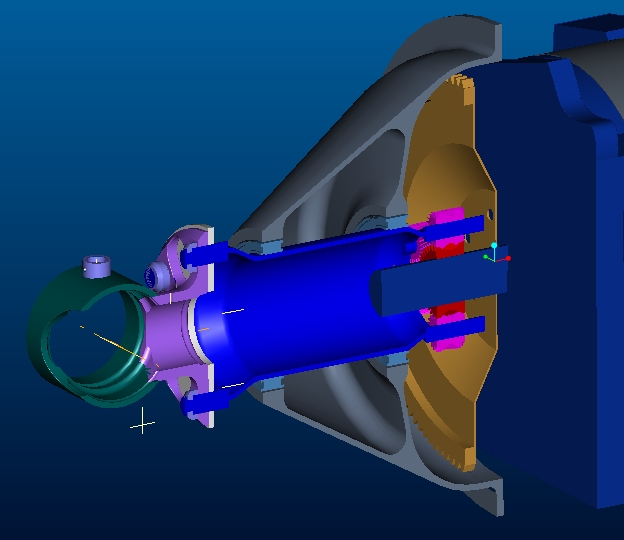
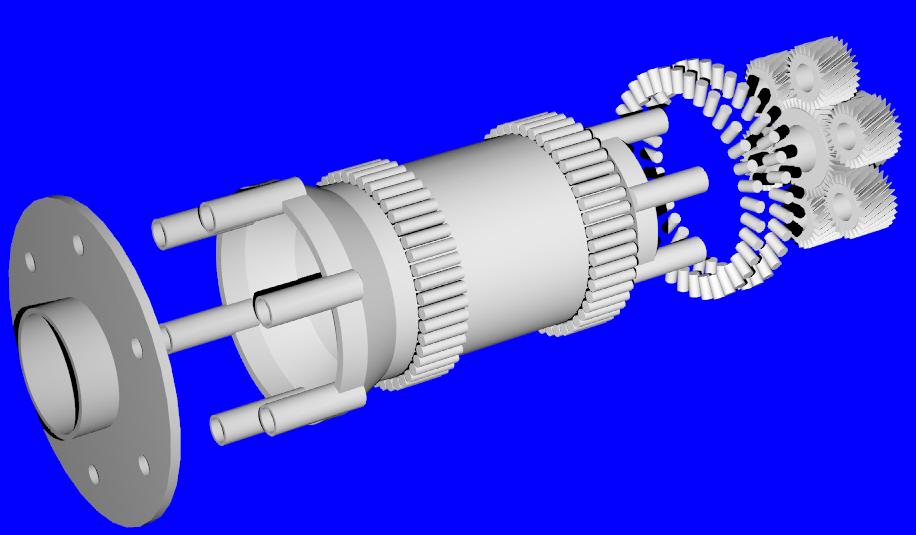
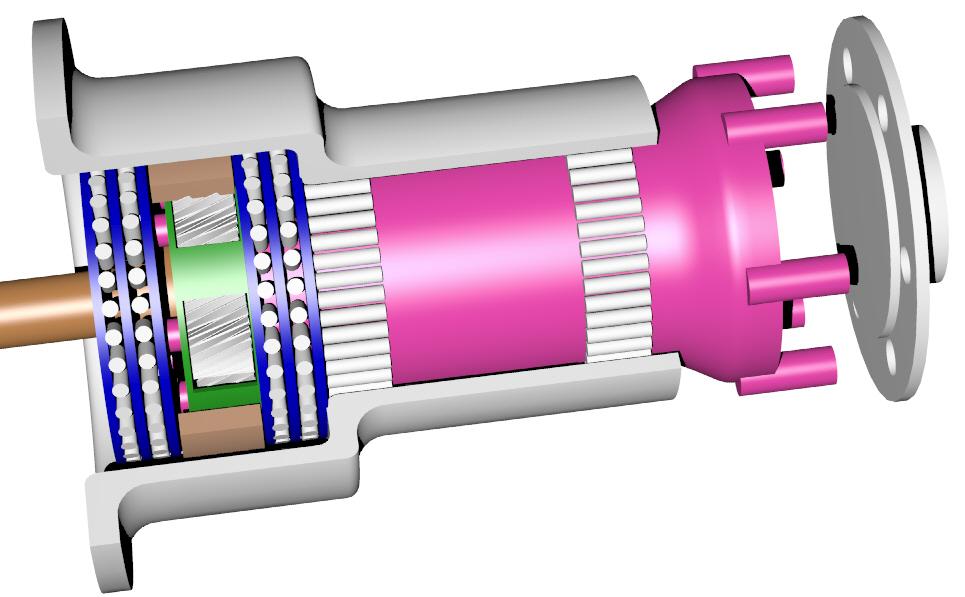
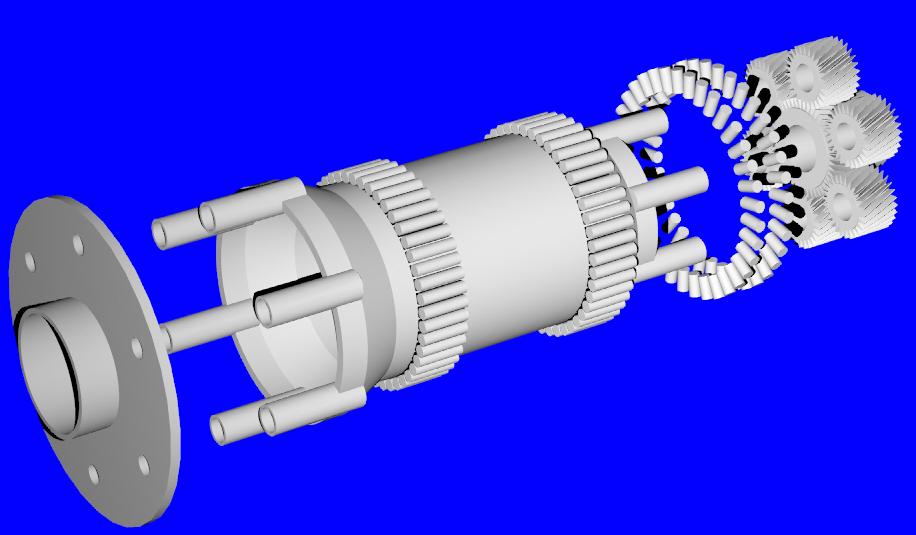
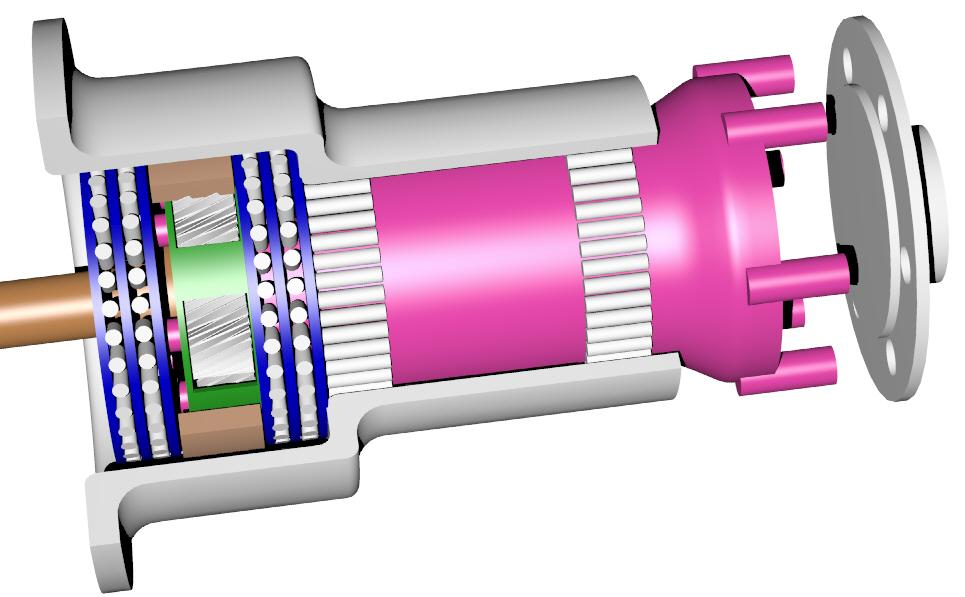
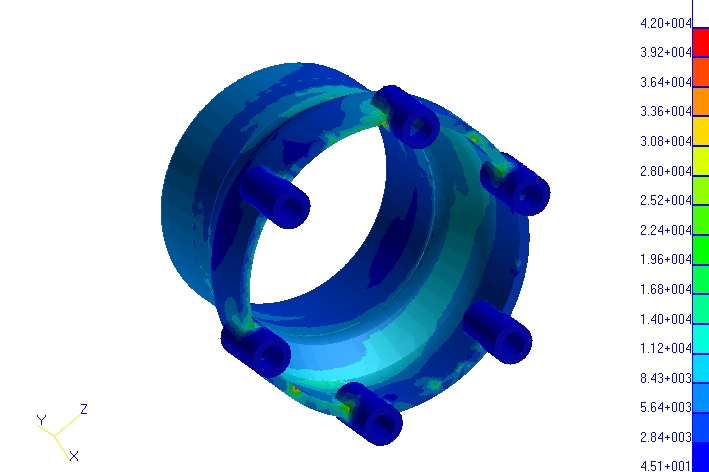
The six pinion Ford planetary set is completely up to the job assuming
it is kept cool enough. It is used in the Ford A4OD auto transmission
and deals with 650 foot pounds of engine torque output by the Power Stroke diesel.
The max torque you will see out of a NA 3 rotor is 240 foot pounds and it is
orders of magnitude smoother than a diesel engine. Gear sets are designed
around torque. The amount of HP they will tolerate depends on how cool
you can keep them.
The only thing I don't like about Tracy's PSRU is it uses high pressure
hot engine oil to lube it. If it had all roller or ball bearings it could be lubed
with a separate oil supply fed through a small oil cooler and recirculated
at low pressure. Gear lube designed for the job could then be used.
Synthetic oil such as Mobile One will help. Regular engine oil breaks down
around 220 to 250 F and the temperature of the oil in the line contact area
of any gear set can easily exceed that temperature. That local hot spot
oil is then combined with the rest of the oil in the gear box so
it will not show up in the measured oil temperature directly. Mobile One,
according to my half hour oven test, does not break down until about
400 F to 500 F. You can run this test yourself. Put a teaspoon amount
in a small can in your kitchen oven when the wife is not around.
What you can do with Tracy current system to improve it is add another
small oil cooler in the high pressure line from the engine going to the
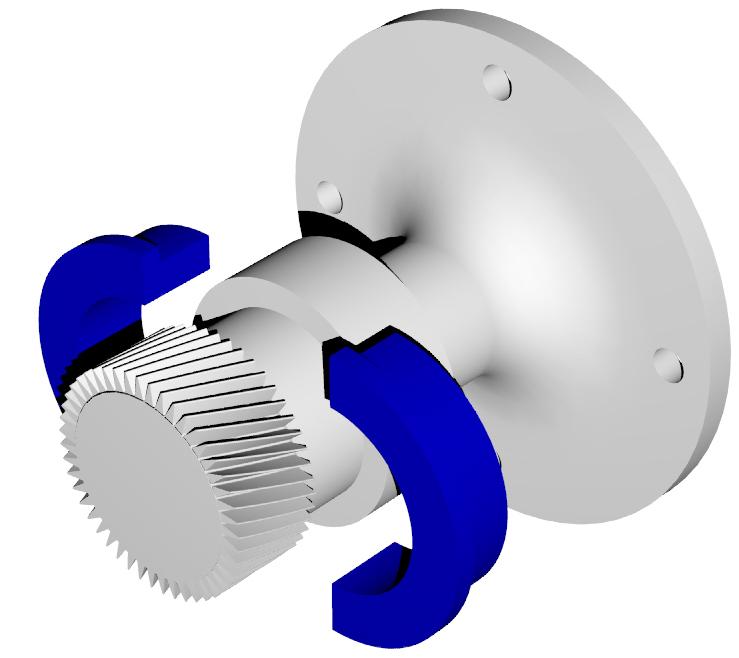
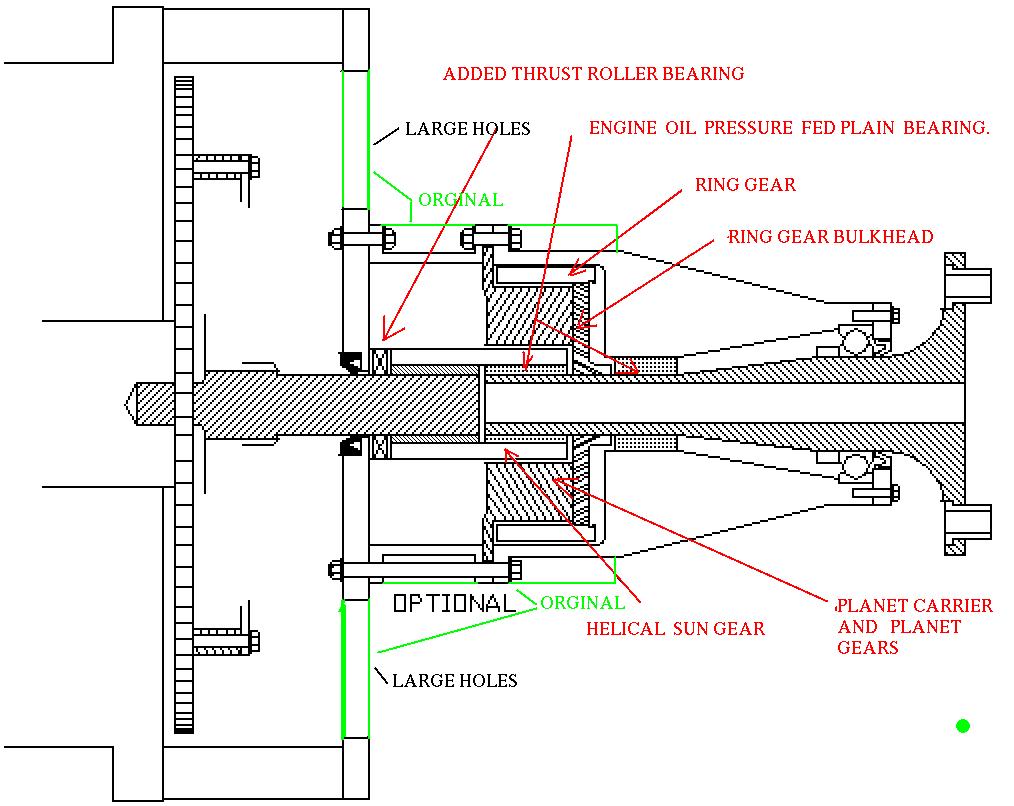
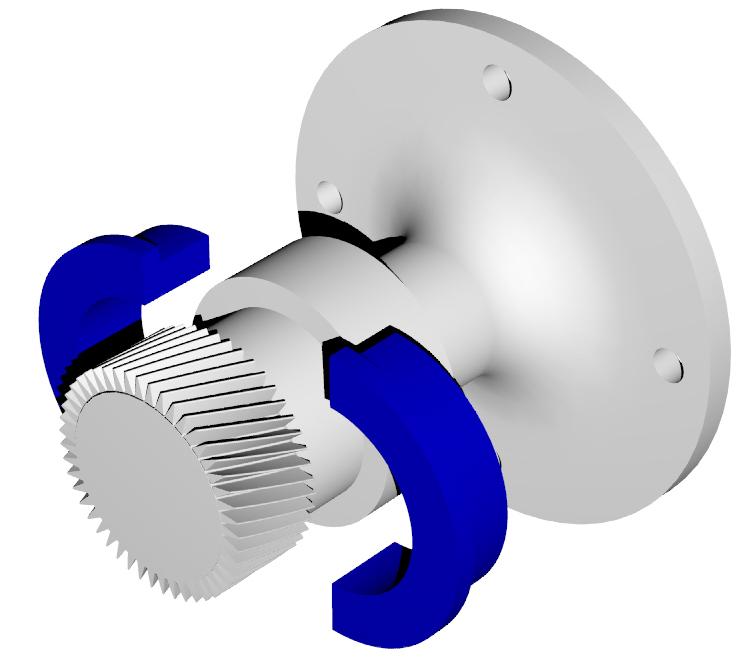
gear box. The back lash is also a function of the spline fit or wear as there
are several splines in Tracy design. Here is a design that does away
with all splines. The sun gear is attached to the damper plate directly.
Keeping track of the oil temperature exiting the gear box is another option.
The vibration is normal with Tracy's damper. It is the gear box over all
torsional stiffness resonating with the rotational inertia of the prop.
The lowest idle RPM is a function of the shore hardness of the rubber
bushings used in Tracy's torque damper. Softer rubber bushings will
lower the resonant frequency. I suggest silicone rubber bushings as
they will tolerate 500 F while regular neoprene is limited to
about 200 F.
It won't hurt the engine to idle it above 1800 RPM. Your prop RPM with
a 2.85:1 PSRU of course is only 631 RPM which is lower than the idle
speed on my O-470.
--
Paul Lamar ...No rotor no motor.
The Rotary Engine NewsLetter. Powered by Linux.
ACRE NL web site.
http://www.rotaryeng.net
Copyright 1998-2007 All world wide rights reserved.