> This is one of the major advantages we enjoy over the
> air cooled aircraft piston engine.
> The rotary will run at peak EGT all day long. It will also keep
> running at 200 degrees lean of peak and 25:1 air fuel ratio
> like a diesel engine.
>
> Your muffler might not like to run at peak EGT but that is cheap
> to replace compared to the cost of an air cooled aircraft piston engine.
> Of course it also has no valves to burn up.
>
>
> I notice that GAMI has now backed off on their recommendations to
> run aircraft engines 50 degrees lean of peak after being
> publicly vilified by the attached Lycoming pdf :)
>
http://www.gami.com/frames.htm
>
> Now if only Mazda would wake up and adopt Honda technology for
> dealing with NOX emissions when running lean of peak in cars.
>
> Paul Lamar ...No rotor no motor.
Dear Paul:
Question: I searched the Internet for Honda technology that lowered NOx
emissions while running lean of peak. I found two (at least).
Here they are:
1. The CVCC engine
from:
http://206.160.145.240/technical/papers/741158
SAE Technical Papers
Title: Nox Emission and Fuel Economy of the Honda Cvcc Engine
Document Number: 741158
Author(s):
Shizuo Yagi - Honda R&D Co., Ltd.
Tasuku Date - Honda R&D Co., Ltd.
Kazuo Inoue - Honda R&D Co., Ltd.
Abstract:
In this paper, the experimental results concerning the effect of the
geometrical and operating factors of the CVCC engine on NOx emission,
taking into consideration the fuel economy, are described with respect
to a specific engine configuration, and they are compared with the
results calculated by means of the mixture formation model. Furthermore
the relationship between the NOx emission level and specific fuel
consumption has been explained, and then it has been shown that the
controlled combustion obtained with the CVCC engine is very effective
for eliminating fuel economy penalty and reducing emissions.
2. Honda's new dieslel Catalytic Converter
from:
http://world.honda.com/news/2006/c060925DieselEngine/
Honda Next-Generation Diesel Engine System
The new catalytic converter utilizes a two-layer structure: one layer
adsorbs NOx from the exhaust gas and converts a portion of it into
ammonia, while the other layer adsorbs the resulting ammonia, and uses
it later in a reaction that converts the remaining NOx in the exhaust
into nitrogen (N2). Ammonia is a highly effective reagent for reducing
NOx into N2 in an oxygen-rich, lean-burn atmosphere. This ability to
generate and store ammonia within the catalytic converter has enabled
Honda to create a compact, lightweight NOx reduction system for diesel
engines. The system also features enhanced NOx reduction performance
at 200?300ēC, the main temperature range of diesel engines.
Honda designed the catalytic converter for use with its 2.2 i-CTDi
diesel engine, which has earned widespread praise for quiet, clean
operation and dynamic performance since its introduction in 2003 on the
European Accord model. By further advancing combustion control, the 2.2
i-CTDi delivers cleaner exhaust to the NOx catalytic converter. Honda
achieved this by optimizing the combustion chamber configuration,
reducing fuel injection time with a 2,000-bar common rail injection
system and boosting the efficiency of the EGR (exhaust gas
recirculation) system. Thanks to these improvements, Honda has reduced
the amount of NOx and soot normally found in engine exhaust, while
increasing power output.
Along with developing superior technology for cleaning exhaust gas,
Honda plans to address other technical challenges in developing clean
diesel engines, such as handling diesel fuels with different cetane
numbers and meeting U.S. On-Board Diagnostic System requirements. Honda
plans to introduce its next-generation diesel engine in the U.S. within
three years.
Gasoline engines presently employ three-way catalytic converters that
offer NOx reduction rates as high as 99%, but this performance is
possible only at the stoichiometric air-fuel ratio. In the oxygen-rich
environment of a lean-burn diesel engine, three-way catalytic converters
only reduce NOx levels by approximately 10%. Honda?s new catalytic
converter efficiently reduces NOx in a lean-burn atmosphere, enabling
diesel engines to rival gasoline engines in cleanliness. The compact
system is also easy to install in passenger vehicles.
Reaction Mechanism of the New NOx Catalytic Converter for Diesel Engines
http://world.honda.com/news/2006/c060925DieselEngine/image/02.jpg
1 During lean burn operation, the NOx adsorbent in the lower layer
adsorbs NOx from the exhaust gas.
2 As needed, the engine management system adjusts the engine air-fuel
ratio to rich-burn, wherein the NOx in the NOx adsorption layer reacts
with hydrogen (H2) obtained from the exhaust gas to produce ammonia
(NH3). The adsorbent material in the upper layer temporarily adsorbs the
NH3.
3 When the engine returns to lean-burn operation, NH3 adsorbed in the
upper layer reacts with NOx in the exhaust gas and reduces it to
harmless nitrogen (N2).
Exhaust Gas Cleaning System Configuration
http://world.honda.com/news/2006/c060925DieselEngine/image/03.jpg
Honda Patents Plasma-Assisted Catalyst System for NOx Emissions Reduction
26 May 2006
A sketch of an embodiment of the aftertreatment system.
A recent US patent award to Honda provides some insight into the
approaches the automaker is taking to be able to meet both California
LEV II LEV and EPA Tier 2 Bin 5 diesel emissions requirements in the
US?thereby giving it a ?50-state diesel.? The patent describes a diesel
emissions aftertreatment system that combines a small plasma reactor
with catalytic units to reduce NOx emissions.
NOx reduction to the level required by the regulations is the US is one
of the thornier issues automakers must solve. DaimlerChrysler became the
first to announce a 50-state solution when it announced its E320 BLUETEC
and VISION GL320 BLUETEC earlier this year. (Earlier post.)
DaimlerChrysler is using two different technologies to bring NOx down to
compliance levels. For the E320?due to be introduced later this year?the
company is using a newly-developed NOx adsorber, a catalytic device that
converts NOx to nitrogen.
For the larger GL320, DaimlerChrysler plans to use a urea-based
injection system (using an aqueous urea solution called AdBlue, the
genesis of the BLUETEC name). Both are combined with Selective Catalytic
Reduction systems, which, while in principle are the same, differ in
application design based on vehicle parameters and emissions targets.
(DaimlerChrysler also needs to have the EPA buy into the notion of using
the urea-based injection system.)
BLUETEC is a good example, however, of the current technology applied to
NOx reduction.
In its patent filing, Honda acknowledges both approaches. The company
also notes problems with each: that the adsorber can impose a fuel
penalty due to the regeneration strategy, and the urea-injection
approach requires the development of an infrastructure for another fluid.
In the proposed Honda system, the electrically-powered plasma reactor
first converts oxides of nitrogen other than NO2 to NO2. In addition,
and in conjunction with a reducing agent injected upstream of the
reactor, it can also oxidize PM. Multiple reactors could be placed in
series or in parallel, if needed.
The NO2 exhaust stream then flows to the catalyst units where it is
adsorbed or reduced by alkali metals and silver.
Other companies and laboratories are exploring the use of
plasma-catalyst combinations for NOx reduction.
Research funded by the DOE and later by ArvinMeritor led to the
deployment of a plasma reformer (Plasmatron) for use with heavy-duty
diesel engines. In development since the 1990s, the system reduced NOx
emissions by up to 90% when used with an adsorber catalyst. It operated
effectively at lower temperatures than other NOx removal systems, and it
reduced the amount of fuel required for adsorber regeneration in half.
GM researchers have developed a plasma-assisted catalyst system (PAC)
capable of reducing NOx under highly lean conditions using E-diesel or
ethanol as the reductant. The system consists of a compact,
energy-efficient hyperplasma reactor followed by a dual-bed catalytic
reactor. They also demonstrated good NOx conversion (above 90% on
average) over a wide temperature range of 200-400° C under steady-state
optimum operating conditions.
Pacific Northwest National Laboratory also developed a two-phase
approach to a plasma catalysis system, also producing reduction of NOx
emissions by as much as 90%.
Caterpillar has looked at reformer-assisted lean NOx catalysis as well
as plasma-facilitated catalysis.
Researchers from Ford, GM, DaimlerChrysler and PNNL collaborated on a
three-phase plasma-catalyst system. (They found that with hexene as a
reductant, the system reduced NOx by more than 90%; with diesel or
Fischer-Tropsch reductant, however, the catalyst efficiency rapidly
dropped off.)
The key to successful commercialization will be developing the right
catalytic units, solving the problem of generating and maintaining the
electricity required for the plasma, packaging it such as way that it
works within vehicle form factors, manufacturing it cost-effectively and
delivering the required low emissions.
Honda has said that it will introduce a 4-cylinder clean-diesel engine
into the US market within the next three years.
Question: Paul, when you wrote: "if only Mazda would wake up and adopt
Honda technology for dealing with NOS emissions when running lean of
peak in cars" is it one of these two advances you are referring to, or
were you refering to something completely different?
Thanks!
Les Nordman
That is exactly what I had in mind. Thanks for all the work looking it
up and presenting it. The diesel engine has severe additional problems
with particulate emissions. (Black smoke.)
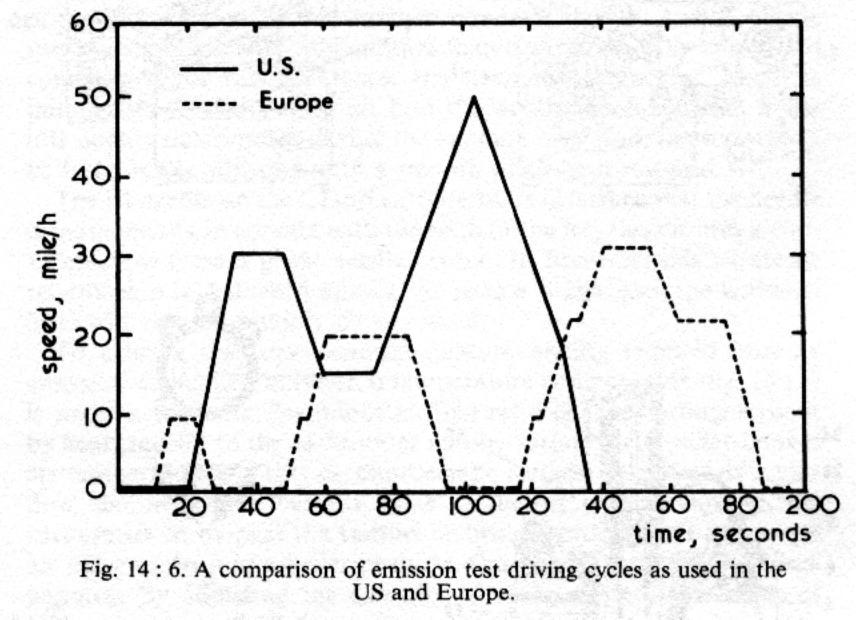
In fact from monitoring the OBD II on my Odyssey I suspect it goes into lean
burn when you lift on the accelerator pedal unlike my RX8 that always
appears to stay at stoichiometric no matter what. Lifting the accelerator
and over driving the engine does not appear to be part of the EPA
driving cycle and therefore NOX is probably not measured in this mode.
Paul Lamar ...No rotor no motor.
The Rotary Engine NewsLetter. Powered by Linux.
ACRE NL web site.
http://www.rotaryeng.net
Copyright 1998-2007 All world wide rights reserved.