Hello all,
I was under the impression that coating failures were only a problem
with the aluminum side housings. And, that rotor housings are chrome
plated with no problems. Is this a case of someone trying an
improvement just for change?
Dan
Yes that is true on stock rotor housings but some people are coating the rotor
housings anyway. One reason it is done is to attempt to save a damaged
rotor housing. Damaged rotor housings are normally a throw away item
if damaged. There are unsubstantiated claims of lower friction
and unproven insulating qualities as well.
Another reason rotor housings are coated is if they are made
by third parties. Not Mazda. Several Wankel engine builders
other than Mazda have cast their own rotor housings. An apex
seal on a wear surface is a complex resonant system like any other
mechanical device. If conditions are wrong it will chatter or resonate
and leave marks in the rotor housing. There several different factors
that can cause this to happen.
1. The friction between the apex seal and the rotor slot.
2. The friction between the apex seal and the rotor housing.
3. The weight of the apex seal.
4. The spring rate of the apex seal spring.
5. The material the apex seal is made of. It was discovered
over a 100 years ago that cast iron was best for piston
rings due to its porosity and it consequently ability to retain
lubrication. Its hardness and smoothness is also a factor
for low friction.
6. Last but not least the stiffness or inherent spring
rate of the rotor housing wear surface itself. A steel wear
surface is three times stiffer than an aluminum wear surface.
This last factor has an affect on the bond between coating
and the base material. When it flexes on a microscopic level motion
takes place between the coating and material causing the bond to fail
and the coating to separate. Once hard ceramic particles separate from the
surface it is like adding loose sand to the engine. This "sand" cause
catastrophic engine failure needless to say.
Some attempts have been made to use a chrome plating on an
aluminum housing. This too has failed as chrome does
not adhere well to aluminum. The hard steel liners are first
copper plated and than a layer of chrome is plated on after
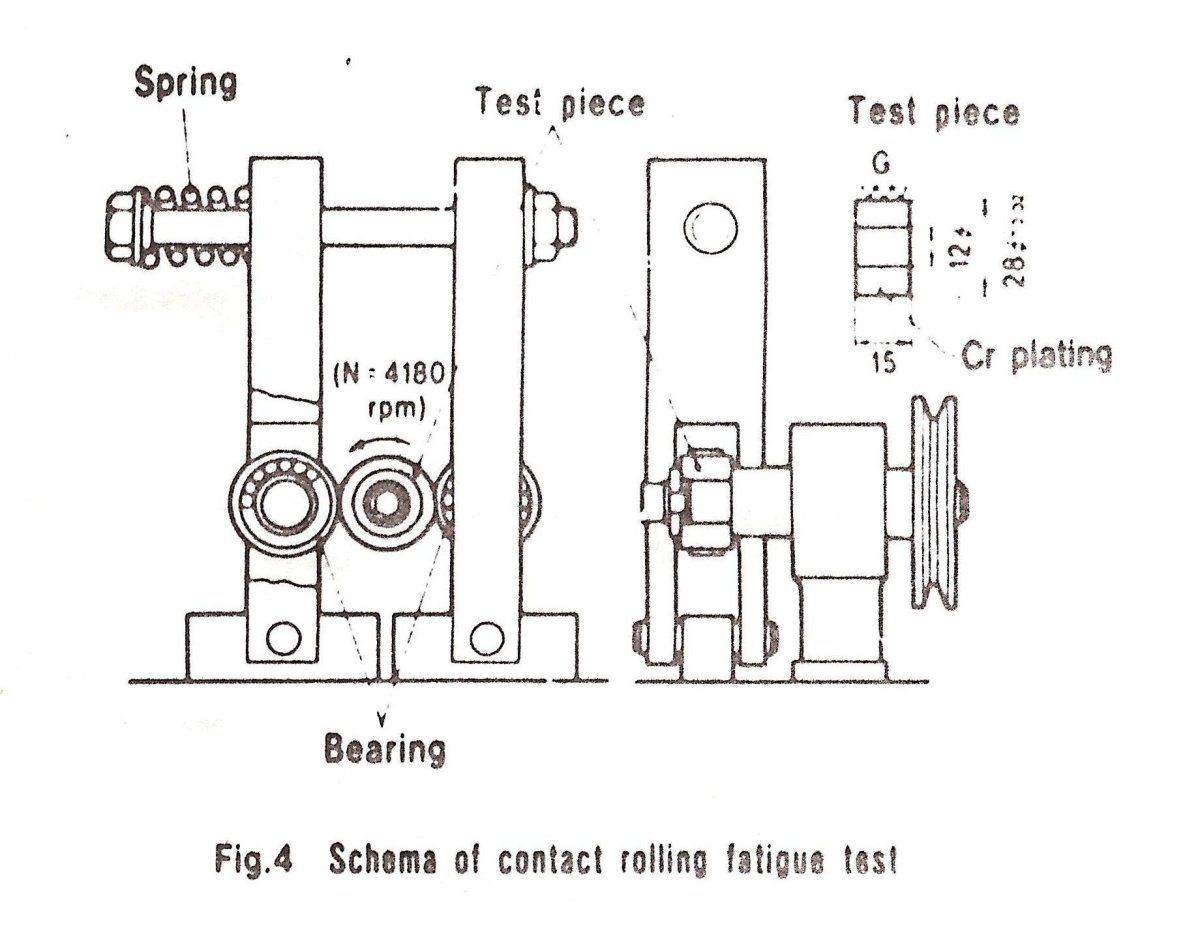
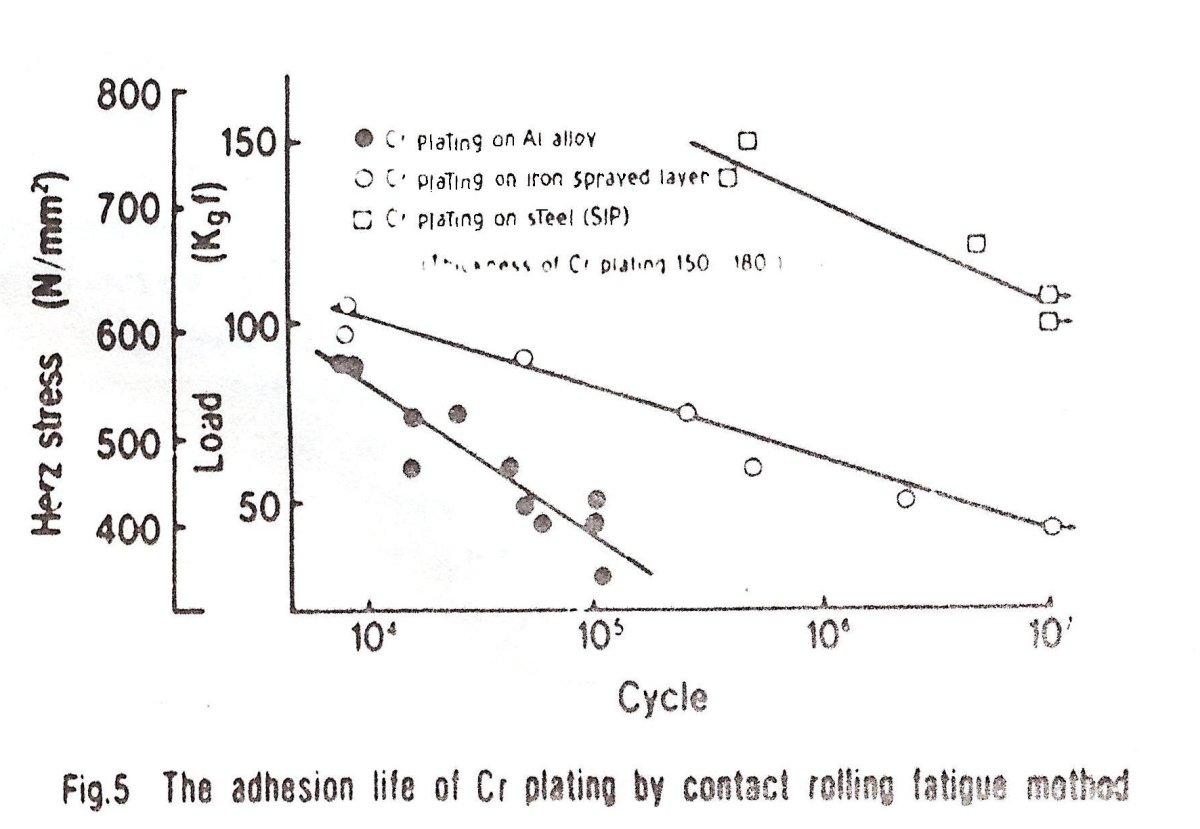
that. Mazda devised a contact rolling fatigue tester to
check the long term adhesion of the chrome plating on
the steel and aluminum liner. See the attached chart.
The chrome plating is a microscopically porous version that
retains and spreads an oil coating. This oil coating is absolutely
essential to lower the friction between apex seal and housing.
Mazda forms the steel liner with teeth that mechanically lock
the hard steel liner to the aluminum. THIS is the ONLY system that
has been proven to work long term with nearly 2 million Mazda engines
built so far and billions of running hours.
The next best thing is detonation gun coating that works in a similar
fashion. Randomly shaped super hard and strong particles are
fired at the surface of the aluminum at super sonic velocities.
Consequently these particles are mechanically locked into the aluminum
surface.
Much of this applies to the flat end housings as well.
The problem with all coatings is quality control. There is no
way to non destructively test a coating. Consequently any
new coating system must be tested statistically over several hundred
engines each with several thousand hours in field service. If that is
not done it becomes a crap shoot.
--
Paul Lamar ...No rotor no motor.
The Rotary Engine NewsLetter. Powered by Linux.
ACRE NL web site.
http://www.rotaryeng.net
Copyright 1998-2007 All world wide rights reserved.