I went back and checked some old messages prior to
installing the
oil water
HX but you never mentioned OAT or climb. Do you remember
what that
may have
been?
"To answer your question on water temps; the water temps
were never
a problem.
They would stabilize around 135-150, depending on MAP."
Sounds like your glycol system was very effective if not
over kill.
Do you recall the size of the rad?
Paul Lamar ...No rotor no motor.
Paul,
The application was Ford Galaxy (probably w/390ci engine,
but not
stated). Core size is 18 x 22.5 x 2.5, best I
recall. Initial
flight
was in August and the temps were in the mid 90's.
Mark S.
You obviously did a great job on the rad ducting. Core
volume
appears to
be about 1000 cubic inches where our rule of thumb call
for 300
cubic inch
per rotor or about 900 at the max for a 3 rotor.
What I can't understand is why the oil cooler is not working
better.
Perhaps you have some air leaks in the front duct or the
back side
of the oil
cooler is too hot. Can you make some air temps measurements
behind
the oil cooler?
What brand of oil cooler is that?
--
Paul Lamar ...No rotor no motor.
It appears the oil cooler and glycol cooler exhaust into the
same
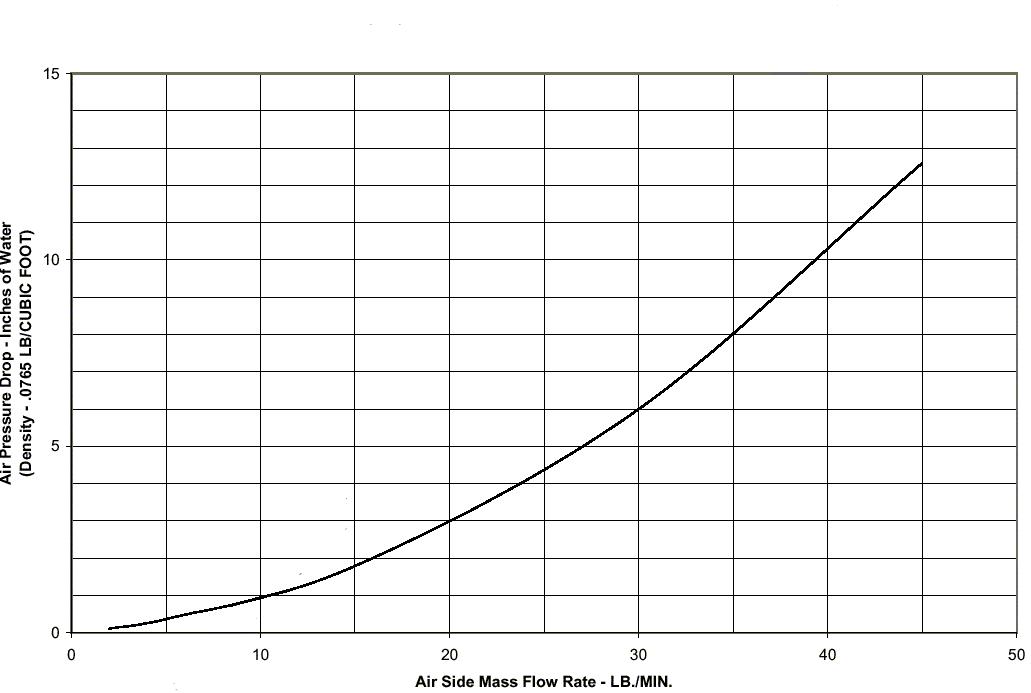
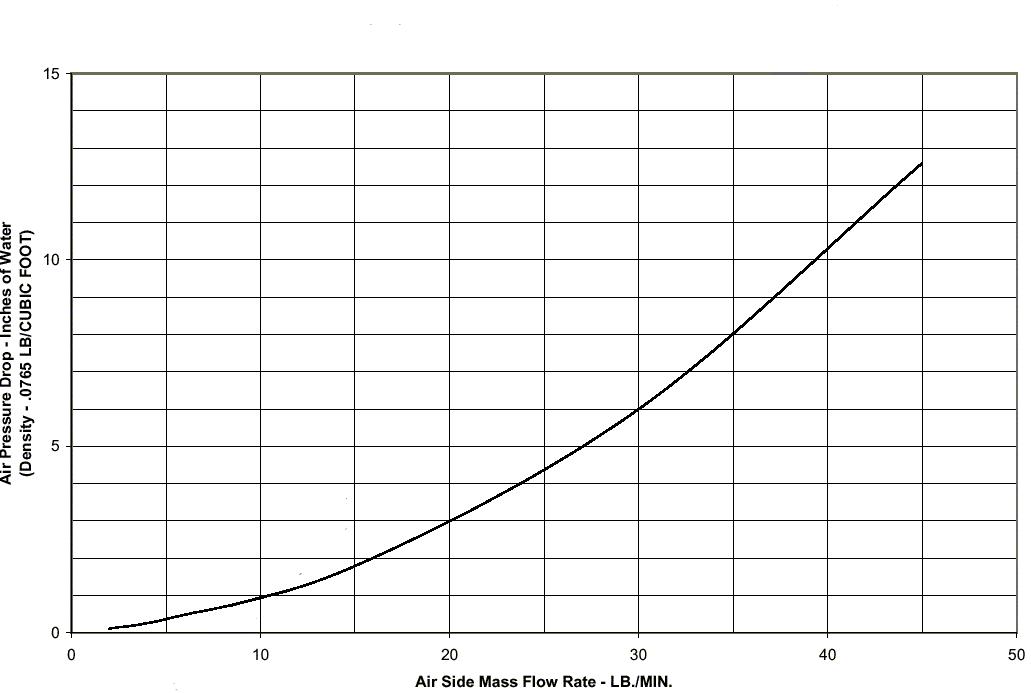
chamber/plenum (main volume of the cowl.. If the delta-P across
the oil
cooler is larger than the delta-P for the glycol cooler, it
might
explain the difference. Maybe the oil cooler is thicker? Is
there room
for a dedicated duct for the oil cooler to the outside of
the cowl -
maybe out the left side adjacent and aft of the cooler?
Regards,
Matt-
Matt,
Yes, the oil cooler is 3/8" thicker than the glycol
exchanger. Also,
maybe more significant, is that the fin count is much higher for
the oil
cooler, resulting in higher drag/pressure drop across it. I had
considered adding a dedicated exit duct for the oil cooler, but
didn't
want to pay the drag penalty. That's when I decided to try the
oil-to-water exchanger. The beauty with that solution is that
it didn't
cost me any additional cooling drag. I feel that if I could fit a
slightly larger glycol exchanger in place of what I'm running
now, that
I could eliminate the oil/air exchanger altogether. I even flew
with
50% of the oil/air exchanger blocked off. It was pretty close
with the
current glycol exchanger, but not quite enough to fly in Texas
in the
summertime. So, I left the oil/air exchanger in place and don't
have
any more cooling problems. That's a real good feeling.
Mark S.
Mark,
So you're not interested in the cooling redundancy that Paul has
suggested as a good idea - using oil-air and glycol-air exchangers at
the same time? I still think that would be the direction I'd go. In
fact, I'd make that a requirement, as I think it's something that could
make for a more favorable outcome should the airplane suffer from a
single component failure..
Maybe it's just anecdotal, but the vaunted P-51 Mustang has a separate
oil-air cooler, as I believe do the other Merlin powered aircraft
(Spitfires, Hurricanes, etc). I think the P-40 (Allison powered) was
the same way.
The Mustang had an induction air to glycol supercharger intercooler, but
this ran with a separate cooling loop from the engine - and had its own
coolant pump and air-glycol exchanger. This allowed putting the
intercooler where the directness/compactness/packaging is important. It
wouldn't be practical to have a duct feeding an air-air intercooler
between the stages of the supercharger (on a Merlin).
Please keep in mind, I don't have a rotary powered airplane, nor a
liquid cooled airplane, nor even an airplane I built myself, so take my
ideas with a grain of salt.. :)
I also commend you for putting together an airplane that's running
well. I admire the accomplishment.
Regards,
Matt-
Matt,
I do have a glycol-air and an oil-air exchanger, but also an oil-glycol
exchanger. I don't see where removing the oil-glycol exchanger is going
to improve the time I have to get on the ground should the glycol system
spring a leak. I may explore the possibility of building a dedicated
exit duct for the oil-air exchanger though... in my spare time. If that
works out, then I'll consider removing the oil-glycol exchanger.
Mark S.
I am really interested in why it is not working better. If you don't mind,
next time you are out there, please record the number of fins per inch and the
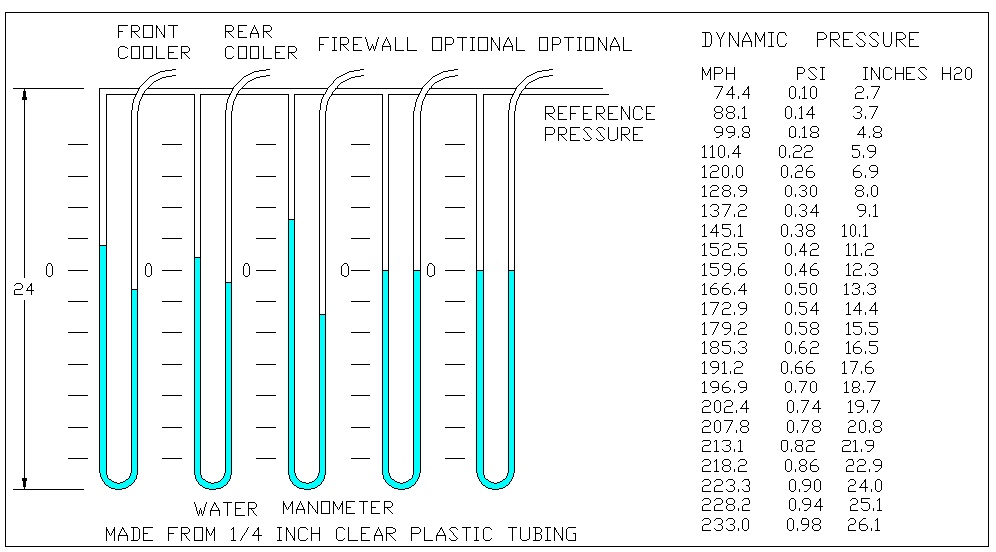
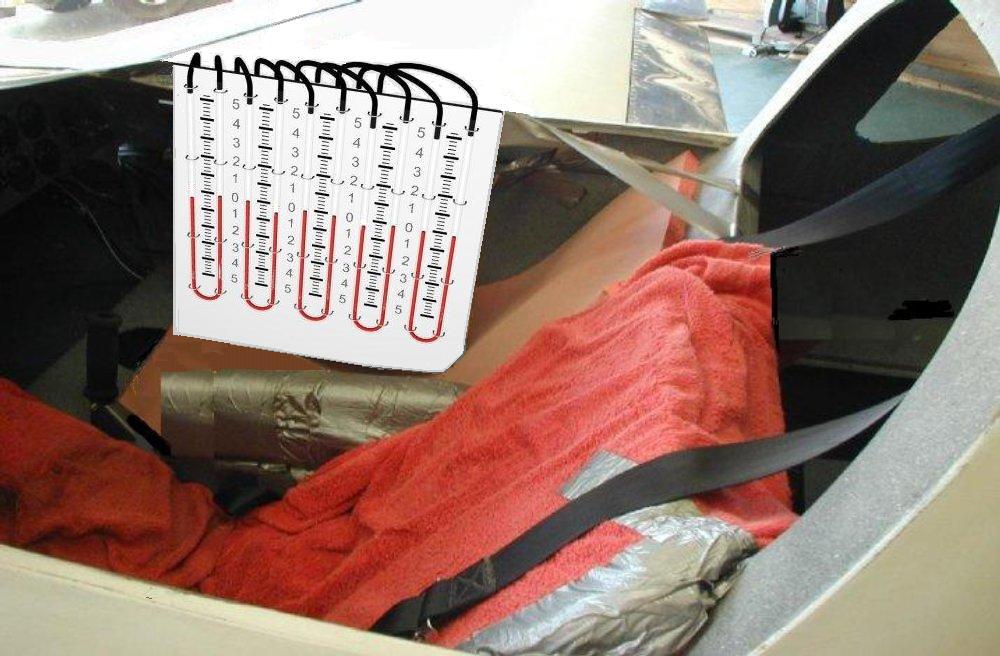
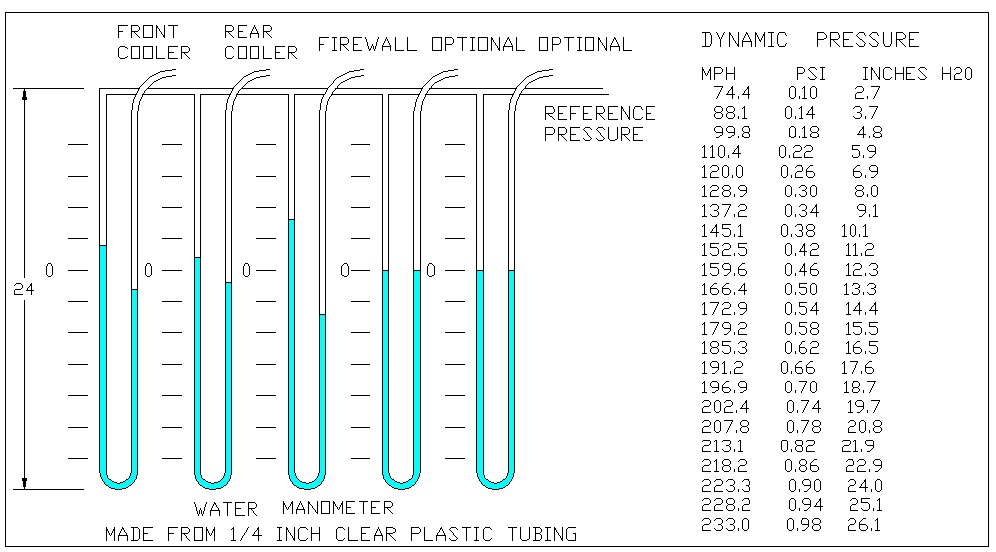
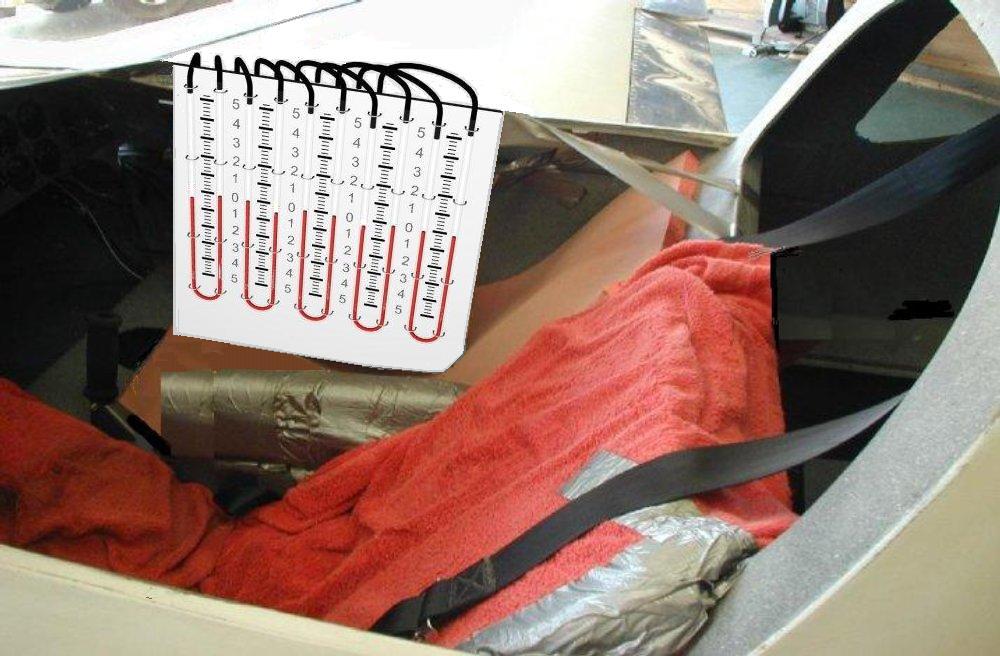
tube spacing. Also if you have a water manometer measure the pressure
on the face of the oil cooler at speed. Use the porous foam hot glued to
the end of the sense tube trick. You have my cooling book.
Here is a chart of dynamic pressure verses speed. The pressure should be
.3 to .4 of this number in the center of the core. If it is higher or lower
there could be something wrong with the duct or the porosity of the oil cooler.
In other words at 120 MPH dynamic pressure is 6.9 inches of water.
The oil cooler face should be in the ball park of 2 to 2.8 inches of water.
The higher the number the less the porosity of the oil cooler. If it is
blocking the air flow through the core excessively it should be much higher
than 2.8 inches.
If it is lower than 2 inches you may have a leak in the duct or the duct may
be improperly shaped. You can do the same thing to the glycol rad and compare
the two numbers. It would also be helpful to measure the pressure
behind the core in the cowl as well.
You would not happen to have any data like this on the oil cooler would you?
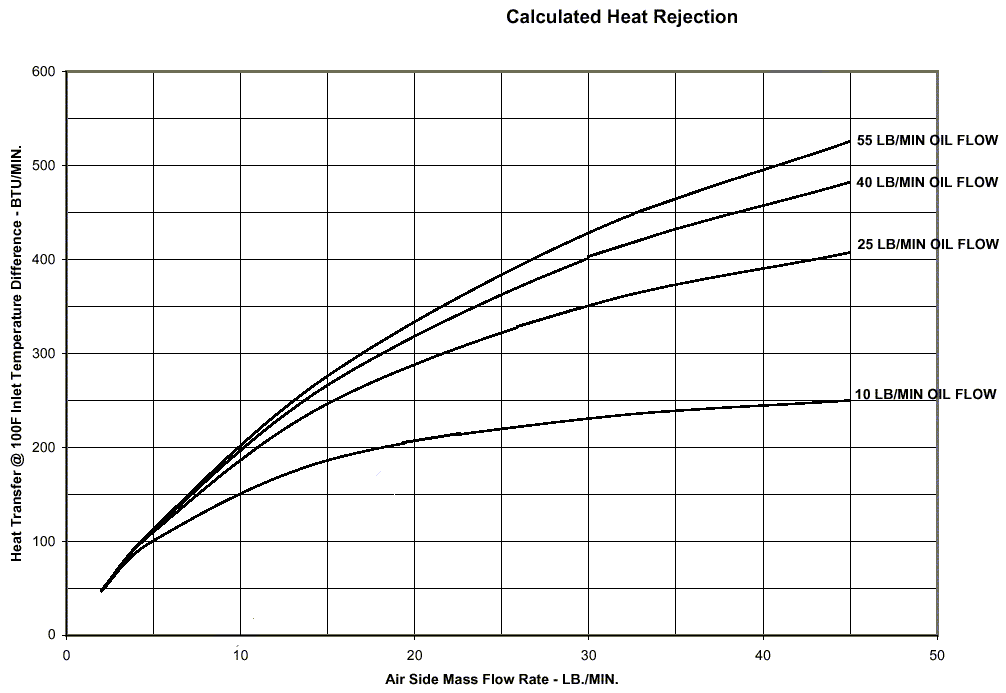
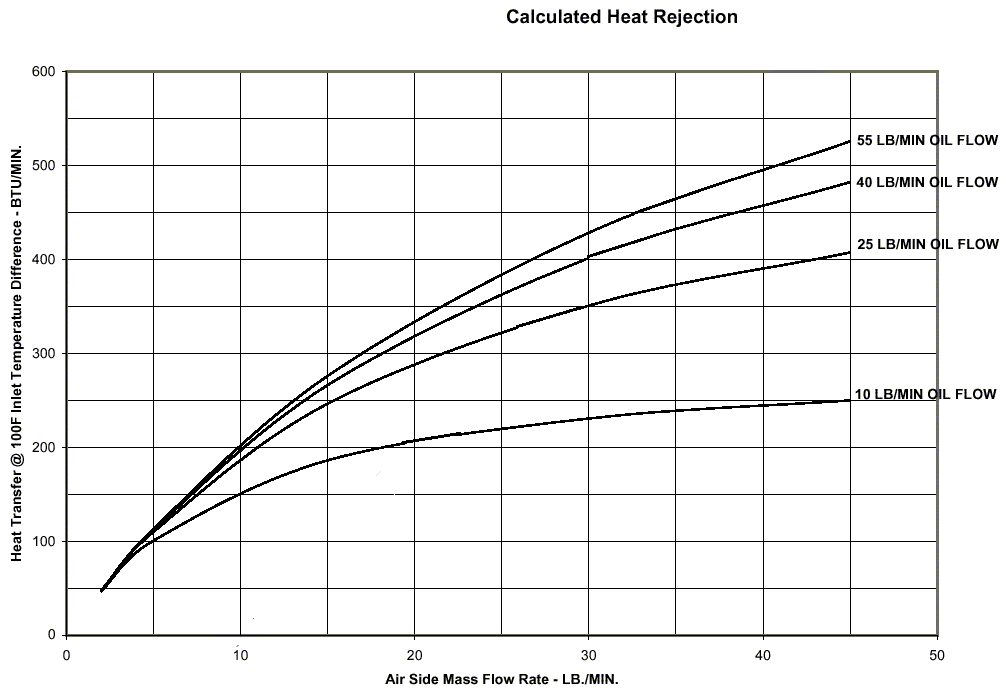
My brain is kind of fried. Pardon the pun. Perhaps perhaps Bill Schertz can tell
us where we want to be on the 3 rotor oil BTU rejection.
Paul Lamar
The Rotary Engine NewsLetter. Powered by Linux.
ACRE NL web site.
http://www.rotaryeng.net
Copyright 1998-2007 All world wide rights reserved.