A manually controlled over pressure valve. When your airplane
starts spewing steam disable the valve and pump in cold
cooling water from an emergency reservoir supply until you get
it back on the ground. If you don't disable the valve you have to
pump it in at over 30 psi.
--
Paul Lamar ...No rotor no motor.
Emergency spray bars - mist onto the rad inlet - would work great on
Mark's layout since it would then blow any remaining water over the
entire engine. Cool the system, lower the tendency to boil. How much
flow do you need? A windshield washer pump probably isn't enough.
Maybe the domestic water pump from a travel trailer? How about a
pre-pressurized tank, or a CO2 cartridge which would pressurize the
emergency tank. How much water to haul? 1 gallon? 2?
Matt-
Evap water sucks down a lot of heat. Called the heat of vaporization
as I recall. It don't take much.
Paul Lamar ...No rotor no motor.
Paul,
Use a 50/50 mix of methanol and water for spray. Better evap provides
even
more cooling. On the yak we run water spray bars on the oil cooler
and run a
15 minute race at max power with the oil cowl doors closed. We use
about 3
quarts per minute, but we are cooling a 1600 horse power radial. You
need a
pump with a little bit of pressure so the water is a good mist coming
out of
the spray bar. The spray bar is nothing but a 3/8 stainless tube with
.020"
holes drilled in it. Our pump is an RV water supply pump for semi
trucks as
we are 24v. 12v ones are very cheap, made of plastic so they are light.
Trick it to put it on an arm switch and have a coolant temperature
switch
turn on the pump and alert the pilot. You want to slow down the problem
before you boil over to give you some air time to get down.
Larry
Translates to .375 quarts per minute at 200 HP. At that rate a gallon
(8 pounds)
will buy about ten minutes. Pretty good unless you are out in the middle
of nowhere. 200 MPH is 3.33 miles per minute or 33 miles in ten minutes.
I think a 3 gallon tank (24 pounds) would not be out of the question.
Almost 100 miles.
>
Maybe a little bit of both. Make up water AND spray bar.
--
> Paul Lamar
-----------------------------------------------------------
Same idea as emergency core cooling in a Nuclear Power plant :-)
Bill Schertz
KIS Cruiser #4045
N343BS (reserved)
Wow! Cool! I did not know that.
--------------------------------------------------------------
VERY IMPORTANT:
BTW Bill, how do you convert BTU to Horse Power.
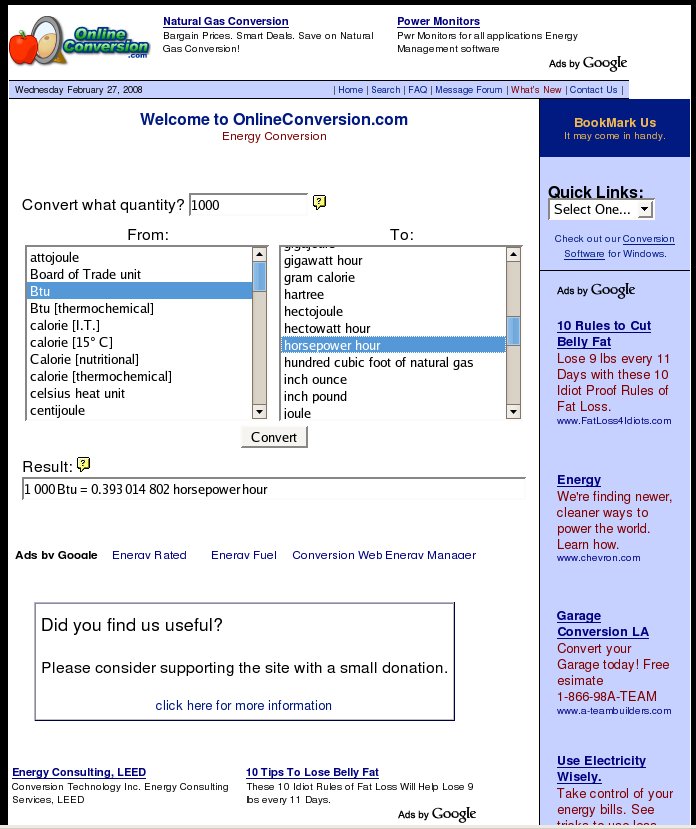
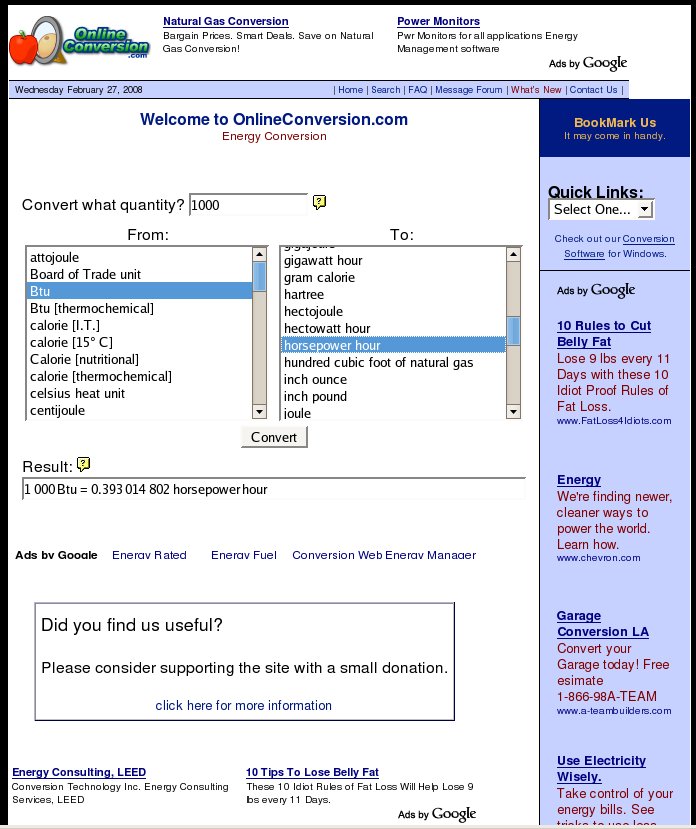
If I use http://www.onlineconversion.com/energy.htm
They 1 000 Btu = 0.393 014 802 horsepower hour
Are BTU based on minutes so that is really .393 X 60 = 25.58 HP?
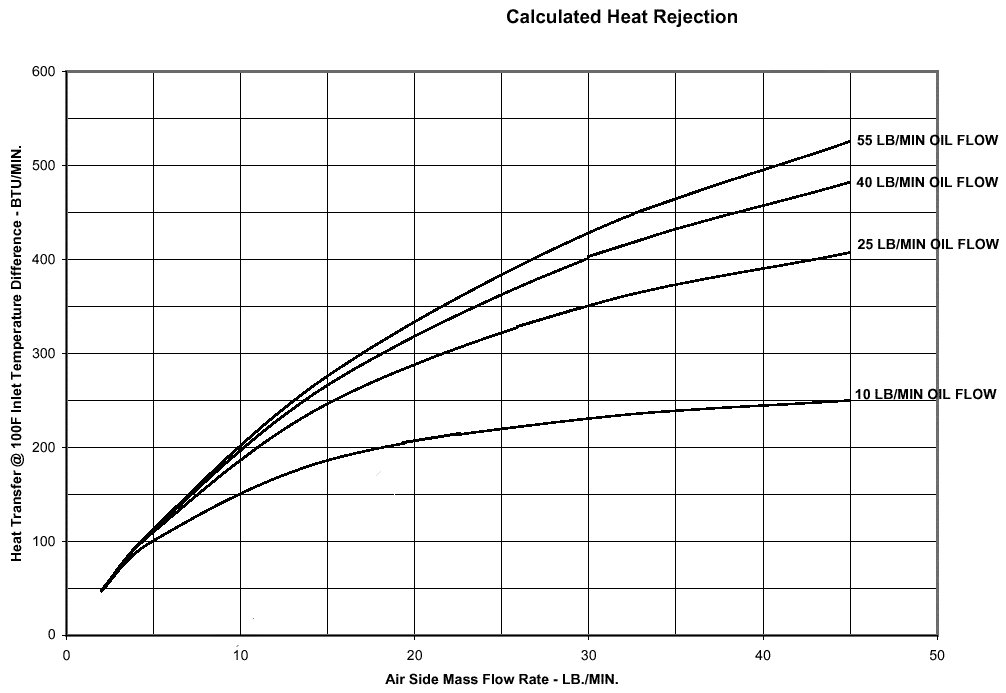
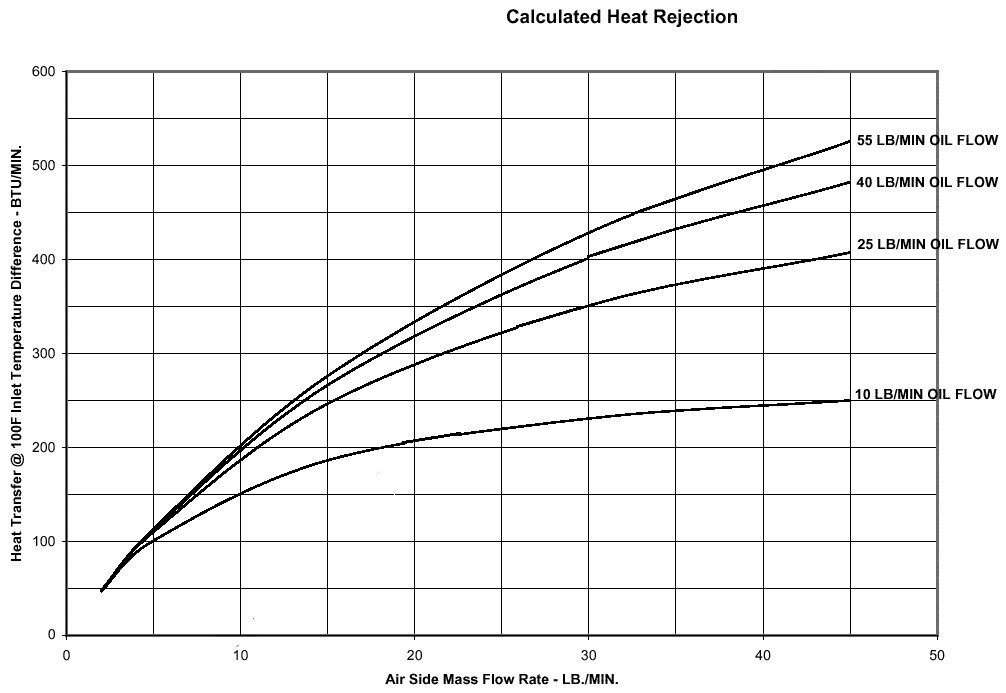
I am trying to get a handle on the size and capacity of this oil cooler.
This is the ONLY oil cooler I have good and complete data on.
Both air side and oil side.
> Paul Lamar
Paul,
A BTU is a measure of energy. Power would be BTU per unit of time. 1
BTU = 778 ft-lb
So, 1 BTU/hr = 778 ft-lb/hr =12.97 ft-lb/min = 3.93 E -4 horsepower
Inverting this we get: 2545 BTU/hr = 1.0 hp
Aubrey
Hummm you mean if I apply a torque on a stationary bolt for a period of time
that is energy? How did I miss this in 72 years :) I am not saying
you are wrong. Far from it. I totally believe you. I must have skipped that
physics/thermo class. Obviously this is a huge gap in my thermo self education.
There is no doubt my body would be burning calories.
If you stood up for a period of time you would be burning calories.
I thought it had to be rotating to get HP.
So a BTU is a torque! Wow.
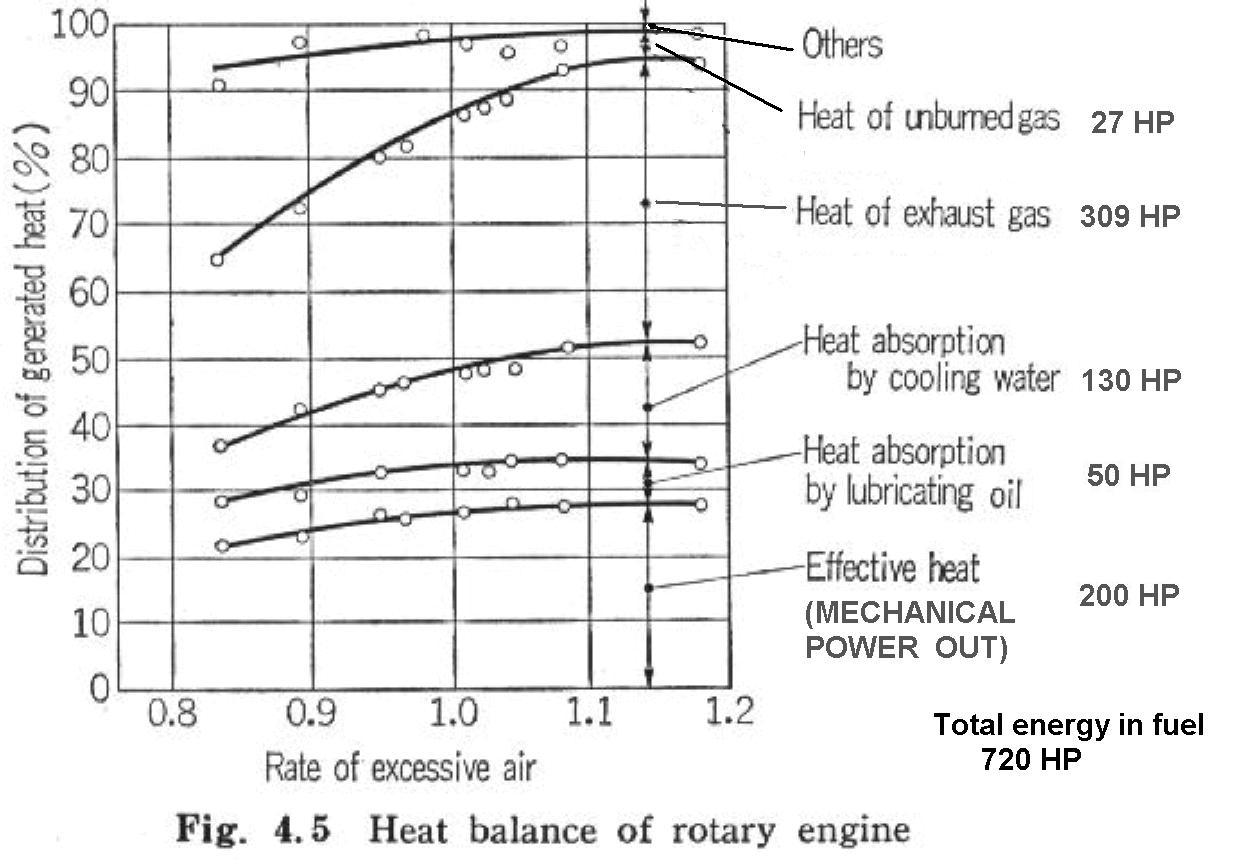
What is the HP that this oil cooler is dissipating
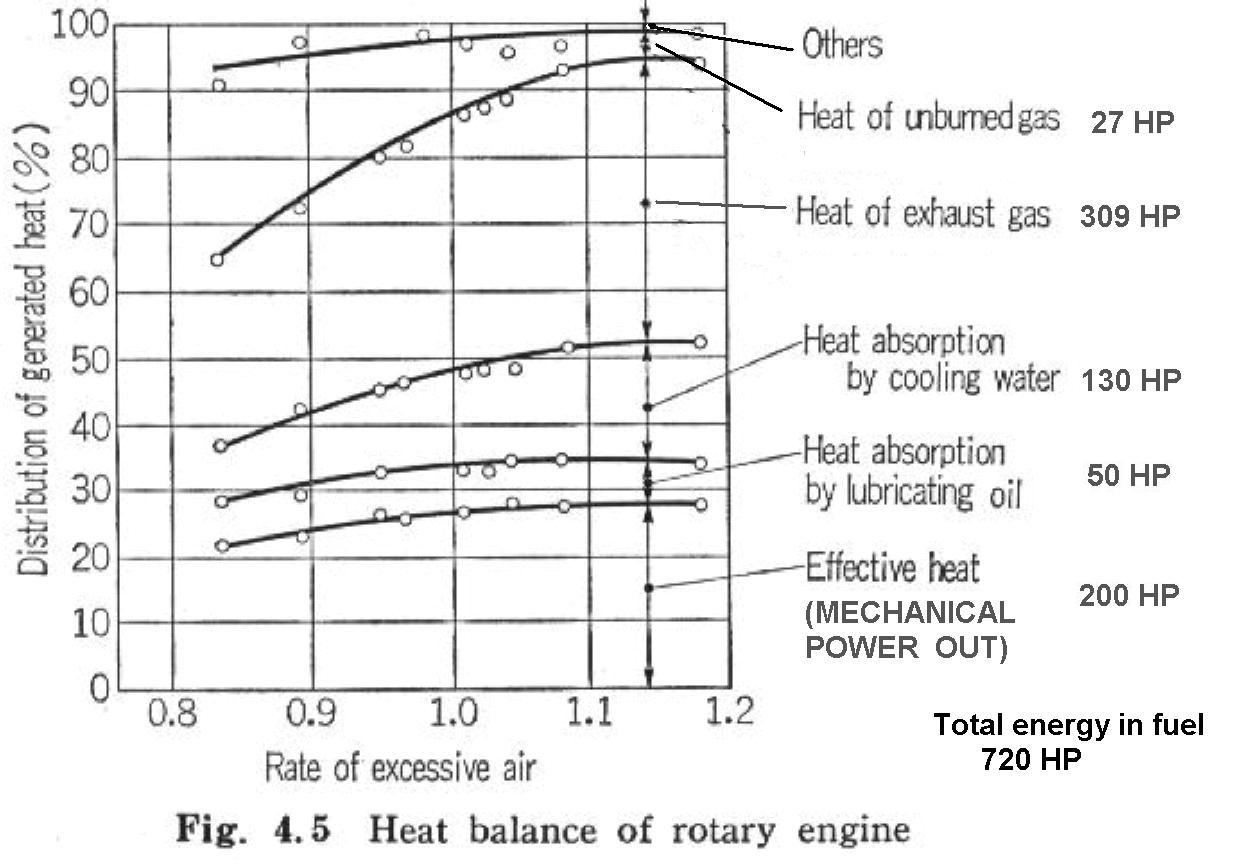
when it says 400 BTU's/min? We need about 50 HP for a 200 HP
rotary.
Now I am changing the subject to turbo compounding.
Here is another hypothetical situation. If the 1700 F exhaust gases
were not moving what would be the BTU? Would it depend on on how long they stayed
at 1700 F? Would it be a function of the volume of the container?
I am just thinking out loud here.
Then the kinetic energy in the exhaust is only the mass of the gas moving at
some speed? The heat of the gas has nothing to do directly with the kinetic
energy. The application of heat of course increases the kinetic energy
of the gas as it expands the gas. The gas expansion in an open ended pipe causes an
increase in the kinetic energy as the expanded gas speeds up trying to get out.
Is that an accurate description of what is happening?
Paul Lamar ...No rotor no motor.
The Rotary Engine NewsLetter. Powered by Linux.
ACRE NL web site.
http://www.rotaryeng.net
Copyright 1998-2007 All world wide rights reserved.