Impact energy in a moving gas stream is the mass of the gas times the velocity
squared just like the energy in a plane crash. That is why the FAA limits the stall
speed of GA airplanes. I digress.
The kinetic energy in the exhaust is the mass of the gas moving at
some speed. The heat of the exhaust gas has nothing to do directly with the
kinetic energy. The application of heat increases the kinetic energy
of the gas as it expands the gas in a limited volume. The gas expansion
in an open ended exhaust pipe causes an increase in the kinetic energy as
the expanded gas speeds up trying to get out. If you choke the pipe down
with a nozzle the kinetic energy further increases at the expense of an
increase in back pressure.
Paul Lamar
-----------------------------------------------------------------
Paul, and Group,
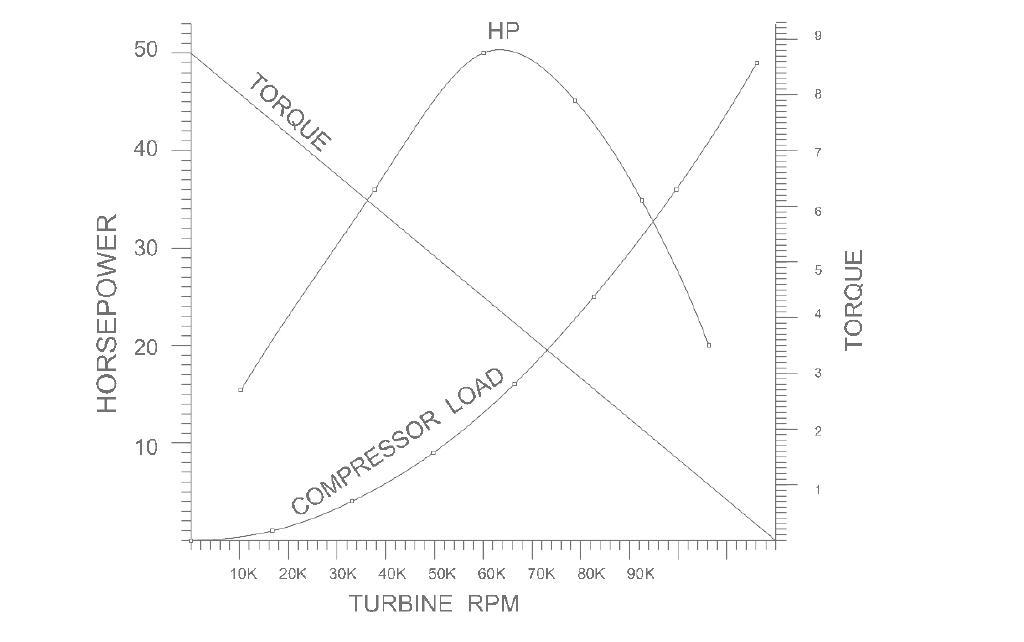
I wanted to run something by you to see what you think of it. These
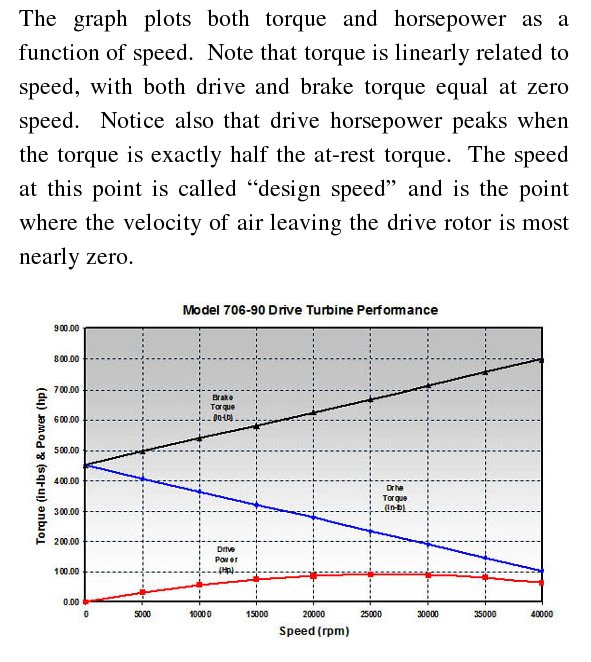
newer turbo-compound trucks are using the axial flow turbines because
they are more efficient in the RPM range where an engine might operate.
I had a thought about how we usually will be running a specific RPM in
cruise and only slightly more at WOT. My suggestion is this, why not
optimize an axial flow turbine for cruise, and then gear it directly to
the e-shaft?
At idle or low RPM the turbine might even be a drag on the
engine, though a small one. This wouldn't be a big loss though and the
muffling we would get from the turbine would be worth it. As the exhaust
flow increased the turbine would start to produce power. Recovery at
lower RPMs might be a fraction of what it could be with a variable speed
drive, but we wouldn't be operating in that range for long. As the power
rose to at least cruise RPM the turbine would be in it's near optimum
range and greatly improving BSFC with the minimum loss. Max RPM at WOT
wouldn't be much higher and the engine would still be recovering
considerable HP from the turbine, though not the optimum available
through a variable speed gearbox.
All the while we would need less of a
muffler after the exhaust was run through the turbine. The connection
could be simple like a multi rib flat belt or even a direct drive chain
or gear drive. We wouldn't be recovering much at low RPM's but as we
have mentioned so many times before we wouldn't be at those RPMs for
long. The losses wouldn't be any different from the losses caused by a
heavy muffler system used to quiet the engine anyway. This idea would be
like the really large turbine you have drawn in the past, but could be
done with a more conventional look to it. So what do you think of this
idea? It is nowhere near as elegant or efficient as the traction drive,
but in the optimized RPM band it might be almost as good with a very
simple setup. I believe it would work. Tell me I'm wrong.
Bill Jepson
--------------------------------------------------------------------------
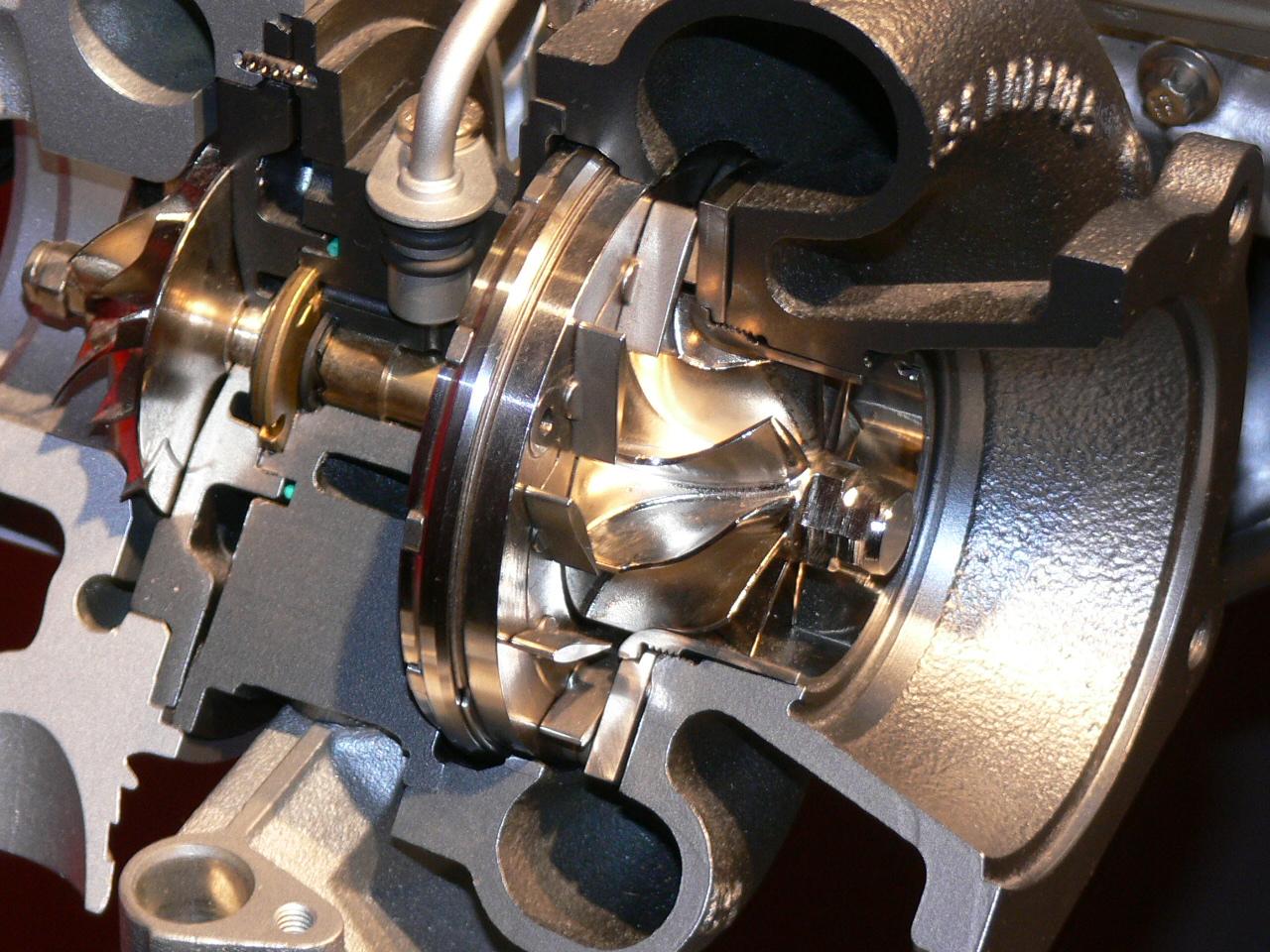
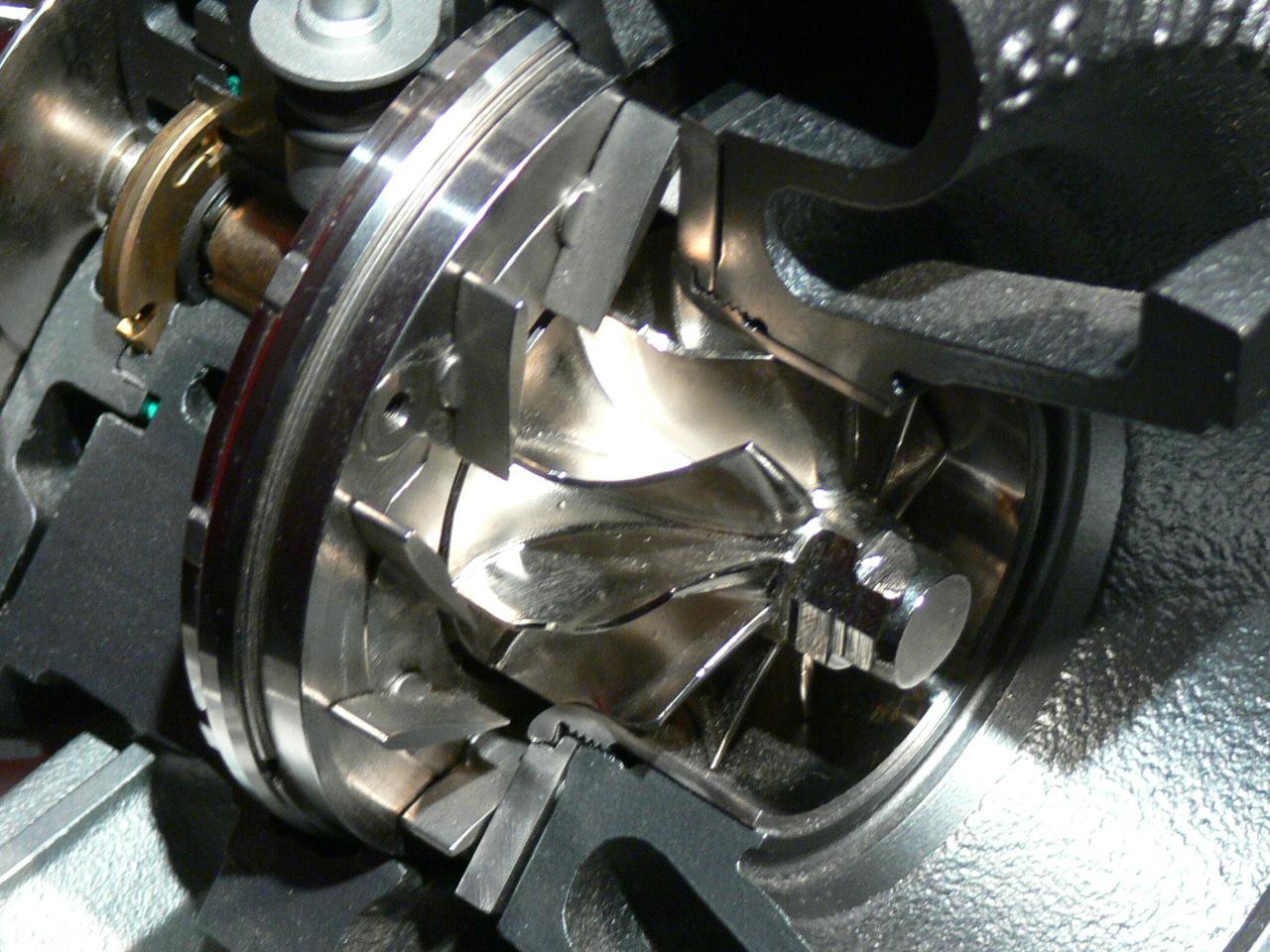
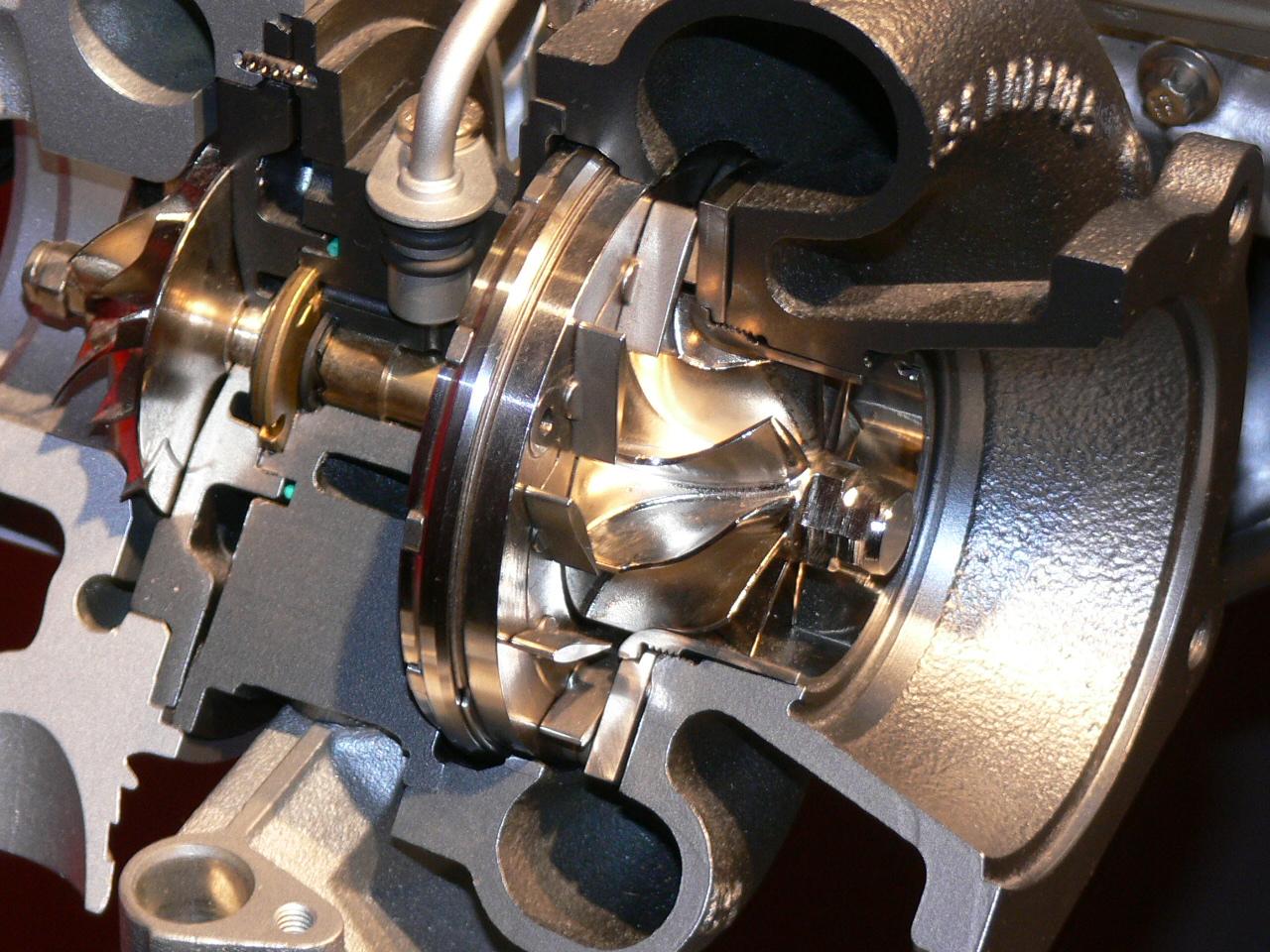
These turbo charger variable angle vane devices work on axial flow turbines
as well as radial flow turbines to broaden the turbine HP range over a range
of engine RPM and power. It is very similar to changing the A/R on a radial
turbine. In effect they are choking the exhaust pipe. They are very simple devices.
If you add a one way clutch to the turbo compound (TC) turbine output shaft
the TC turbine will not be a drag on the engine when the engine is RPM is
higher than the RPM the TC turbine output shaft can generate.
Paul Lamar ...No rotor no motor.
The Rotary Engine NewsLetter. Powered by Linux.
ACRE NL web site.
http://www.rotaryeng.net
Copyright 1998-2007 All world wide rights reserved.