Impact energy in a moving gas stream is the mass of the gas times the velocity
squared just like the energy in a plane crash. That is why the FAA limits the stall
speed of GA airplanes. I digress.
The kinetic energy in the exhaust is the mass of the gas moving at
some speed. The heat of the exhaust gas has nothing to do directly with the
kinetic energy. The application of heat increases the kinetic energy
of the gas as it expands the gas in a limited volume. The gas expansion
in an open ended exhaust pipe causes an increase in the kinetic energy as
the expanded gas speeds up trying to get out. If you choke the pipe down
with a nozzle the kinetic energy further increases at the expense of an
increase in back pressure.
Paul Lamar
Paul,
You are, of course, correct about kinetic energy of a moving gas -
temperature doesn't have anything to do with it. However, there is
kinetic energy in a gas due to its temperature.
http://en.wikipedia.org/wiki/Temperature
"For an ideal gas the kinetic theory of gases uses statistical
mechanics to relate the temperature to the average kinetic energy of
the atoms in the system. This average energy is independent of
particle mass, which seems counter-intuitive to many people.
Temperature is related only to the average kinetic energy of the
particles in a gas - each particle has its own energy which may or may
not correspond to the average; the distribution of energies (and thus
speeds) of the particles in any gas are given by the Maxwell-Boltzmann
distribution."
How do we efficiently turn the heat energy of the hot gas into
mechanical work? Does a normal turbocharger do this? Is all of the
cooling of the exhaust as it goes through a turbo just wasted
(dissipated through the turbo housing)? Or does some of the heat loss
get converted to rotational energy?
Matt-
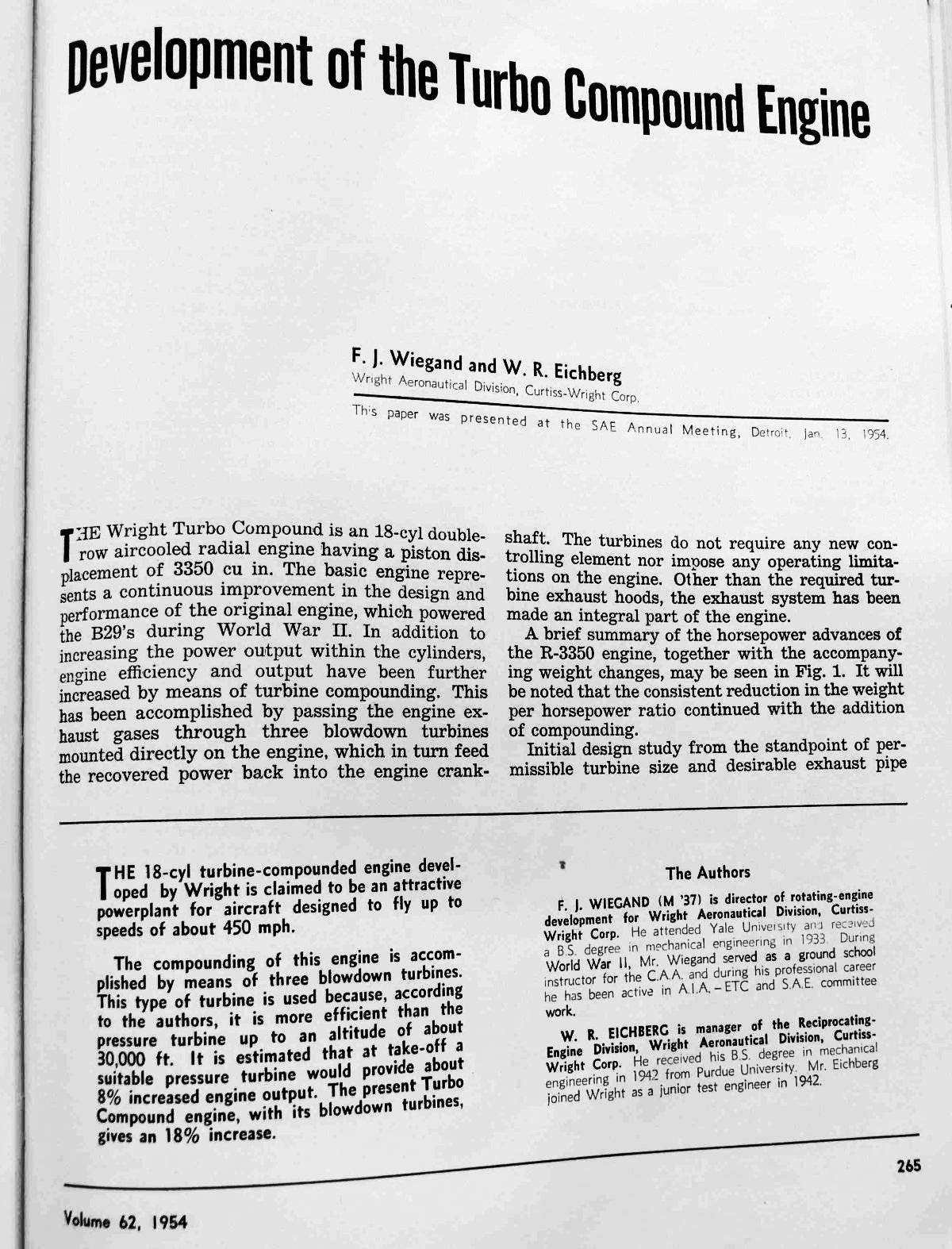
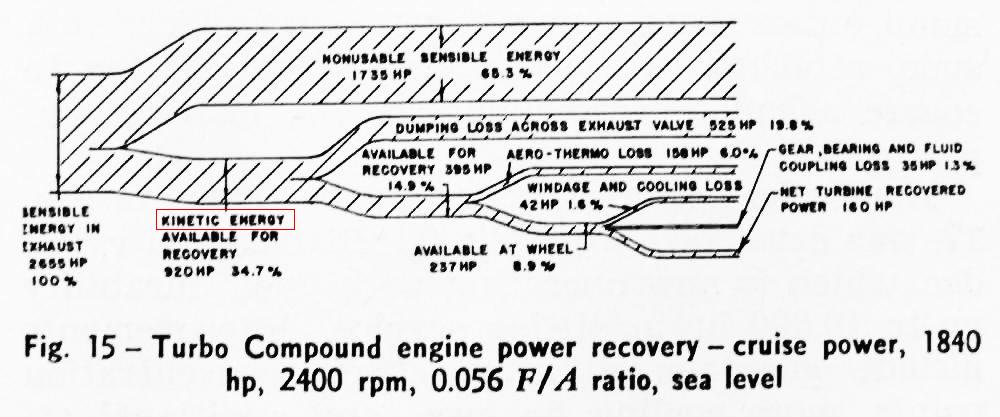
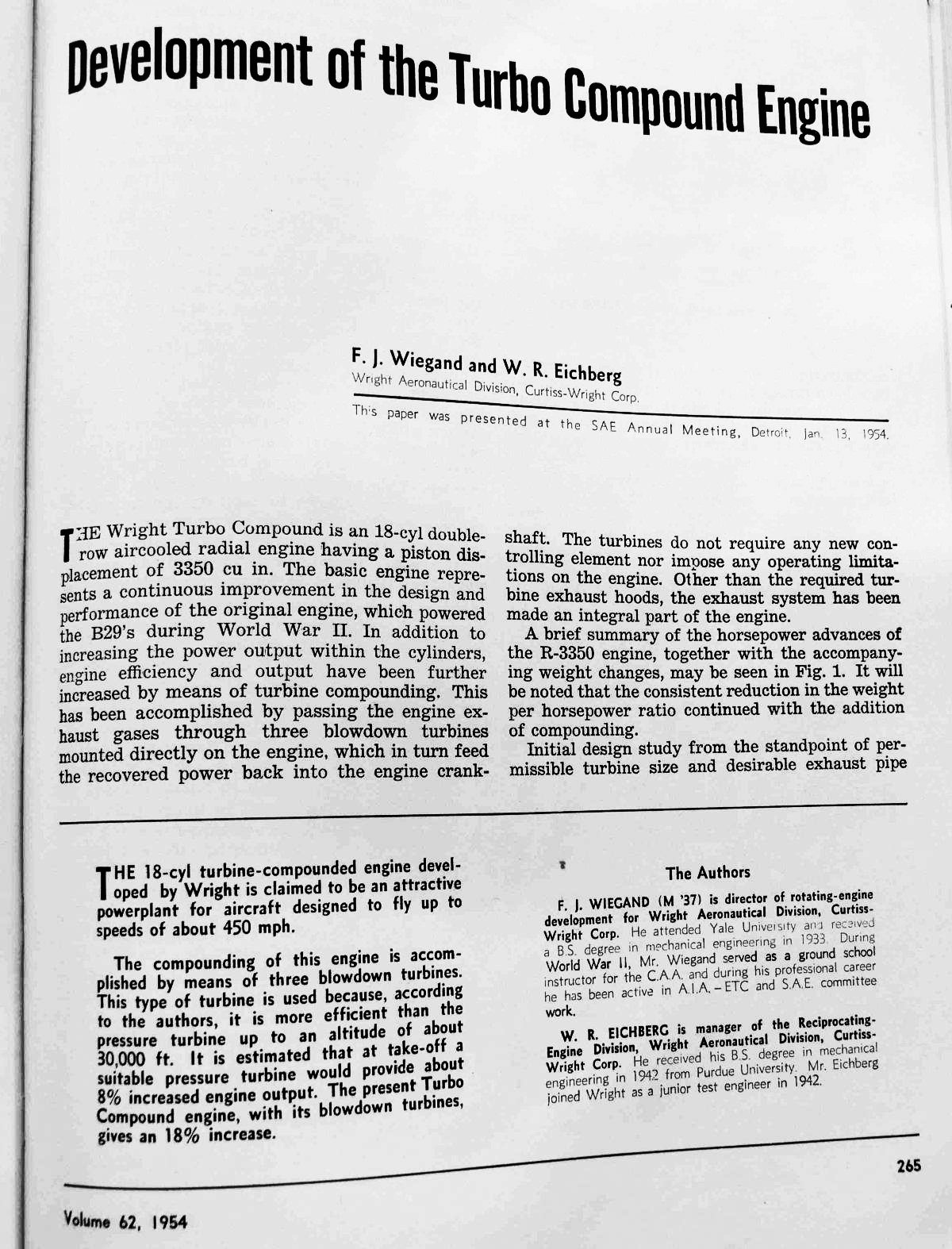
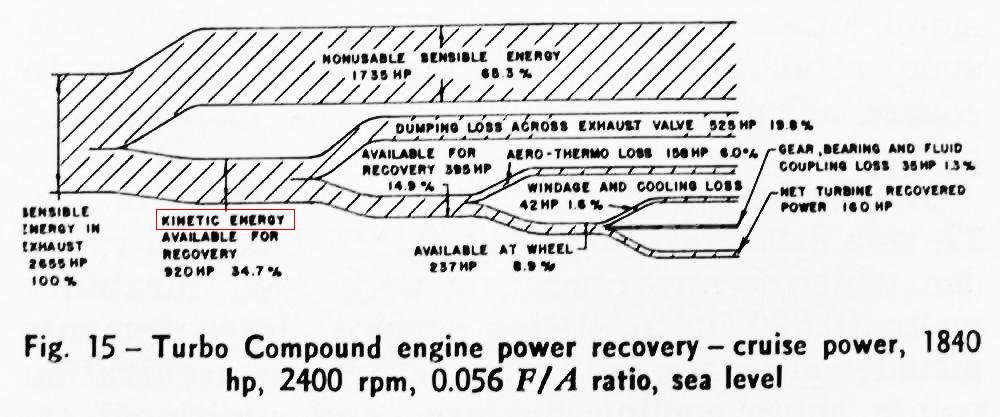
In the context of turbo compounding Kinetic implies the over all motion
of the gas as opposed to the local motion of the molecules I think.
CW wrote the book on this back in the 50's. I think that is the kinetic
energy they were referring to.
IMHO
?1. Use it to expand the gas.
?2. No.
?3. Yes.
?4. Only by expanding the gas.
The exhaust valve loses kinetic energy in two ways. Aerodynamic drag and
dissipated heat due to conduction into the cooling system. The aerodynamic
drag is transformed into heat which adds a small amount of heat to the
valve and the valve seat.
BTW People discovered quite some time ago that by eliminating sharp turns
in high flow high pressure oil plumbing systems the oil temperature comes
down by 10 or more degrees.
The same principle apples to the p-port verses the side port.
For a given port area the p-port can improve the VE by 20%.
Paul Lamar ...No rotor no motor.
The Rotary Engine NewsLetter. Powered by Linux.
ACRE NL web site.
http://www.rotaryeng.net
Copyright 1998-2007 All world wide rights reserved.