Paul,
Has anyone else sent you this article from Aero-News?
They don't say what type of rotary engines are used. This sounds like
another Moller!
John Lewis
-------------------------------------------------------------------------------
An article from Aero-News.net
For Paul
Milner Flying Car Latest Attempt To Meld The Road With The Air
Will Debut At The New York International Auto Show
by ANN Managing Editor (And Resident Motorhead) Rob Finfrock
Let's face it -- in most "serious" aviation circles, the idea of a
flying car is met with raised eyebrows, at best -- and at worst,
outright disdain. There's arguably fair precedent for those attitudes,
given the less-than-stellar proposals to date... from flying Ford
Pintos, to the still resolutely-earthbound Moller concepts.
But there are signs of life, and innovation, in this segment. *ANN
reported in 2006 on the Terrafugia*
a "roadable aircraft" now under development... and while we're still
skeptics, most ANN'ers are also quite willing to be proven wrong.
It was with a similar, measured /"hmmm..."/ I read recently of the
latest flying-car concept, to be formally unveiled later this month at
the prestigious New York International Auto Show. Developed by Jim
Milner, the Milner Motors AirCar is billed as a four-seat
advanced-composite car that you can fly to your destination, fold up the
wings and drive it down the highway.
The Aircar features a foldable main wing in the rear of the vehicle and
a canard lifting surface in the front. For trips up to 1,000 miles, the
AirCar will provide the fastest door-to-door travel times possible,
according to Milner
When airborne, the 28-ft wingspan, 3,000 lb. maximum weight AirCar will
cruise at 200 mph for up to 1,000-miles, according to the company. Power
comes from two rotary engines that drive dual 28-inch pusher ducted fans.
Once on the ground, the wings fold to 7-ft wide, and a separate 40-hp
engine powers the car up to 85 mph. The initial prototype is non-flying
but driveable, and demonstrates it is possible to design and build a car
that not only flies, but is also an airplane strong enough to drive on
public roads.
As a flight instructor, airline pilot, and successful entrepreneur, with
over 35 years in the aviation industry, Milner believes he is
well-positioned to deliver on the promise of bringing a flying car to
market.
-----------------------------------------------------------------------
Utter nonsense.
No airplane or car pushed or pulled by a ducted fan will go 200 MPH.
That is why the Moller Sky Car has never gone beyond hover.
See http://www.rotaryeng.net/PAV.html
Paul Lamar ...No rotor no motor.
Tell me if I got this right.
The problems with a roadable airplane are:
1. A single powerplant needs to provide two
different kinds of power or you have the weight
of two powerplants.
2. The undercarriage needs to be dual use which
is complex and heavy. Having a separate
undercarriage for driving and landing is heavy.
3. The undercarriage and the rest of the vehicle
gets beaten up while driving.
4. The low speed vehicle classification is too restrictive
and a regular car needs to meet safety requirements.
It looks almost impossible.
-Jeff Martin
1? Yes.
2? Maybe.
3? To some extent.
4? Yes.
Not impossible. To get around the car crash rules which adds about 500
pounds to the typical small car you need to make it 3 wheels and register it
as a motor cycle. Also the smog rules are relaxed for motor cycles.
Yes the suspension and wheel drive does add a bit of weight but not
a show stopper.
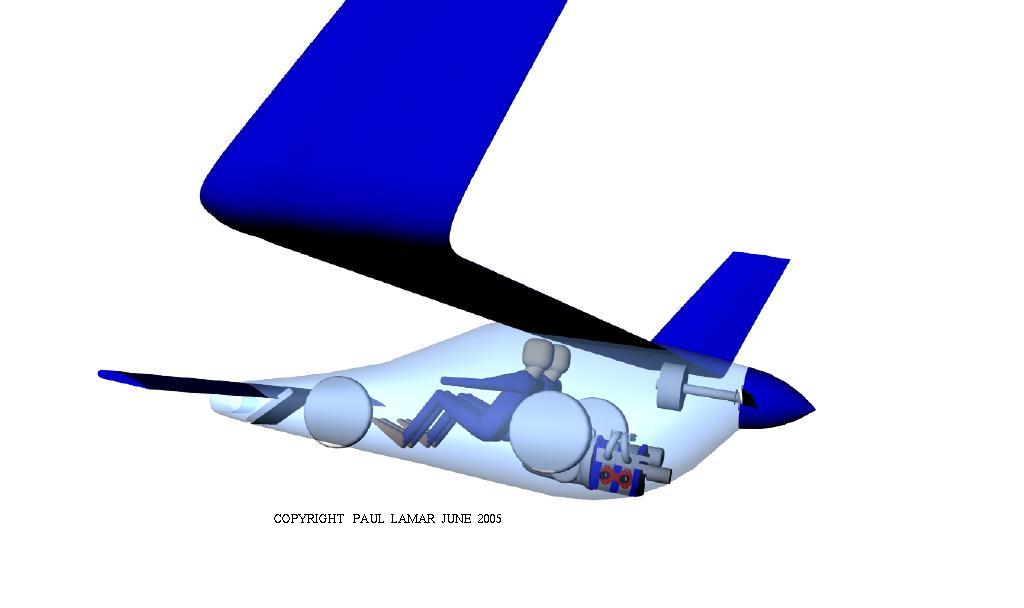
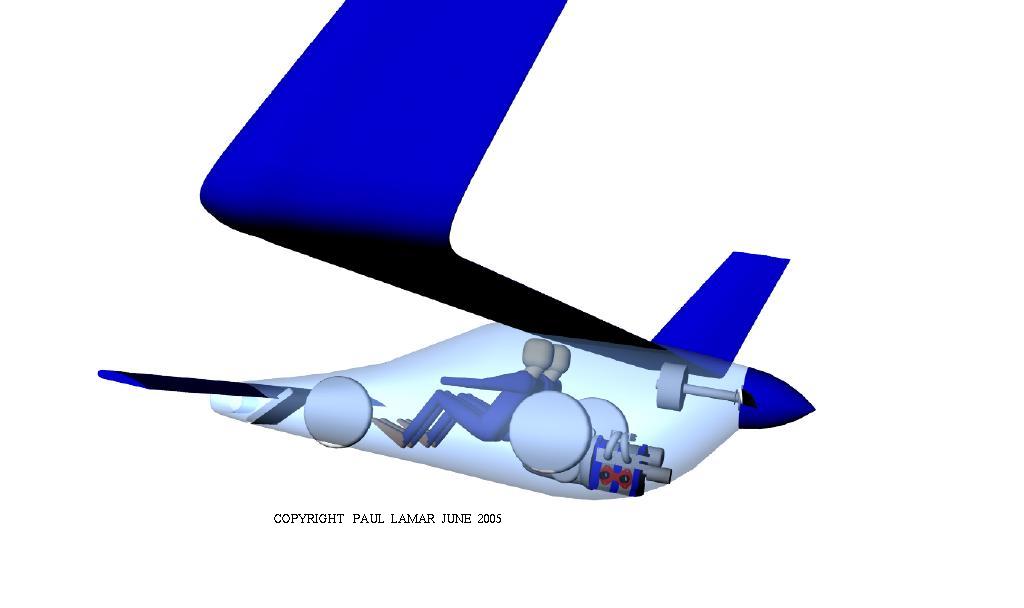
Generally speaking cars are shorter than fuselages so you need to choose
an aircraft type that has a short fuselage. That would be a canard.
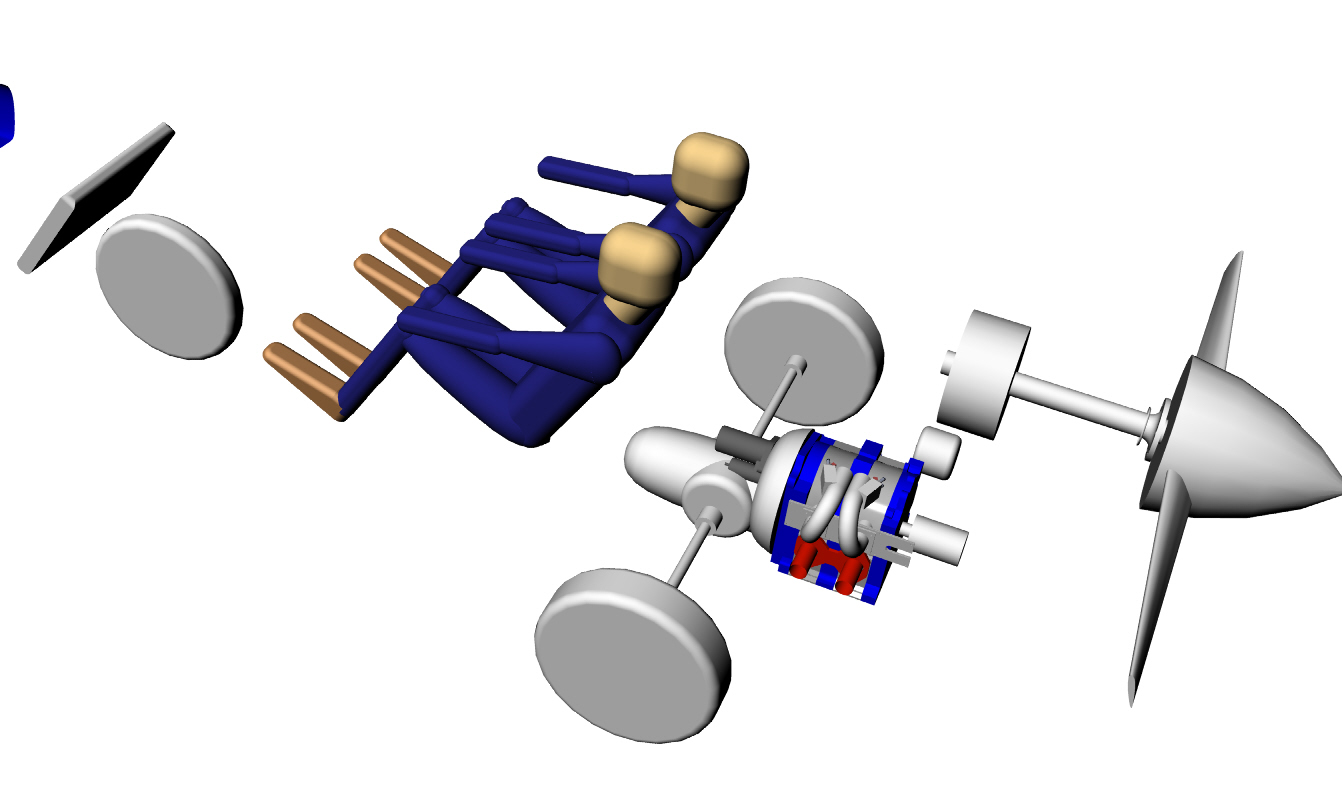
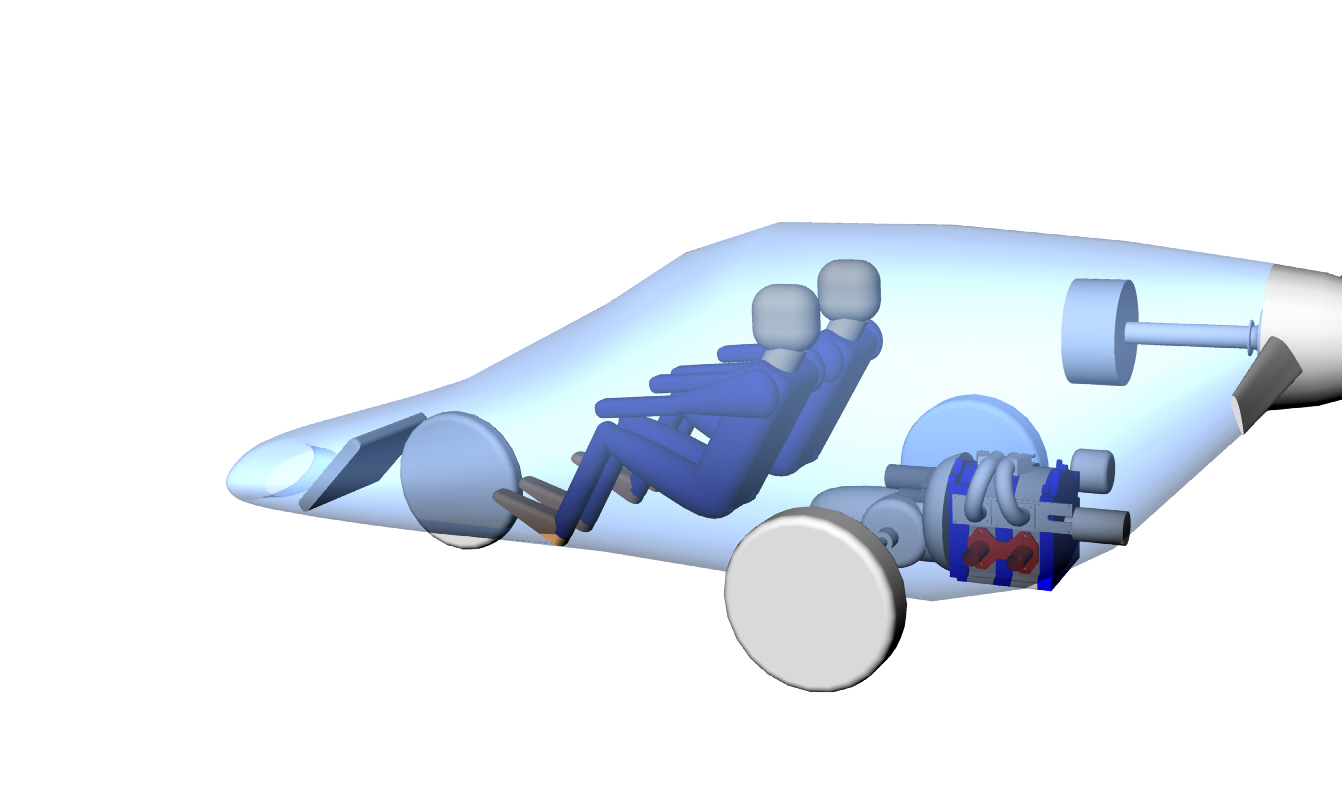
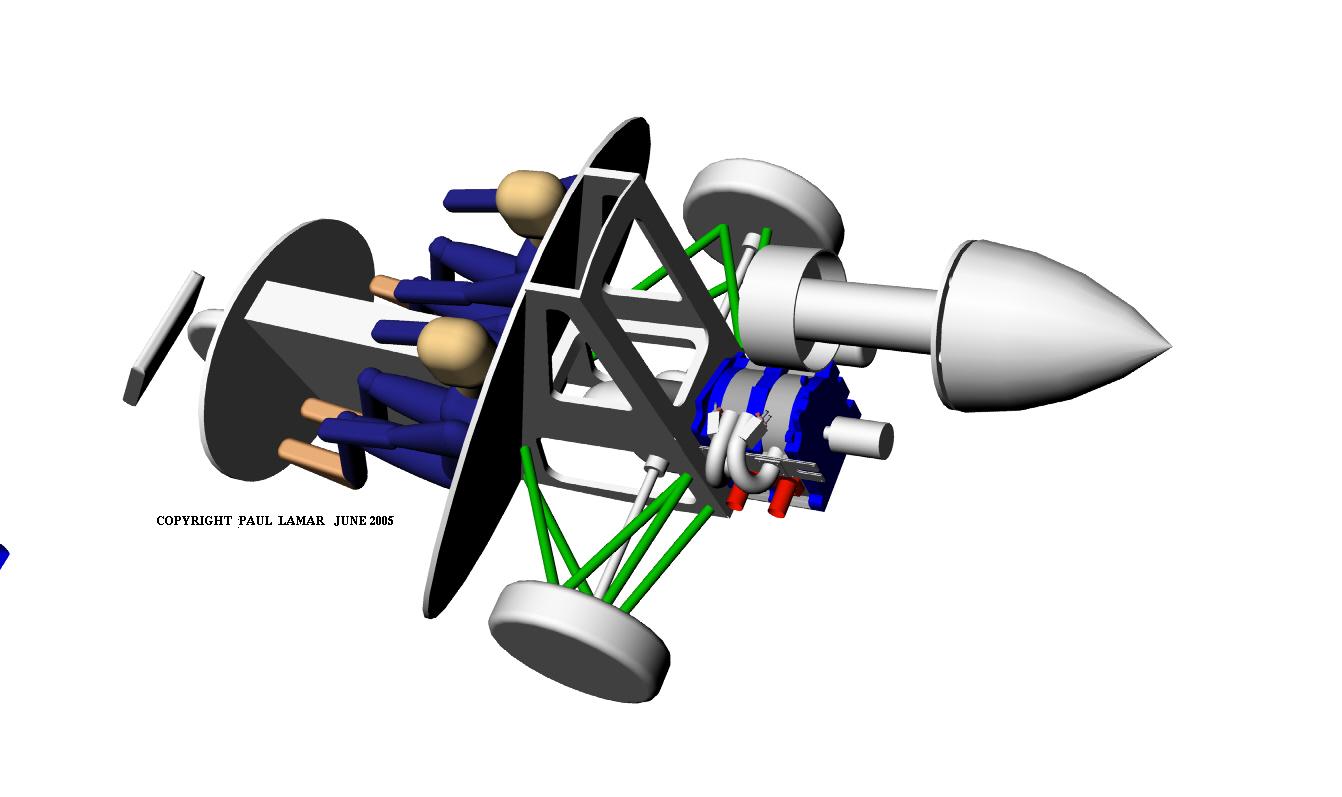
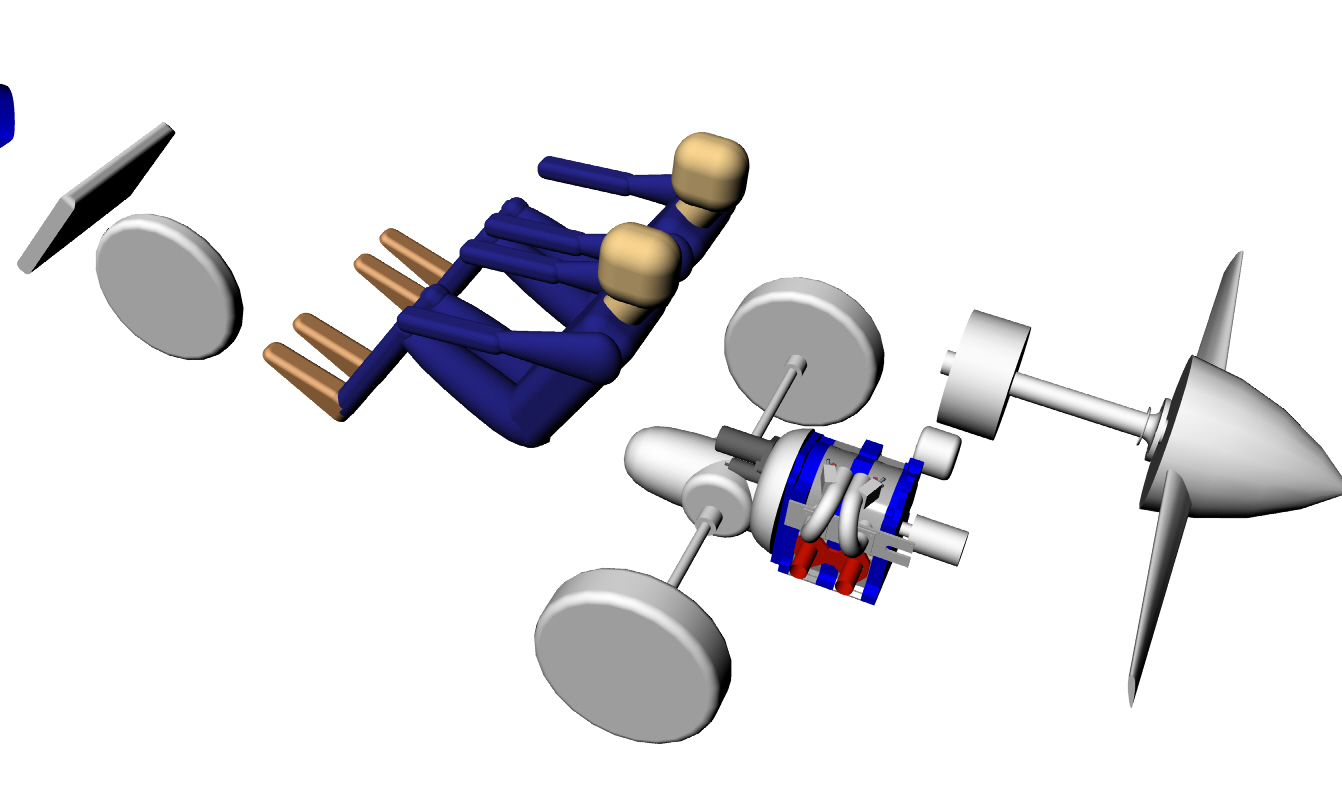
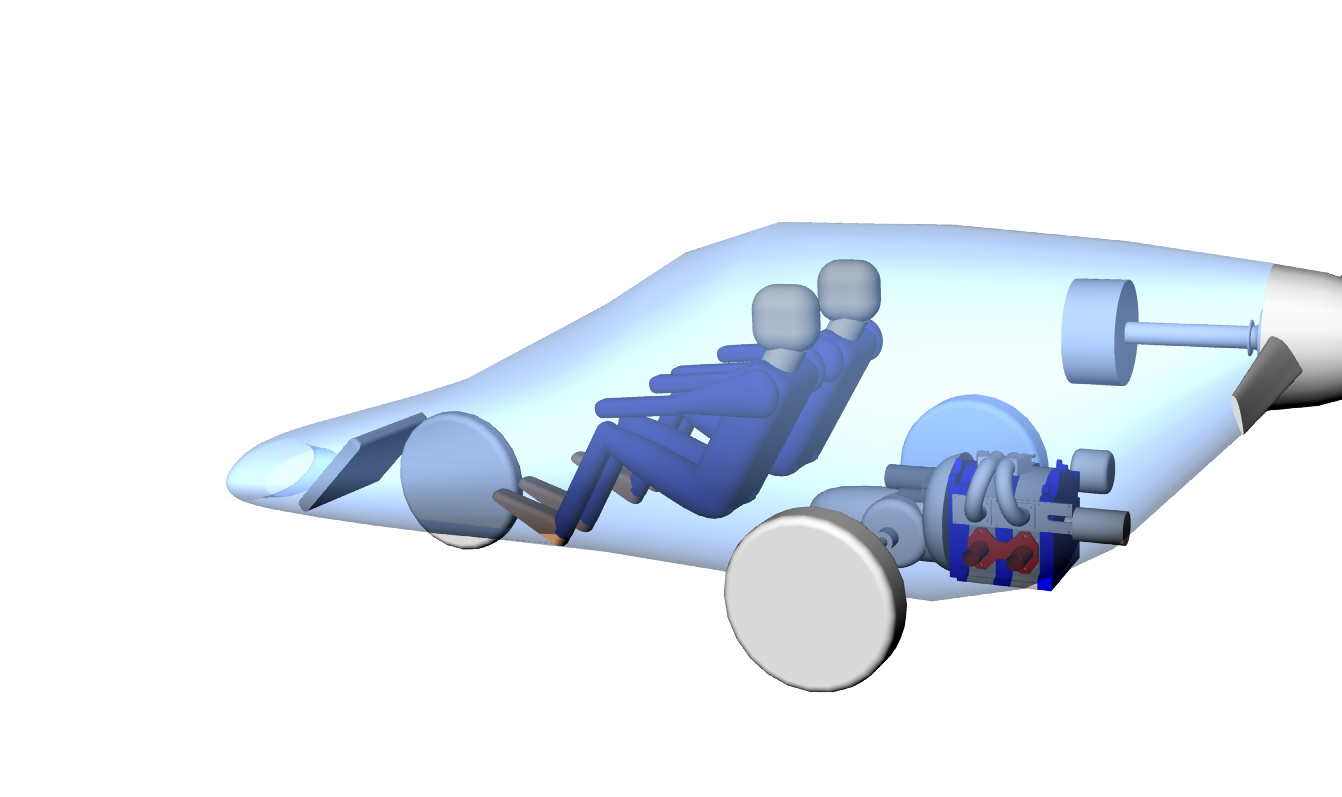
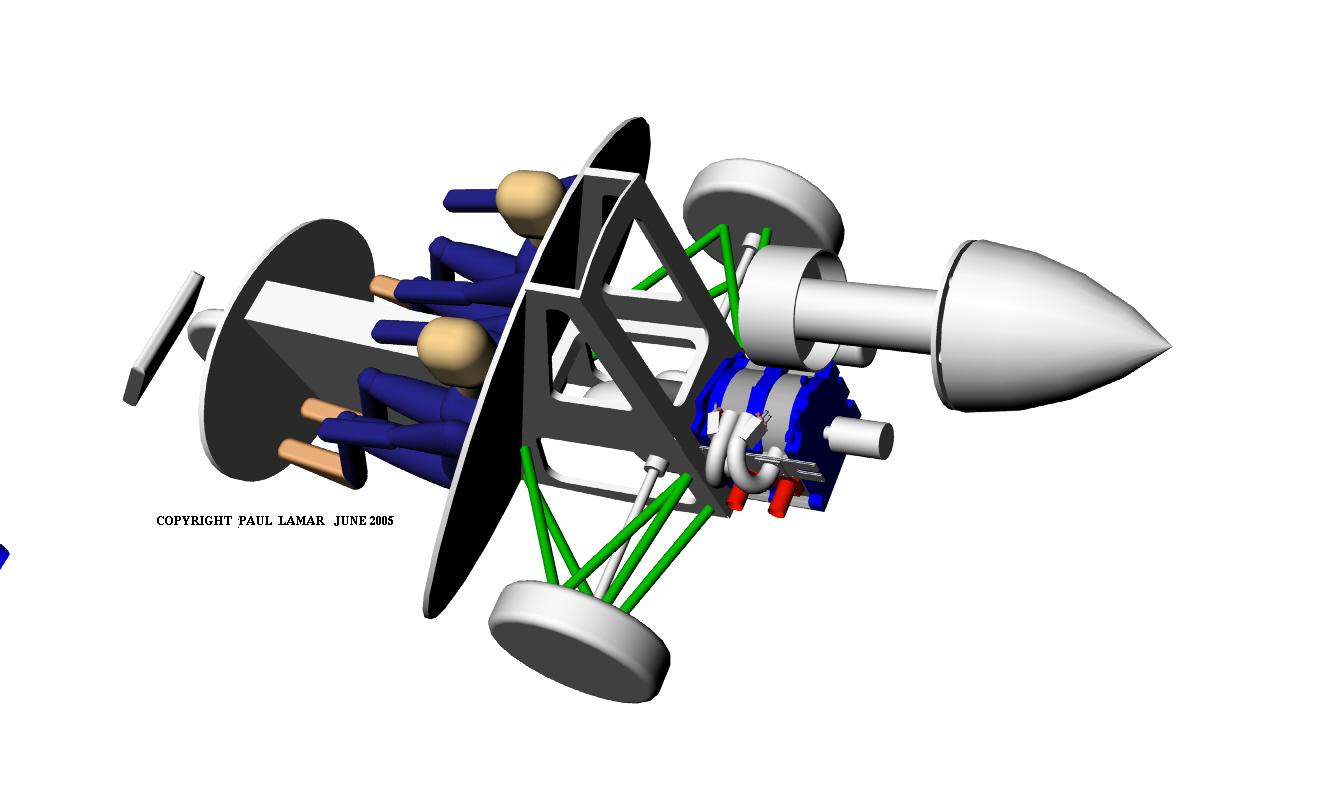
I realized one of the unique features of the rotary
is its very simple e-shaft. If one makes it longer and
larger in diameter on the front end one can get power out of both
ends. One end is mated to a stock VW transmission and the
other end uses one of Ken Welters 3:1 cog belt reduction drives.
You take off in first gear and get much better acceleration to
flying speed. This is due to the traction you get out of tires
as opposed to a highly slipping prop. As soon as you run out of
RPM in first you push in the clutch and shift into neutral.
the prop takes over.
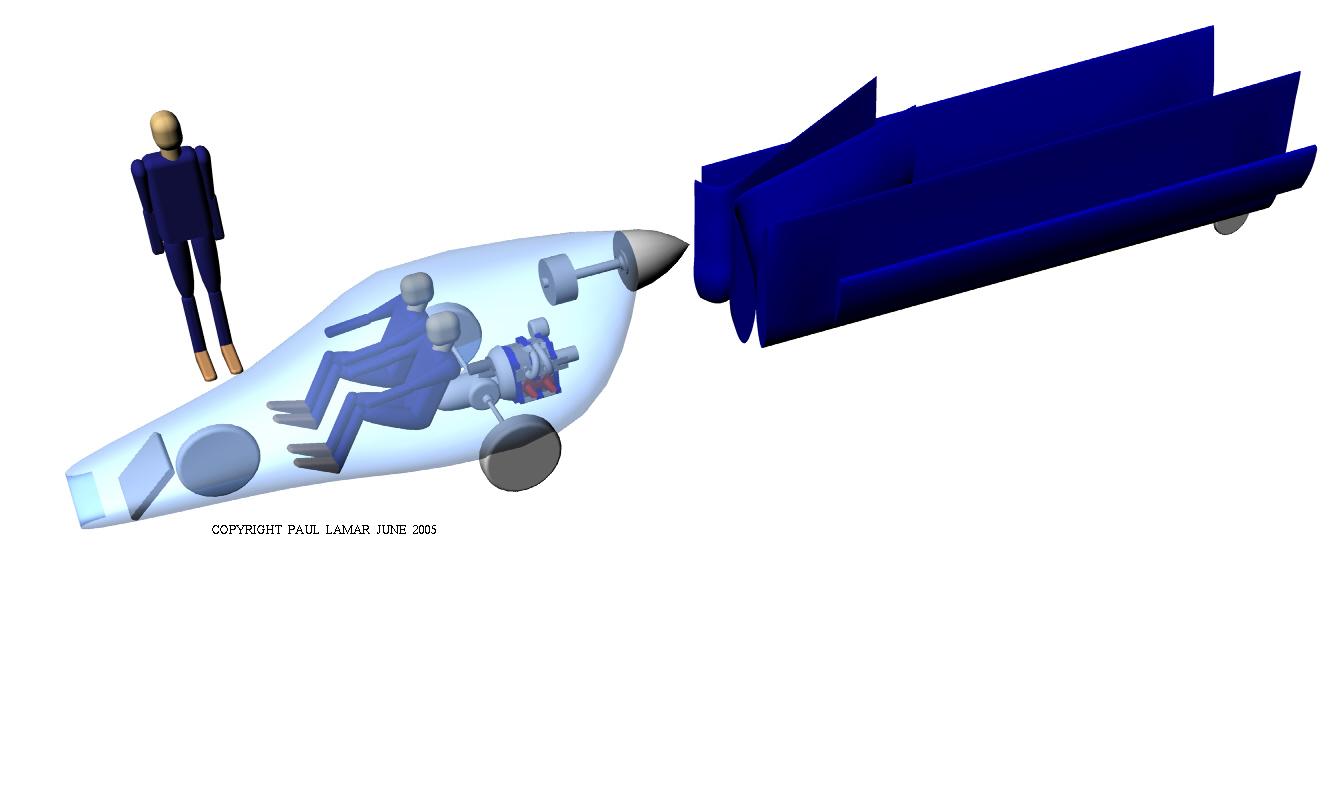
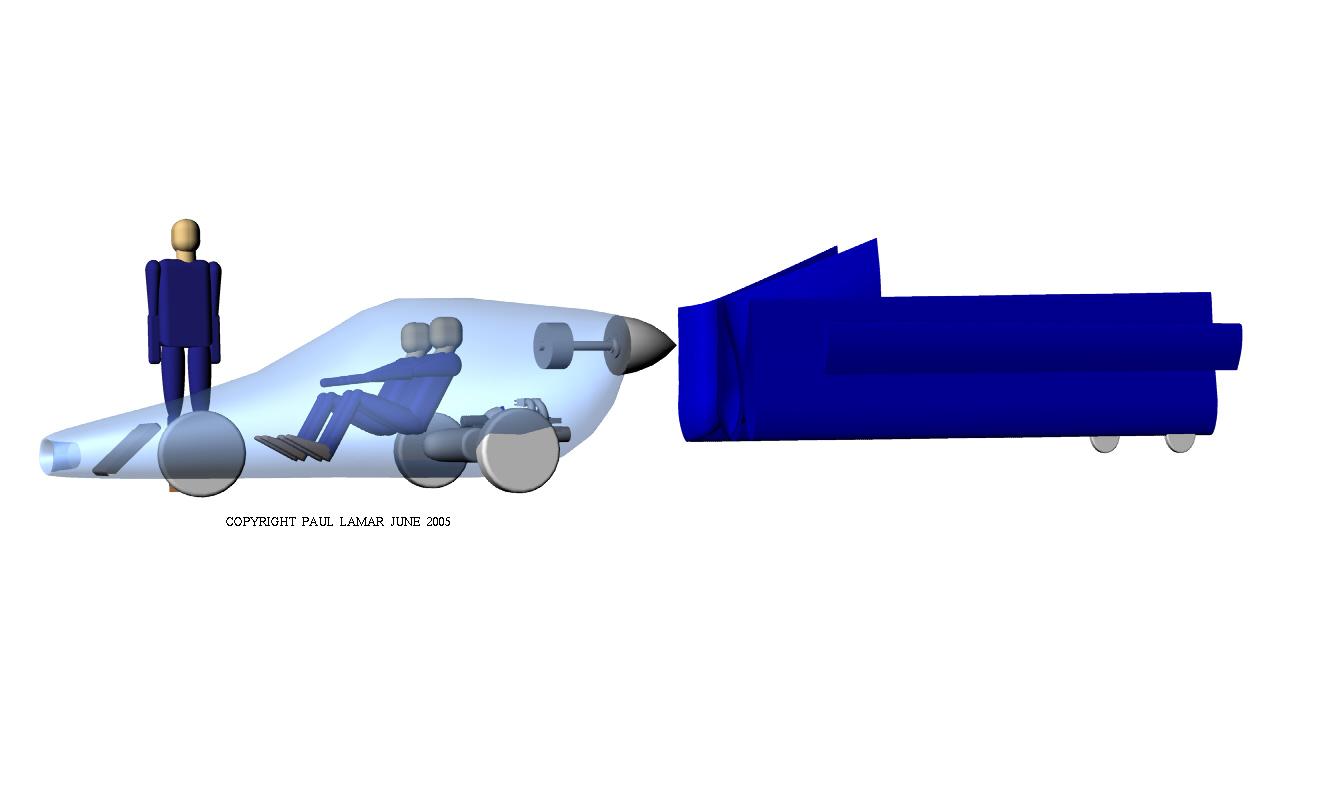
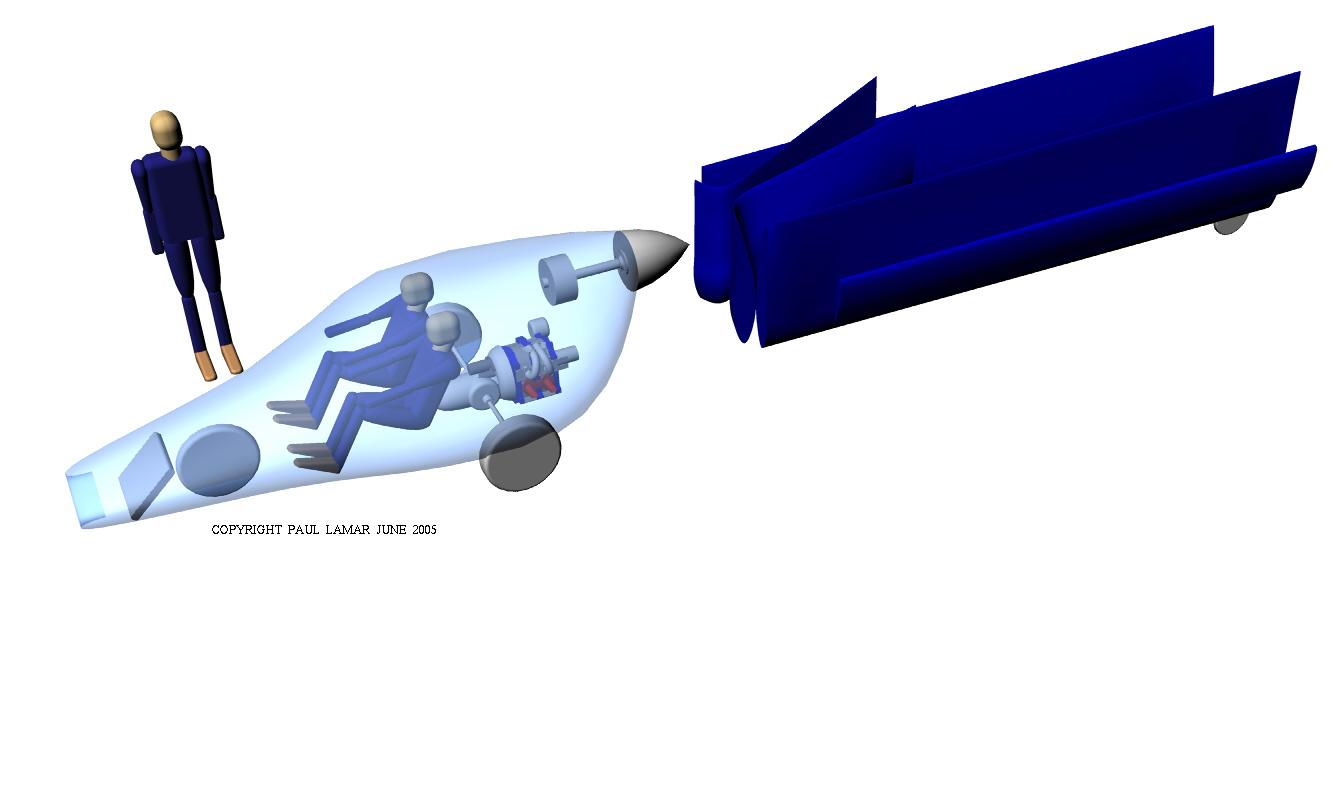
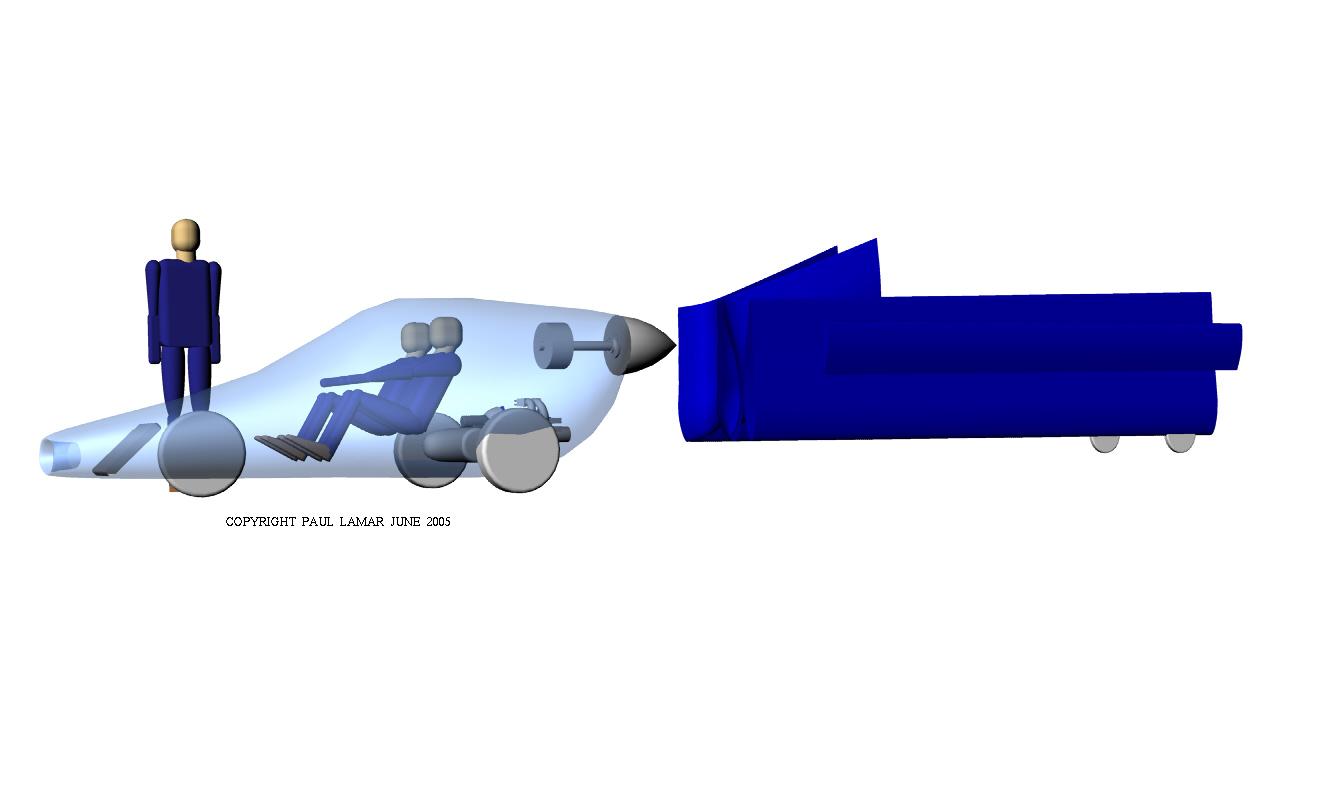
For road work you remove the canard and main wings
and tow them behind you. The only drawback here is the weight
of the VW gear box and drive shafts.
Its a motor cycle on the ground as that circumvents a load of
EPA and DOT rules.
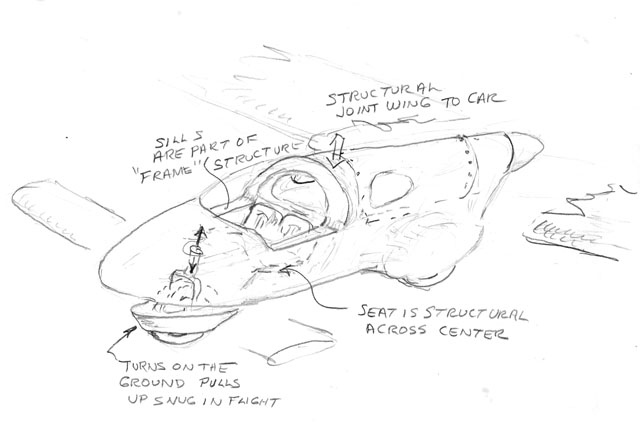
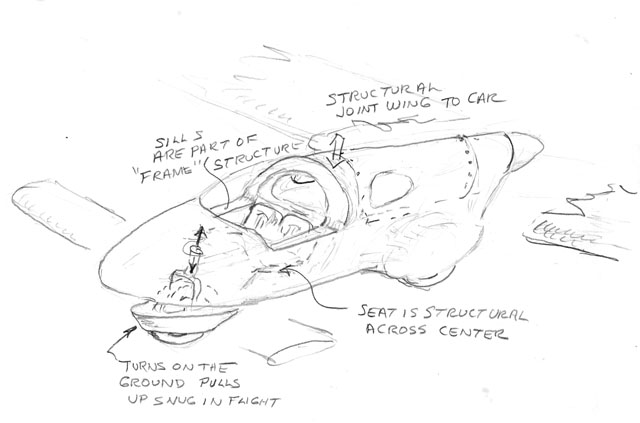
The large wheels also give you a bit more ground clearance for
suspension travel when landing. Suspension is on the down stops
when lowered for landing. Also the rotary gets better
gas millage just like any other ICE if you keep the cruise
RPM as low as possible.
Roadable airplanes ARE flyable. There are no technological
break throughs required. The vast majority of the
parts are off the shelf.
The main challenge is minimizing the weight penalty.
Most roadable aircraft designs use twin booms for the tail but
the Ruttan Canard configuration is a better fit with roadable
requirements IMHO. To my knowledge nobody has flown the canard
configuration yet.
With the gear retracted there will be near zero aerodynamic
penalties.
One of the design parameters one needs to pay a lot of attention
to on a roadable is the weight of the wheels and tires.
I suggest dragster forged aluminum front wheels and tires at 15 by 3 1/2
for the rear. You need diameter as the cruise RPM on
the ground using the VW tx requires a rather large diameter
tire.
The front tire can be a light weight motorcycle wheel
and tire. Motor cycle disc brakes will also keep the weight
down.
The large wheels also give you a bit more ground clearance for
suspension travel when landing. Suspension is on the down stops
when lowered for landing. Also the rotary gets better
gas millage just like any other ICE if you keep the cruise
RPM as low as possible.
Trailer configuration.
You build narrow wheels and part of the hitch into the leading edge
of the wings and strap the canard to one of them. Hinge the tip vertical
stabilizers to lie flat (more or less) on top of the wings.
Paul Lamar
Perry Micks response on when you need the trailer and when you don't.
In most cases would you even need to trailer the wings? You keep the car
at home and the wings at your local airport. Drive to airport, put on
wings. Fly to your destination. Leave wings at that airport. Drive
locally around that airport. When you are ready to go home, drive back
to destination airport and put the wings back on. Takeoff and fly back
to home airport. Take wings off and drive home, leaving wings at local
airport.
Perry Mick
http://www.rotaryeng.net/roadable.html
The Rotary Engine NewsLetter. Powered by Linux.
ACRE NL web site.
http://www.rotaryeng.net
Copyright 1998-2007 All world wide rights reserved.