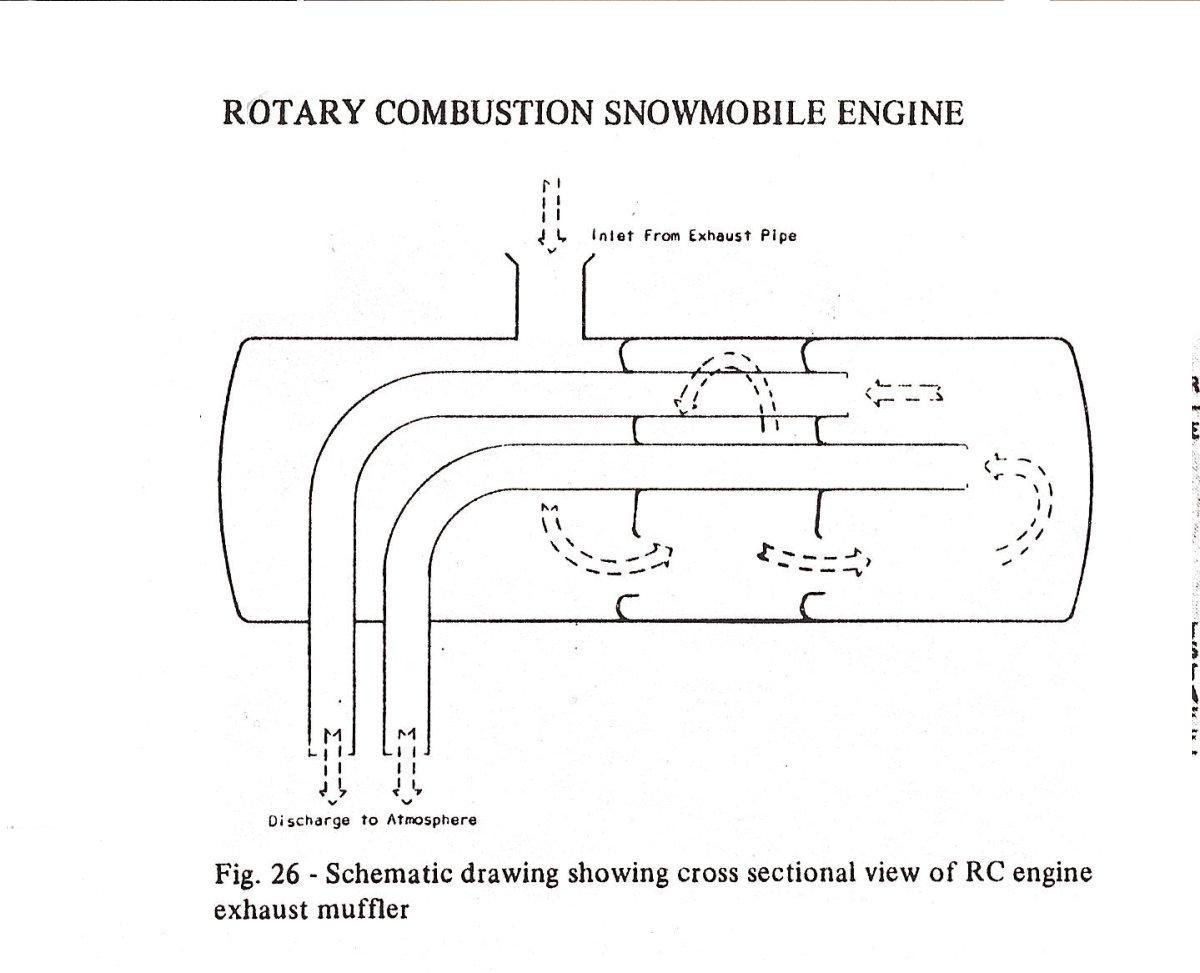
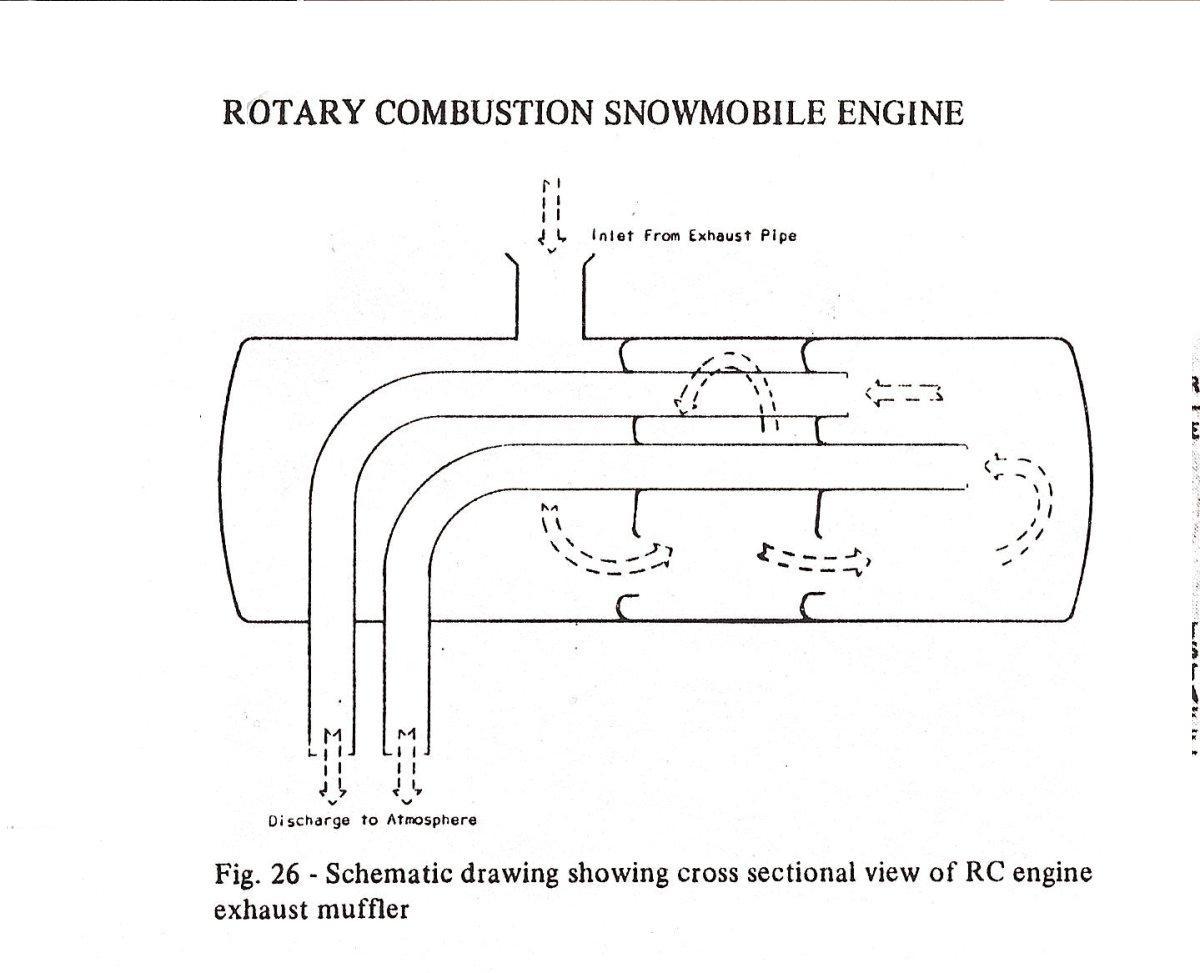
> This is the first good data and muffler design
> information we have had so far.
> The peak db readings are correlating well with
> what we are seeing with the Mazda.
> A 20 db drop in noise is an excellent result.
>
> If this muffler were 9 inches in diameter
> and about 12 inches long it would have 800 cubic
> inches. A slight variation would be 8.5 inches
> in diameter and 14 inches long. Both should fit
> in most cowls. OMC blasted air at the exhaust
> pipes coming out of the engine with the main cooling
> blower to keep them cool. A blast tube or electric fan
> could be used instead.
> --
> Paul Lamar ...No rotor no motor.
Paul,
Thanks. A couple of questions:
- Are the dimensions you've suggested empirical, or based on analysis
of the size of the OMC muffler?
- Chamber sizes, locations of dual pipes from engine, and location
and sizes of pass-through orifices between the chambers: Do we believe
that these things are critical, or can we get fairly good results based
on "TLAR" ("That Looks About Right") and the diagram?
- Cooling: Maybe use the airflow from a fan behind the water/gycol
or oil cooler. At the high temps of the exhaust pipes, the delta T
won't be much different if we use ambient air or something 50 F degrees
warmer. Maybe this is an opportunity to also fit a tube to gather
cockpit heat (for those of us not living in the sunbelt). The trick is
to get it all squeezed under the cowl in a way that also permits easy
inspection and service.
Mark W.
They are derivatives the 800 cubic inches OMC specified for the can.
The input pipes can be about 2 inches in diameter. As a guess I would
make the dual output pipes around 1.5 to 1.75 OD. One could scale
things off this dwg.
Paul Lamar ...No rotor no motor.
The Rotary Engine NewsLetter. Powered by Linux.
ACRE NL web site.
http://www.rotaryeng.net
Copyright 1998-2007 All world wide rights reserved.