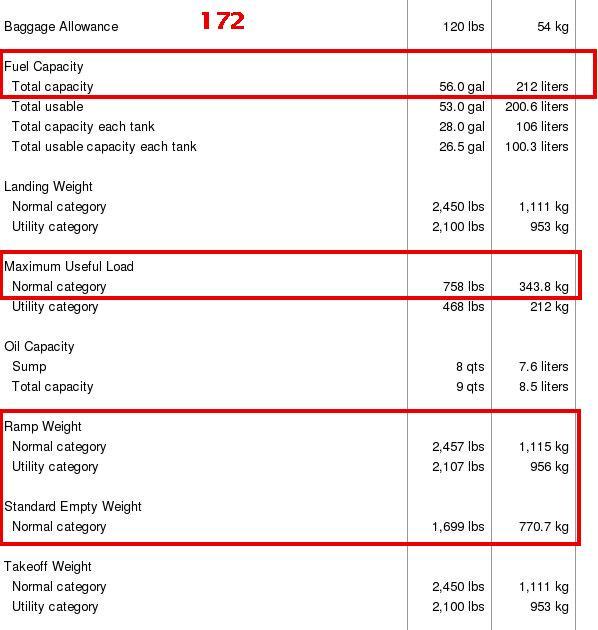
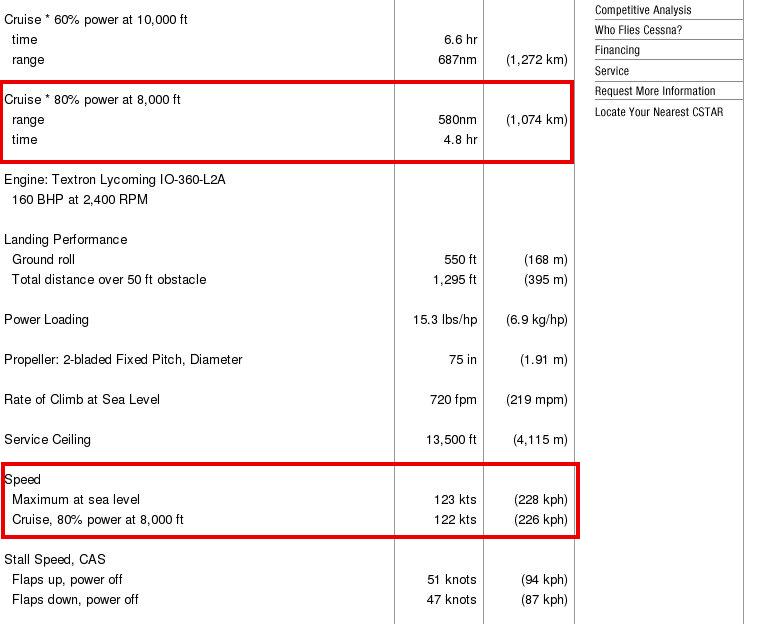
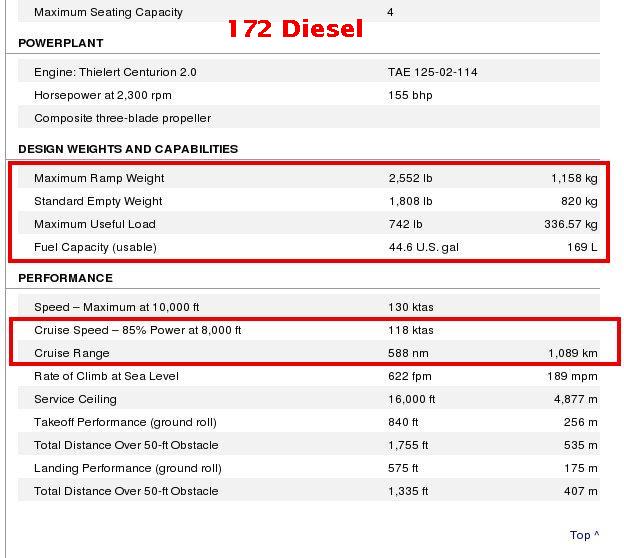
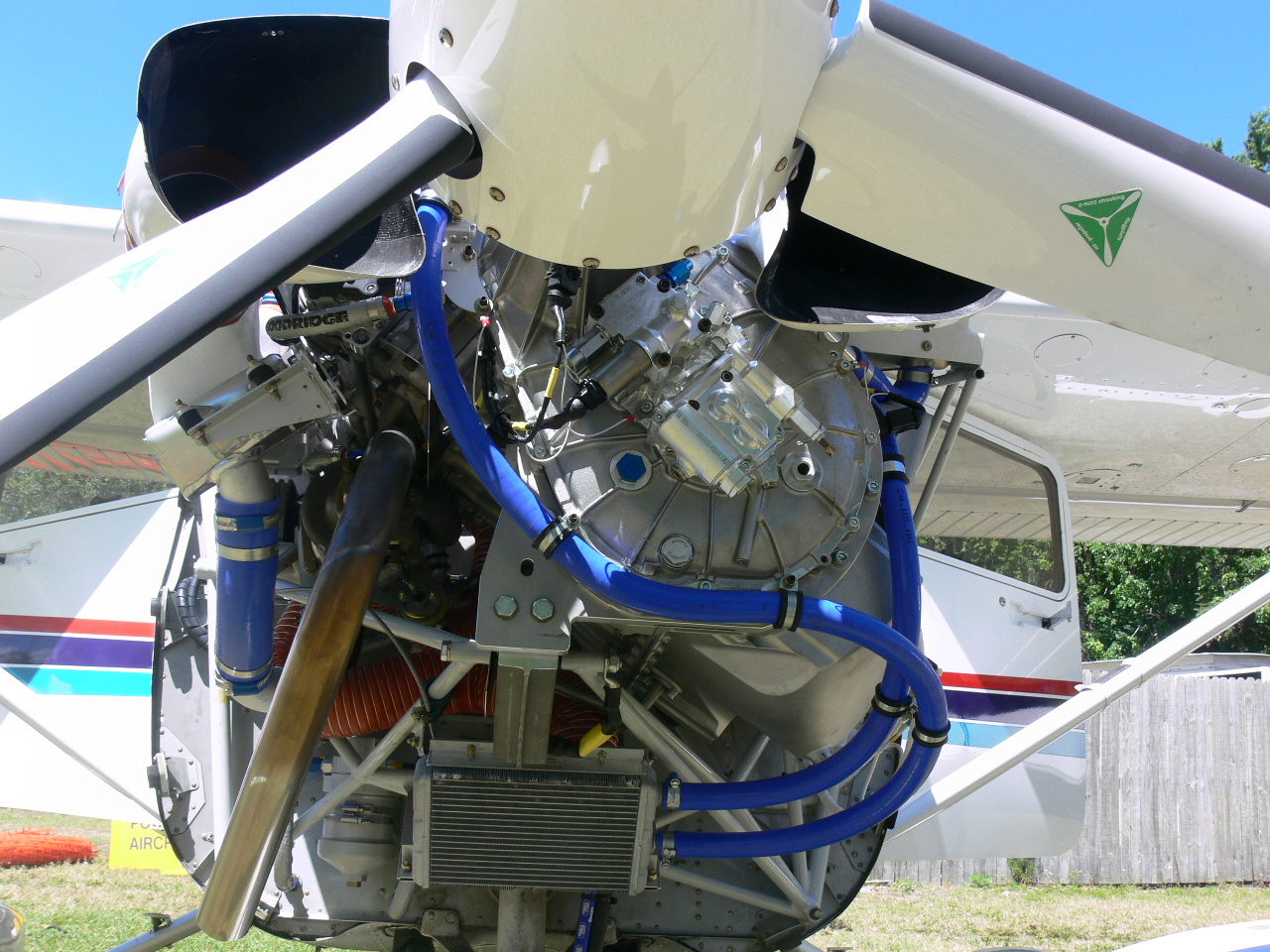
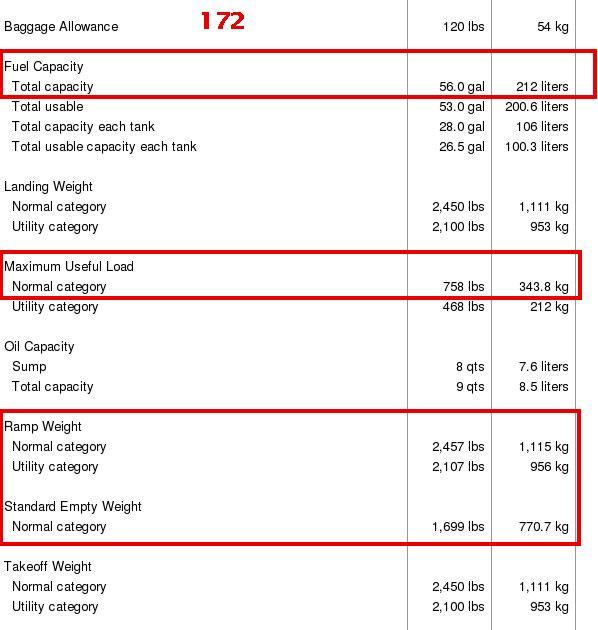
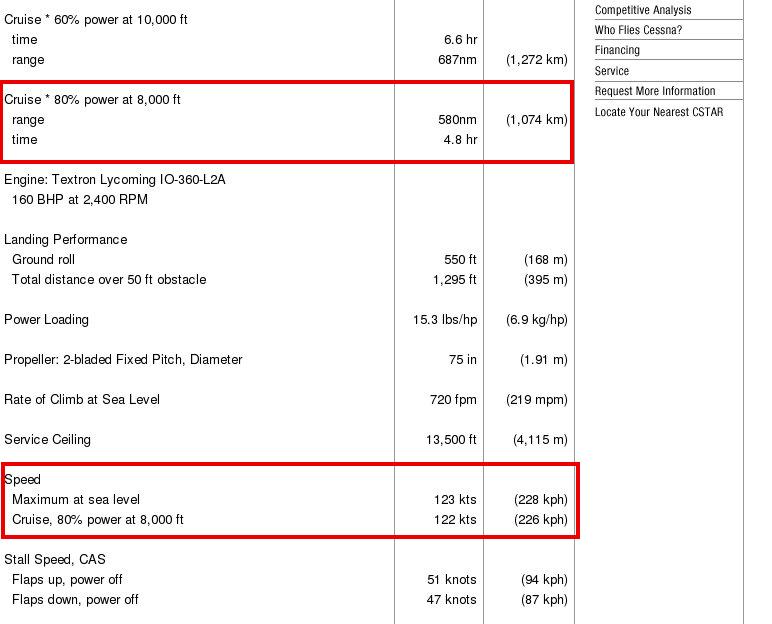
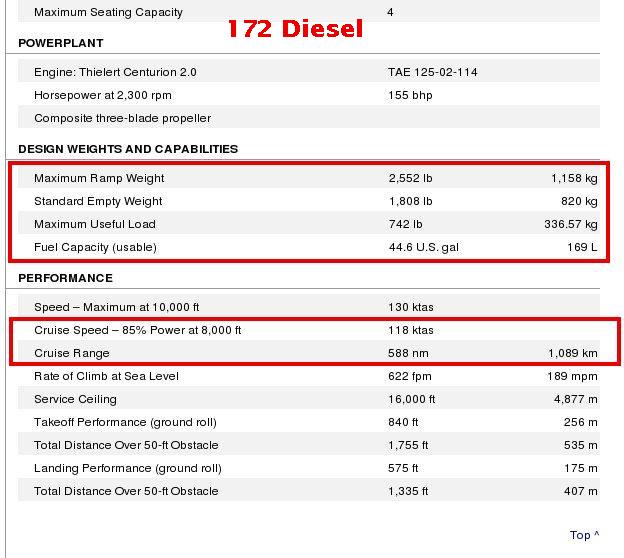
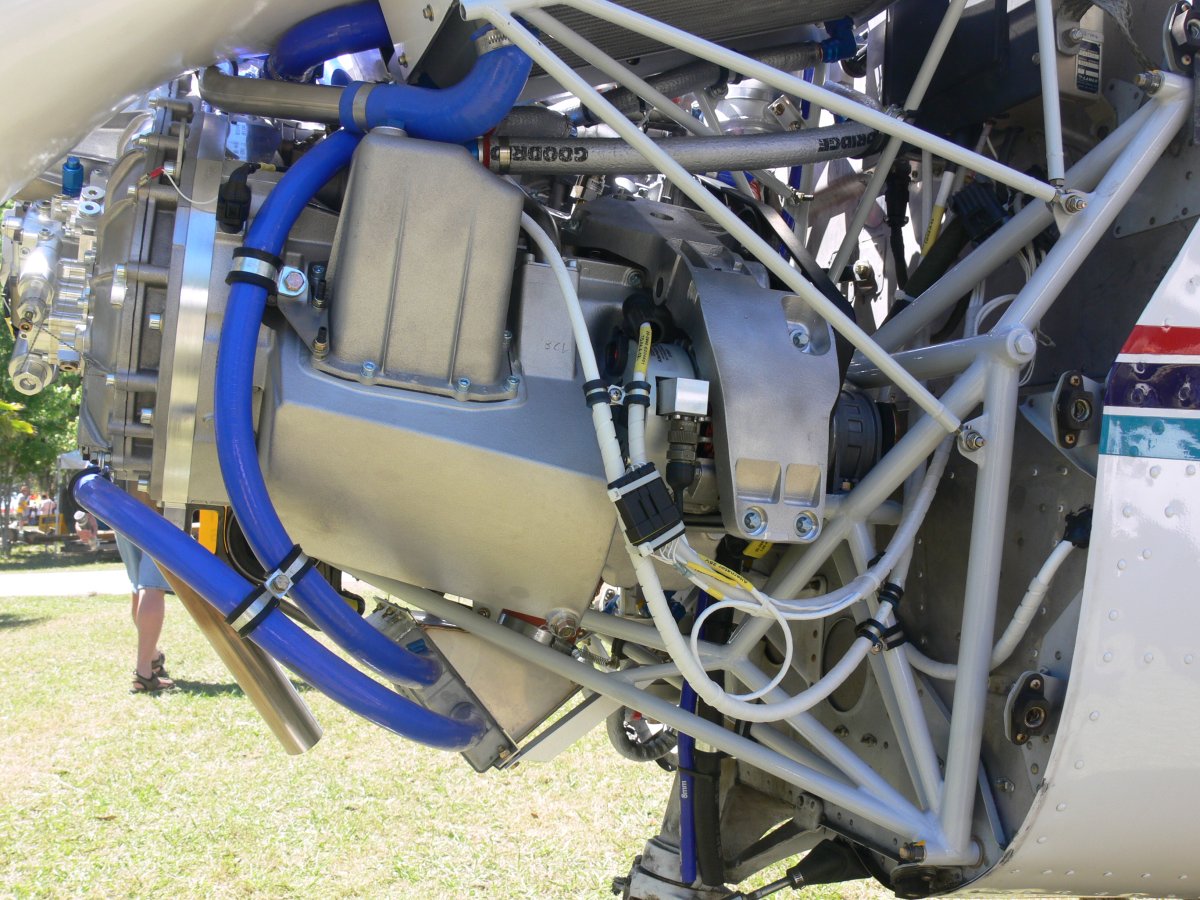
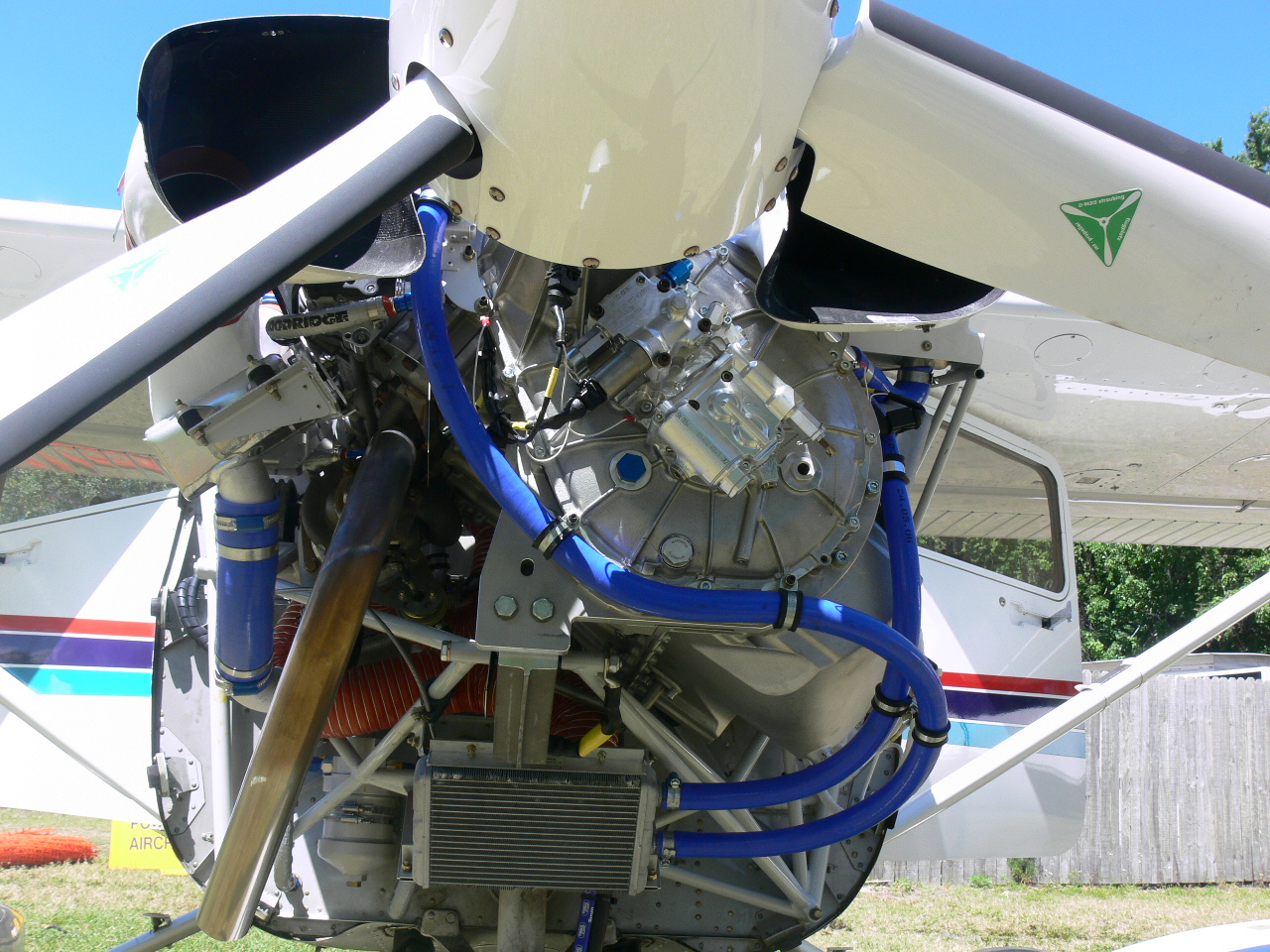
172 verses 172 diesel data from the Cessna web site.
Diesel fuel is a pound heavier than gasoline.
Gas is six pounds per gallon and diesel is 7 pounds per gallon.
44.6 gallons of diesel weighs 312 pounds of fuel.
Max useful load on a Diesel 172 is 742 pounds.
Subtract the full fuel weight and you get 430 pounds.
Range is 588 nm.
85% power is 132 HP.
Cruise speed is 118 kts or 5 hours.
8.9 gallons an hour or 62.5 pounds per hour.
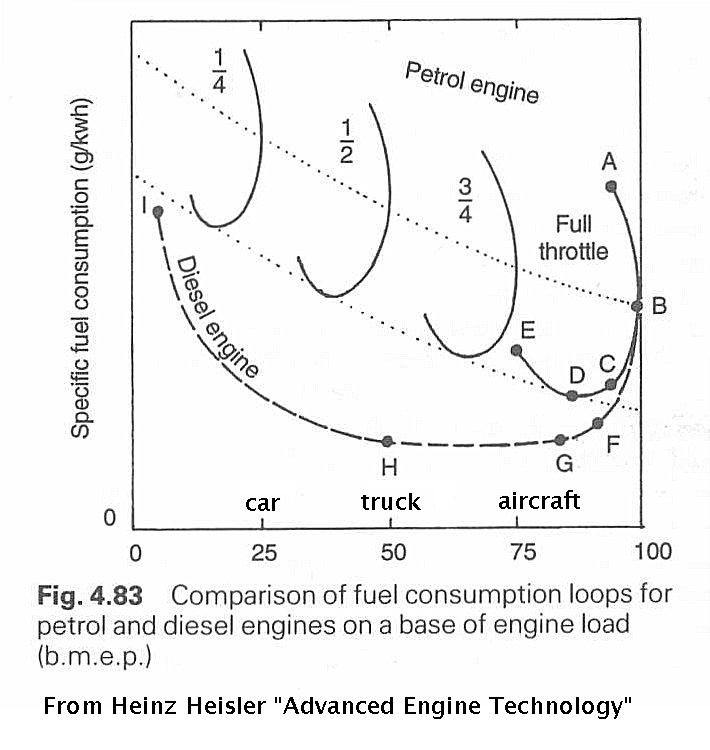
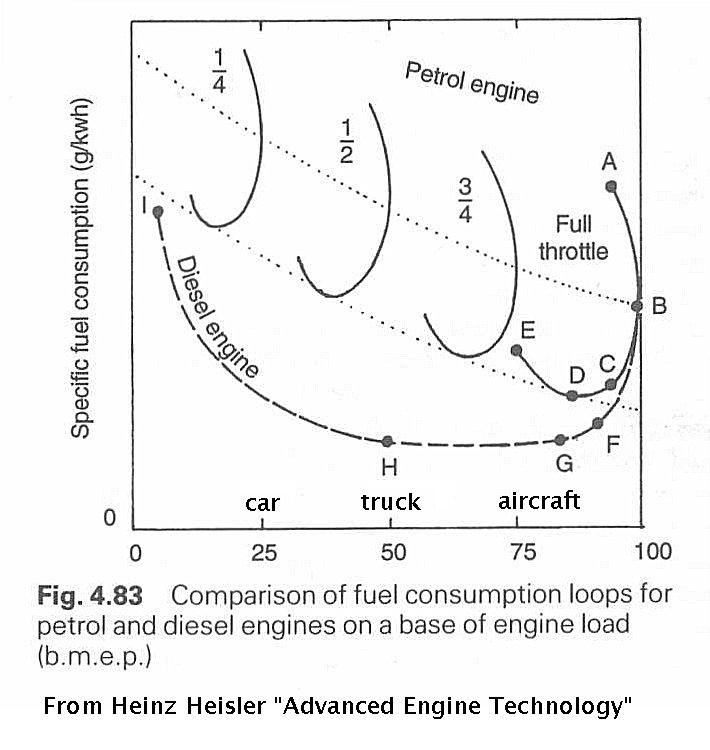
BSFC is therefore .47. Not a lot different than a rotary.
And typical for a diesel engine running near full power.
A leaned rotary at 132 HP would be about the same BSFC but the gallons
per hour would be higher at 62.5/6 or 10.4 gallons per hour.
------------------------------------------------------
The numbers for a stock Lycoming powered 172 are:
56 gallons of gasoline weighs 336 pounds of fuel.
Max useful load is 758 pounds.
Subtract the full fuel weight and you get 422 pounds.
Range is 580 nm.
80% power is 128 HP.
Cruise speed is 122 Kts or 4.8 hours. Four kts faster than the diesel.
11.8 gallons an hour or 69.6 pounds per hour.
BSFC is therefore .54 which is a typical for a Lycoming
rich of peak.
It would take a long time to pay for the extra $15,000 you
will pay for a diesel powered 172.
Not to mention you are required to throw the diesel away
at 1200 hours if it does not pass inspection. No overhaul allowed.
If it does pass 1200 hour inspection you are required to
throw it away at 2400 hours. No exceptions.
At 100 hours a year that is 24 years. At that point the Mercedes
diesel engine will probably no longer be available so the airplane,
in theory, will be worthless. One would have to replace the engine
now certified in the diesel powered 172 with some other engine and
obtain an FAA STC.
I don't see it :)
--
Paul Lamar ...No rotor no motor.
The Rotary Engine NewsLetter. Powered by Linux.
ACRE NL web site.
http://www.rotaryeng.net
Copyright 1998-2007 All world wide rights reserved.