The subject of torque kept coming up again and again at Sun N Fun.
There is a lot of misunderstanding out there on this subject.
AIRPLANES FLY ON HP AND NOT TORQUE!
Torque by it self means nothing.
HP is torque times RPM.
Torque at low engine RPM is useless in an aircraft engine
with a fixed pitch prop.
What counts is the torque at the maximum engine RPM when
the prop tips are near supersonic. When that happens there
is no way the engine is going to rev any faster.
That is the point where you want maximum torque.
What happens is the engine will continue to gain HP
due to RPM alone even after the torque starts to fall off.
If you are able to move the torque peak up the engine will
generate more HP. The maximum torque of any given engine is a constant.
All you can do by intake tuning is move the torque peak up and down
the rev range. If the intake is not tuned the torque
will be less and may be a flatter curve than if the
intake system is tuned.
You can always generate more HP in a rotary by
increasing the gear ratio, raising the max engine RPM and reducing
the aerodynamic losses in the intake and exhaust system.
Putting it another way aero drag times speed equals HP.
Newton stated that for every action there is an equal
and opposite reaction. At the top speed of an airplane drag
equals thrust so thrust times speed is also HP.
Here is another given. The BSFC of any engine is always
a minimum at the RPM of maximum torque.
What you want in a Mazda powered AC with a fixed pitch prop
is max HP at 7500 RPM and max torque at 5500 or there abouts.
That gives the best BSFC for cruise.
BSFC for the new people is the pounds of fuel the engine
burns each hour for each HP the engine is generated.
--
Paul Lamar ...No rotor no motor.
Paul,
A few comments I have regarding torque, we are using our twin rotor engine
to compete against the 912 and 914 series engine from Rotax.
What we believe matters with torque is at takeoff the max torque to the prop
flange is an important comparison to make as it relates to two different
engines:
Rotax 912 Max torque 94 Ft Lbs x 2.2 reduction = 206.8 Ft Lbs
RotaMax 1300 Max Torque 120 Ft Lbs x 1.9 reduction = 228 Ft Lbs
A 10% increase in torque to a fixed pitch prop will require more pitch too
fully load the engine thus create more thrust.
Here is what we want our customers to understand:
If you are building an experimental aircraft and using an in flight
adjustable pitch propeller you should understand two things:
You can run our engine from 3000 RPM to 5000 RPM and maintain a pretty
constant torque/load number.
You need to load the engine down at the lower RPM due to the fact the engine
is charge cooled we want the end user to understand this.
Feel free to give input to this discussion and feedback as to whether I
communicated our thoughts properly.
We are going to do some comparisons in flight over the next few weeks as to
our single and twin engine in the same plane competing with a Rotax 912.
These tests will validate some of our "assumptions"
Eric Barger,
RotaMax Inc.
www.rotamax.net
Are you saying the pitch is set too low and the engine is running up against
the rev limiter and not the prop?
What you want at takeoff speed is max HP at the engine RPM that occurs.
That is also max thrust at takeoff speed. Thrust in pounds times speed
in feet per second divided by a constant (550) is HP.
The peak torque is usually a 1000 or so RPM below that. What you usually get
is something a little below max RPM at takeoff as the prop is partially stalled.
As you climb out there will be a speed at which the RPM and HP will peak.
In cruise you would like the engine RPM to be at the peak torque RPM
as that is where the BSFC is lowest indicating the most efficient RPM
of the engine. There is a subtle difference that is not the same
as saying this is the peak torque you are getting out of the engine.
The top speed of the airplane is another place you will see max HP
and max RPM of the engine again limited by the vector tip speed of the
prop. In other words the combined speed of the forward motion of the
aircraft and the radial speed of the tip.
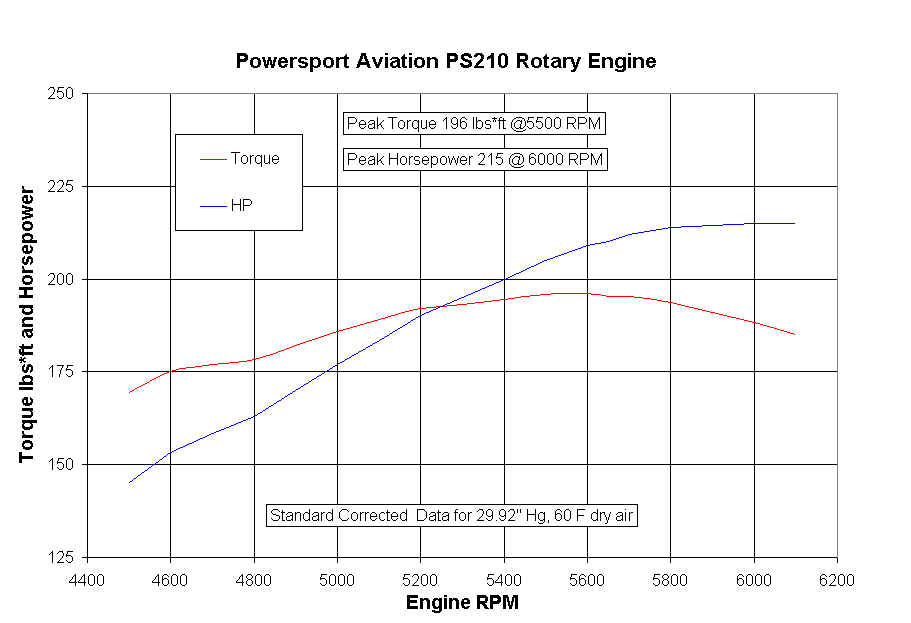
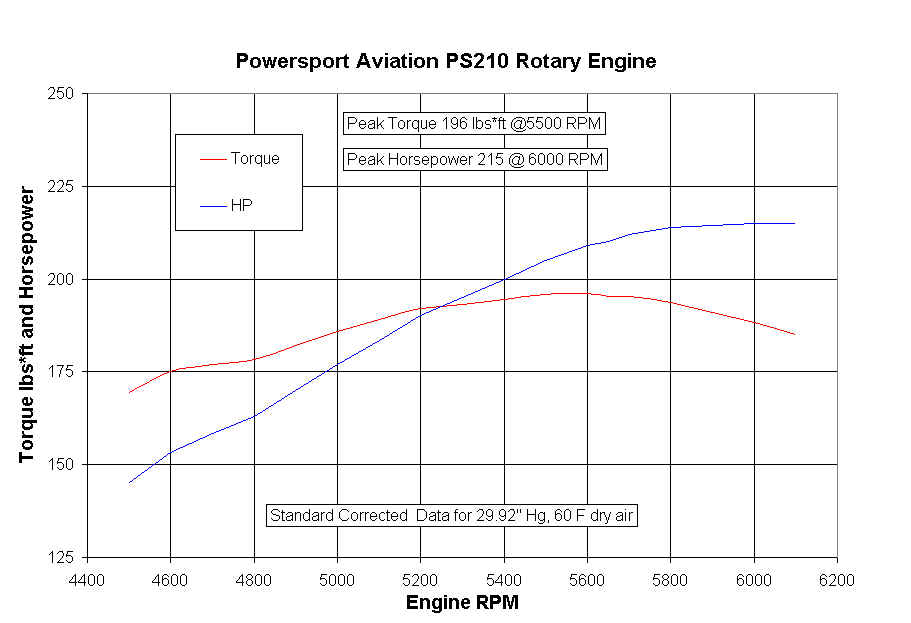
The first chart is a dyno curve on a Power Sport p-port engine. Note the HP peak
is several hundred RPM beyond the peak torque. This curve is when
the engine is loaded down on a dyno so max torque is being generated
at all RPM's. The torque curve is not flat as Power Sport is using an
organ pipe tunned intake system.
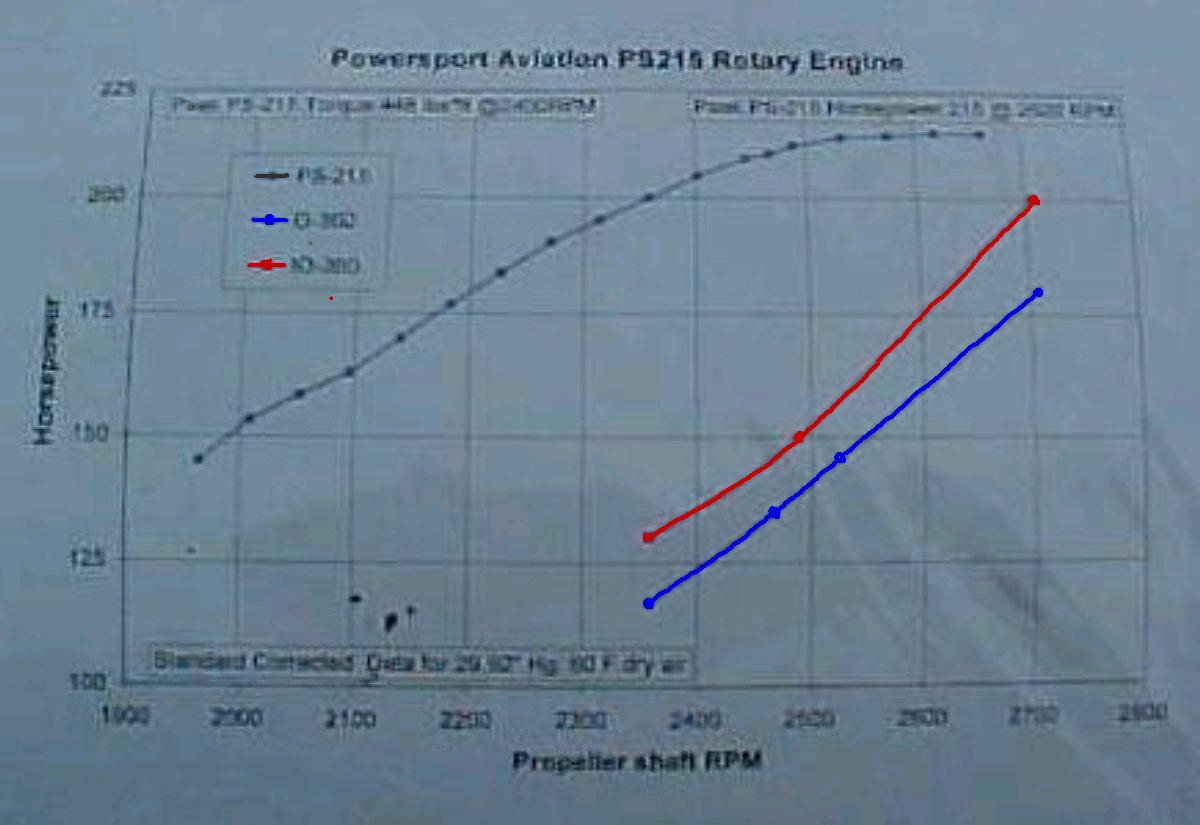
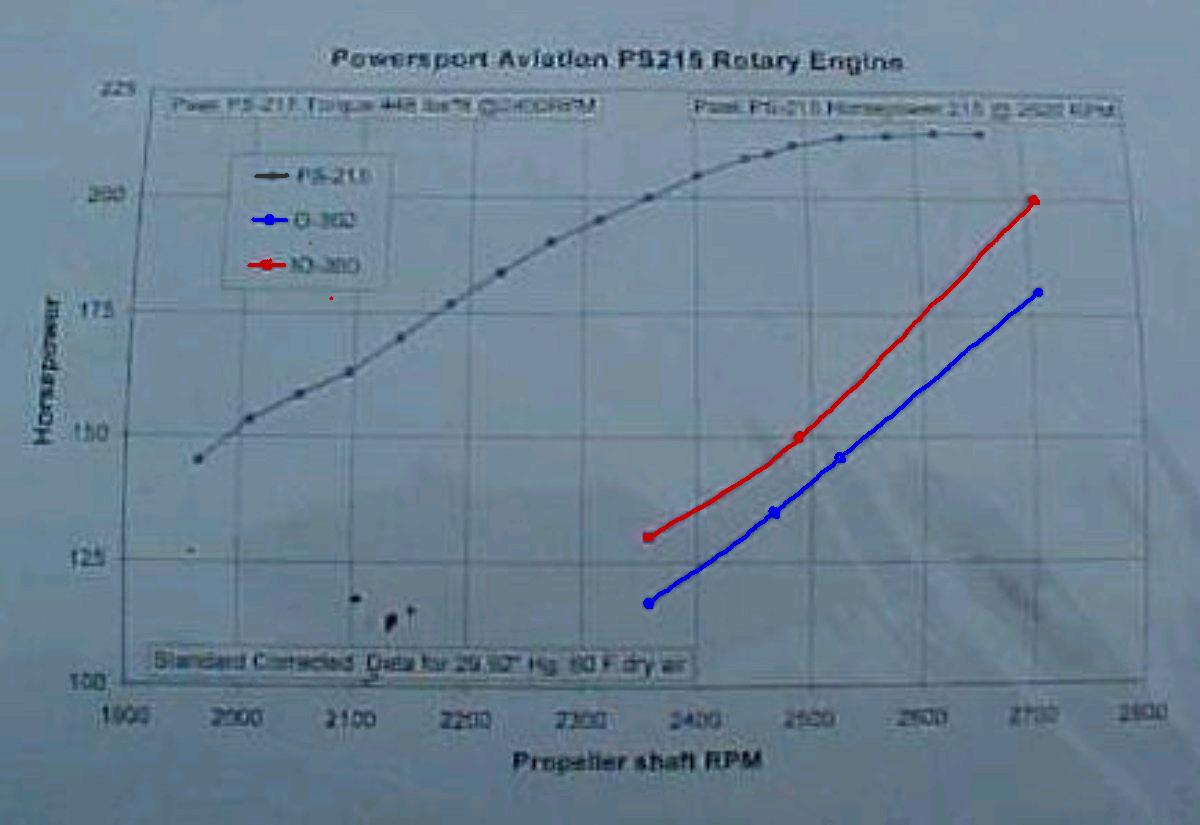
The next chart plots the HP of a Power Sport engine generated on a dyno
against the HP generated by two aircraft engines under prop load.
I think the aircraft engines were an O-360 and an IO-360.
The pictures was so bad I enhanced it with xpaint.
Apples and Oranges but Power Sport was trying to make a point they
did not understand :) Never the less this chart shows the vast difference
in prop load verses dyno load. Now if you wish to plot the actual torques
you know the RPM and you know the HP so one can use the HP formula
to plot the torque for all three cases.
I'll do the algebra.
HP = T X RPM / 5252
HP X 5252 = T X RPM
or
T X RPM = HP X 5252
Therefore:
T = HP X 5252 / RPM
The best way to make this far less confusing is forget torque
and talk in terms of HP or thrust alone.
Aubry or Bill J help me out here.
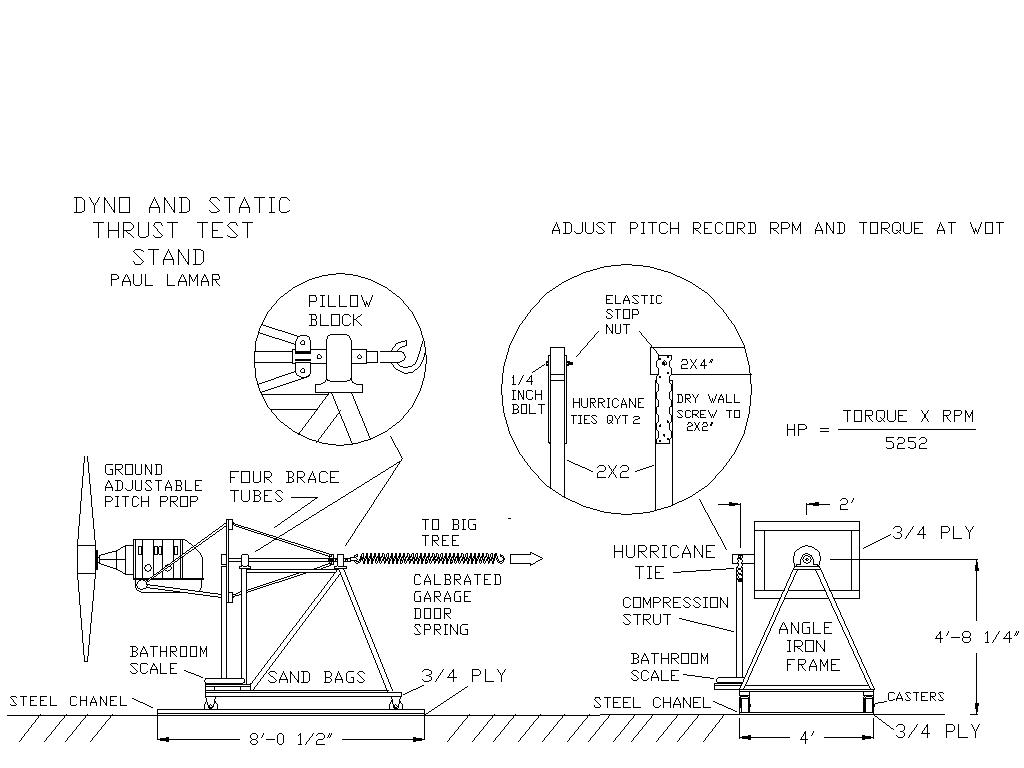
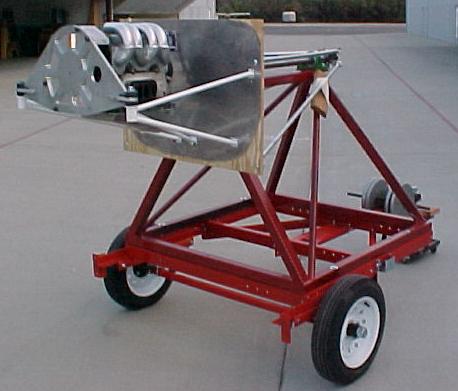
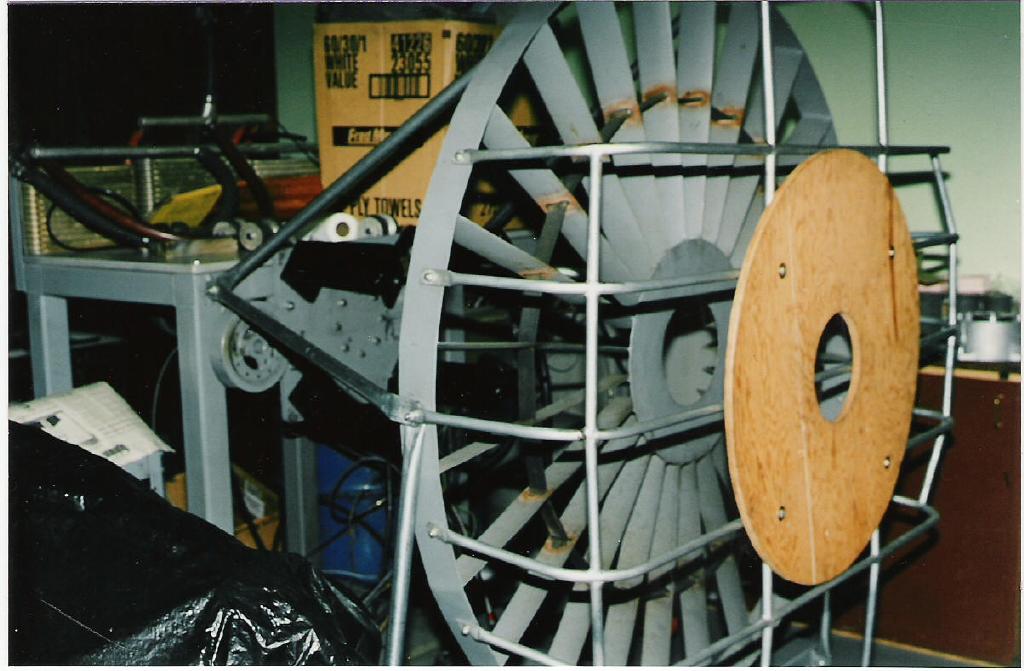
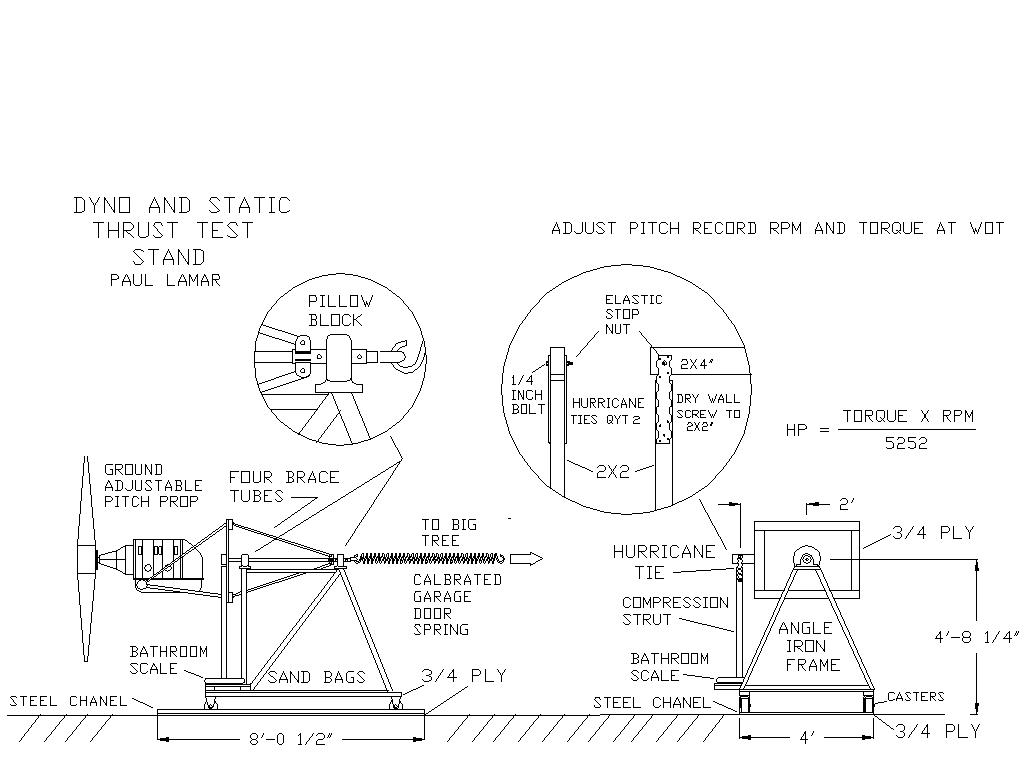
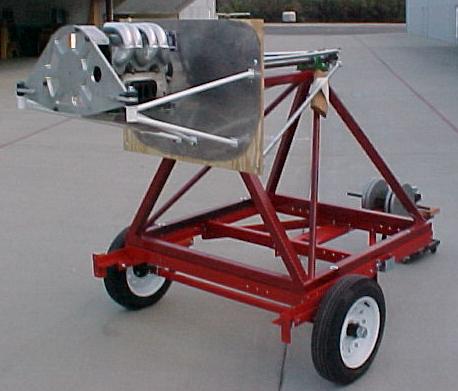
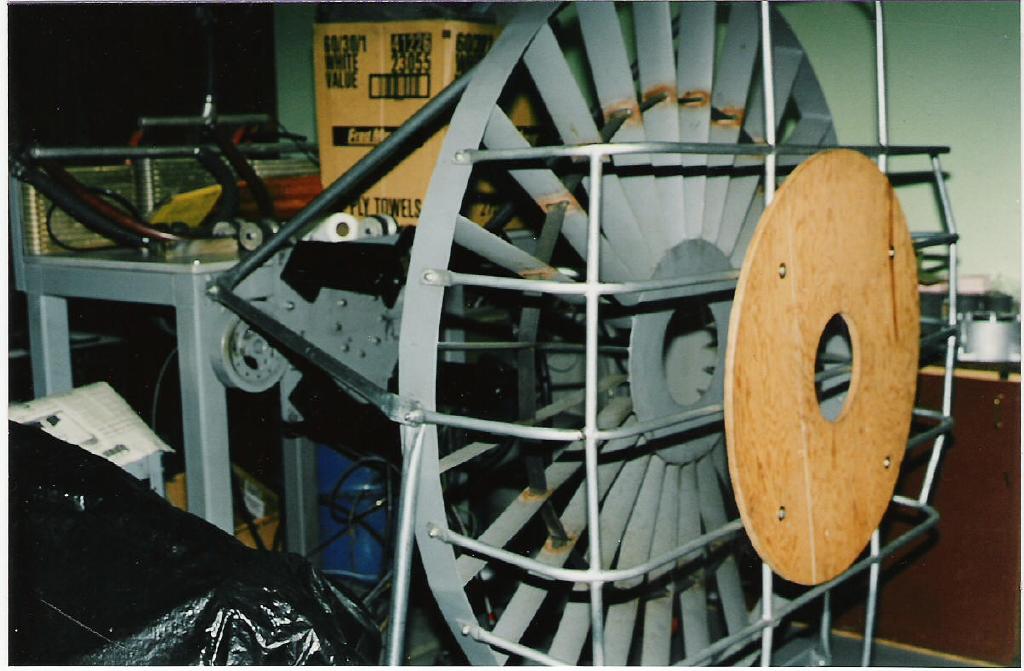
One of the best devices for understanding this better is a prop dyno.
Run the engine up against the prop load untill it won't go any faster
and measure the HP. Change the pitch on the prop and do it again.
Plot this over a wide range of pitches for a given prop.
Do not rely on the max static thrust measurements. Max thrust at a dead stop
is not a good criteria for setting the pitch for best takeoff at 60 MPH.
--
Paul Lamar ...No rotor no motor.
The Rotary Engine NewsLetter. Powered by Linux.
ACRE NL web site.
http://www.rotaryeng.net
Copyright 1998-2007 All world wide rights reserved.