> We're here to swap knowledge, so I'm glad it helps.
>
> As far as the heavier molecules, I consider this a very minor factor,
> compared to the typhoon of fuel-laden air flowing past the plugs --
> that's where the efficiency comes from. The more fuel molecules you
> ignite with the spark, the better your burn will be.
>
> Keith W
>
> Perhaps some one should try small walls in the rotor combustion chamber
> depressions to promote turbulence.
>
> Paul Lamar
>
That would be counterproductive. The smoother the flow, the more
consistent the burn will be. The optimum would be a flow of the
stoichiometric oxygen-fuel mixture completely without turbulence -- not
possible within the realm of physics in an enclosed space, but it would
provide the maximum burn efficiency, as no fuel molecule would remain
unburned.
Turn on a kitchen faucet, just enough so that there is a continuous flow
rather than individual drips. Now put your finger into the flow, and it
is no longer a flow below your finger, it's drips again. The induced
turbulence has permanently destroyed the stability of that flow. The
only way to overcome this and get the same result that you had (a smooth
flow) is to increase both the amount of fluid in the stream and the
length of the stream (that same finger in a flowing river has almost no
effect). This is inefficiency, and this is why there is so much
unburned fuel in the exhaust -- they have to throw a LOT of fuel at the
plug to make sure that there is enough of it to ignite and SUSTAIN
ignition so that it will spread through the chamber.
Remember, an internal combustion engine is JUST AN AIR PUMP. It runs on
AIRFLOW. The smoother that flow, the better.
Keith W
How would you propose to maintain non-turbulent flow in a Otto-cycle
(non-continuous flow) engine?
Turbulence can provide useful mixing (stirring) if the fuel delivery
system doesn't provide perfect atomization/vaporization. I believe
that's how it is being employed in many modern engines. Hurts the
volumetric efficiency a bit, but yields more complete combustion.
How much unburned fuel is in the exhaust of a modern piston engine -
before the catalytic converter? The loss of efficiency is in heat
mostly.. The cat is just doing cleanup.
Regards,
Matt-
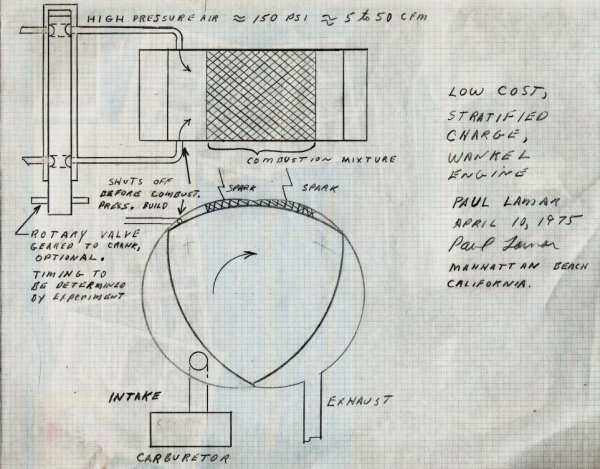
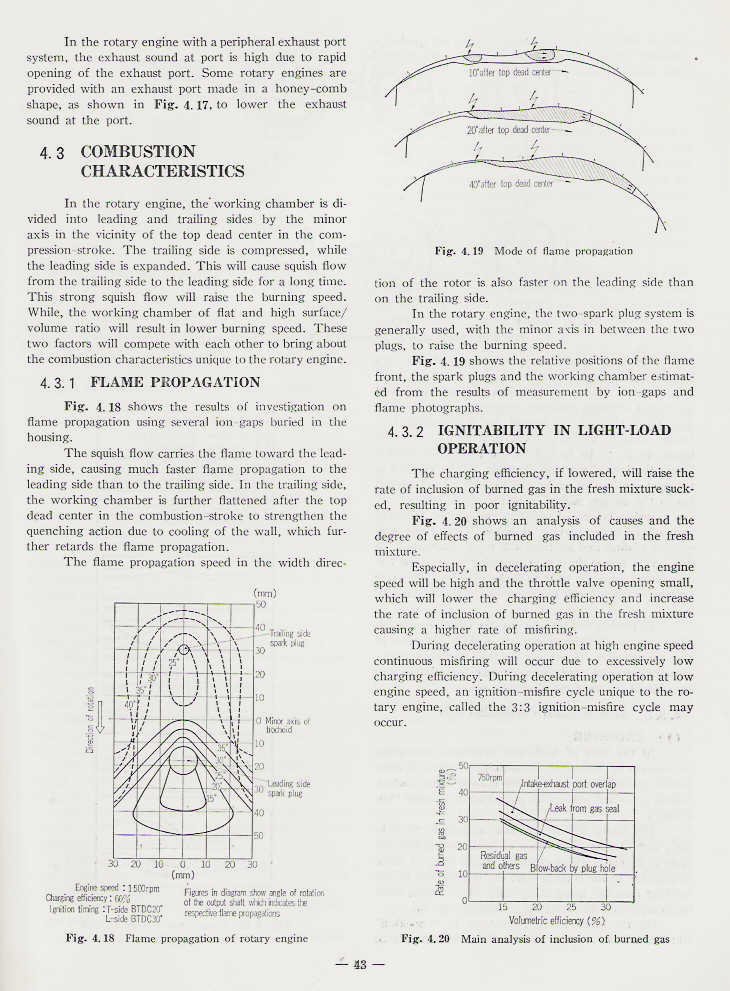
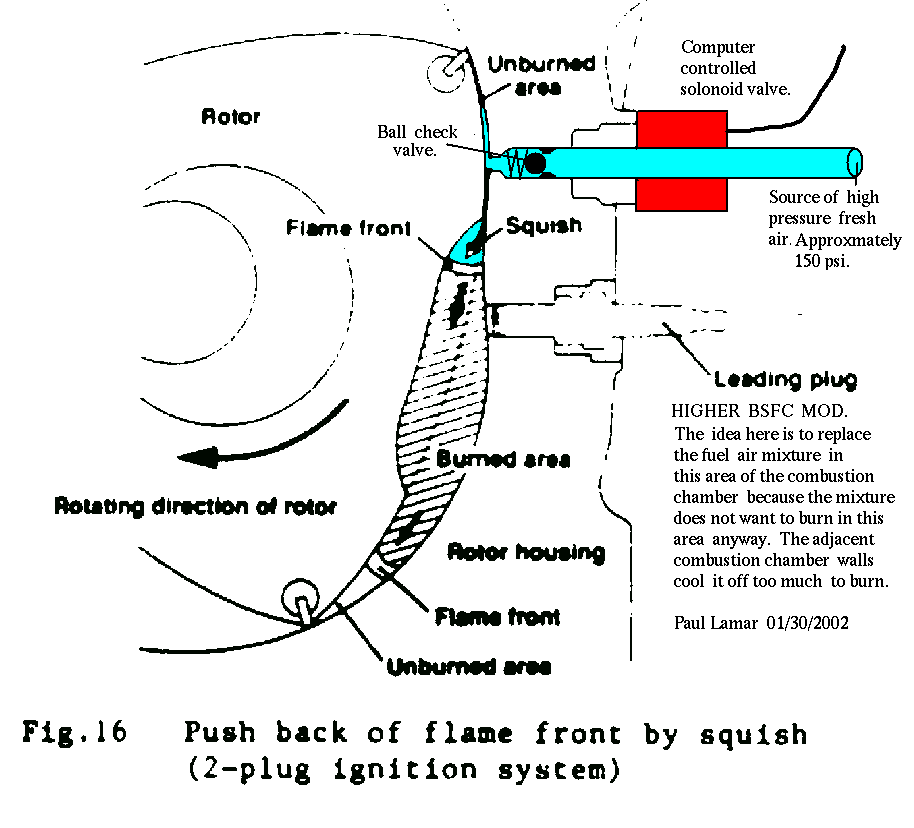
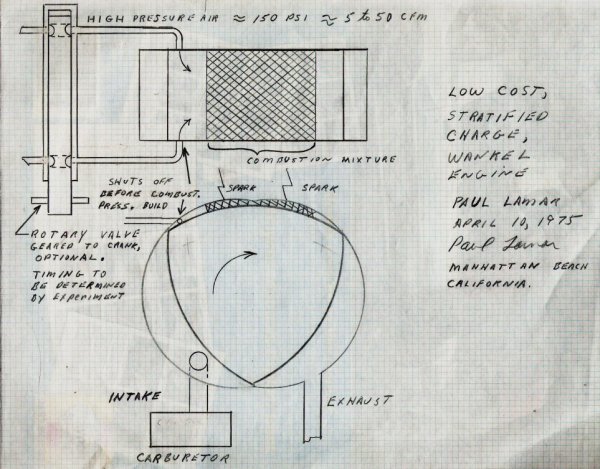
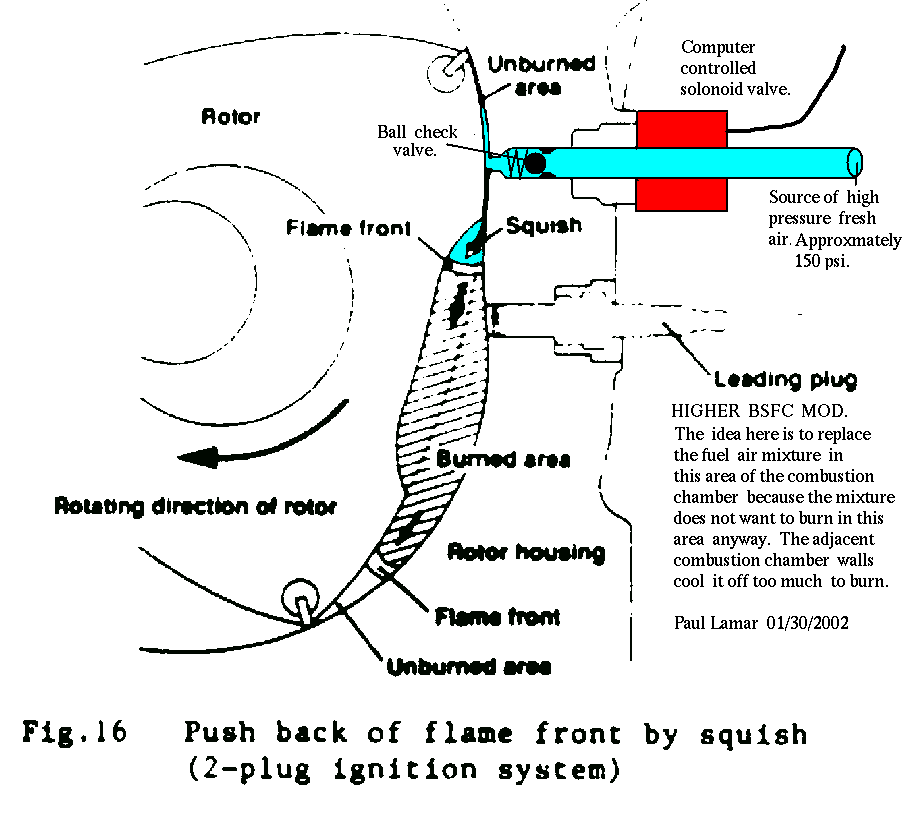
Here is what really happens in the rotary.
Obviously I have been thinking about this since 1975 :)
--
Paul Lamar ...No rotor no motor.
The Rotary Engine NewsLetter. Powered by Linux.
ACRE NL web site.
http://www.rotaryeng.net
Copyright 1998-2007 All world wide rights reserved.