Over the years I have been rubbing shoulders with OEM brass. I have
spoken face to face with Dieter Zetsche
<http://en.wikipedia.org/wiki/Dieter_Zetsche>about diesel cars in USA.
The bottom line here is "consumer perception." That is, what the VP of
what ever, perceives the consumer will want. It does not really matter
how good the product is selling in US, but how the VP thinks it will
sell in the future. Even when the CEO knows and demands a product be
sold here in USA (like the diesel Liberty and CRD E-320D)- the
perception rules.
Ask your self, with $4 / gal gas and $4.6 /gal diesel, why doesn't
detroit sell 73 mpg cars here they already sell outside USA ? - Perception.
-dave A
It is more than that Dave.
California has mandated a draconian carcinogenic particulate limit
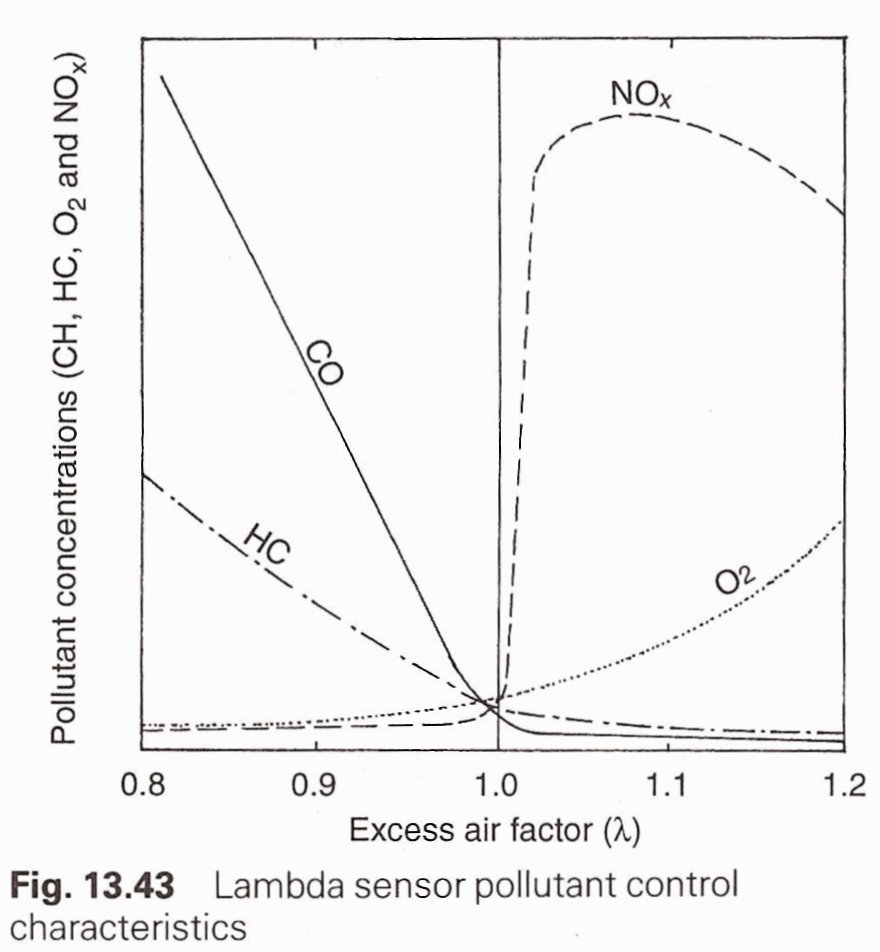
that most diesel's engine cannot reach. The other problem is NOX.
The NOX problem is going to be expensive and awkward. If they can fix NOX on
a diesel they can also run piston and rotary engines super lean with the same tech.
Paul Lamar ...No rotor no motor.
From:
http://www.dieselnet.com/standards/us/ld_t2.php
Current tech diesels are 50 state compliant - if I recall correctly, Tier 2
Bin 5. (see table 2 at the link).
"The same emission limits apply to all vehicles regardless of the fuel they
use. That is, vehicles fueled by gasoline, diesel, or alternative fuels all
must meet the same standards. Since light-duty emission standards are
expressed in grams of pollutants per mile, vehicles with large engines (such
light trucks or SUVs) have to use more advanced emission control
technologies than vehicles with smaller engines in order to meet the
standards.
The EPA Tier 2 program uses a three-tiered compliance strategy.
Pre-production evaluation is used to certify vehicles prior to sale. A
production evaluation is used on the assembly line for early evaluation of
production vehicles. Finally in-use evaluation is used to verify properly
maintained vehicles after several years of use.
The Tier 2 regulation brought new requirements for fuel quality. Cleaner
fuels are required by advanced emission aftertreatment devices (e.g.,
catalysts and particulate filters) that are needed to meet the regulations.
Sulfur Levels in Gasoline-The program requires that most refiners and
importers meet a corporate average gasoline sulfur standard of 120 ppm and a
cap of 300 ppm beginning in 2004. Since 2006, the average standard has been
reduced to 30 ppm with an 80 ppm sulfur cap. Temporary, less stringent
standards applied to some small refiners through 2007. In addition,
temporary, less stringent standards applied to a limited geographic area in
the western USA for the 2004-2006 period.
Diesel Fuel Quality-Diesel fuel of maximum sulfur level of 15 ppm (known as
the ultra low sulfur diesel, ULSD) was made available for highway use
beginning in June 2006. The reduction of sulfur content in diesel fuel was
legislated by the EPA as a part of the 2007-2010 emission regulation for
heavy-duty engines."
Andy Hecker
San Antonio
To solve the NOX problem it will take extraordinary methods.
All lean engines have this problem and the diesel is the epitome
of a lean engine.
http://findarticles.com/p/articles/mi_m0CYH/is_18_4/ai_66275901
Another factor is the ratio of diesel fuel to gasoline you get out of crude.
In Europe now there is a huge unbalance. Diesel fuel is in short supply
because diesel cars are 70% of the market in France and high percentages
elsewhere so the tax structure will need to change to correct the unbalance.
Paul Lamar
The Rotary Engine NewsLetter. Powered by Linux.
ACRE NL web site.
http://www.rotaryeng.net
Youtube key word UTUBPLEASE
Copyright 1998-2008 All world wide rights reserved.