Paul,
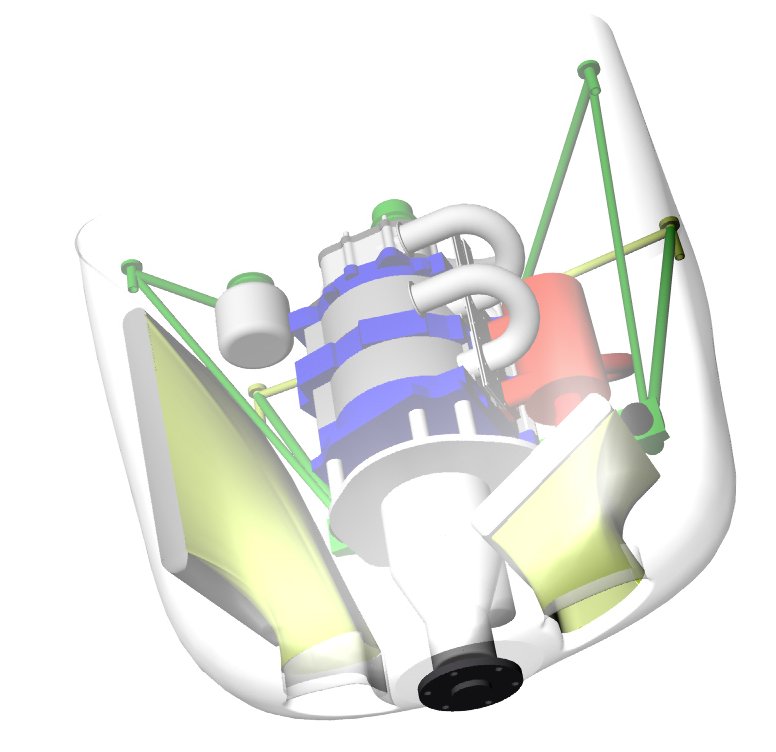
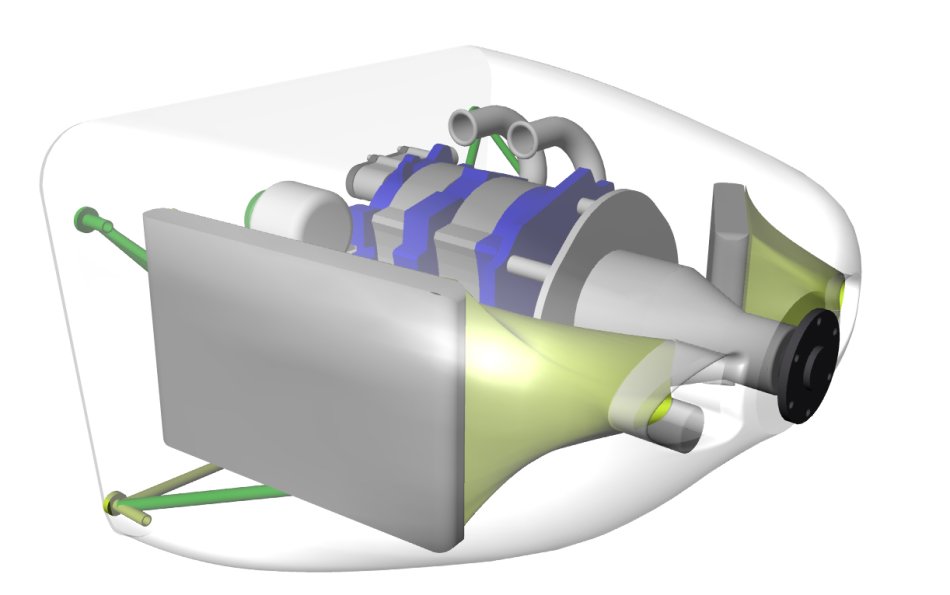
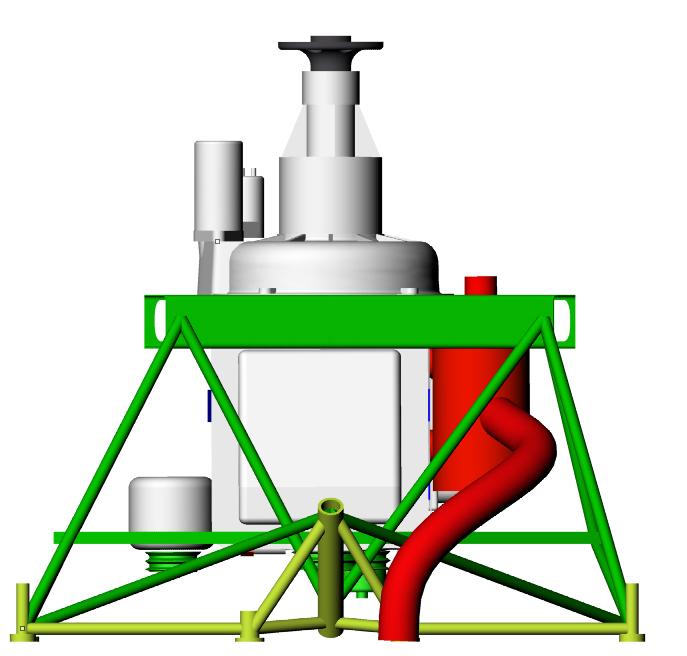
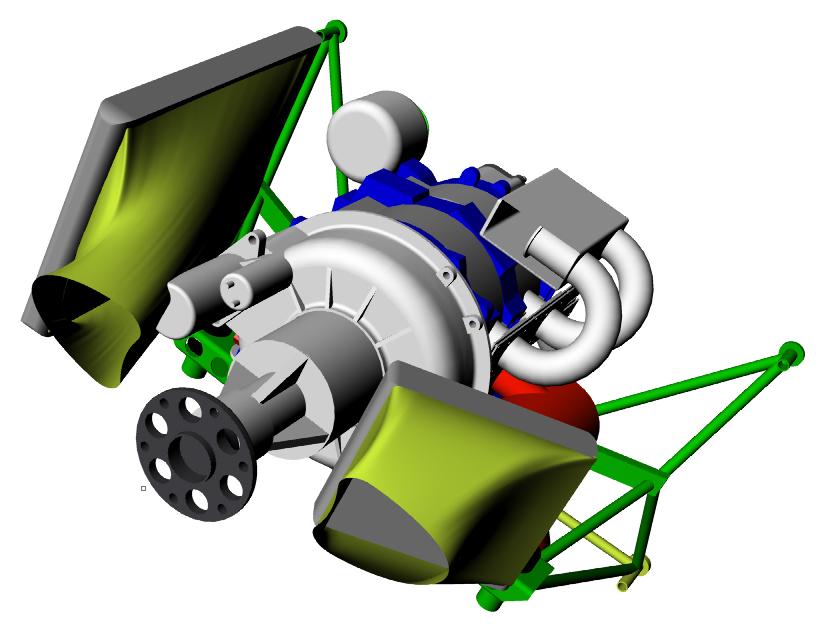
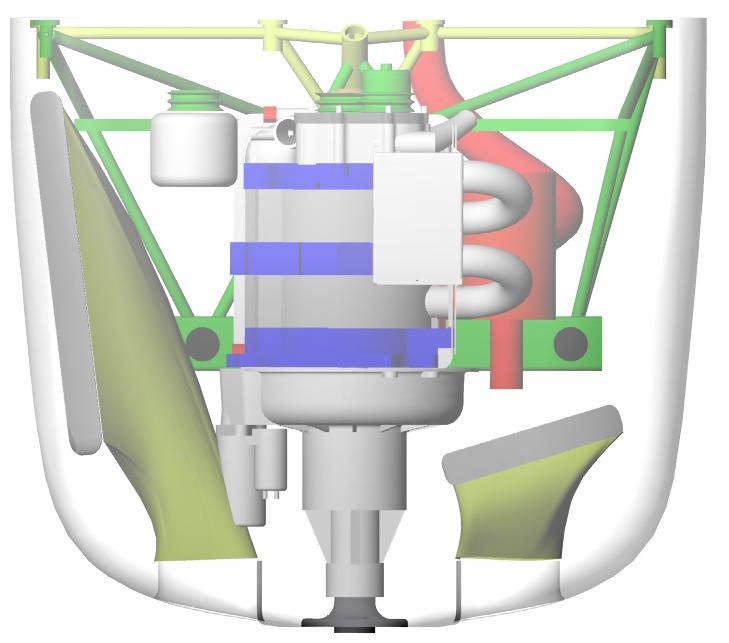
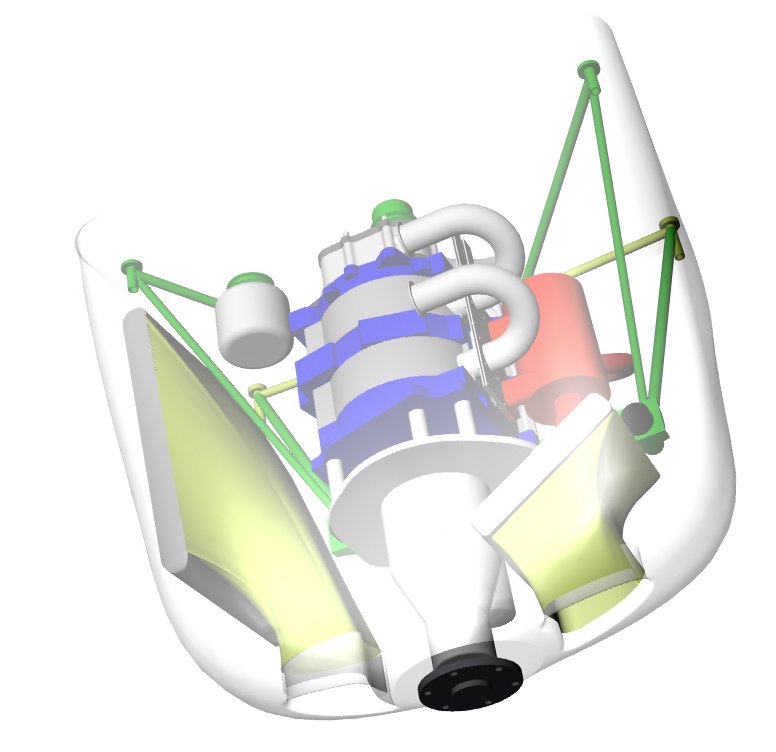
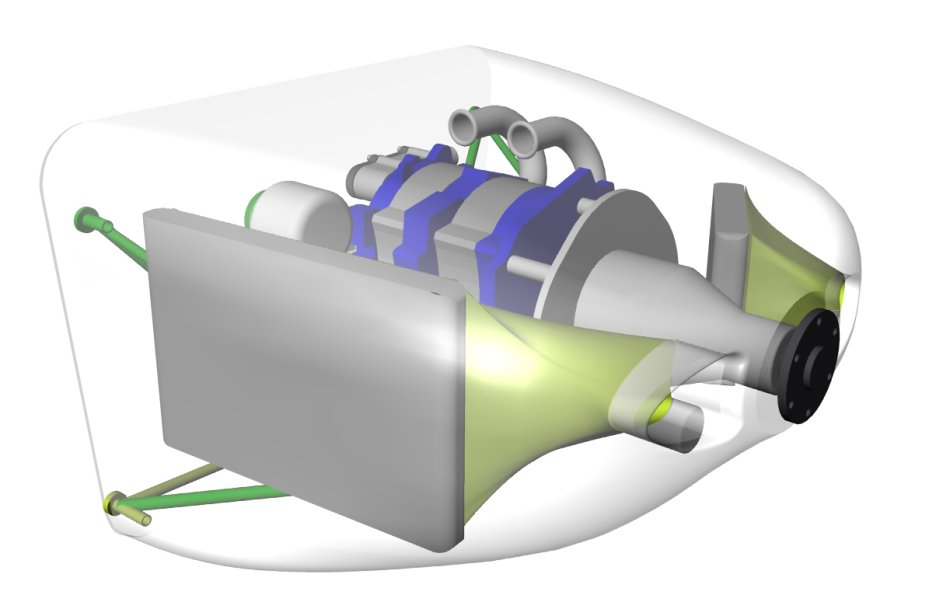
I'm looking at your diffuser picture on p23 of your book on cooling and
would like to know two dimensions which would be used for say a 20 "
square radiator core
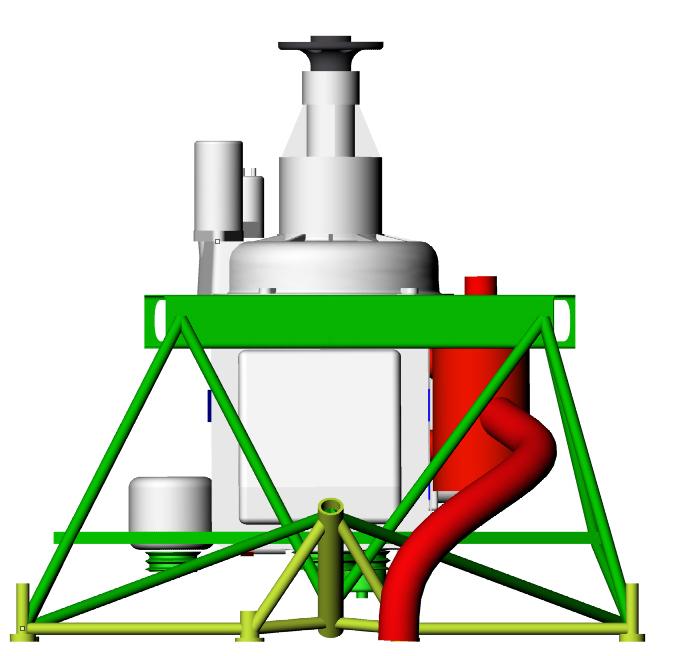
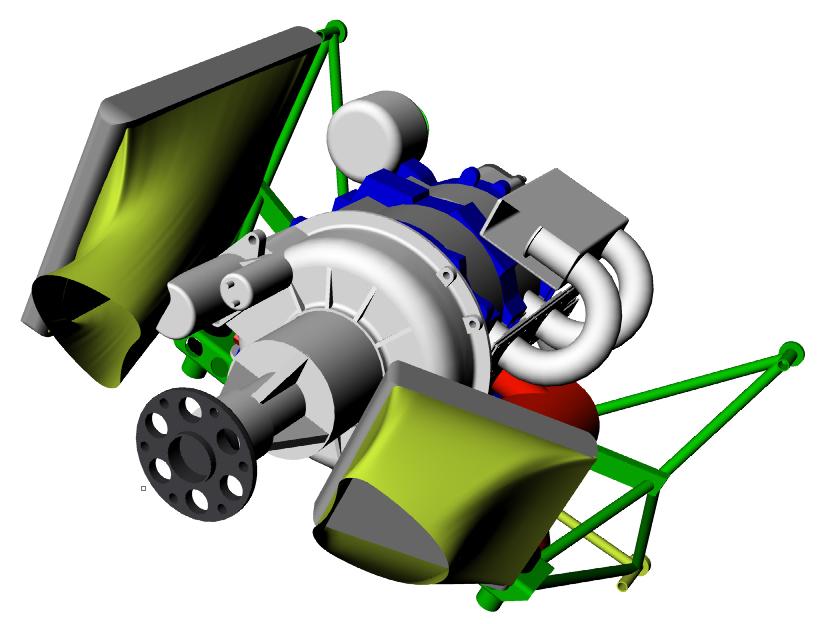
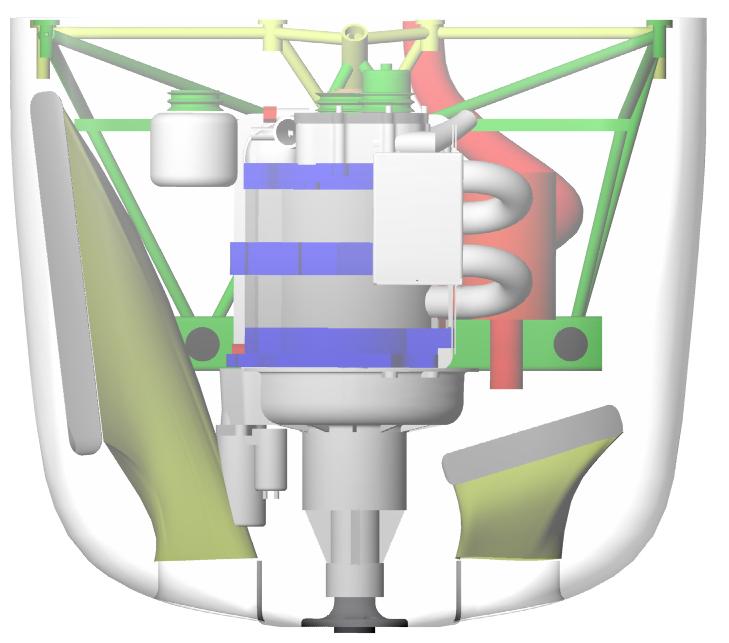
1) height of the wedge diffuser opening
2) dimensions or area of the trumpet diffuser inlet opening.
John P
That had the 2" wide by 20" long 2nd gen oil cooler mounted along
side the rad so the total
core dimensions would be 25" wide by 20" long or 500 square inches
of core frontal
area. 25% of the core area is a good rule of thumb for a 200 MPH
airplane.
If the core frontal area is 500 square inches 25% of that is 125 square
inches or 10" by 12" or 6 inches by 25 inches in front of the wedge.
Larger
if you are building an airplane that is never going any faster than
150 MPH
such as a float plane or STOL bush plane. In that case you can use
30% or 35%.
Smaller if you are building a 300 MPH racer and you don't mind
climbing out
at a modest angle and higher speed. Cooling drag at cruise will be
reduced
in any event if you use well sealed cowl flaps as they reduce the
air flow into
the intake and cause a phenomena called external diffusion. In
effect a self
streamlining volume of high pressure air build up just in front of
the intake
opening.
Paul Lamar ...No rotor no motor.
Paul,
Am I correctly understanding you on the 200 mph 25"x 20" case as follows;
The front of the kays & london wedge which equals the rear of the
Kuchemann & webber trumpet diffuser is 6" high by 25" wide=150 in2
The front of the Kuchemann & webber trumpet diffuser air intake is 10" x
12"=120 in2.
So the trumpet diffuser would only have a reduction ratio Ai/Ab of
120/150=.8 when used with the wedge diffuser as opposed to a more
usual and smaller air intake of Ai/Ab=.4 when used in a frontal flow
application.
I was also hoping that the 6" dimension would be smaller since I have a
nose gear rv7a which interferes w/ the space available and also T.Cooks
2.14-1 reduction drive which interferes due to the standard 6 o'clock
mounting of the starter.
John P
Arithmetic error. You can change the wedge height to 5" by 25" or 125" square.
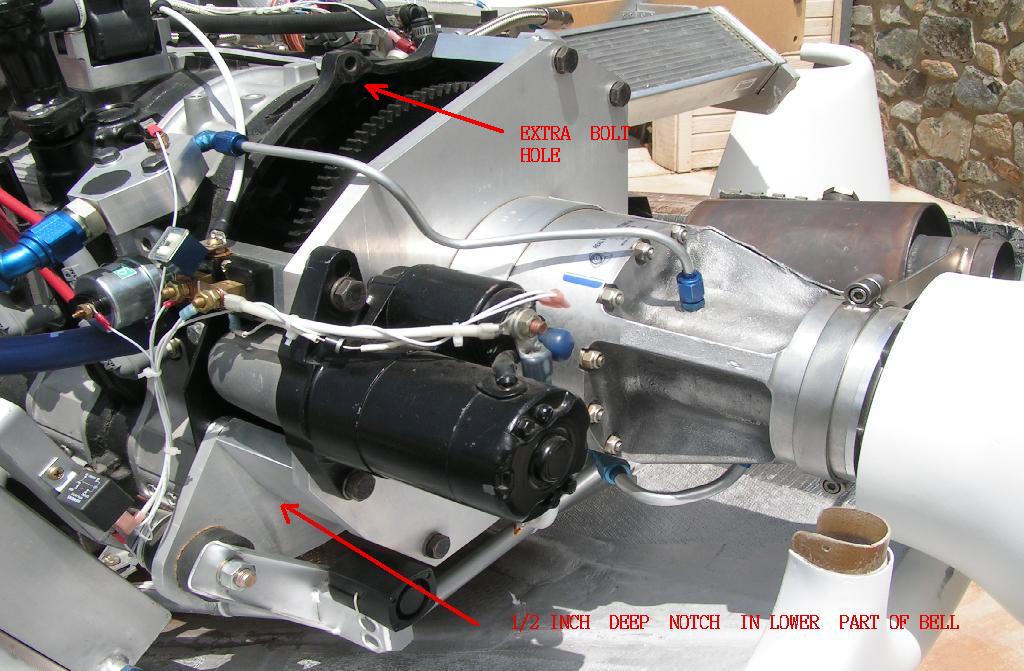
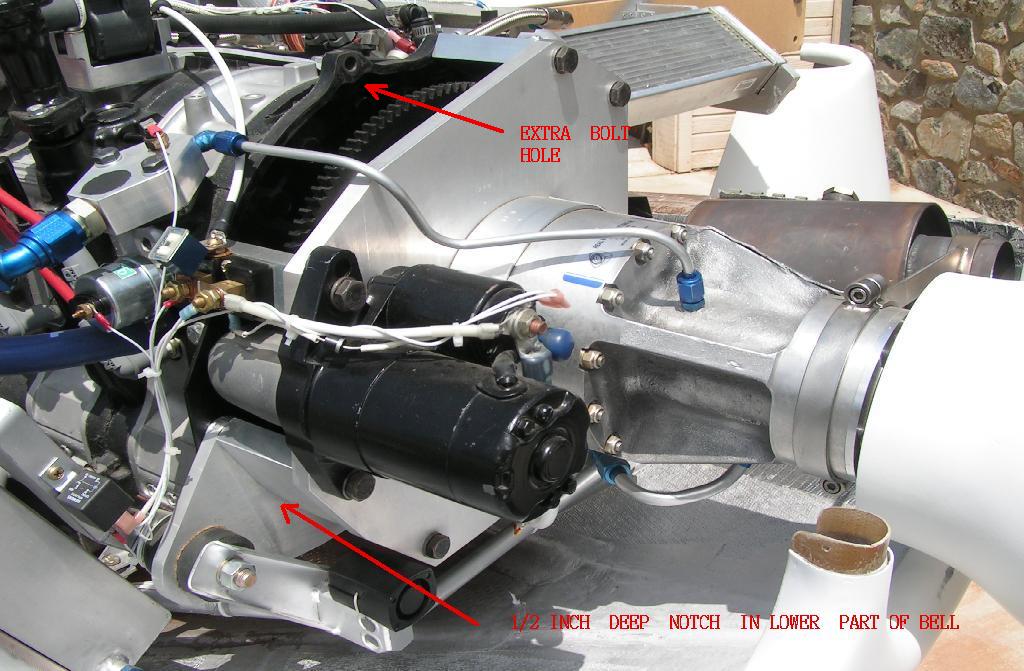
With a bottom rad we always move the starter as it is easy put it in the 9 O'clock
position and use longer mounting bolts as in this picture. All the new bell housings
will have it in this position. Al Gietzen figured out this trick. Saves the weight of
a couple of bolts.
If you don't have your motor mount already you might consider a side mount with an
RV7A as there appears to be a bit more room over there.
Paul Lamar ...No rotor no motor.
The Rotary Engine NewsLetter. Powered by Linux.
ACRE NL web site.
http://www.rotaryeng.net
Youtube key word UTUBPLEASE
Copyright 1998-2008 All world wide rights reserved.