Paul,
I wanted to make a quick comment as to our experience with synthetic oils.
We have tested 3-4 oils out of every category this includes 2 Cycle oil,
Bio Based Oil, Straight and Multi weight oils, as well as synthetic.
Our engine does run a hotter rotor temp than the Mazda although
here is what we seen out of synthetics.
The oil provided great bearing and seal lubrication as well as a
thin film for sealing the engine. The oil when burnt in the combustion
process would leave a "concrete" like deposit and this would build on
the rotor and in tear down and inspection this was next to impossible
to remove. Our concern was what happens when a small piece of this
"concrete" like debris lets loose and gets into the rotating assembly.
Our experience thru testing all the various oils points to one
oil as the clear winner for our engine and probably for the Mazda
as well and here it is and here is why.
This is an email response from our Engine Program Manager
Eric,
I did every check you could do for this oil. The obvious reason
is the 30wt worked so good and Shell was pushing the multigrade,
we tried it. Engine noise increased as well as heat, both internal
and cooling system. This test of simply replacing 30wt with 10/40 was
done several times.
I have a book written by Chevron oil about many topics, one being
the year, reason, why, multi weight oils where invented. It's the
old proverb; you can't get something for nothing. It's widely accepted
that the gain for using multi weight oils is at sacrifice of bearing
lubrication. At engine loads it does not stay in contact with bearing
surface and breaks down under hi heat. The surface film is simply not
there in a multi grade oil. This is known by the oil community and
readily available for anyone to read. They admit to why multi grade
oil was invented.
Car manufactures put the squeeze on Oil Company's to help with
gas mileage and start up in all weather conditions. They wanted
oil that could be used all year. Which it does, but at a sacrifice
to lubrication.
The RotaMax engine needs certain qualities for lubrication and
heat management. The straight weight Rotella provides for the needs.
It also is very compatible with LP fuels which multi weight is not.
LP engines generally run higher internal heat.( Combustion )
The final quality of the straight weight Rotella oil is the
very high detergent cleaning capability, which the multi weights
do not possess. Because of the multi weight oil break down, sludge
is produced. Multi weight has a low flash point which is very bad
for a charged cooled engine. This produces sludge.
10/40 or any other multi weight and any brand should not be used
in a RotaMax engine.
A link to their website here.
http://www.shell.com/home/Framework?siteId=rotella-en&FC2=/rotella-en/html/iwgen/products/zzz_lhn.html&FC3=/rotella-en/html/iwgen/products/product_rotellasingle.html
Eric Barger
RotaMax Inc.
www.rotamax.net
Those of us in the aircraft industry are not likely to burn LP.
The largest problem we have had over the last 38 years is a thick carbon build up
on the rotors. This is something that does not show up in a few hours of running.
I am talking about rotary engines with thousands of hours. Non synthetic oils break
down and form carbon at around 250 degrees F. Synthetics are still alive
at 450 to 500 F. Mazda Rotors run at 500 F and charge cooled OMC engine rotors
run 600 to 700 F. Also since you have anti-friction roller and ball bearings
throughout your engine I suspect clean burning two cycle oil would be ideal.
Most two cycle engines use anti friction bearings and only two cycle oil
for lubricating the bearings.
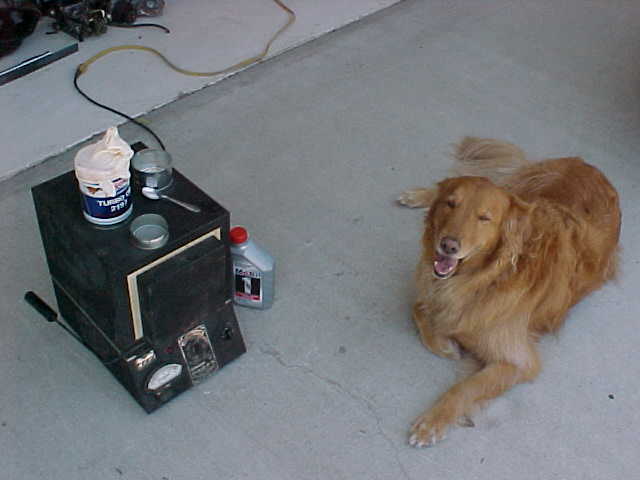
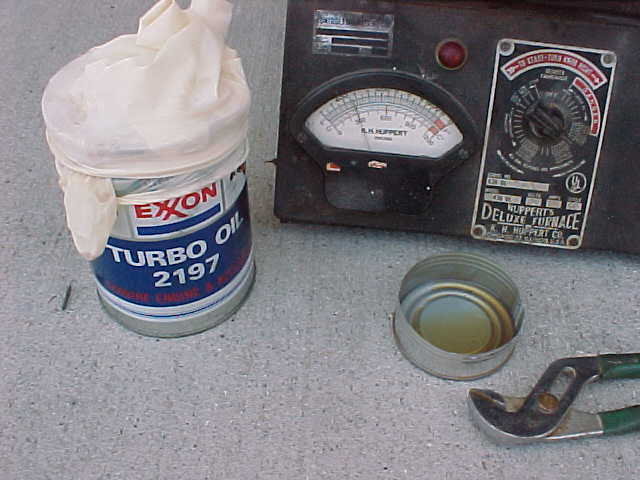
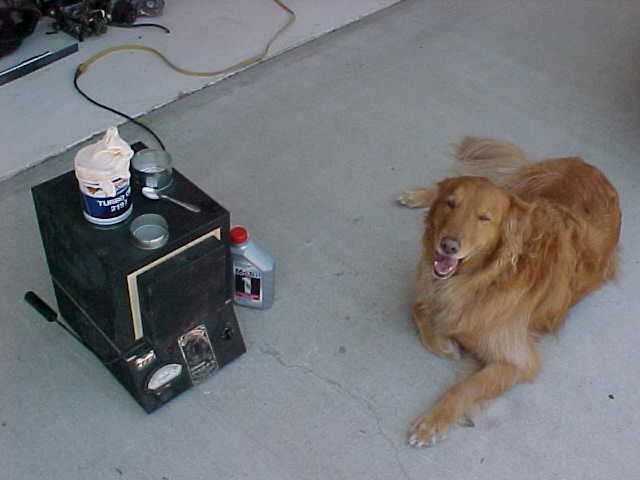
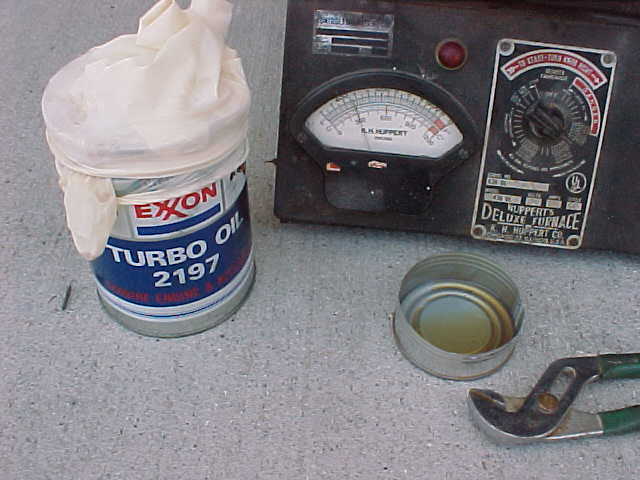
I will get a sample of the Shell oil and give it our 500 degree F oven breakdown test.
Anybody can run this test. Put a teaspoon worth of oil in a cat food can and
heat it in an oven at 500 F for half an hour.
Here is one of the original messages dating back to 1998
-------- Original Message --------
Subject: Oil Bake Off
Date: Sun, 13 Sep 1998 00:29:20 -0700
From: Paul
<rotaryeng@earthlink.net>
To: bit@any
Your not going to believe this Tracy.
MMO was the worst of the lot. Nothing but thick varnish was left. No
liquid was left. I also burned a fresh sample and it burned with thick
black smoke which means a lot of particulates.
The best I have tried so far has been the Quaker State Universal 2-Cycle
Engine Oil. Only about 15% of the volume was cooked off. No varnish. The
oil turned black and thickened slightly but that was about it.
I set fire to a fresh sample and it burned a little bit like a sparkler
with very little smoke.
Rank:
2 cycle was first
synthetic was second
10W30 was third
and MMO was last.
Course this is not a definative test. The proof is in
the using. I can't wait to see the inside of your engine.
How about borrowing a bore scope and have a look through the big spark
plug hole. Take your exhaust off and have a look at the center of the
apex seals.
If anybody wants to try this please do.
One teaspoon of oil in the bottom of a cut down cat food
can, baked in a pre-heated oven at 500 degrees F for one hour. Get ready
for a stinking kitchen. I would set up ventilation fans as well.
Paul Lamar
The Rotary Engine NewsLetter. Powered by Linux.
ACRE NL web site.
http://www.rotaryeng.net
Youtube key word UTUBPLEASE
Copyright 1998-2008 All world wide rights reserved.