Use two or more small low pressure facet pumps down near the
main tank outlets, to pump fuel up to the 20 gal aux tank.
They have built in one way valves. Select one or the other
with switches depending on the amount in the strake tanks.
Use sight gages on the inner ends of the strake tanks.
Use a tall and skinny sump tank behind the firewall fed only from
the center tank. A piece of five inch aluminum tubing 4 feet high will
work fine. About 4 gallons. Send the return fuel to this tank.
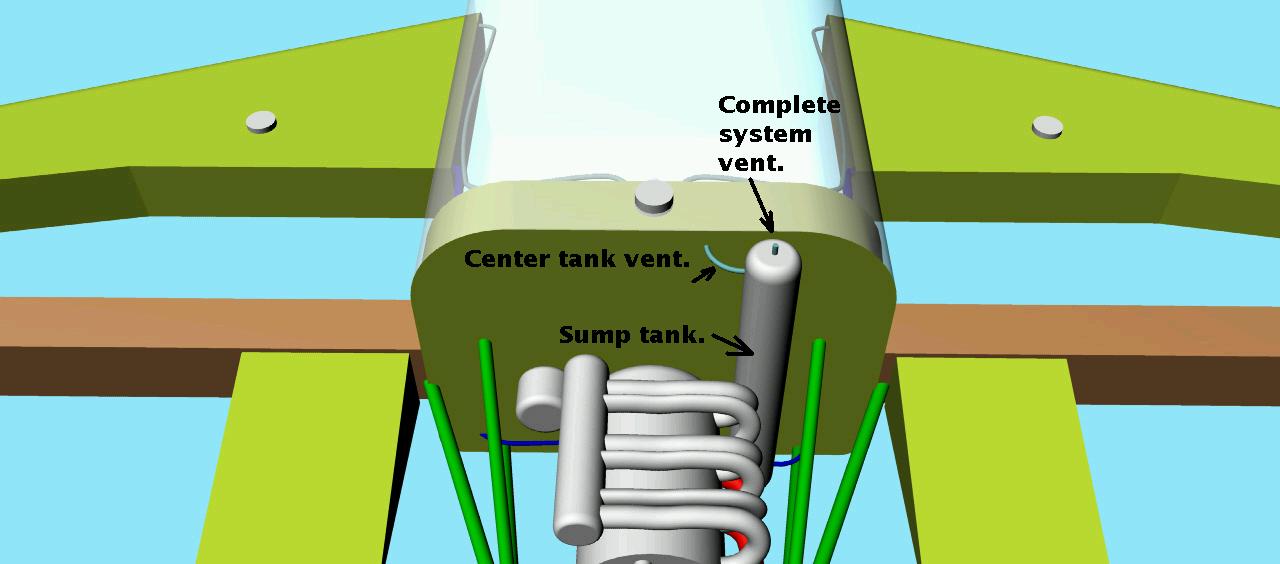
Vent all tanks to the top of the fuse but do not point
the vents forward in any case.
There is a sight gage on the forward face of the aux 20 gallon tank.
When that is empty you still have a gallon or so in the sump tank to get
it on the ground.
IMHO total fuel will now be about 59 gallons or about 3.3 hours or
700 mile range at 75% power. Leaning the engine to .47 BSFC you
will get about 740 mile range. The fuel burn will go down
to about 17 gallons an hour.
Paul Lamar ...No rotor no motor.
Paul why the 4' high sump? It is being fed by gravity right? Will the
return fuel be enough to keep it full? Will it only be as full as the
head in the main center tank? Why not just weld 1' or so of the 5" pipe
on to the bottom of the center tank?
Dan
Welding pipe on the bottom of the center tank will not work because it sits on top
of the spar for CG and passenger space reasons. Besides that it is made from fiberglass.
It's not entirely necessary to be 48 inches but it won't hurt. It adds a few gallons.
If it were shorter and vented the vent would fill up to the top of the center tank.
The return fuel is always less than the fuel going out. The fuel in the sump tank and
the center tank will slowly go down together until the center tank is near empty. At that point
one of the strake fuel pumps is turned on to refill the center tank and the sump tank.
The center tank and sump tank will then go down again. The process is repeated for the
other strake tank. When the center tank goes down again for the third and last time the
only fuel will be left in the sump tank. The sump tank never really gets close to empty
until the aircraft is completely out of gas.
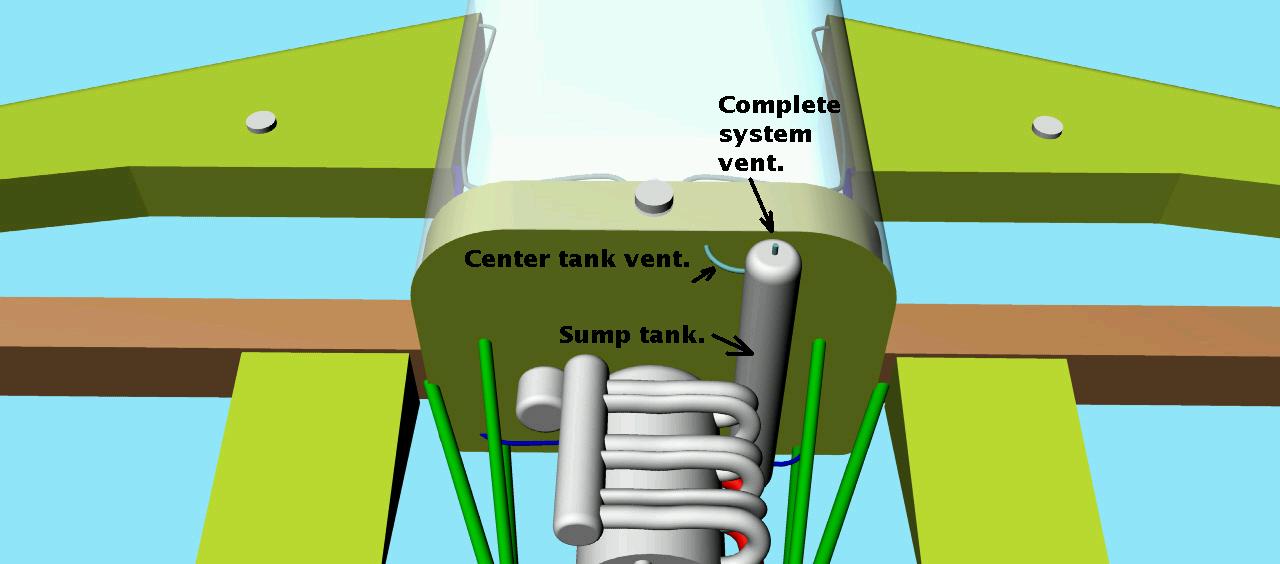
BTW you could vent all three tanks to the top of the sump tank. If you forget
and left one of the strake pumps on too long fuel would be transfered back
to the other strake tank after the sump and center tanks filled up.
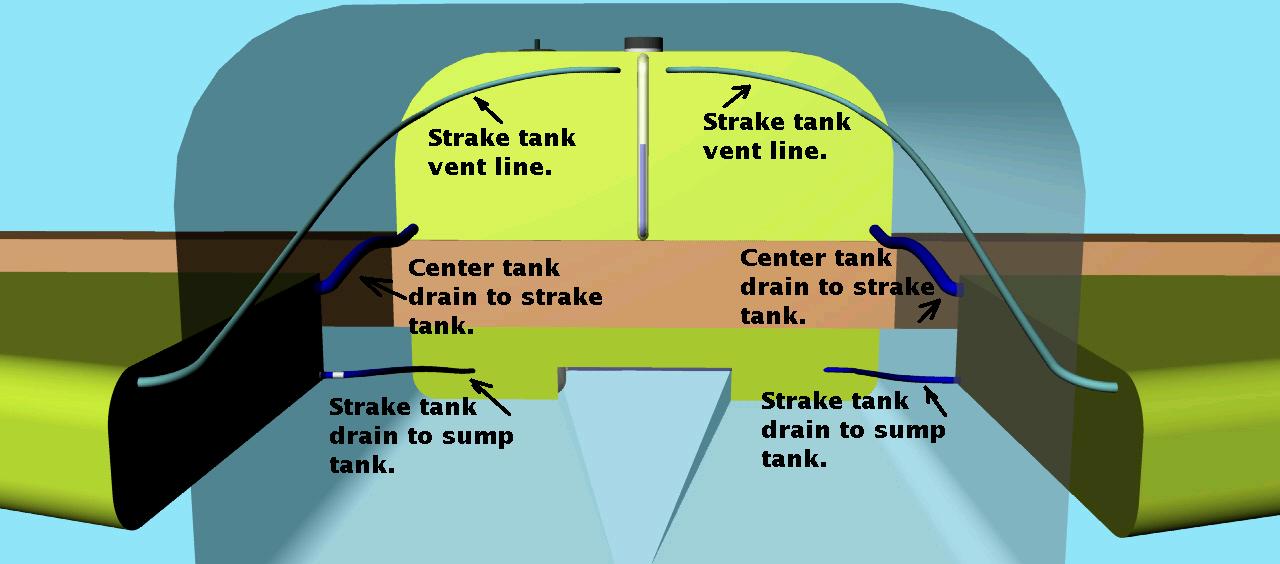
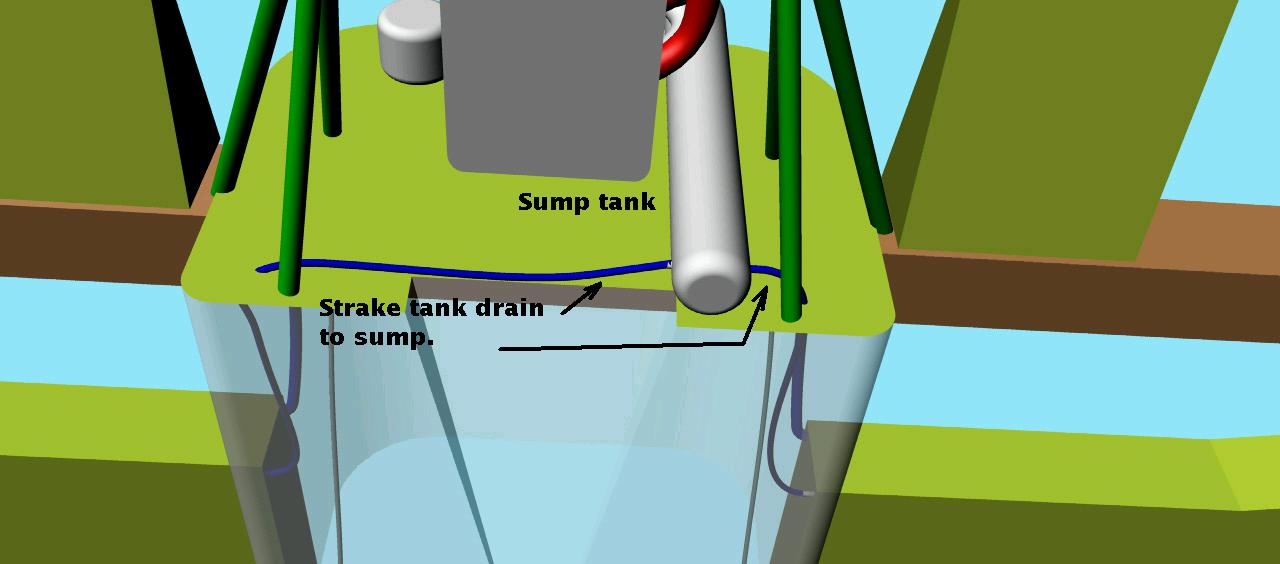
Another way of plumbing three tanks is have the center tank drain to
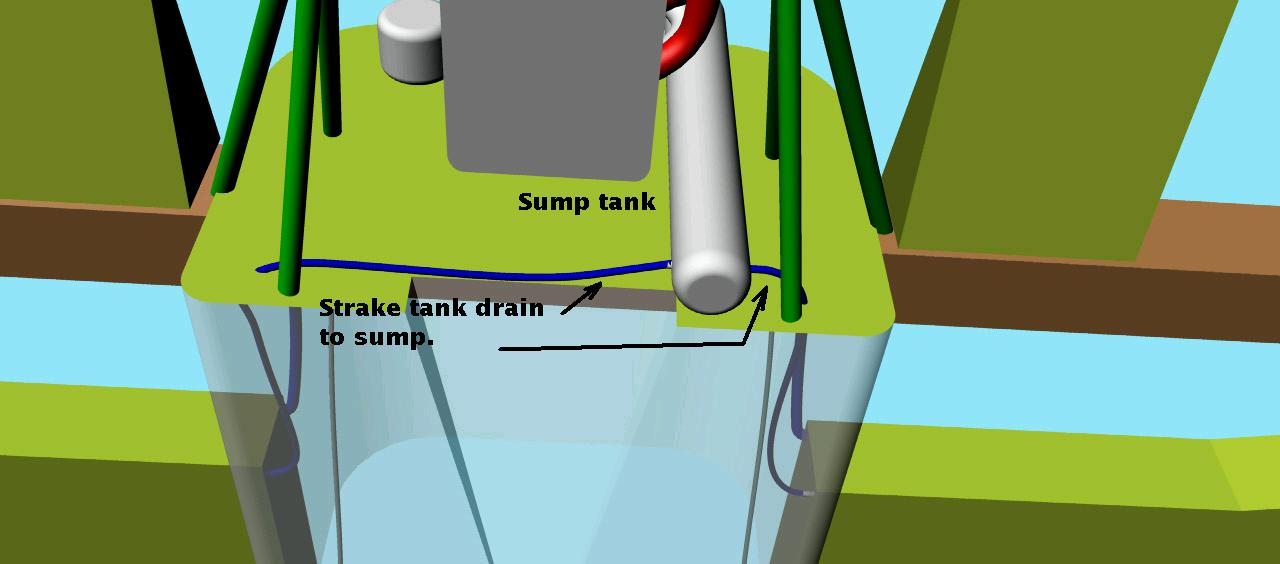
both strake tanks. Then have the strake tanks drain to the 48 inch high
sump tank. That would eliminate the two transfer pumps.
You could put the center tank low ahead of the spar but then it would encroach on passenger
space and it would not gravity feed to a sump tank.
For an LSA three tanks are totally unnecessary as you are not sweating fuel capacity.
One of the big pitfalls with EFI return fuel is to suck fuel from one tank and return
fuel to another. In that case you can empty a tank in short order and perhaps pump
fuel out of the other tank through it's vent.
Fuel systems are tricky. You must consider a range of scenarios. Physical layout
is as important as plumbing configuration or more so.
----------------------------------------------------------------------
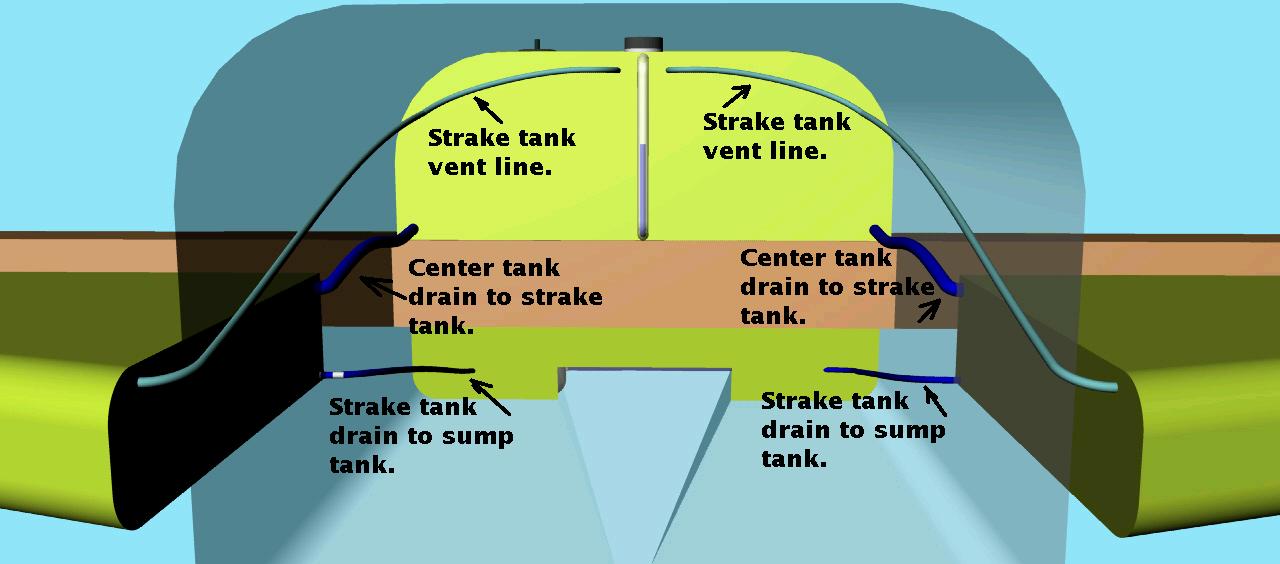
These are the 3D's for the third scenario.
By far the simplest system so far. Does away with the transfer
pumps. All return fuel goes to the 4' high aluminum sump tank which
will help to cool it.
--
Paul Lamar ...No rotor no motor.
The Rotary Engine NewsLetter. Powered by Linux.
ACRE NL web site.
http://www.rotaryeng.net
Youtube key word UTUBPLEASE
Copyright 1998-2008 All world wide rights reserved.