>>> Wouldn't it be wonderful if everybody developing an engine for use
>>> in aircraft could afford a dyno. It would be a lot safer if people
>>> tested their intended engine for horsepower on the ground instead of
>>> during the first flight. It would also verify or discredit some of the
>>> claims made by vendors selling auto engines for aircraft use.
>>> All too frequently they claim xxx HP at 6500 RPM and then install
>>> a 1.4:1 PSRU.
>>>
>>>
http://www.youtube.com/watch?v=sImSPvPglbI
>>>
>>> The History Channel had a well done video segment on HP so
>>> I incorporated some of that. They asked a bunch of people; "What
>>> is HP?" and few could answer. It is amazing how many people
>>> still do not understand HP.
>>>
>>> There are good pictures of Ken Welters rotary powered Coot and
>>> Power Sports rotary engine prop dyno.
>>>
>>>
>>> Please give it the highest rating as that encourages other people
to view
>>> the video. The more rotary powered cars out there the better. This
>>> insures
>>> a future
>>> supply of the rotary engines, that we all know and love, for use in our
>>> aircraft.
>>> --
>>> Paul Lamar ...No rotor no motor.
Paul, your suggestion regarding dyno testing rotary aircraft engines
with reduction gear installed would be a major advance for flight safety.
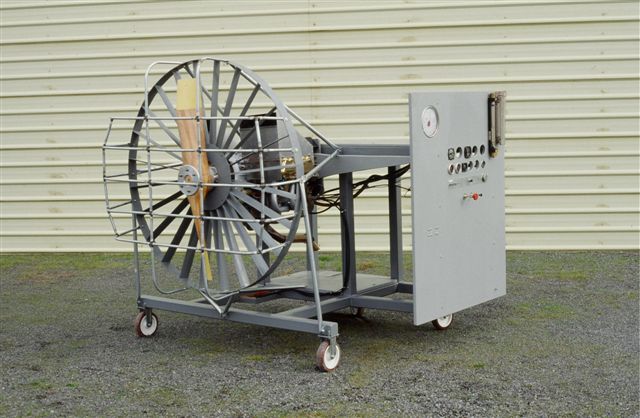
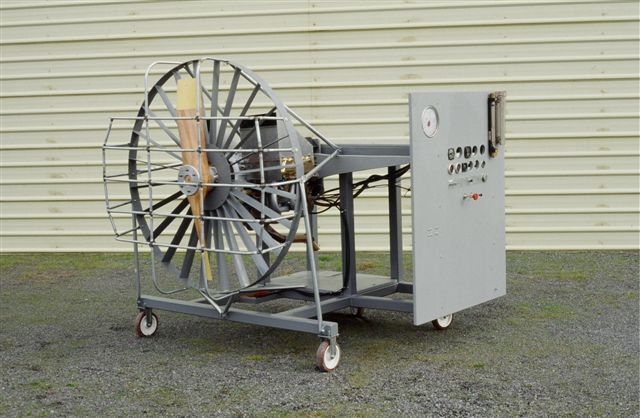
This is the dyno we built in 1990 to test both rotary and Lycoming
engines. Phillip Groelz and I earlier discussed providing it for a
free/cost only testing service when people have fully assembled their
rotary engines. Would you be interested in being the dyno master if we
did this so there would be a good consolidated data base regarding
component development, service issues, sound, and performance?
You may have seen the dyno when you were at the shop years ago. It
is basic and simple, using a torque arm connected to a rotary scale.
Uses the same principle as your drawing. We later added a pre-oiling
feature prior to startup. We discovered quickly that a shock absorber
for the torque arm was required for Lycomings due to the violent shaking
on startup/shutdown. For rotary engine testing, heat exchangers were
installed along the back on top in the prop blast.
The dyno instrumentation is old school so that would take two guys to do
power runs....one to run it and the other to log the numbers during
runs. Be good to have modern data acquisition if possible
cost-wise. That area is your expertise. Phillip talked to Rob Hickman,
the owner/designer of Advance Flight Systems who lives next door and
would work with us. His system records the data. We talked to Rob
earlier about doing one for the rotary RV-3 being built and considering
using it on the dyno to gather data. But if we were doing a lot of
engines we would want to have something dedicated to the dyno.
One of the major design considerations would be noise containment
provisions because the shop/hangar is at an airpark. An advantage is
that guys could fly in. We are about 7 miles from Van's Aircraft at Aurora.
If we did this, seems as though we would want to use a variant of your
S-beam mounts to take just all 2 rotor engines. Would take a separate
mount for three rotor engines to put test club in proper location in shroud.
---------------------------------------------------------------------------
Related background:
During the years we worked on the prototype rotary aircraft engines
using this dyno, it was stunning the number of things that broke during
testing before the engine ever got into flight tests. We learned a lot
about what would crack or break--exhaust pipes and mufflers, accessory
mounting brackets , throttle shafts, oiling issues, ,engine mount
tubes,drive belt harmonics and on and on. Granted the issues we faced
were greater because these early prototypes engines used many
original components and combinations.
Prior to constructing this dyno we ran the first Superlight rotary
aircraft engine in 1988 on the shop water brake dyno used for race car
and boat engines. Not good for the geared rotary engine because
without the propeller it did not provide the complete torsional
equation. Raised all kinds of hell with breaking input shafts,
reduction gear and pieces inside and outside the engine. The test
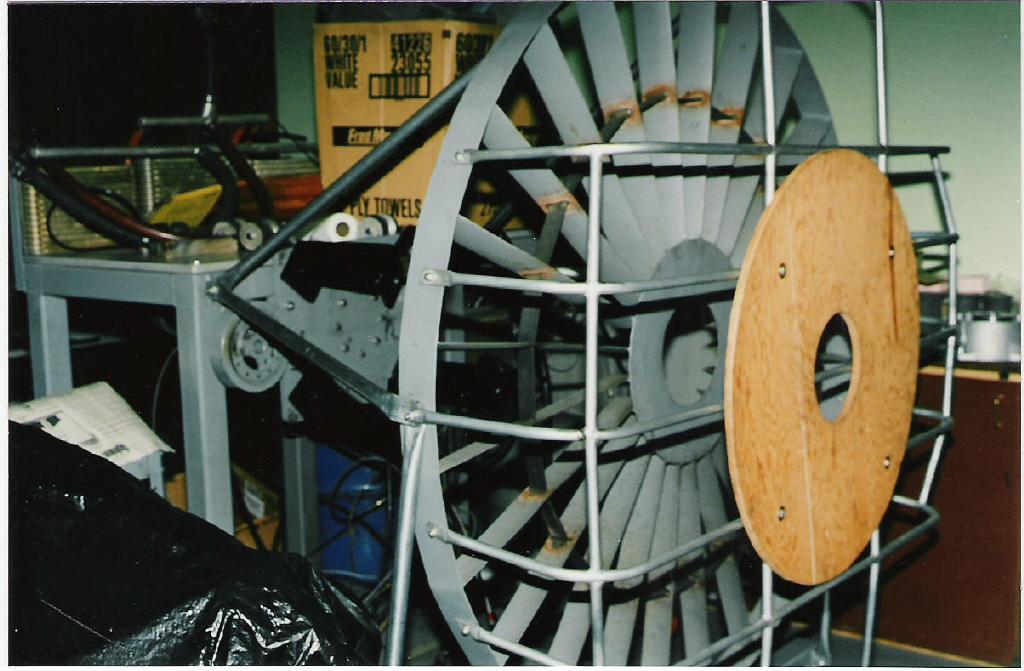
club shown here is the one we use for both Lycomings and rotary
engines. It started life as our first rotary engine propeller---84"
dia. and and high pitch. During early flight tests we lost a
stationary and internal rotor gear, and subsequently delaminated a tip
following the instant engine seizure. Cut down it maked a great test club.
-----------------------------------------------------------------------------
Steve Beckham
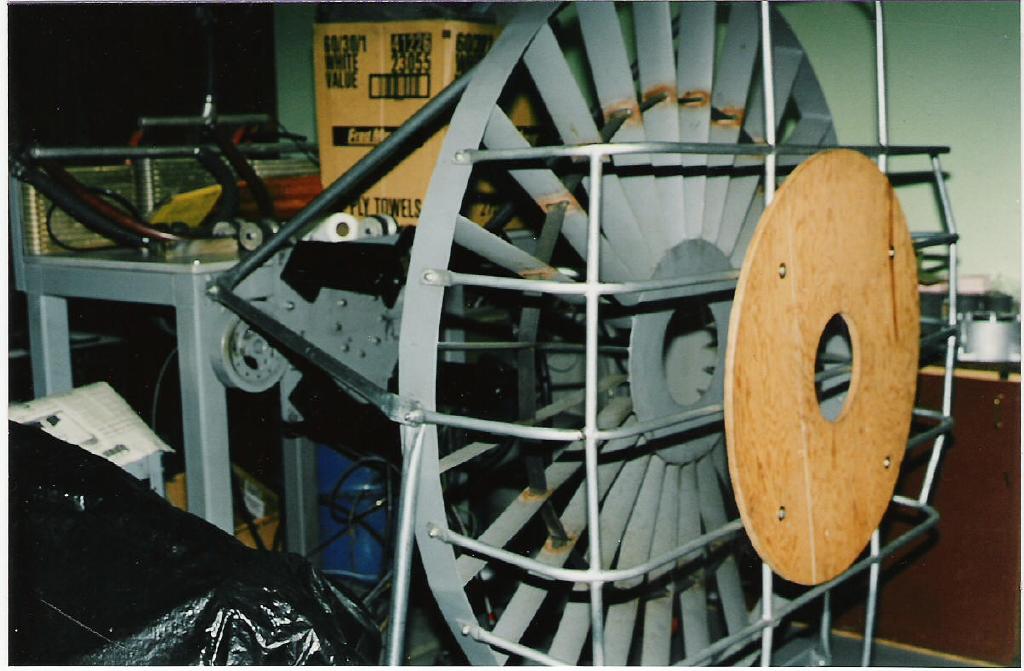
Very interesting Steve. Thanks for sending that picture and background info.
Yes I think it is the same one in the second picture here that I took in your shop.
Your dyno inspired me to build mine.
Did you ever try it back to back with and without the stator?
Here at Santa Paula the sound is not an issue as we can tow our prop dyno
mounted on a trailer out to the far reaches of the field and it makes no more noise than
a plane taking off. Also as long as you stay out of the plain of the prop a safety
shroud is unnecessary. No more dangerous than running up an aircraft engine before takeoff.
You guys were the pioneers. Now ten years later we have dozens of aircraft flying with
many many hours using either the Ross gear box or Tracy's gear box with no problems.
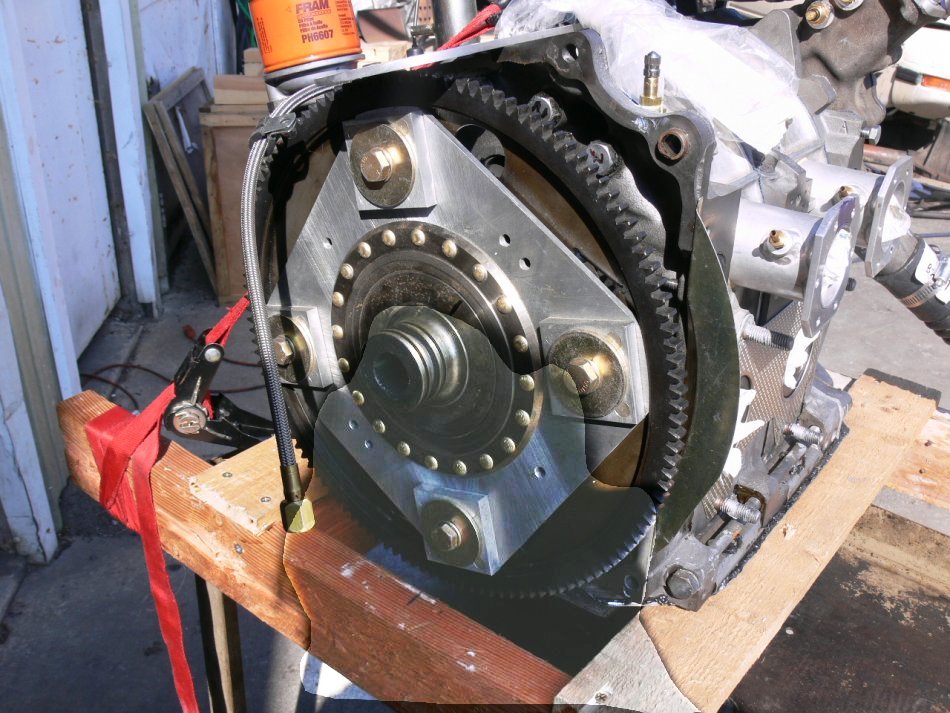
Some are using the latest six pinion Ford based auto tranny plantaries on three rotor engines.
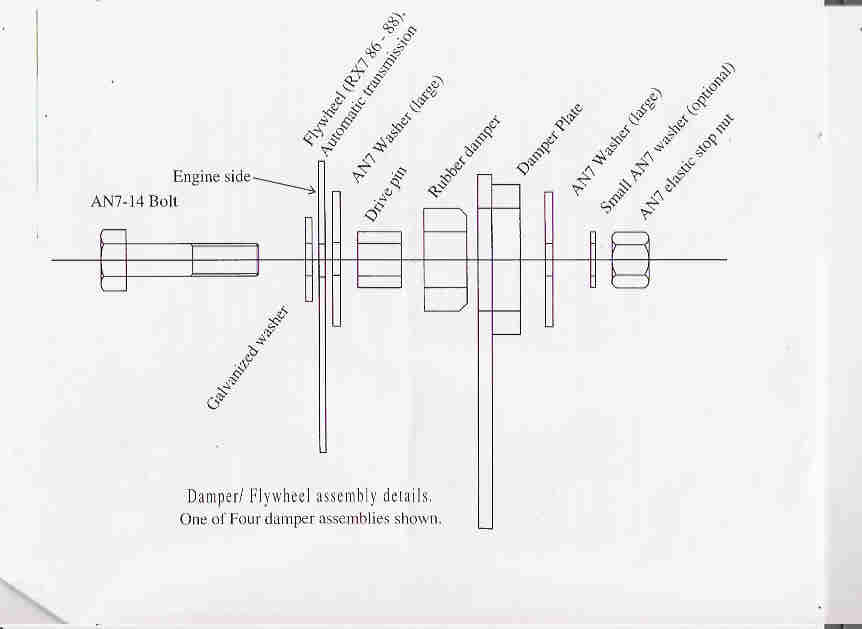
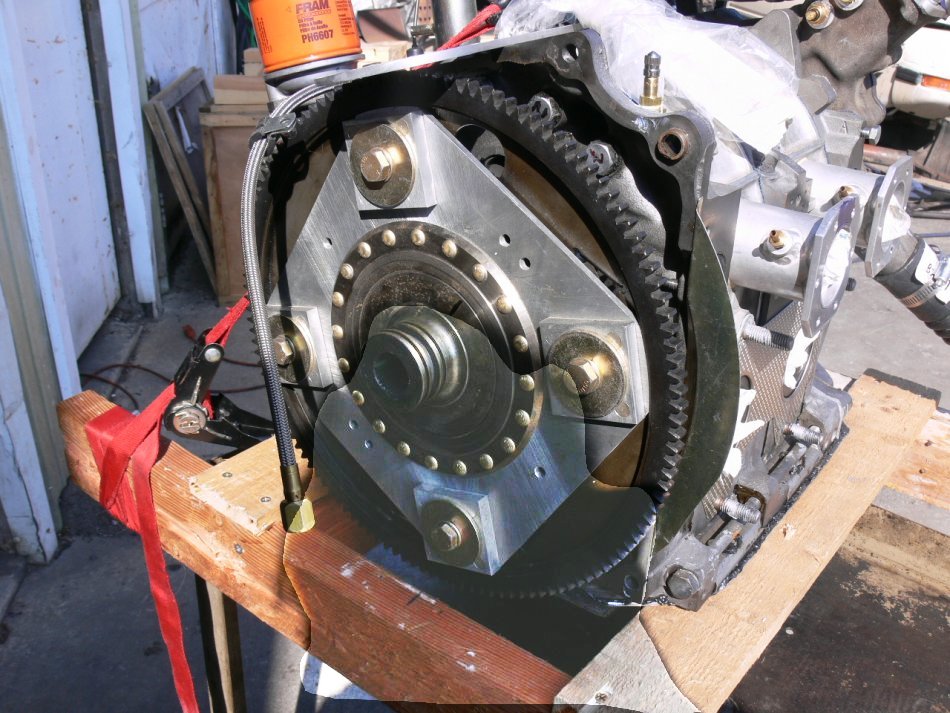
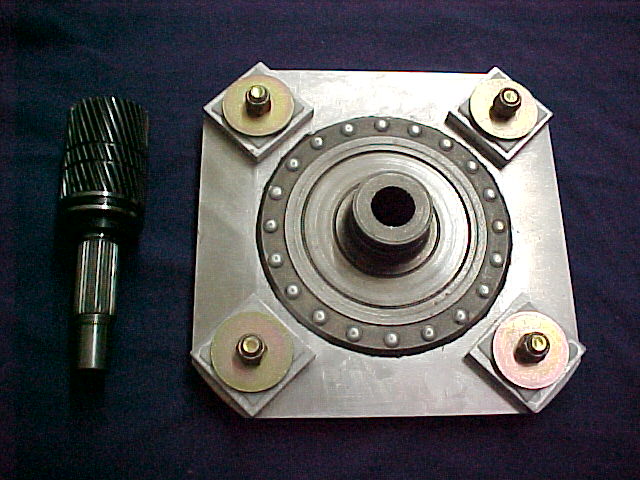
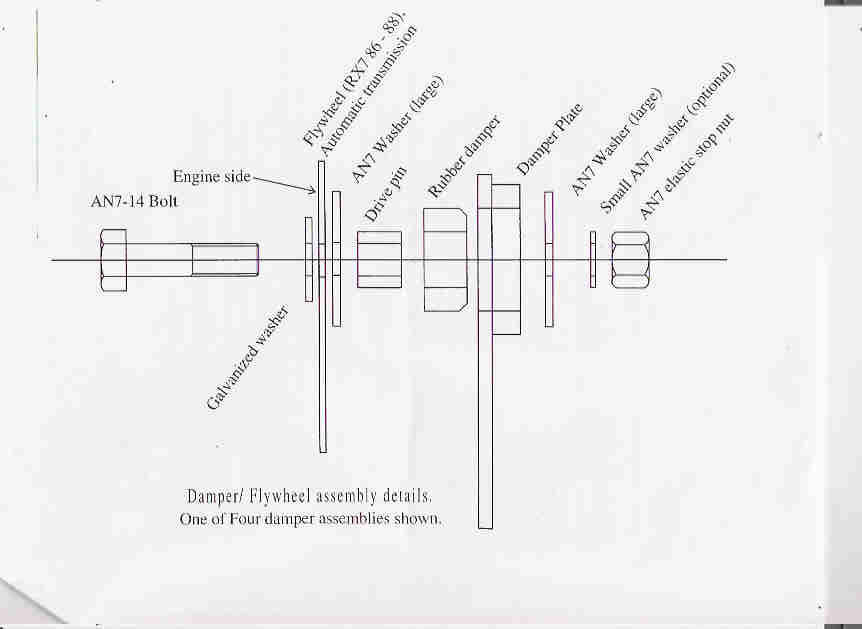
The secret is the torque pulse isolators.
Paul Lamar ...No rotor no motor.
The Rotary Engine NewsLetter. Powered by Linux.
ACRE NL web site.
http://www.rotaryeng.net
Youtube key word UTUBPLEASE
Copyright 1998-2008 All world wide rights reserved.