To all:
Sorry, Paul, and sorry to you, gentlemen, for taking the thread off
topic. Sending it off topic was not my intention: I was trying to think
out of the box for a better solution to Mr. Leonard's turbo charger problem.
I thought a combustion turbine, a structure that must deal with extreme
heat and pressure, could also deal with the extreme heat and pressure of
a turbocharger turbine. Ã? I thought that, if the kind of turbine and
temperatures were Mr. Leonard's problems, one stone (the new kind of
turbine the Purdue researchers are making) would kill both birds (the
temperature and turbine efficiency problems). Sending one stone after
two birds, however, has hurled FOD in the subject thread intake! :-)
Seriously, the wave rotor combustion turbine _is_ experimental and will
take time to develop. Ã? It cannot solve the immediate problem.
My apologies,
Les Nordman
Naw! It is not all that bad Les :) Thanks for thinking about it.
BTW I don't understand that thing. It looks like a rotating combustion
chamber and not a turbine. One of the diagrams shows it installed
ahead of a turbine. Maybe it is a device to keep the kinetic energy up
while cooling off the gases. I did not spend a lot of time studying it.
------------------------------------------------------------------------
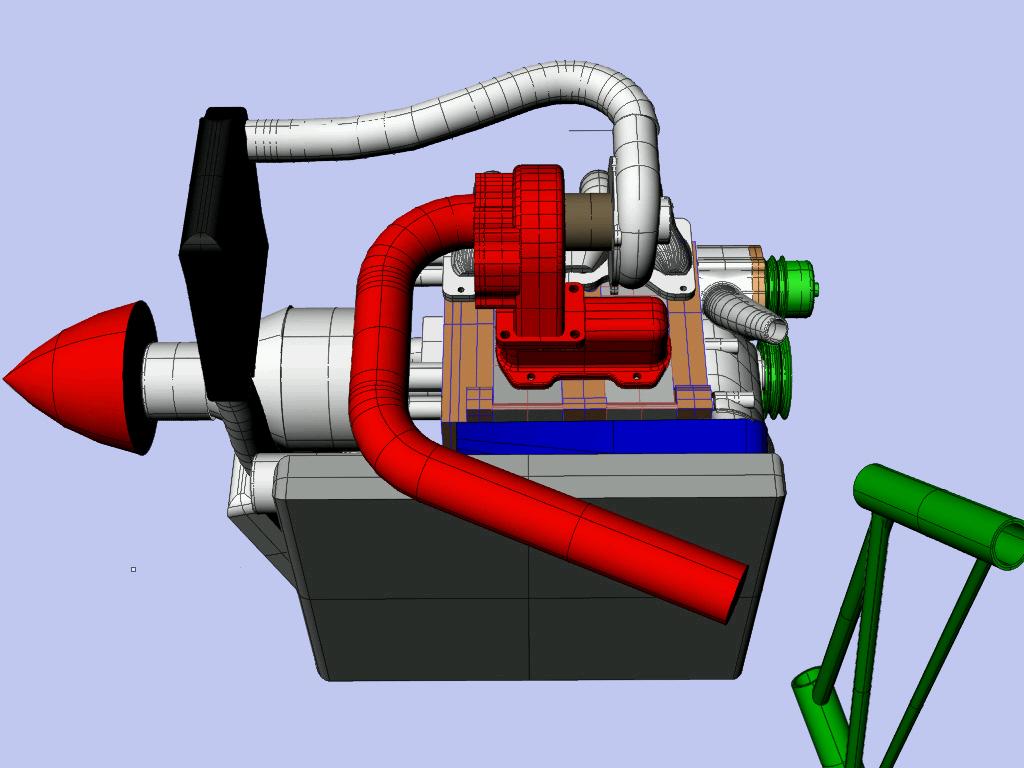
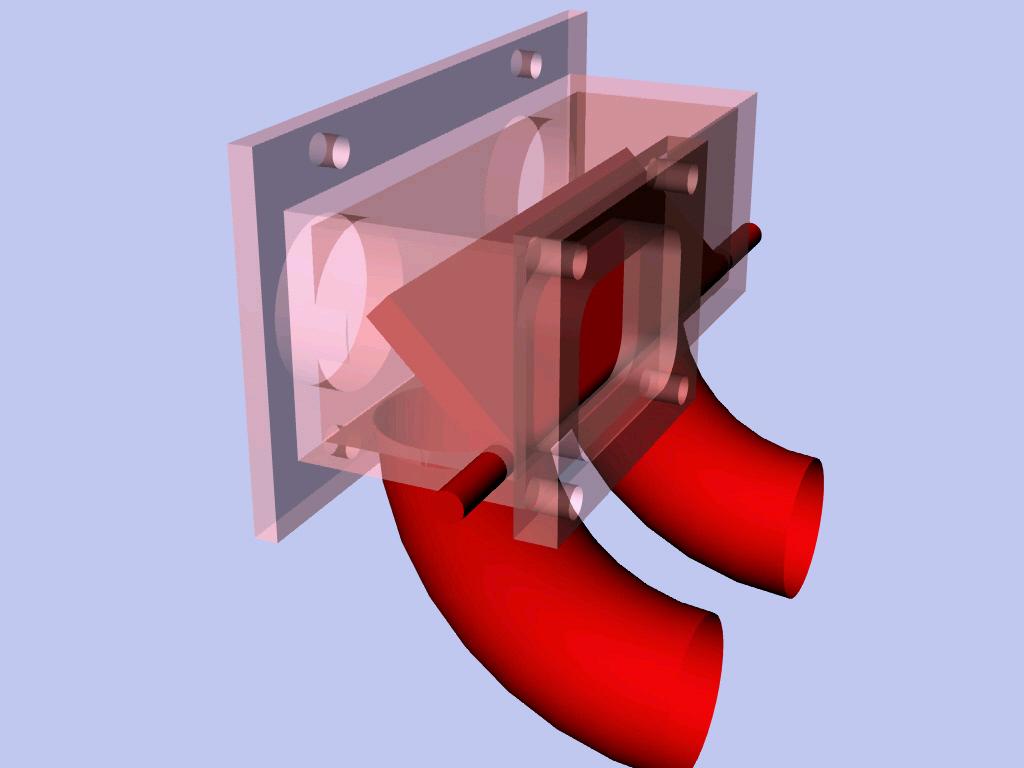
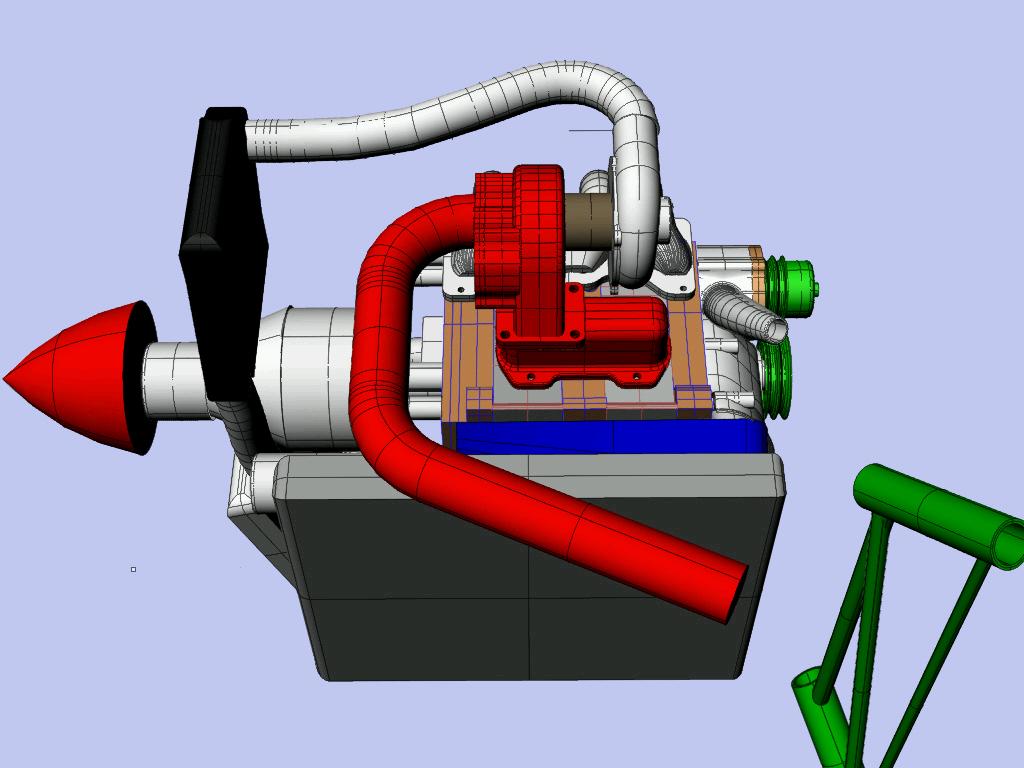
This triggered an idea in my brain. Why not use an exhaust
ejector to add air mass and kinetic energy to the exhaust gas and cool it
off at the same time? This might be very valuable with a turbo compound
set up. The ejector could be curved for packaging reasons. Would also work
for turbo charging of course. The cooling air supply would be connected
to a ram air scoop behind the prop to get an unlimited supply of cool air.
This could be a very significant break through in turbo compounding the
rotary.
Patent pending :)
Paul Lamar ...No rotor no motor.
Paul,
The back pressure on the engine side of a turbo is great enough that this
would probably just spit exhaust out the air inlet. Now if the impeller on
the turbo is sized way more than needed, like 2 or 3 times, you could bleed
some of the compressed air as the air source. Food for thought...
Larry
Well perhaps but I think it is still worth a try without the bleed
air from the compressor side but that too is worth a try.
--
Paul Lamar ...No rotor no motor.
I've always been told that the drive pressure on the turbine equals the
boost pressure on the compressor wheel. Otherwise the shaft would be
accelerating or decelerating.
--drury
There are a zillion other factors. The boost pressure is always above
the turbine pressure. In most cases the boost pressure is up to ten psi
higher.
Hugh MacInnes "Turbochargers." Page 11. This is the bible of turbochargers.
What is true is the torque from the turbine equals the torque required
by the compressor for constant speed. In that case the HP is also equal. If
the current max HP
of the turbine exceeds the HP required of the compressor the turbocharger
will speed
up. That is our main problem. We don't want that in an aircraft turbocharger
running
at cruise RPM.
--
Paul Lamar ...No rotor no motor.
Just to be sure I understand what we're talking about.. We're going
to put (pump) ambient air into the inlet of the exhaust side of the
turbocharger in an effort to cool the stream.
I wonder whether at rich mixtures the addition of relatively
oxygen-rich air will cause the unburned hydrocarbons in the exhaust
stream to continue to burn. Like a smog pump on an 70's/80's car.
Canceling some of the cooling effect. Should make it run cleaner.
http://en.wikipedia.org/wiki/Air_injection_reactor
"Secondary air injection (commonly air injection, colloquially smog
pump, trademark Air Injection Reactor) is an automobile emissions
control strategy introduced in 1966, wherein fresh air is injected
into the exhaust stream. The exact mechanism by which exhaust
emissions are controlled depends on the method of injection and the
point at which air enters the exhaust system. The first systems
injected air very close to the engine, either in the cylinder head's
exhaust ports or in the exhaust manifold. These systems provided
oxygen to oxidize (burn) unburned and partially-burned fuel in the
exhaust before its ejection from the tailpipe. There was significant
such unburned and partially-burned fuel in the exhaust of 1960s and
early 1970s vehicles, and so secondary air injection significantly
reduced tailpipe emissions. However, the extra heat of recombustion,
particularly with an excessively rich exhaust caused by misfiring or a
maladjusted carburetor, tended to damage exhaust valves and could even
be seen to cause the exhaust manifold to incandesce."
We're also talking about a net increase in mass flow (if not volume)
through the turbine?
Not poo-poo'ing, just pondering what's going to happen.
Maybe an exhaust aftercooler before sending the stream to the
turbocharger. But the heated air doesn't go to the turbo - just
overboard.
Matt-
Maybe it is too complicated and hard to package. The back pressure might
be a show stopper. The technical risk factor is high.
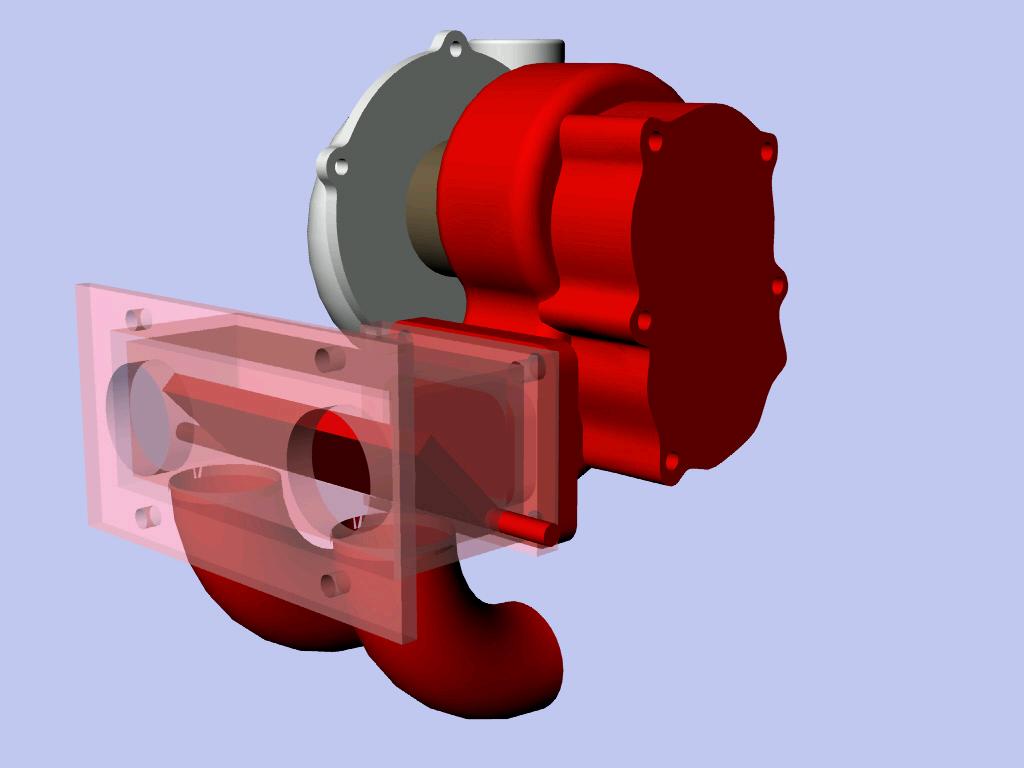
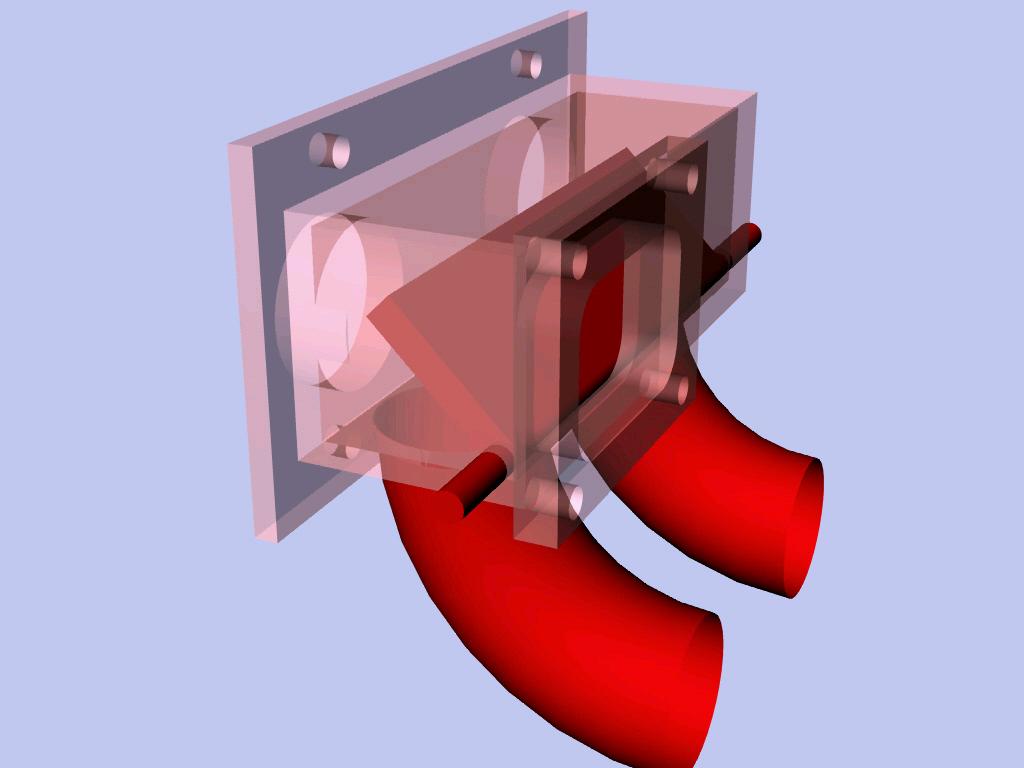
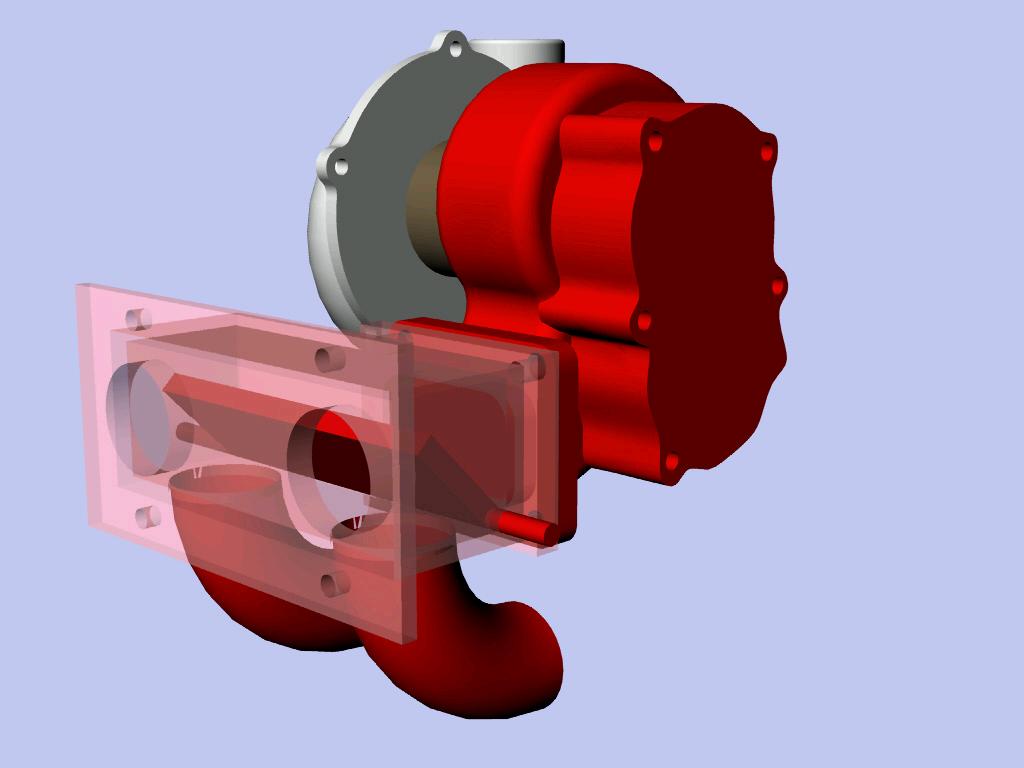
Since we now have a source for turbo tach perhaps the diverter
valve/manifold is the better way and cheaper way to go. I am working on a control
for it. Probably going to use a small planetary gear box and and
rotating shaft back to a cockpit knob for a manual control.
Paul Lamar ...No rotor no motor.
The Rotary Engine NewsLetter. Powered by Linux.
ACRE NL web site.
http://www.rotaryeng.net
Youtube key word UTUBPLEASE
Copyright 1998-2008 All world wide rights reserved.