>
> If the problem is that the temperatures of the exhaust are too high for
> the turbocharger blades to handle, can the wave rotor combustion turbine
> (see article below) help the situation?
>
>
http://www.avweb.com/eletter/archives/avflash/1147-full.html#198158
> New Turbine Cleaner, More Efficient
>
http://www.grc.nasa.gov/WWW/cdtb/projects/waverotor/index.html
>
http://www.grc.nasa.gov/WWW/cdtb/projects/waverotor/wavediv.html
>
http://www.grc.nasa.gov/WWW/cdtb/projects/waverotor/4port.html
>
> The gas turbine engine is due for an overhaul and Engineers at Purdue
> University have reached the testing stage of the wave rotor combustion
> turbine, a new generation of gas turbine engines. They say the engine is
> about 15-20% more efficient and could cut carbon dioxide emissions in
> aircraft by 20 percent or more over traditional gas turbine engines now
> in use. According to NASA, the wave rotor combustion turbine derives its
> efficiency from a rotating core that is exposed to hot and cold flow
> which keeps its mean temperature considerably lower than the peak cycle
> temperature. Leading the project is Razi Nalim, P.E., Ph.D., associate
> professor of Mechanical Engineering at Indiana University-Purdue
> University Indianapolis (IUPUI). ?Our goal is to design an alternative
> to the gas turbine application that is just as reliable, but cleaner,
> more efficient, and more powerful," said Nalim. "It will not only help
> reduce fossil fuel consumption and greenhouse gas emissions in
> traditional applications like airplanes and power generation, but a
> lighter, more efficient engine may allow Boeing to design an aerospace
> plane to carry us all the way to outer space and return safely to
> earth.? To further assist the development of this new technology, IUPUI
> has recieved a $200,000 award from the Rolls Royce Corporation to
> continue the design and testing process. Dr. Nalim and his team expect
> to be operational by the end of the year with a test rig to help prove
> the benefit of the concept. "Jet engine technology is pretty mature,"
> said Nalim. "To make a really big improvement you need to make a pretty
> significant change."
>
> Leslie Nordman
>
> Kind of off topic Les. Not something we can do to solve the
> immediate turbo charger problem.
>
> Paul Lamar
To all:
Sorry, Paul, and sorry to you, gentlemen, for taking the thread off
topic. Sending it off topic was not my intention: I was trying to think
out of the box for a better solution to Mr. Leonard's turbo charger problem.
I thought a combustion turbine, a structure that must deal with extreme
heat and pressure, could also deal with the extreme heat and pressure of
a turbocharger turbine. I thought that, if the kind of turbine and
temperatures were Mr. Leonard's problems, one stone (the new kind of
turbine the Purdue researchers are making) would kill both birds (the
temperature and turbine efficiency problems). Sending one stone after
two birds, however, has hurled FOD in the subject thread intake! :-)
Seriously, the wave rotor combustion turbine
_is_ experimental and will
take time to develop. It cannot solve the immediate problem.
My apologies,
Les Nordman
Naw! It is not all that bad Les :) Thanks for thinking about it.
BTW I don't understand that thing. It looks like a rotating combustion
chamber and not a turbine. One of the diagrams shows it installed
ahead of a turbine. Maybe it is a device to keep the kinetic energy up
while cooling off the gases. I did not spend a lot of time studying it.
------------------------------------------------------------------------
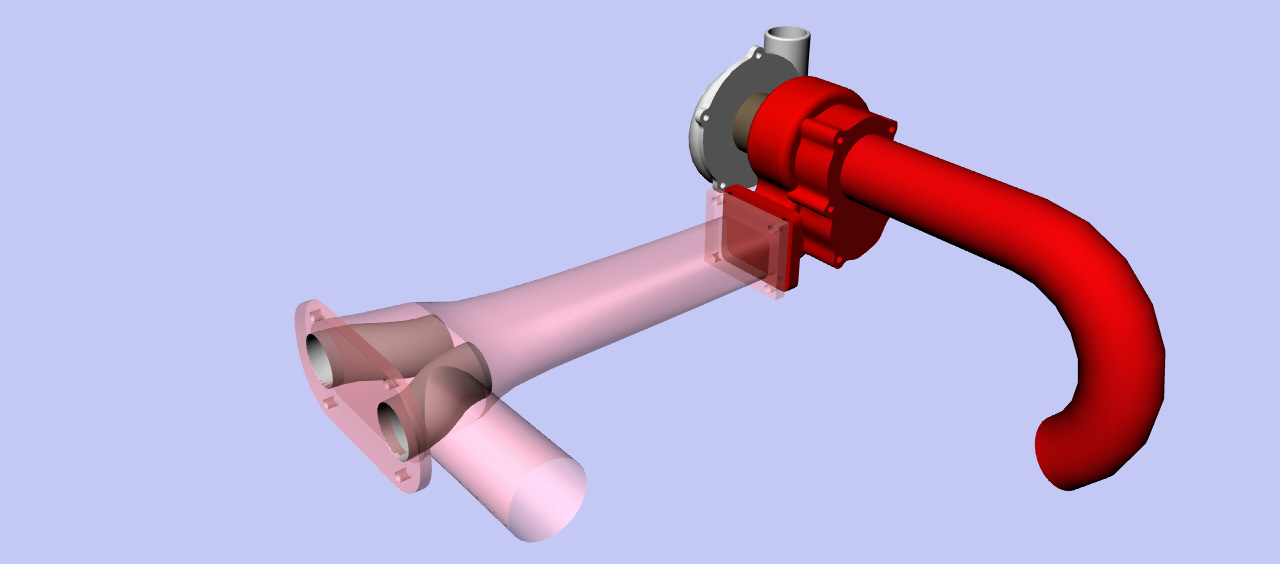
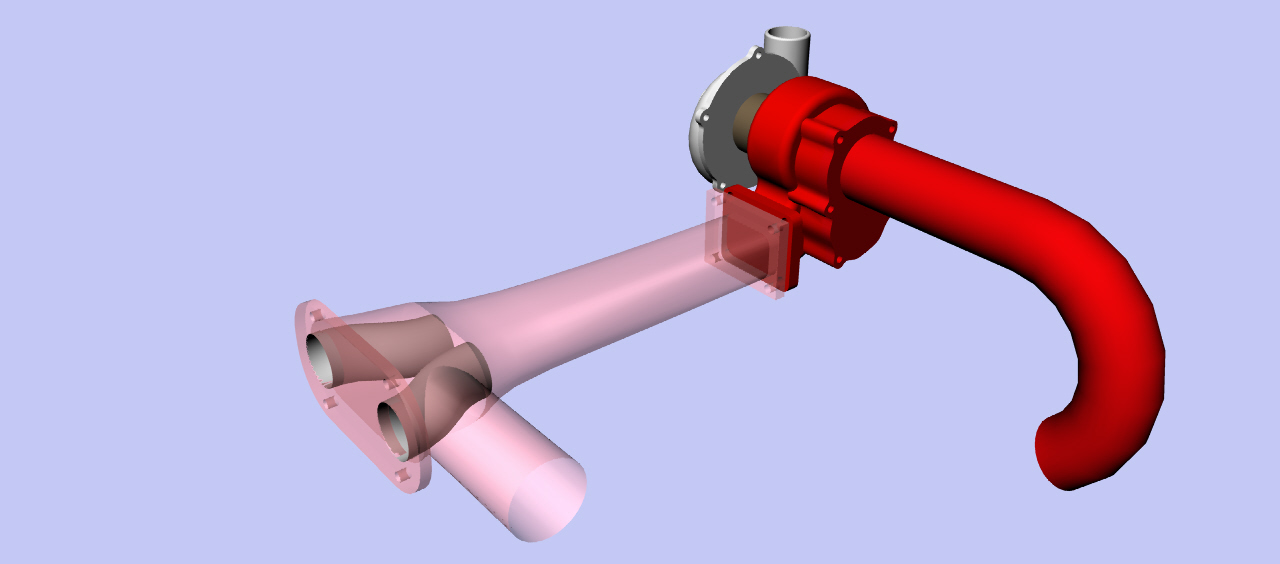
This triggered an idea in my brain. Why not use an exhaust
ejector to add air mass and kinetic energy to the exhaust gas and cool it
off at the same time? This might be very valuable with a turbo compound
set up. The ejector could be curved for packaging reasons. Would also work
for turbo charging of course. The cooling air supply would be connected
to a ram air scoop behind the prop to get an unlimited supply of cool air.
This could be a very significant break through in turbo compounding the
rotary.
Patent pending :)
Paul Lamar ...No rotor no motor.
The Rotary Engine NewsLetter. Powered by Linux.
ACRE NL web site.
http://www.rotaryeng.net
Youtube key word UTUBPLEASE
Copyright 1998-2008 All world wide rights reserved.