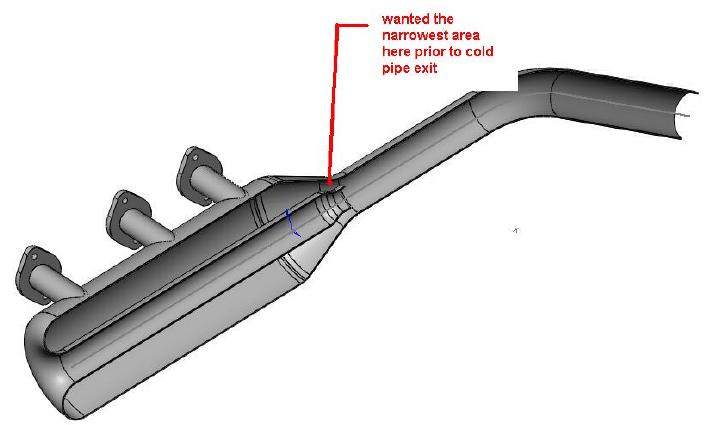
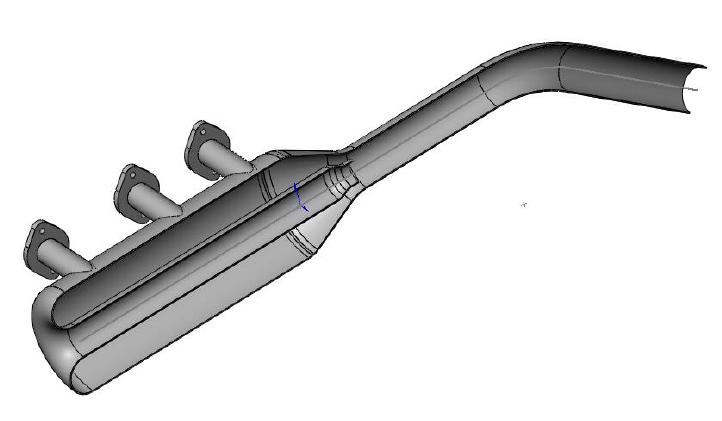
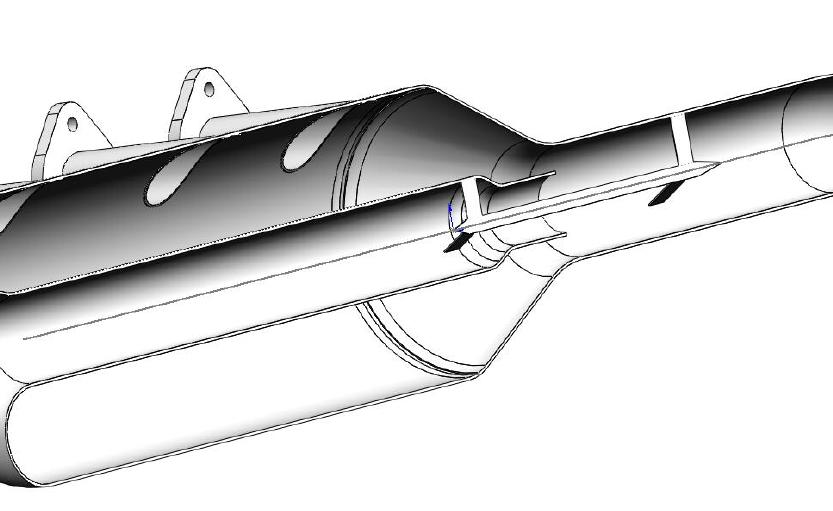
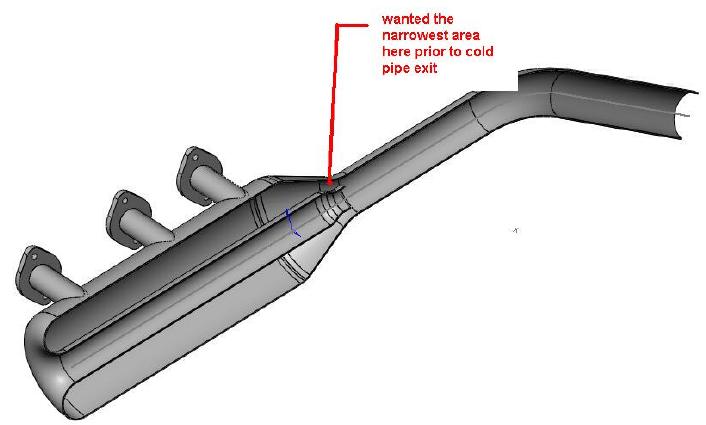
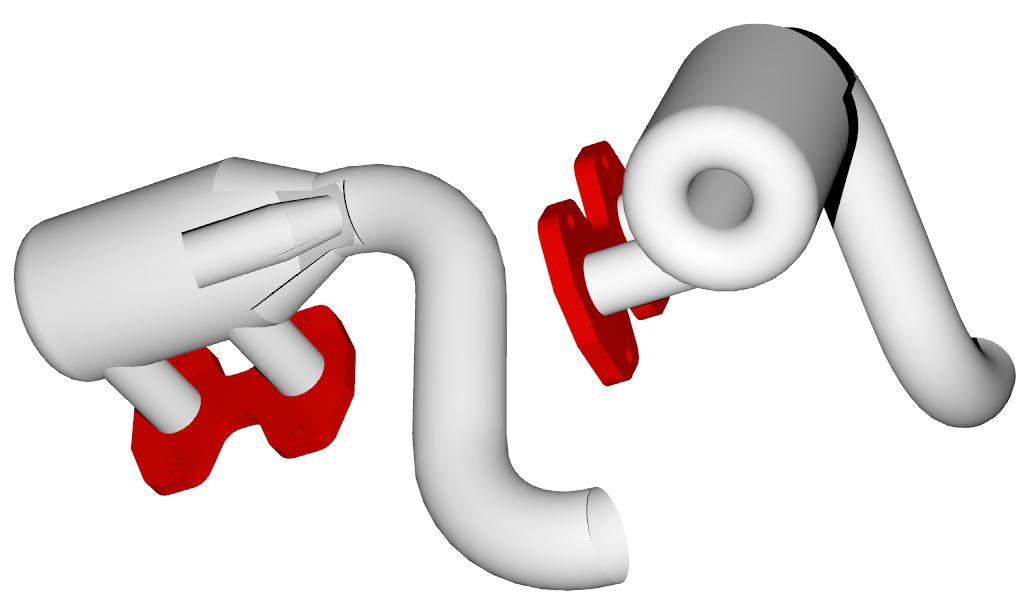
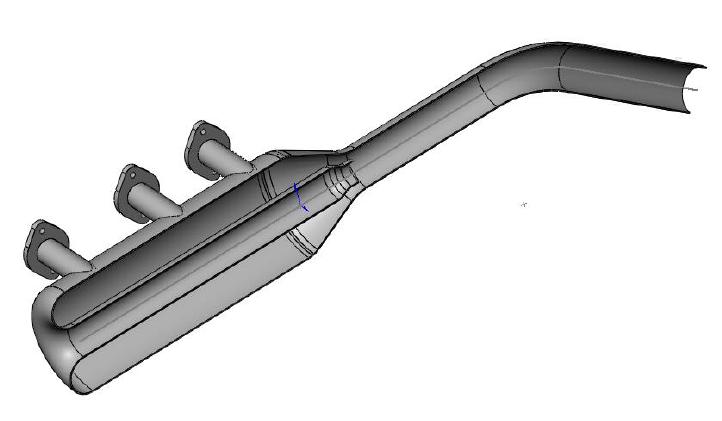
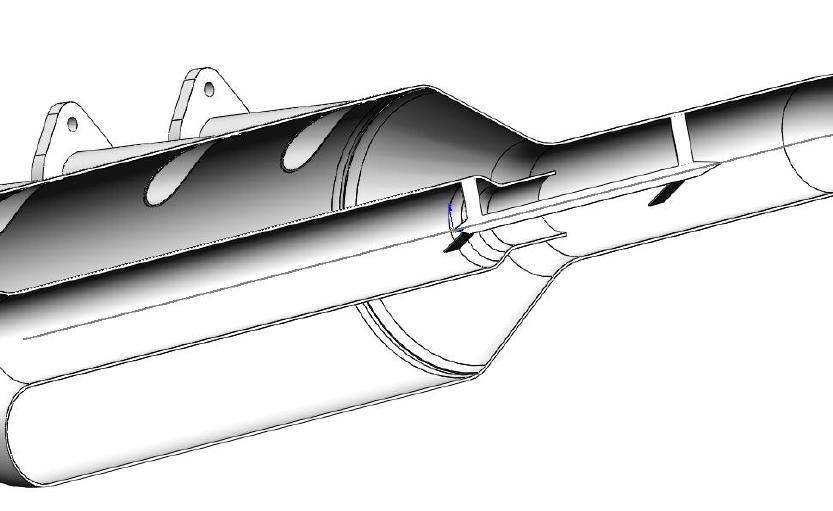
This triggered an idea in my brain. Why not use an exhaust
ejector to add air mass and kinetic energy to the exhaust gas and
cool it
off at the same time? This might be very valuable with a turbo
compound
set up. The ejector could be curved for packaging reasons. Would
also work
for turbo charging of course. The cooling air supply would be
connected
to a ram air scoop behind the prop to get an unlimited supply of
cool air.
This could be a very significant break through in turbo compounding
the
rotary.
<turbo-exhaust-ejector.jpg>
Patent pending :)
Paul Lamar
Paul -
This is an evolution of the muffler that used an ejector to suck cool
air down the middle (was it called a VAM muffler?) We would have the
same issues as the VAM with exhaust coming out backwards through the
"cooling tube", only now it would be significantly exacerbated by
turbine back pressure.
I'm not knocking the idea, but it needs to be thought through to avoid
killing someone. Here, let me just start off the design challenges (I
am sure there are many more):
1) Exhaust would back flow at low power/RPM. (Just like the VAM
Muffler.) It also would tend to back flow until the turbine spools up
upon throttle increases. This must be handled by directing the
"ejector fresh air intake" appropriately, like out the bottom of the
cowl. Exhaust back flow should not poison the crew. Exhaust back
flow should not overheat unprotected components.
2) Failures of the turbine will increase exhaust back flow - think of
Dave Leonard's recent frozen/stuck turbo.
3) Any exhaust blockage (turbo failures, muffler failures, etc.) will
cause the "ejector fresh air intake" to become a secondary exhaust.
This is good and bad. GOOD for redundancy (Think of Mistral's recent
power loss.) BAD for the "new exhaust pipe" temperatures, stresses,
etc.
4) This would add a whole new variable to turbo tuning. Now the
ejector air mass flow needs to be factored in, along with its
(dynamic) pressures.
Personally, I love the idea of a turbo as a muffler. I think the
simplest solution lies in remotely mounting the turbo to allow gas
expansion and cooling to reduce TIT. By "remotely" I mean not
directly off the exhaust ports - maybe with an extra 12-24" of fat
exhaust pipe tucked under the cowl
Another thought I have entertained (at the expense of complexity) is
using one turbine per exhaust port - half the flow per turbo will
translate to lower RPMs.
That's it for me. Please re-attach your drawing for reference when re-
posting.
-Vince Orton
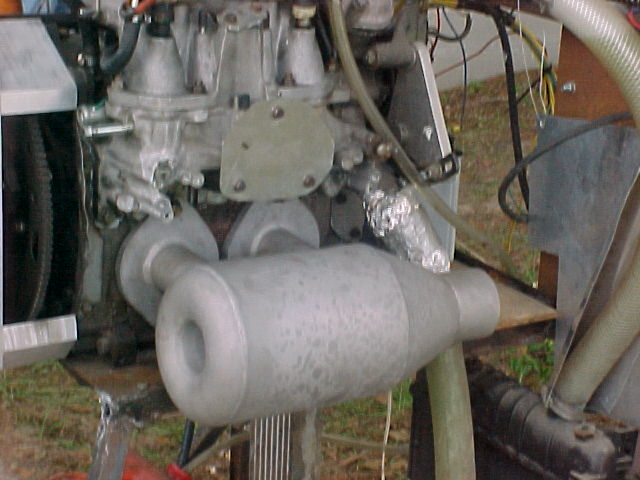
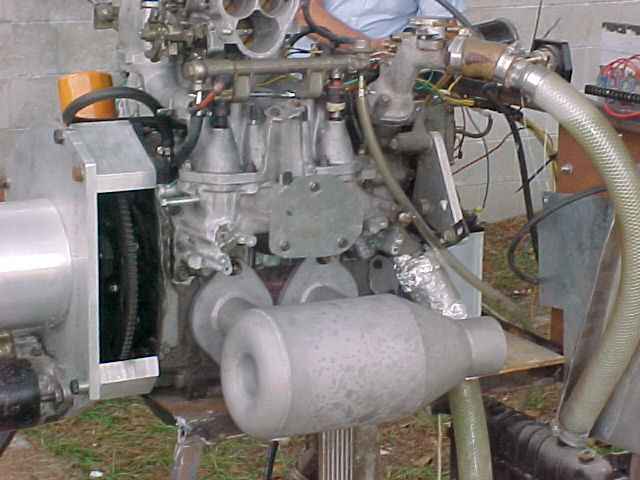
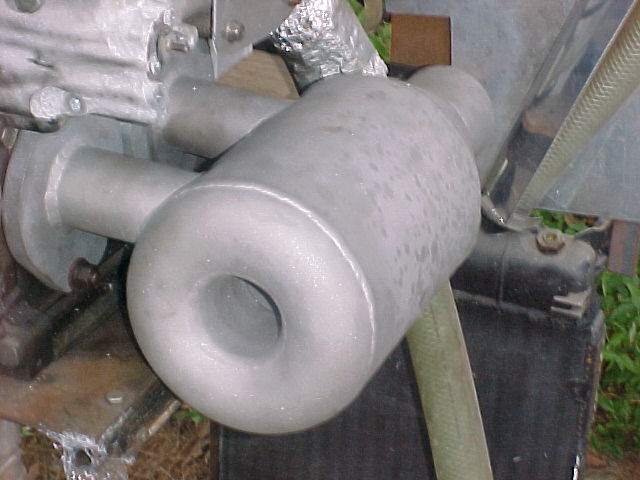
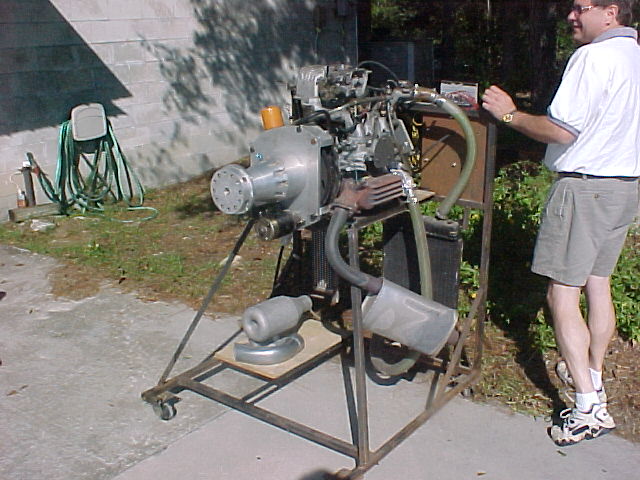
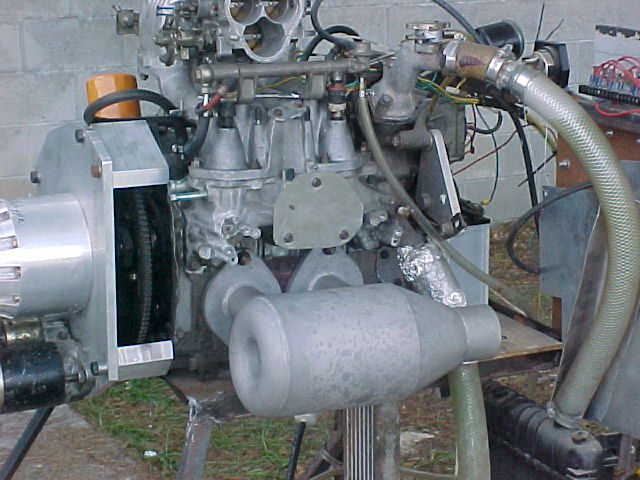
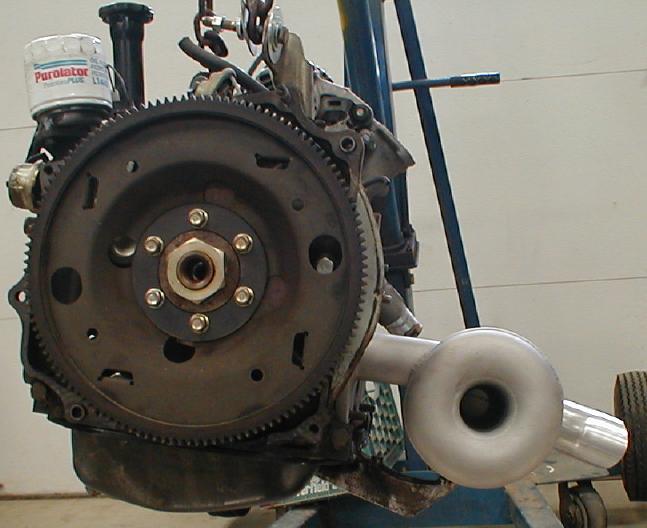
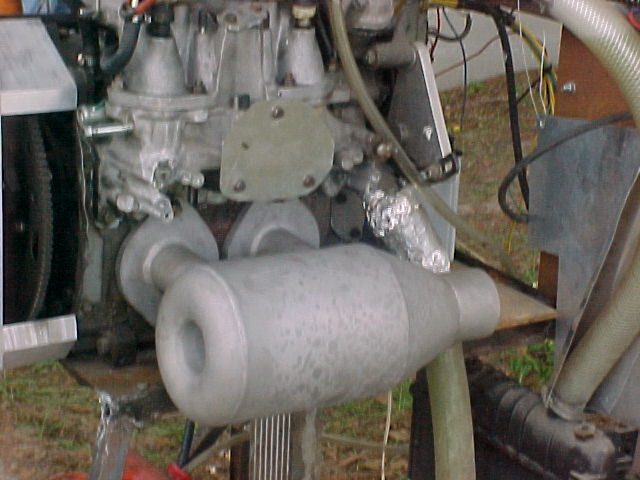
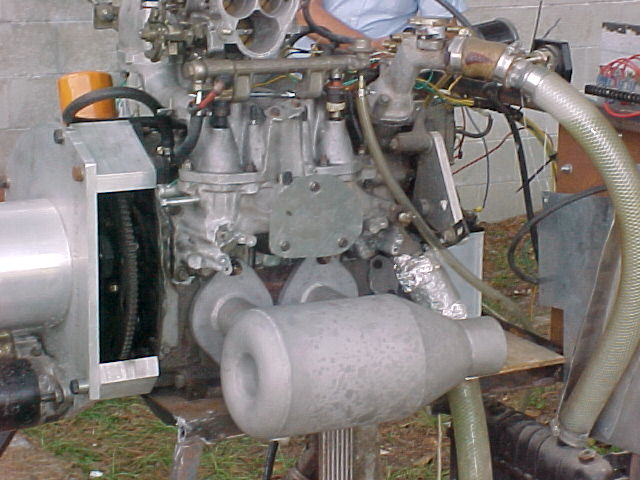
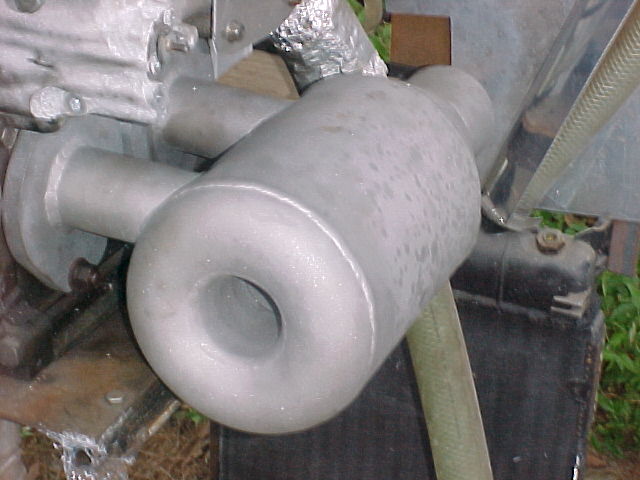
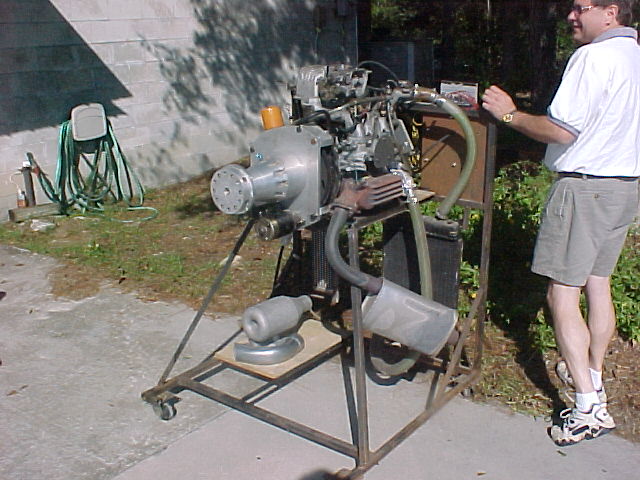
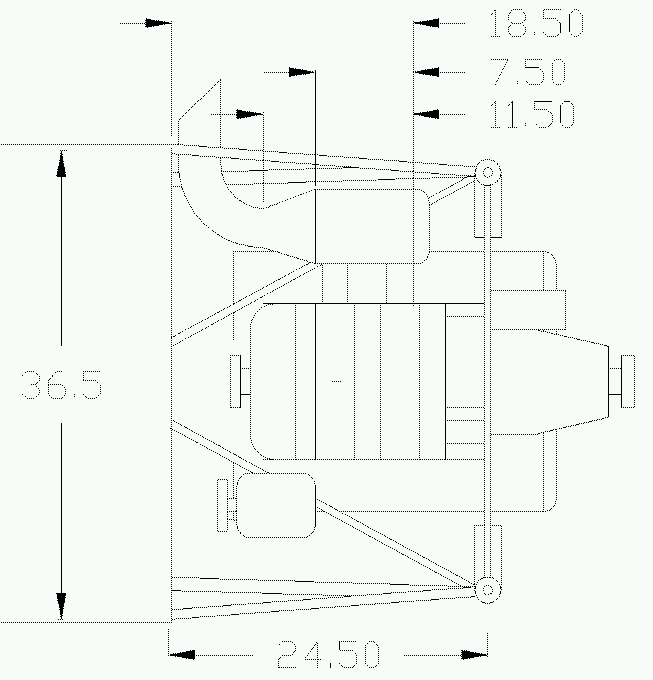
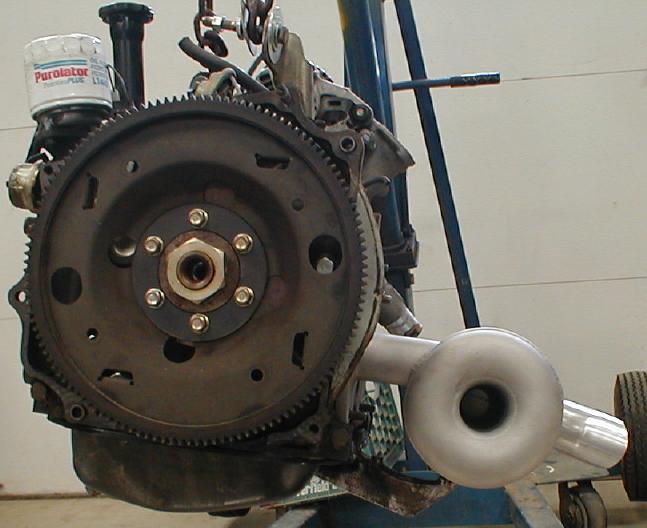
Well yes. The exhaust will come out if there is no prop turning
which happened with the VAM test in 2003. I was there and I was able to hold my
hand in front of the VAM air intake during engine idle. Here
are the pictures of the test. I also don't think the internal
exhaust ejector was optimized. The welder added his own creativity to
the job as welders are wont to do :)
"The cooling air supply would be connected to a ram air scoop behind
the prop to get an unlimited supply of cool air."
At the time of the test we did have a duct going forward to a ram air scoop
just behind the prop. We had no prop on the test engine. I think that will
do the trick to convince the exhaust to go out through the turbo charger
during static run ups instead of coming out the front. At speed you have
dynamic pressure forcing fresh air into the cooling scoop. This adds
to the air entraining effect of the ejector.
In the unlikely event of a total blockage of the exhaust there would be
a cowl on the airplane so any exhaust coming out scoop would have to reverse and
flow along the outside of the cowl and back towards the aft
end of the engine mixing with fresh air in the process. Of course
the engine would not stop unlike what happened to Mistral as you pointed out.
Yes the duct and scoop should be made of SS.
I don't see any real problems.
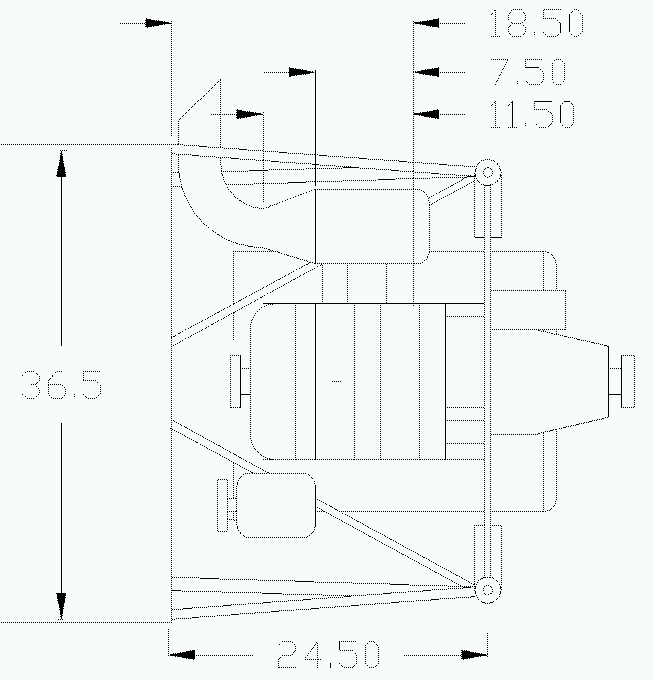
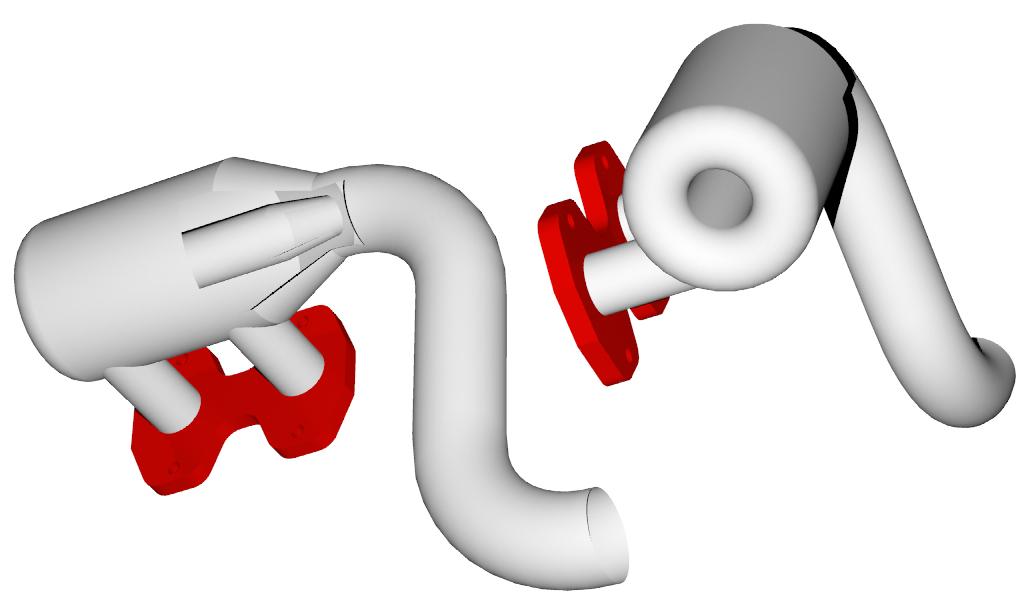
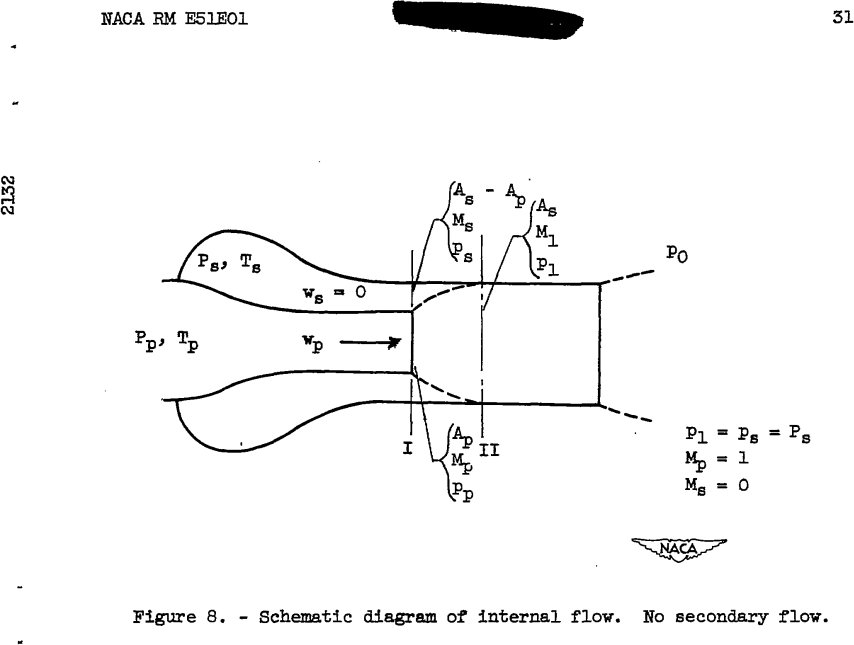
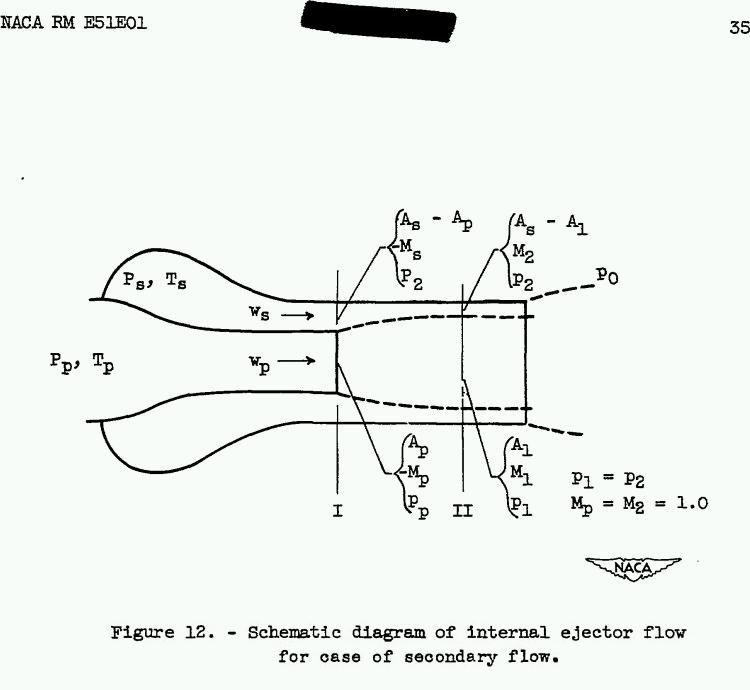
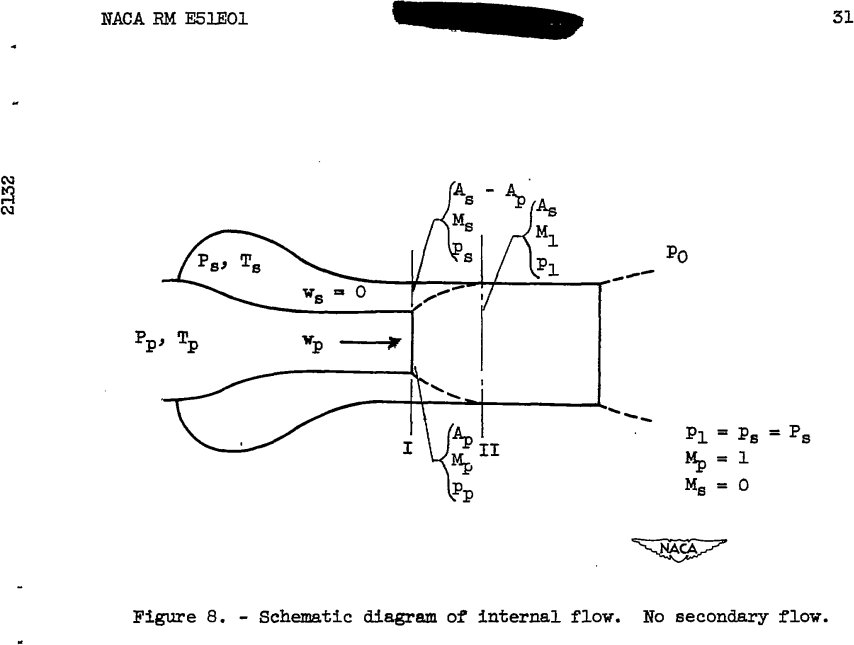
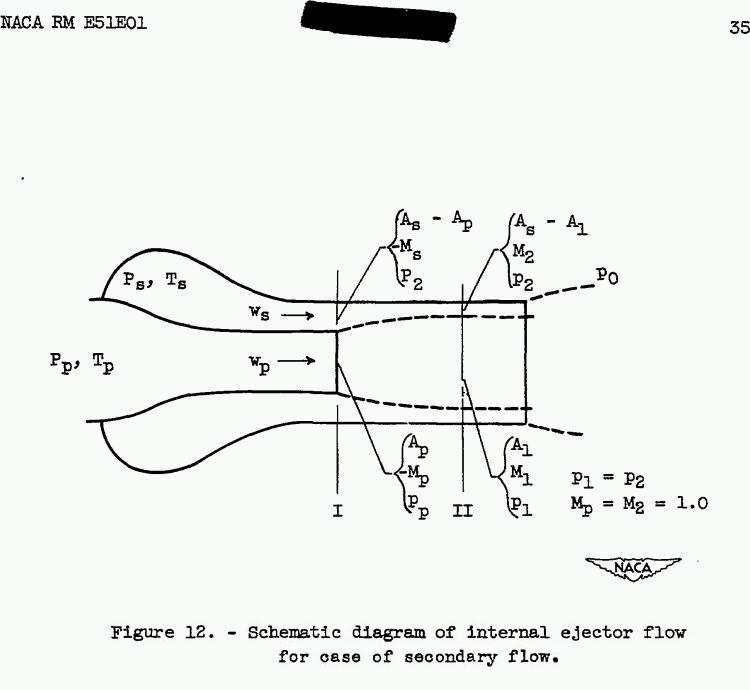
BTW this design was completely mathematically analyzed by NACA back in
May 1951 in report E51E01. Last 2 pictures.
Paul Lamar ...No rotor no motor.
The Rotary Engine NewsLetter. Powered by Linux.
ACRE NL web site.
http://www.rotaryeng.net
Youtube key word UTUBPLEASE
Copyright 1998-2008 All world wide rights reserved.