Aluminum rotors could increase the RPM and HP of the rotary by 150%.
RTI Helps Technology Transfer of NASA Aluminum Alloy to Improve Evinrude
Outboard Motors
RESEARCH TRIANGLE PARK, N.C. -- A long-standing partnership between RTI
International
and the National Aeronautics and Space Administration (NASA) has again
helped to bring
breakthrough NASA technology to market. A NASA invention that can make
outboard engines
quieter and cleaner, and that provides better fuel mileage and increased
durability,
has been adapted for commercial use by a major international corporation.
The Boats and Outboard Engines Division at Bombardier Recreational
Products (BRP) of
Sturtevant, Wis., has begun using NASA's patented high-strength aluminum
alloy for
pistons in its new EvinrudeŽ E-TEC? outboard engine line.
RTI International, working with NASA's Marshall Space Flight Center's
Technology
Transfer Department, played a key role in bringing BRP and NASA together
and in
brokering the agreement. The license agreement between BRP and NASA was
signed in July 2003.
The alloy, developed at NASA's Marshall Space Flight Center in Huntsville,
Ala.,
is used in a new piston design that reduces the so-called "slapping" sound
when
pistons slide up and down in the engine's cylinder. The alloy can greatly
improve
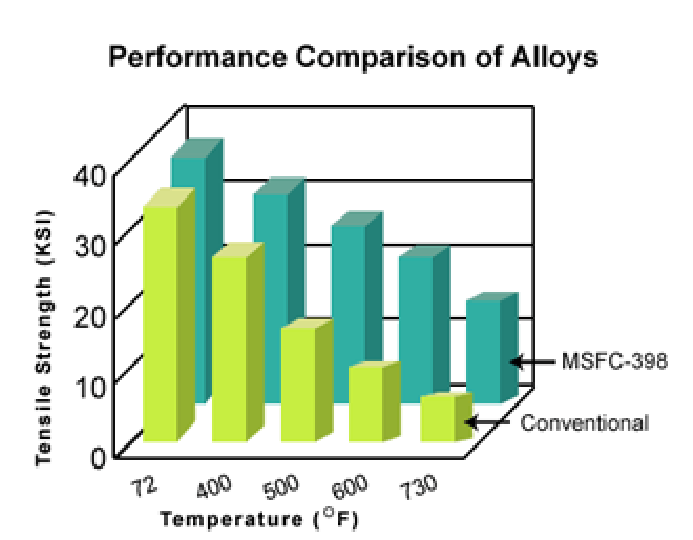
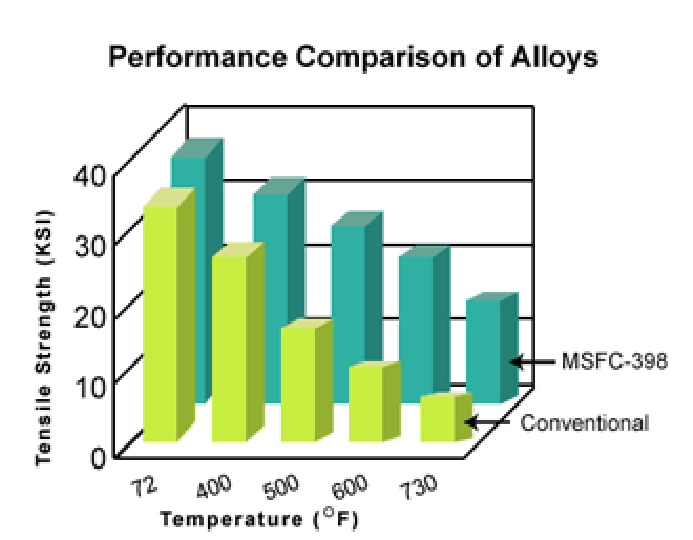
piston durability because it is two and half times stronger than
conventional cast
aluminum pistons at high temperature and can be produced with a material
cost of
less than $1 per pound. It exhibits dramatic strength at temperatures as
high as
500 to 700 degrees Fahrenheit.
Development of the NASA high-strength aluminum alloy began seven years ago
when
a major automobile manufacturer approached NASA seeking a solution to
reduce the
costs of aluminum engine pistons as well as lower engine emissions. NASA
was also
interested in developing an alloy with higher strength and wear-resistance
at
elevated temperatures for aerospace applications.
The result was the discovery of what would become the basis for a new
aluminum
alloy, MSFC-398 or NASA High-Strength Aluminum Alloy. With commercial
guidance
from RTI, the NASA Technology Transfer Partnership introduced MSFC-398
during
the 2001 National Manufacturing Week show in Chicago.
BRP then met with NASA in April 2002, the prototypes were complete by
July,
and the final product was ready in February 2003. "We worked very closely
with
NASA to refine the details," said Bob Young, vice president of product
development
for BRP. "The demands of the outboard engine are more significant than any
other
engine NASA had encountered, even those in the auto industry. The team
from NASA
was on the fast-track, learned all the intricacies, and delivered an
outstanding product.
Jonathan Lee (of Marshall Center's Materials, Processes, and Manufacturing
Department),
who co-invented the alloy with PoShou Chen (of Morgan Research Corp.),
said, "The
usual cycle for developing this type of technology from the research stage
to the
development phase, and finally into a commercial product phase, may take
several
years and more than a $1 million investment. In this case, it has occurred
in less
than four years at a fraction of the cost."
"This is another outstanding example of NASA's Innovative Technology
Transfer
Partnerships (ITTP) program at work with a variety of industries to move
the
benefits of aerospace technology to the public and private sectors while
supporting
NASA's goal of improving life on Earth," said Sammy Nabors, commercial
technology
lead in the Marshall Center's Technology Transfer Department..
RTI and NASA
RTI supports NASA's ITTP program by
* Identifying NASA-developed technologies with commercial potential
* Understanding the value proposition a technology offers to various
markets
* Attracting partners by communicating the opportunity to develop a
commercial product based on NASA's intellectual property
* Supporting negotiations and execution of agreements to
enable successful commercial implementation.
Molly O'Donovan Dix, a technology commercialization specialist and
engineer
at RTI, worked directly with NASA MSFC to develop the partnership with BRP
and continues to help NASA license the technology. She is helping NASA
develop
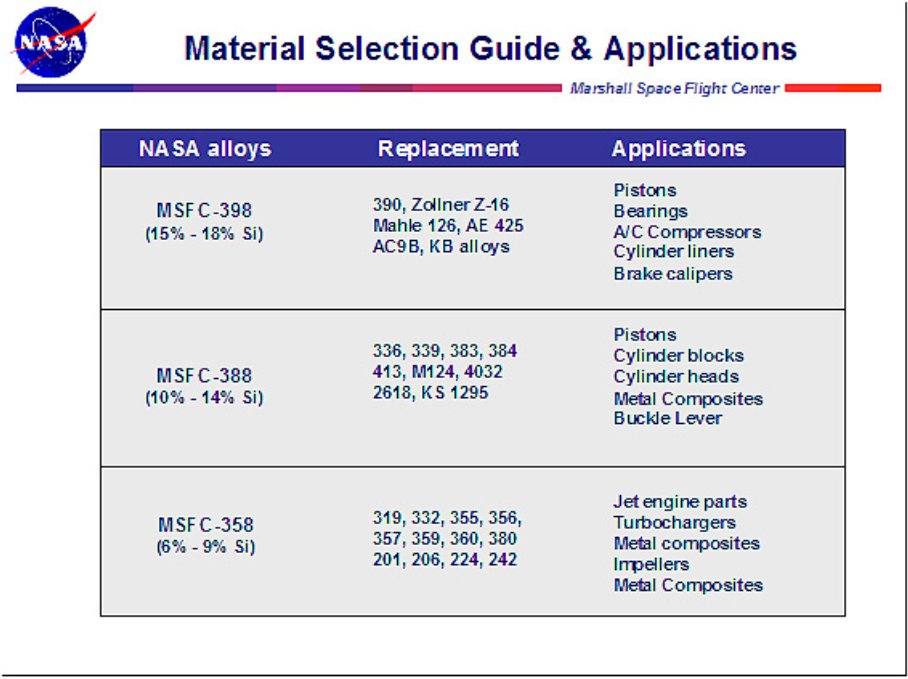
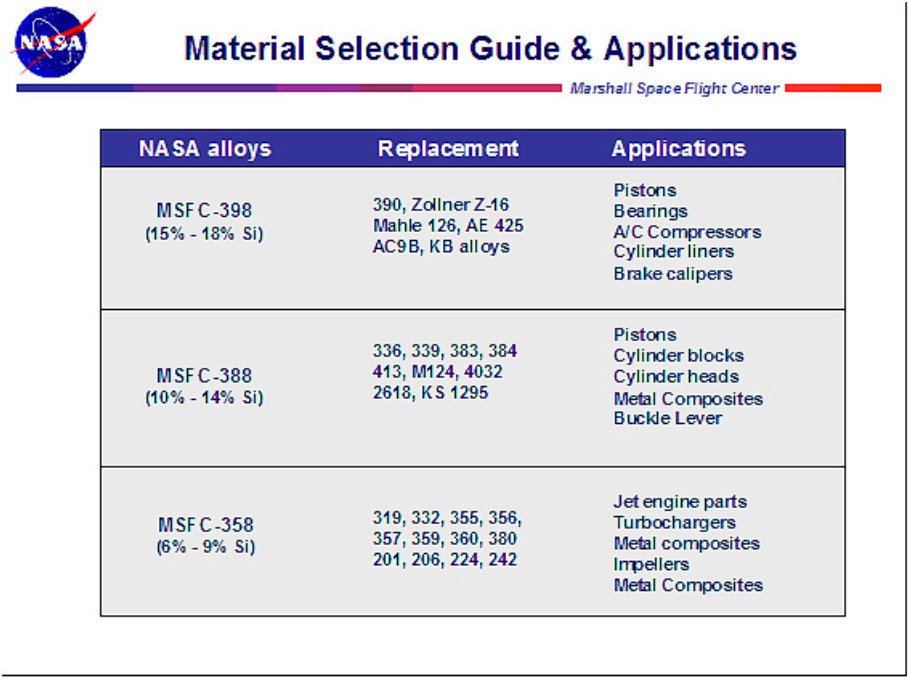
a sophisticated licensing plan for the family of alloys that includes the
MSFC-398 material. In addition to MSFC-398, the hyper-eutectic form of the
alloy, NASA is also licensing the eutectic form as MSFC-388 and the
hypo-eutectic
form as MSFC-358. Limited-term exclusive licenses are being granted in
niche
applications (heat exchangers, small engine applications, etc.) to enable
partners to protect their required development investment. Non-exclusive
licenses are available for automotive pistons and cylinders.
Maybe this is what Mistral , Rotamax and others are using in their end
housings.
George (down under)
I was not aware Mistral had aluminum end housings.
Paul Lamar
The Rotary Engine NewsLetter. Powered by Linux.
ACRE NL web site.
http://www.rotaryeng.net
Youtube key word UTUBPLEASE
Copyright 1998-2008 All world wide rights reserved.