We tried using thicker pipe wall (600 series stainless in incremental
increases in thickness up to almost 1/8" wall ) and even those would
eventually crack. The problem was not cracking at the flange, but
rather
cracking of the pipe wall itself itself whenever pipes from each port
were
merged outboard of the exhaust ports without any provision for a slip
joint
or other. Before we came up with the idea of the ball joint welded
directly
to the port, we first used short stub stacks welded to the four stud
flange,
with a slip fit pipe over that and it completely eliminated the cracking
problems even using .035 wall...but we never came up with anything
close
to
elegant in terms of securing the stub pipe to the slip tube. To test
the
approach we retained the exhaust tube to the stub stack using safety
wire
looped through small 'L" brackets welded to the outboard tube with a
hole
drilled in the 90degree leg for the safety wire...and the other inboard
"L"
brackets held on the stub end by each of the four nuts that secured the
exhaust flange/stub stack to the rotor housing. Looked cheesy and not
meant
for long term but the approach did work and led us to the ball joint. It
is simple and cheap if you could come up with an effective, safe way to
retain the tubes.
Steve Beckham
Steve,
Thanks for the response, I agree the pressed exhaust flanges are the most
elegant option, but there are a degree of complexity for the average
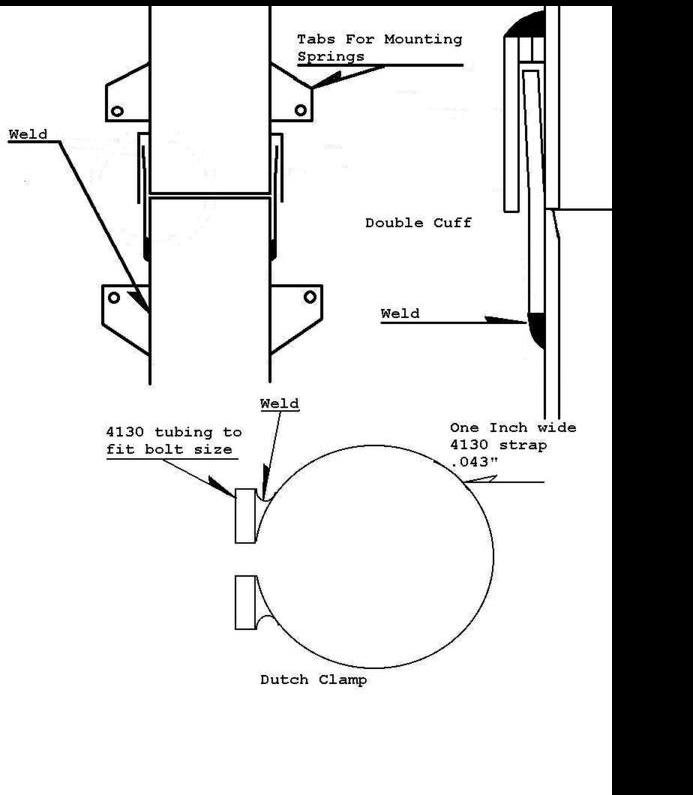
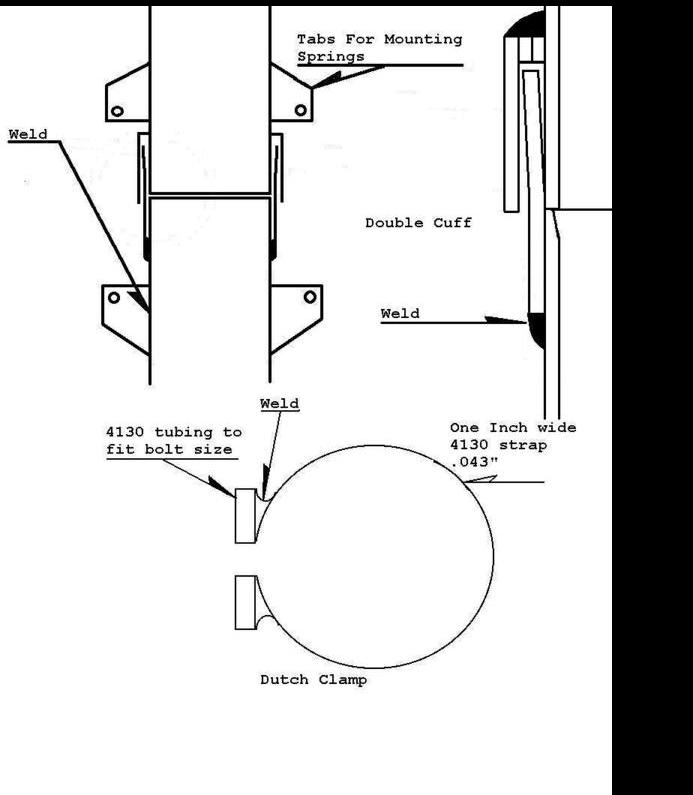
builder - whereas just welding may be easier. See attachment for what may
be
options. This isn't as you described (but similar) with a heavier tube as
the stub I believe it would be quite robust- drawing by Bill Jepson.
George (down under)
George, I apologize for not being able to tell from this nice drawing by
Bill....is the downstream tube allowed to expand and contract independent
of
the short stub stack?
Steve Beckham
YES Steve,
The short header tube has the collar (with dog leg or L shape) welded to it.
The exhaust pipe has a collar and small extension welded to it.
The exhaust pipe is also flared to accommodate the short header tube.
The L shaped ( dog leg) holds the two together. There would be movement
between the two pipes which would allow for differential expansion and
contraction, which I believe is your primary concern.
This could design could have many variations, like more than one dog leg and
springs, but I've never liked springs around that sort of heat.
I believe it's a simple yet quite effective design that can be handled by
the novice.
Here is another by Bill Jepson, if you were concerned about gas leakage.
Could be considered simpler.
George (down under)
The Rotary Engine NewsLetter. Powered by Linux.
ACRE NL web site.
http://www.rotaryeng.net
Youtube key word UTUBPLEASE
Copyright 1998-2008 All world wide rights reserved.